
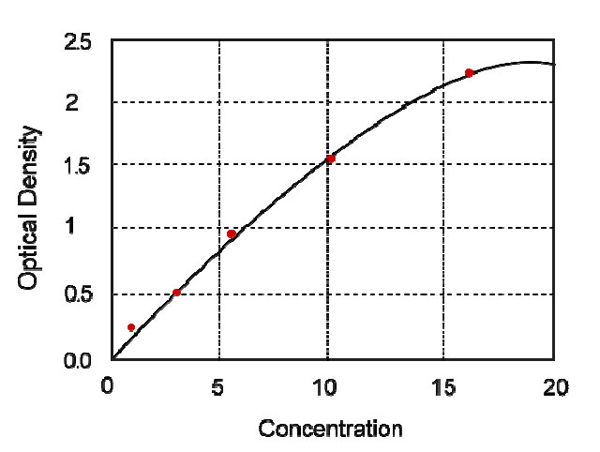
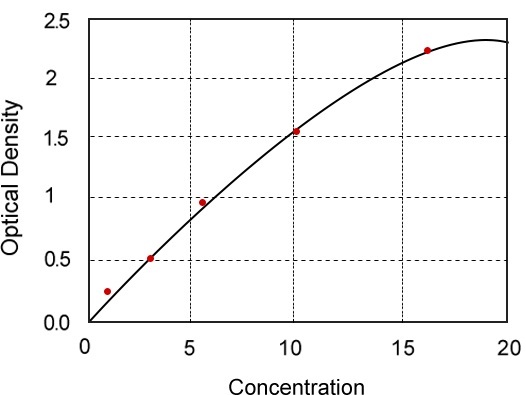
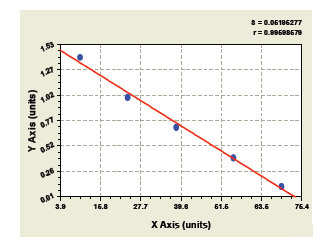
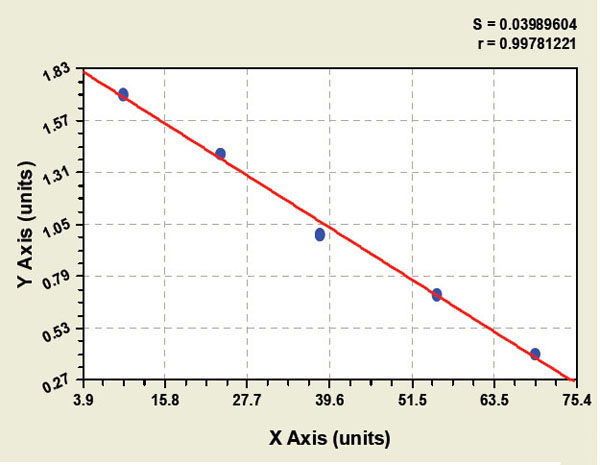
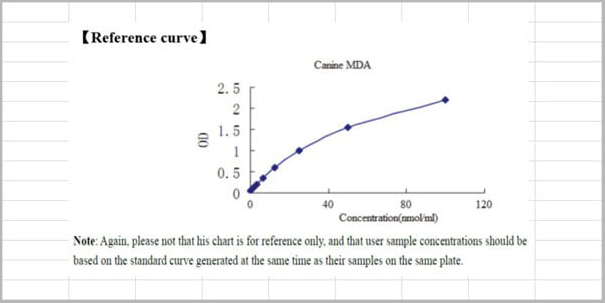
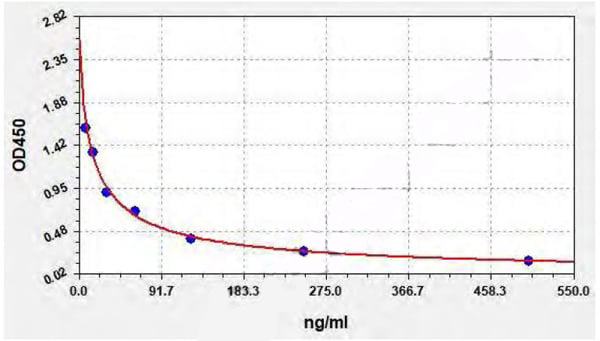
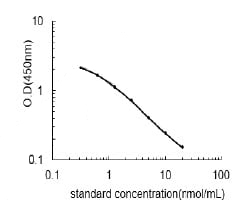
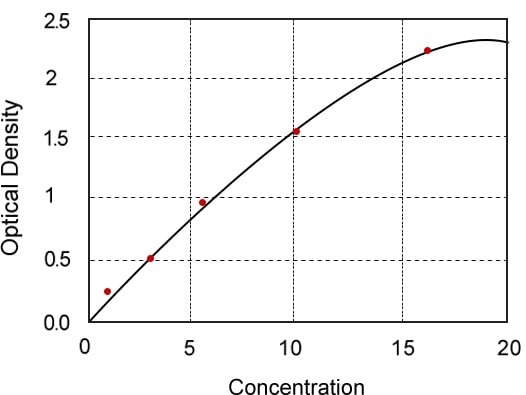
 Standard Curve (Sample)
Malondialdehyde (MDA) Assay Kit | MDA assay kit
Plant Malondialdehyde (MDA) assay kit (Colorimetric method)
DISCONTINUED
This product has been discontinued and is no longer available for purchase. Please contact us for alternative products or more information.
|
This product is discontinued. Contact us for alternatives. |
Standard Curve (Sample)
Standard Curve (Sample)
Intended Uses: This kit can be used to measure the Malondialdehyde (MDA) content in plant tissue samples.
Customer Reviews
Loading reviews...
Share Your Experience
Similar Products



Product Notes
The MDA (Catalog #AAA22070) is an Assay Kit and is intended for research purposes only. The product is available for immediate purchase. It is sometimes possible for the material contained within the vial of "Malondialdehyde (MDA), Assay Kit" to become dispersed throughout the inside of the vial, particularly around the seal of said vial, during shipment and storage. We always suggest centrifuging these vials to consolidate all of the liquid away from the lid and to the bottom of the vial prior to opening. Please be advised that certain products may require dry ice for shipping and that, if this is the case, an additional dry ice fee may also be required.Precautions
All products in the AAA Biotech catalog are strictly for research-use only, and are absolutely not suitable for use in any sort of medical, therapeutic, prophylactic, in-vivo, or diagnostic capacity. By purchasing a product from AAA Biotech, you are explicitly certifying that said products will be properly tested and used in line with industry standard. AAA Biotech and its authorized distribution partners reserve the right to refuse to fulfill any order if we have any indication that a purchaser may be intending to use a product outside of our accepted criteria.Disclaimer
Though we do strive to guarantee the information represented in this datasheet, AAA Biotech cannot be held responsible for any oversights or imprecisions. AAA Biotech reserves the right to adjust any aspect of this datasheet at any time and without notice. It is the responsibility of the customer to inform AAA Biotech of any product performance issues observed or experienced within 30 days of receipt of said product. To see additional details on this or any of our other policies, please see our Terms & Conditions page.Frequently Asked Questions
What sample types can be used with the MDA assay kit?
The MDA assay kit accepts multiple sample types, including serum, plasma, urine, tissue homogenates, and cell lysates. This versatility makes it suitable for various oxidative stress studies across different biological matrices, allowing researchers to measure lipid peroxidation markers in diverse experimental contexts.
What is the detection sensitivity and range for MDA measurement?
MDA assay kits typically demonstrate a sensitivity of 0.36 µM with detection limits around 0.62 µM. The assay provides quantitative measurements across a working range suitable for detecting lipid peroxidation in biological samples, enabling precise quantification of oxidative stress markers.
How long does the MDA assay protocol take to complete?
The MDA assay protocol is completed in approximately 1 hour (50 minutes to 1 hour). This rapid turnaround makes it ideal for high-throughput oxidative stress screening and efficient workflow integration in research laboratories.
Does the kit use the TBARS method or a specific colorimetric/fluorometric reaction?
The MDA assay kit uses the TBARS (Thiobarbituric Acid Reactive Substances) method, a colorimetric assay. The assay is based on MDA reacting with thiobarbituric acid to form a colored adduct measured at 532 nm, providing reliable lipid peroxidation quantification with minimal interference from biological matrices.
What controls or standards are required for accurate MDA quantification?
Accurate MDA quantification requires MDA standards of known concentrations to generate standard curves. Blank wells containing only assay diluent serve as negative controls, establishing baseline absorbance. These controls enable researchers to validate assay performance and accurately quantify MDA levels in unknown samples.
How should the MDA assay kit be stored to maintain stability?
Store the MDA assay kit at 4°C to maintain component stability. Proper storage conditions preserve the integrity of reagents and standards, ensuring consistent, reliable results throughout the kit's usable lifetime. Follow manufacturer guidelines for specific storage details and shelf-life information.
What sample types are compatible with the MDA assay kit?
The MDA assay kit is designed for serum, plasma, animal tissues (muscle, liver, kidney), cell culture media, and tissue homogenates. Tissue samples should be homogenized in appropriate buffers (typically 0.15 M Tris-HCl at pH 7.4), and samples must be used immediately after preparation or frozen at ≤-70°C to preserve oxidative markers.
Does the kit use the TBARS method or a specific colorimetric/fluorometric assay?
The MDA assay kit utilizes the TBARS (Thiobarbituric Acid Reactive Substances) method, a well-established colorimetric assay. This method involves the reaction of MDA with thiobarbituric acid under acidic conditions to form MDA-TBA₂ adducts that absorb strongly at 532 nm, providing a straightforward and reliable measurement of lipid peroxidation.
What is the detection sensitivity and working range for MDA?
The MDA assay typically offers sensitivity around 0.03–0.08 µM in the reaction mixture with a detection range of approximately 0.38–133 nmol/mL. This range is suitable for quantifying MDA levels across various oxidative stress conditions and biological sample types.
How long does the MDA assay protocol take?
The complete MDA assay protocol takes approximately 90 minutes. Key steps include sample preparation (15 minutes), incubation with TBA reagent at 60°C (60 minutes), centrifugation, and spectrophotometric reading at 532 nm.
What controls or standards are required for accurate MDA measurement?
The kit includes MDA calibration standards (typically a 6-point serial dilution) and reagent blanks for background correction. Results are calculated by plotting sample absorbance values against the standard curve generated from known MDA concentrations, ensuring accurate quantification across the assay range.
How should the MDA assay kit be stored for stability?
MDA assay kit components should be stored according to package specifications, typically at 2–8°C for short-term storage. Reconstituted reagents (particularly TBA reagent dissolved in hot deionized water) should be used promptly. For longer-term storage, prepared samples should be frozen at ≤-70°C, preferably in liquid nitrogen, to prevent MDA degradation.
What does an MDA assay measure in oxidative stress studies?
An MDA assay measures malondialdehyde, a substance made when cells are damaged by stress. When harmful molecules attack fats in cells, MDA is formed. Higher MDA levels mean more oxidative stress and cell damage.
How is malondialdehyde used as a marker of lipid peroxidation?
When cell membrane fats break down from stress, they form malondialdehyde (MDA). Scientists measure MDA because it shows how much fat damage has happened. More MDA means more lipid (fat) damage in cells.
Is the MDA assay suitable for serum, plasma, or tissue samples?
Yes, the MDA assay can be used on serum, plasma, and tissue samples. It works well with blood samples and tissues like liver, brain, or plant tissues. The method may change slightly depending on the sample type.
What is the difference between an MDA assay and TBARS assay?
An MDA assay measures malondialdehyde more directly. TBARS assays measure MDA and other similar substances, so they are less specific. TBARS is easier but less accurate, while MDA assays give more precise results.
Can diet, storage, or sample handling affect MDA results?
Yes, diet, poor storage, and rough handling can alter MDA levels. Fatty foods, long storage, heat, or air exposure can falsely raise MDA. Handle and store samples gently to avoid this.
Is the MDA assay commonly used in antioxidant or aging research?
Yes, MDA assays are widely used in antioxidant and aging research. Scientists use them to see if antioxidants reduce cell damage or if aging increases oxidative stress. Lower MDA usually means better protection against damage.
Item has been added to Shopping Cart
If you are ready to order, navigate to Shopping Cart and get ready to checkout.