
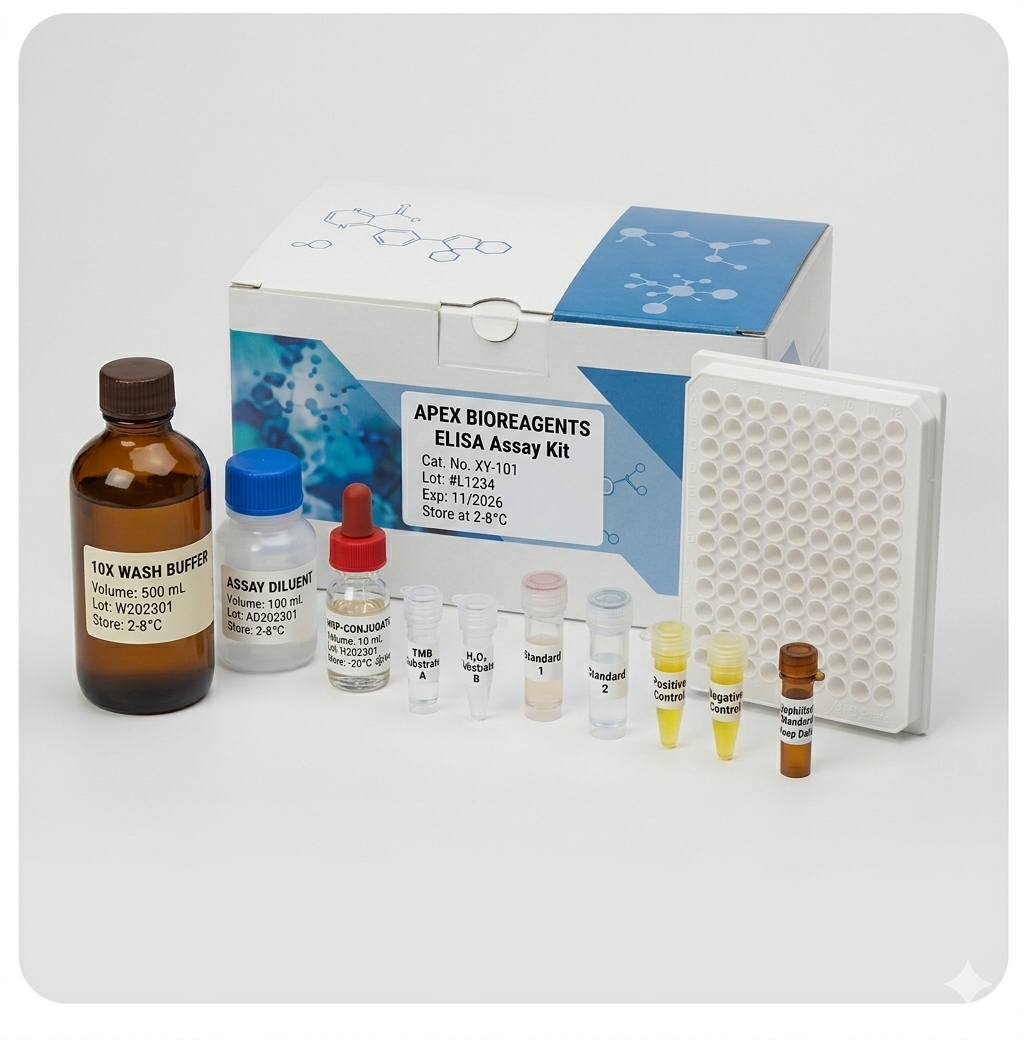
Reactive oxygen species Assay Kit
Reactive oxygen species assay kit (Chemical fluorometric method)
Customer Reviews
Loading reviews...
Share Your Experience
Similar Products




Product Notes
The Reactive oxygen species (Catalog #AAA22078) is an Assay Kit and is intended for research purposes only. The product is available for immediate purchase. It is sometimes possible for the material contained within the vial of "Reactive oxygen species, Assay Kit" to become dispersed throughout the inside of the vial, particularly around the seal of said vial, during shipment and storage. We always suggest centrifuging these vials to consolidate all of the liquid away from the lid and to the bottom of the vial prior to opening. Please be advised that certain products may require dry ice for shipping and that, if this is the case, an additional dry ice fee may also be required.Precautions
All products in the AAA Biotech catalog are strictly for research-use only, and are absolutely not suitable for use in any sort of medical, therapeutic, prophylactic, in-vivo, or diagnostic capacity. By purchasing a product from AAA Biotech, you are explicitly certifying that said products will be properly tested and used in line with industry standard. AAA Biotech and its authorized distribution partners reserve the right to refuse to fulfill any order if we have any indication that a purchaser may be intending to use a product outside of our accepted criteria.Disclaimer
Though we do strive to guarantee the information represented in this datasheet, AAA Biotech cannot be held responsible for any oversights or imprecisions. AAA Biotech reserves the right to adjust any aspect of this datasheet at any time and without notice. It is the responsibility of the customer to inform AAA Biotech of any product performance issues observed or experienced within 30 days of receipt of said product. To see additional details on this or any of our other policies, please see our Terms & Conditions page.Frequently Asked Questions
What is an ROS assay?
An ROS assay is a test that detects and quantifies reactive oxygen species - highly reactive molecules produced during cellular metabolism. These assays measure oxidative stress levels in cells or tissues using fluorescent dyes that become luminescent when exposed to ROS, helping researchers study inflammation, drug effects, and cellular damage.
What is a ROS test?
A ROS test measures reactive oxygen species levels in biological samples to assess oxidative stress. Similar to an ROS assay, it uses fluorescent or chemiluminescent detection methods to identify free radicals like superoxide and hydrogen peroxide, which are essential for understanding cellular health and stress responses.
How to measure ROS in bacteria?
ROS in bacteria can be measured using cell-permeable fluorescent dyes like DCFH-DA or CellROX, which penetrate bacterial cells and fluoresce upon oxidation by ROS. Detection methods include fluorescence microscopy, flow cytometry, or microplate readers. Bacteria require functional esterase activity for dye activation.
What types of ROS does this assay kit detect?
ROS assay kits typically detect hydroxyl radicals (- OH), peroxyl radicals (ROO- ), and hydrogen peroxide (H₂O₂). These represent the major reactive oxygen species generated during cellular stress and metabolism. Some kits detect total ROS levels rather than specific individual species.
How sensitive is the kit and what detection method is required?
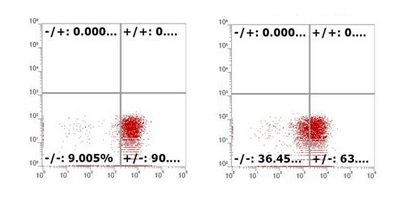
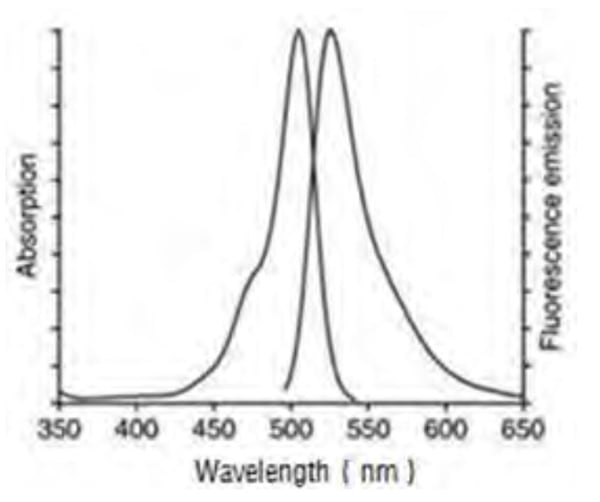
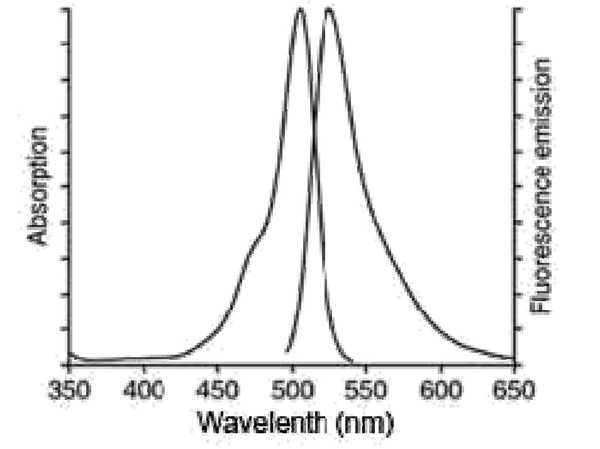
ROS assay sensitivity varies by kit formulation. High-sensitivity DCFH-DA kits achieve superior signal-to-noise ratios compared to standard formulations. Detection requires fluorescence microscopy, flow cytometry, or plate readers measuring excitation ~485-490 nm and emission ~520-528 nm wavelengths.
How long does the ROS detection protocol take?
Standard ROS detection protocols typically require 30 minutes to 1 hour for dye loading and incubation. Measuring and analysis add minimal additional time. Total assay time from sample preparation to results is approximately 2-3 hours, depending on detection method and sample preparation complexity.
What controls or calibration standards are recommended for accurate results?
Both positive and negative controls are essential. Positive controls use ROS inducers (pyocyanin, menadione, or hydrogen peroxide); negative controls use ROS inhibitors (N-acetyl-L-cysteine/NAC) or untreated samples. Standards establish a baseline for fold-change comparisons rather than absolute quantification.
Item has been added to Shopping Cart
If you are ready to order, navigate to Shopping Cart and get ready to checkout.