
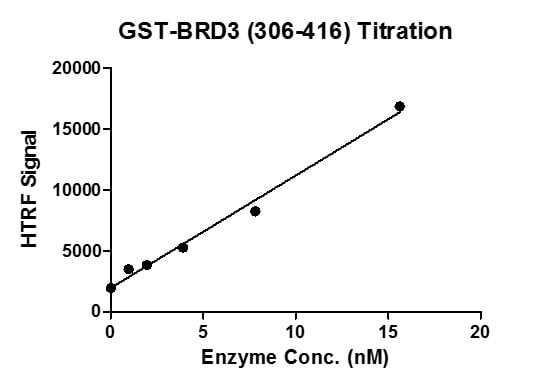
 Application Data
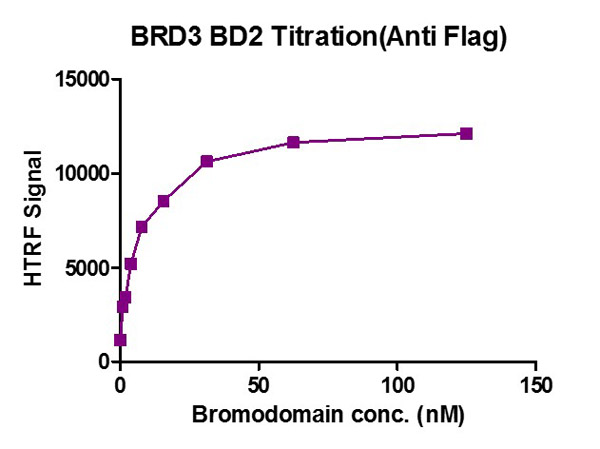
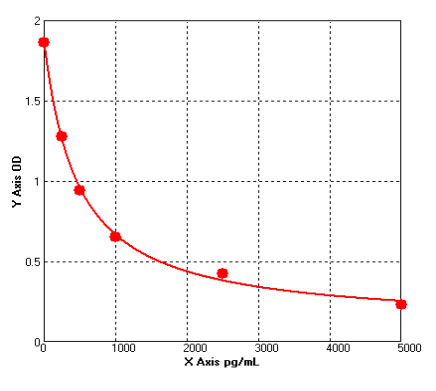
(Recombinant BRD3 (306-416) activity assay. 3.3 uM histone peptide H4K5/8/12/16 (4Ac) was incubated with BRD3 (306-416) protein in reaction buffer including 50mM HEPES-NaOH pH 7.0, 0.1% BSA for 1 hour at room temperature. Anti-DYKDDDDK antibody was used to detect reaction products.)
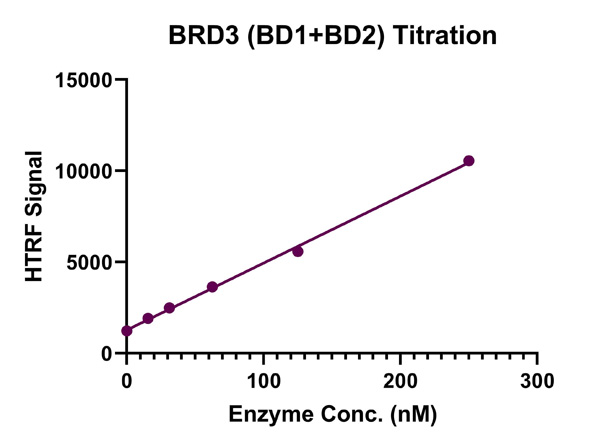
Application Data
(Recombinant BRD3 (306-416) activity assay. 3.3 uM histone peptide H4K5/8/12/16 (4Ac) was incubated with BRD3 (306-416) protein in reaction buffer including 50mM HEPES-NaOH pH 7.0, 0.1% BSA for 1 hour at room temperature. Anti-DYKDDDDK antibody was used to detect reaction products.)
BRD3 recombinant protein
Recombinant BRD3 (306-416) protein
Purity
The recombinant protein is >70% pure by SDS-PAGE.
Synonyms
BRD3; N/A; Recombinant BRD3 (306-416) protein; ORFX; RING3L; BRD3 recombinant protein
Host
E Coli
Purity/Purification
The recombinant protein is >70% pure by SDS-PAGE.
Form/Format
Recombinant BRD3 (306-416) protein was expressed in E Coli cells and is supplied in 25mM Tris pH7.4, 150mM NaCl, 5% glycerol.
Protein Species
Human
Tag
DYKDDDDK-Tag, His-Tag
Notes
Recombinant BRD3 (306-416) is suitable for use in binding assays, inhibitor screening, and selectivity profiling.
Dry Ice Note
The product may be shipped with dry ice, and an additional fee may be added to your shipping cost.
Preparation and Storage
Recombinant proteins in solution are temperature sensitive and must be stored at -80 degree C to prevent degradation. Avoid repeated freeze/thaw cycles and keep on ice when not in storage.
Shipping Temp: Dry Ice
Shipping Temp: Dry Ice
Application Data
(Recombinant BRD3 (306-416) activity assay. 3.3 uM histone peptide H4K5/8/12/16 (4Ac) was incubated with BRD3 (306-416) protein in reaction buffer including 50mM HEPES-NaOH pH 7.0, 0.1% BSA for 1 hour at room temperature. Anti-DYKDDDDK antibody was used to detect reaction products.)
Application Data
(Recombinant BRD3 (306-416) activity assay. 3.3 uM histone peptide H4K5/8/12/16 (4Ac) was incubated with BRD3 (306-416) protein in reaction buffer including 50mM HEPES-NaOH pH 7.0, 0.1% BSA for 1 hour at room temperature. Anti-DYKDDDDK antibody was used to detect reaction products.)
SDS-PAGE
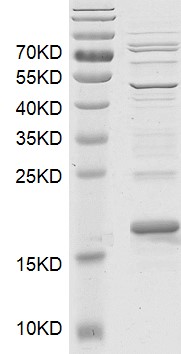
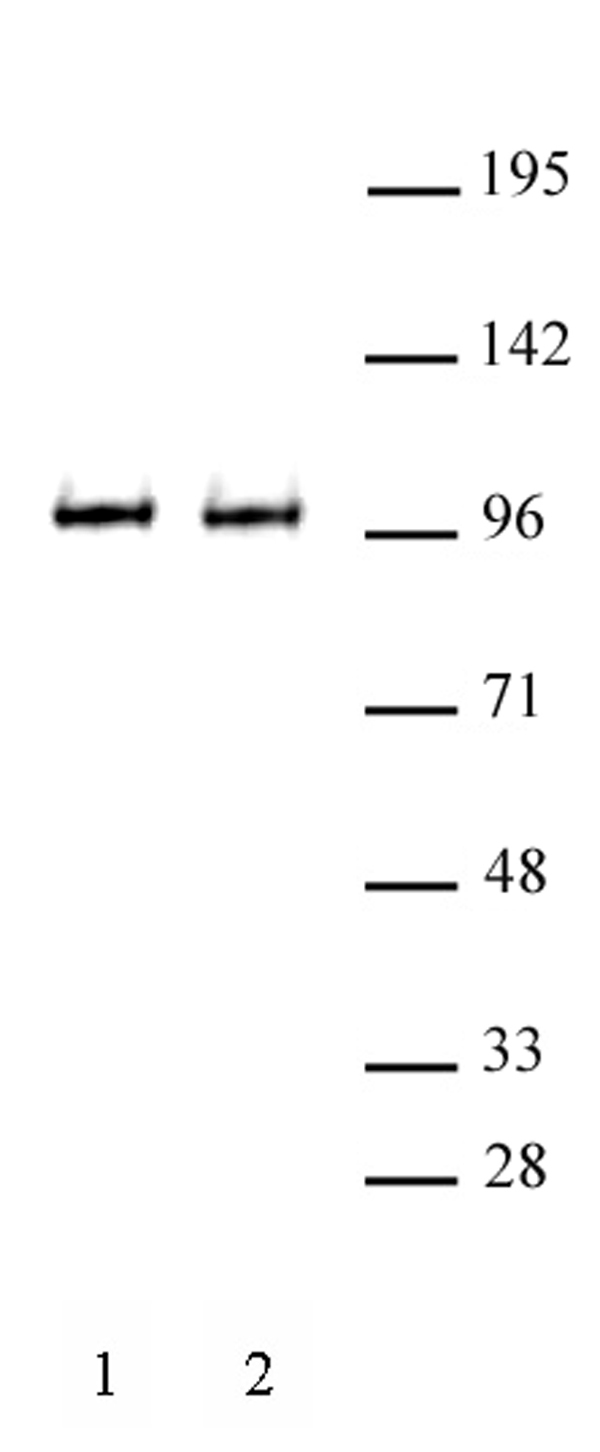
(Recombinant BRD3 (306-416) protein gel. BRD3 (306-416) protein was run on an SDS-PAGE gel and stained with Coomassie Blue.)
SDS-PAGE
(Recombinant BRD3 (306-416) protein gel. BRD3 (306-416) protein was run on an SDS-PAGE gel and stained with Coomassie Blue.)
Related Product Information for BRD3 recombinant protein
Short Description: The peptide corresponding to amino acids 306-416 that contains the bromodomain sequences of BRD3 (accession number NM_007371.3) was expressed in E Coli and contains an N-terminal His-tag and C-terminal DYKDDDDK tag with an observed molecular weight of 19.2 kDa. It shows binding specificity for acetylated H4K8 and H4K12/K16/K20, as well as acetylated GATA1. Bromodomain-containing protein 3 (BRD3), also known as RING3L, belongs to the BET subclass of proteins characterized by two N-terminal bromodomains and one ET (Extra Terminal) domain. BRDs associate with chromatin through their bromodomains that recognize acetylated histone lysine residues. Bromodomains function as 'readers' of these epigenetic histone marks and regulate chromatin structure and gene expression by linking associated proteins to the acetylated nucleosomal targets. The ET domain functions as a protein binding motif and exerts atypical serine-kinase activity. The BET family consists of at least four members in mouse and human, BRD2 (also referred to as FSRG1, RING3), BRD3 (FSRG2, ORFX), BRD4 (FSRG4, MCAP/HUNK1), and BRDT (FSRG3, BRD6). BRD3 binds and regulates GATA1 in an acetylation-dependent manner. GATA1 is a key regulator of gene expression for erythroid and megakaryocyte-specific genes, and mutations in GATA1 have been associated with congenital anemias and megakaryoblastic leukemias. Interestingly, tight interaction of BRD3 with GATA1 requires multiple acetylation modifications, and structural data showed that two adjacent acetylation sites in GATA1 interact with a single bromodomain. BRD3 protein expression is induced in activated lymphocytes. Additionally, it is highly expressed in undifferentiated ES cells and expression is observed to drop upon endothelial differentiation. Altered expression levels of BRD3 have been observed in certain cancers, such as nasopharyngeal carcinomas and bladder cancer. BRD3 also interacts with LANA-1, the Kaposi's sarcoma-associated herpesvirus (KSHV) latency-associated nuclear antigen 1, which is required for the replication of episomal viral genomes. Recombinant BRD3 (306-416) can be used in binding assays and inhibitor screening.
Background: Bromodomain-containing protein 3 (BRD3), also known as RING3L, belongs to the BET subclass of proteins characterized by two N-terminal bromodomains and one ET (Extra Terminal) domain. BRDs associate with chromatin through their bromodomains that recognize acetylated histone lysine residues. Bromodomains function as 'readers' of these epigenetic histone marks and regulate chromatin structure and gene expression by linking associated proteins to the acetylated nucleosomal targets. The ET domain functions as a protein binding motif and exerts atypical serine-kinase activity. The BET family consists of at least four members in mouse and human, BRD2 (also referred to as FSRG1, RING3), BRD3 (FSRG2, ORFX), BRD4 (FSRG4, MCAP/HUNK1), and BRDT (FSRG3, BRD6). BRD3 binds and regulates GATA1 in an acetylation-dependent manner. GATA1 is a key regulator of gene expression for erythroid and megakaryocyte-specific genes, and mutations in GATA1 have been associated with congenital anemias and megakaryoblastic leukemias. Interestingly, tight interaction of BRD3 with GATA1 requires multiple acetylation modifications, and structural data showed that two adjacent acetylation sites in GATA1 interact with a single bromodomain. BRD3 protein expression is induced in activated lymphocytes. Additionally, it is highly expressed in undifferentiated ES cells and expression is observed to drop upon endothelial differentiation. Altered expression levels of BRD3 have been observed in certain cancers, such as nasopharyngeal carcinomas and bladder cancer. BRD3 also interacts with LANA-1, the Kaposi's sarcoma-associated herpesvirus (KSHV) latency-associated nuclear antigen 1, which is required for the replication of episomal viral genomes.
Background: Bromodomain-containing protein 3 (BRD3), also known as RING3L, belongs to the BET subclass of proteins characterized by two N-terminal bromodomains and one ET (Extra Terminal) domain. BRDs associate with chromatin through their bromodomains that recognize acetylated histone lysine residues. Bromodomains function as 'readers' of these epigenetic histone marks and regulate chromatin structure and gene expression by linking associated proteins to the acetylated nucleosomal targets. The ET domain functions as a protein binding motif and exerts atypical serine-kinase activity. The BET family consists of at least four members in mouse and human, BRD2 (also referred to as FSRG1, RING3), BRD3 (FSRG2, ORFX), BRD4 (FSRG4, MCAP/HUNK1), and BRDT (FSRG3, BRD6). BRD3 binds and regulates GATA1 in an acetylation-dependent manner. GATA1 is a key regulator of gene expression for erythroid and megakaryocyte-specific genes, and mutations in GATA1 have been associated with congenital anemias and megakaryoblastic leukemias. Interestingly, tight interaction of BRD3 with GATA1 requires multiple acetylation modifications, and structural data showed that two adjacent acetylation sites in GATA1 interact with a single bromodomain. BRD3 protein expression is induced in activated lymphocytes. Additionally, it is highly expressed in undifferentiated ES cells and expression is observed to drop upon endothelial differentiation. Altered expression levels of BRD3 have been observed in certain cancers, such as nasopharyngeal carcinomas and bladder cancer. BRD3 also interacts with LANA-1, the Kaposi's sarcoma-associated herpesvirus (KSHV) latency-associated nuclear antigen 1, which is required for the replication of episomal viral genomes.
Product Categories/Family for BRD3 recombinant protein
NCBI and Uniprot Product Information
Customer Reviews
Loading reviews...
Share Your Experience
Similar Products


Product Notes
The BRD3 (Catalog #AAA59645) is a Recombinant Protein produced from E Coli and is intended for research purposes only. The product is available for immediate purchase. It is sometimes possible for the material contained within the vial of "BRD3, Recombinant Protein" to become dispersed throughout the inside of the vial, particularly around the seal of said vial, during shipment and storage. We always suggest centrifuging these vials to consolidate all of the liquid away from the lid and to the bottom of the vial prior to opening. Please be advised that certain products may require dry ice for shipping and that, if this is the case, an additional dry ice fee may also be required.Precautions
All products in the AAA Biotech catalog are strictly for research-use only, and are absolutely not suitable for use in any sort of medical, therapeutic, prophylactic, in-vivo, or diagnostic capacity. By purchasing a product from AAA Biotech, you are explicitly certifying that said products will be properly tested and used in line with industry standard. AAA Biotech and its authorized distribution partners reserve the right to refuse to fulfill any order if we have any indication that a purchaser may be intending to use a product outside of our accepted criteria.Disclaimer
Though we do strive to guarantee the information represented in this datasheet, AAA Biotech cannot be held responsible for any oversights or imprecisions. AAA Biotech reserves the right to adjust any aspect of this datasheet at any time and without notice. It is the responsibility of the customer to inform AAA Biotech of any product performance issues observed or experienced within 30 days of receipt of said product. To see additional details on this or any of our other policies, please see our Terms & Conditions page.Item has been added to Shopping Cart
If you are ready to order, navigate to Shopping Cart and get ready to checkout.