
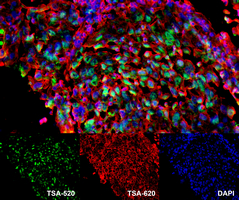
 Application Data
Multiplex Detection Kit
Multiplex IHC Detection Kit (Triple)
Applications
Immunofluorescence, Immunohistochemistry
Synonyms
Multiplex; N/A; Multiplex IHC Detection Kit (Triple); Multiplex detection kit
Applicable Applications for Multiplex detection kit
IF (Immunofluorescence), IHC (Immunohistochemistry)
Directions for Use
1. De-paraffinizing (de-waxing) and rehydrating
1.1 Heat the slides in tissue-drying oven for 45 minutes at 60 degree C. Place the slides in a rack, and perform the following washes: Xylene I: 15 mins Xylene II: 15 mins 100% Ethanol: 5 mins 95% Ethanol: 5 mins 85% Ethanol: 5 mins 70% Ethanol: 5 mins
1.2 The slides are placed in a lab draught cupboard to rinse off ethanol.
1.3 Finally, wash the slides in the pure water.
2. Antigen or epitope retrieval
2.1 Add the appropriate antigen retrieval buffer (EDTA pH 9.0 or sodium citrate pH 6.0) to the microwaveable vessel.
2.2 Place the slides in the microwaveable vessel. Then place the vessel inside the microwave (1200W).
2.3 Boil for 8 mins in microwave (1200 W) under medium heat, then stop heating for 8 mins, followed by low and medium heat for 7 mins. Other heat-induced epitope retrieval methods can also be used, e.g., heated at 120 degree C 1-2 min, 100 degree C 20mins or 95 degree C in a water bath. Be sure to monitor for evaporation and watch out for boiling over during the procedure. Do not let the slides dry out.
2.4 After cooling down in room temperature, place the slides in PBS (pH 7.4) to wash 3 X 5 mins on a decolorizing shaker.
Notes: To get best results, antigen retrieval buffer and protocol should be determined according to the tissue types and antigen types.
3. Blocking endogenous peroxidase
3.1 Add enough 3% hydrogen peroxide (H2O2) to cover the slides.
3.2 Incubate for 15 mins in the dark at room temperature.
3.3 Place the slides in PBS (pH 7.4) to wash 3 X 5 mins on a decolorizing shaker.
4. Blocking
4.1 Drain slides and then use an IHC pen to draw a circle around each sample on your slide (to hold antibody solution within the target area).
4.2 Add 3% BSA-PBST solution (or other blocking buffer) inside the circle to cover the tissues, incubate 30 mins at room temperature.
5. Primary antibody incubation
5.1 Remove blocking buffer and add primary antibody diluted by recommended antibody diluent overnight at 4 degree C or 37 degree C for 1-2h.
6. HRP Polymer Working Solution incubation
6.1 Place the slides in PBS (pH 7.4) and wash 3 X 5 mins on a decolorizing shaker.
6.2 Incubate slides with HRP Polymer Working Solution (50ul for each slice) in the dark at room temperature for 60 mins.
6.3 Wash 3 X 5 mins with PBS buffer.
7. Tyramide labeling
7.1 Apply the TSA-520 Dye Working Solution to each sample (50ul for each slice) and incubate for 10-15 mins at room temperature.
7.2 Wash 3 X 5 mins with PBS buffer.
8. Denoise Repeat steps 2. At the end of the single stain, may add antifade mounting medium to view the slides or go on labeling another fluorescent dye.9. RepeatRepeat steps 3-7 for another fluorescent dye (TSA-620 Dye Working Solution) to each sample.
10. DAPI counterstaining
10.1 Place the slides in PBS (pH 7.4) and wash 3 X 5 mins on a decolorizing shaker.
10.2 Apply the DAPI solution (50ul for each slice) to each sample and incubate in the dark at room temperature for 10 mins.
11. Mounting the slides
11.1 Place the slides in PBS (pH 7.4) and wash 3 X 5 mins on a decolorizing shaker.
11.2 Add antifade mounting medium (3-5ul for each slice) to cover the section.
12. View the slides. View the sample using a fluorescence microscope with appropriate filters.
Note: To get the best results from multiplex staining, the experimental condition must be optimized.
1.1 Heat the slides in tissue-drying oven for 45 minutes at 60 degree C. Place the slides in a rack, and perform the following washes: Xylene I: 15 mins Xylene II: 15 mins 100% Ethanol: 5 mins 95% Ethanol: 5 mins 85% Ethanol: 5 mins 70% Ethanol: 5 mins
1.2 The slides are placed in a lab draught cupboard to rinse off ethanol.
1.3 Finally, wash the slides in the pure water.
2. Antigen or epitope retrieval
2.1 Add the appropriate antigen retrieval buffer (EDTA pH 9.0 or sodium citrate pH 6.0) to the microwaveable vessel.
2.2 Place the slides in the microwaveable vessel. Then place the vessel inside the microwave (1200W).
2.3 Boil for 8 mins in microwave (1200 W) under medium heat, then stop heating for 8 mins, followed by low and medium heat for 7 mins. Other heat-induced epitope retrieval methods can also be used, e.g., heated at 120 degree C 1-2 min, 100 degree C 20mins or 95 degree C in a water bath. Be sure to monitor for evaporation and watch out for boiling over during the procedure. Do not let the slides dry out.
2.4 After cooling down in room temperature, place the slides in PBS (pH 7.4) to wash 3 X 5 mins on a decolorizing shaker.
Notes: To get best results, antigen retrieval buffer and protocol should be determined according to the tissue types and antigen types.
3. Blocking endogenous peroxidase
3.1 Add enough 3% hydrogen peroxide (H2O2) to cover the slides.
3.2 Incubate for 15 mins in the dark at room temperature.
3.3 Place the slides in PBS (pH 7.4) to wash 3 X 5 mins on a decolorizing shaker.
4. Blocking
4.1 Drain slides and then use an IHC pen to draw a circle around each sample on your slide (to hold antibody solution within the target area).
4.2 Add 3% BSA-PBST solution (or other blocking buffer) inside the circle to cover the tissues, incubate 30 mins at room temperature.
5. Primary antibody incubation
5.1 Remove blocking buffer and add primary antibody diluted by recommended antibody diluent overnight at 4 degree C or 37 degree C for 1-2h.
6. HRP Polymer Working Solution incubation
6.1 Place the slides in PBS (pH 7.4) and wash 3 X 5 mins on a decolorizing shaker.
6.2 Incubate slides with HRP Polymer Working Solution (50ul for each slice) in the dark at room temperature for 60 mins.
6.3 Wash 3 X 5 mins with PBS buffer.
7. Tyramide labeling
7.1 Apply the TSA-520 Dye Working Solution to each sample (50ul for each slice) and incubate for 10-15 mins at room temperature.
7.2 Wash 3 X 5 mins with PBS buffer.
8. Denoise Repeat steps 2. At the end of the single stain, may add antifade mounting medium to view the slides or go on labeling another fluorescent dye.9. RepeatRepeat steps 3-7 for another fluorescent dye (TSA-620 Dye Working Solution) to each sample.
10. DAPI counterstaining
10.1 Place the slides in PBS (pH 7.4) and wash 3 X 5 mins on a decolorizing shaker.
10.2 Apply the DAPI solution (50ul for each slice) to each sample and incubate in the dark at room temperature for 10 mins.
11. Mounting the slides
11.1 Place the slides in PBS (pH 7.4) and wash 3 X 5 mins on a decolorizing shaker.
11.2 Add antifade mounting medium (3-5ul for each slice) to cover the section.
12. View the slides. View the sample using a fluorescence microscope with appropriate filters.
Note: To get the best results from multiplex staining, the experimental condition must be optimized.
Preparation and Storage
Store at 4 degree C in dark for 1 year, do not freeze.
Application Data
Application Data
Related Product Information for Multiplex detection kit
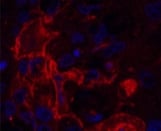
Three colors multiplex IHC tyramide signal amplification (TSA)
Customer Reviews
Loading reviews...
Share Your Experience
Similar Products


Product Notes
The Multiplex (Catalog #AAA266514) is a Detection Kit and is intended for research purposes only. The product is available for immediate purchase. AAA Biotech's Multiplex can be used in a range of immunoassay formats including, but not limited to, IF (Immunofluorescence), IHC (Immunohistochemistry). Researchers should empirically determine the suitability of the Multiplex for an application not listed in the data sheet. Researchers commonly develop new applications and it is an integral, important part of the investigative research process. It is sometimes possible for the material contained within the vial of "Multiplex, Detection Kit" to become dispersed throughout the inside of the vial, particularly around the seal of said vial, during shipment and storage. We always suggest centrifuging these vials to consolidate all of the liquid away from the lid and to the bottom of the vial prior to opening. Please be advised that certain products may require dry ice for shipping and that, if this is the case, an additional dry ice fee may also be required.Precautions
All products in the AAA Biotech catalog are strictly for research-use only, and are absolutely not suitable for use in any sort of medical, therapeutic, prophylactic, in-vivo, or diagnostic capacity. By purchasing a product from AAA Biotech, you are explicitly certifying that said products will be properly tested and used in line with industry standard. AAA Biotech and its authorized distribution partners reserve the right to refuse to fulfill any order if we have any indication that a purchaser may be intending to use a product outside of our accepted criteria.Disclaimer
Though we do strive to guarantee the information represented in this datasheet, AAA Biotech cannot be held responsible for any oversights or imprecisions. AAA Biotech reserves the right to adjust any aspect of this datasheet at any time and without notice. It is the responsibility of the customer to inform AAA Biotech of any product performance issues observed or experienced within 30 days of receipt of said product. To see additional details on this or any of our other policies, please see our Terms & Conditions page.Item has been added to Shopping Cart
If you are ready to order, navigate to Shopping Cart and get ready to checkout.