
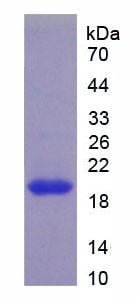
 SDS-PAGE
(Figure 2. SDS-PAGESample: Active recombinant VDR, Human)
SDS-PAGE
(Figure 2. SDS-PAGESample: Active recombinant VDR, Human)
Vitamin D Receptor (VDR) Active Protein | VDR active protein
Active Vitamin D Receptor (VDR)
Avoid repeated freeze/thaw cycles.
Store at 2-8 degree C for one month.
Aliquot and store at -80 degree C for 12 months.
Stability Test:
The thermal stability is described by the loss rate. The loss rate was determined by accelerated thermal degradation test, that is, incubate the protein at 37 degree C for 48h, and no obvious degradation and precipitation were observed. The loss rate is less than 5% within the expiration date under appropriate storage condition.
SDS-PAGE
(Figure 2. SDS-PAGESample: Active recombinant VDR, Human)
SDS-PAGE
(Figure 2. SDS-PAGESample: Active recombinant VDR, Human)
Bioactivity
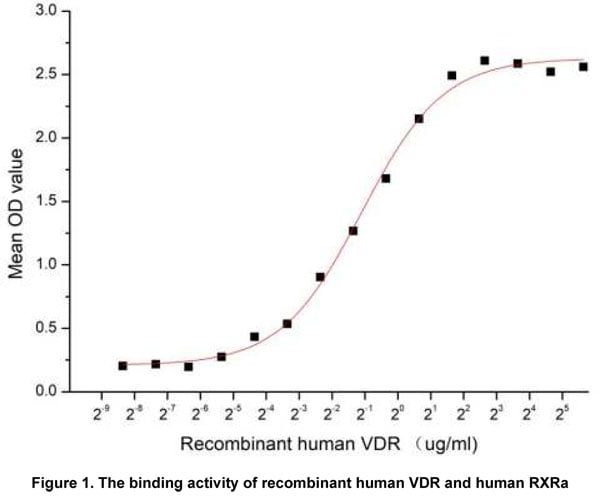
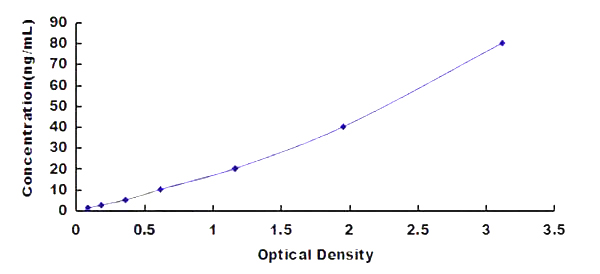
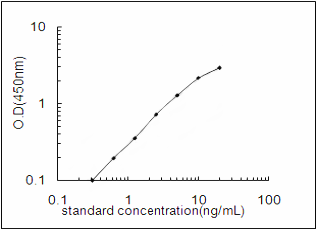
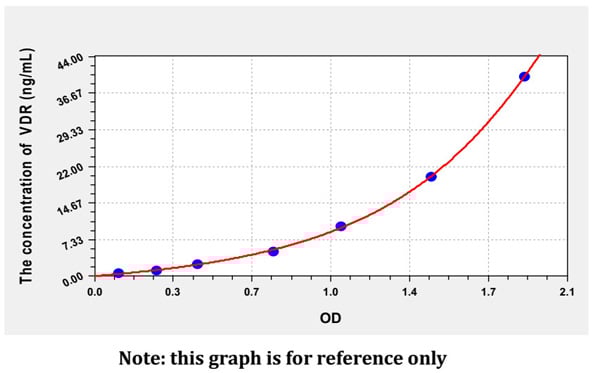
(Vitamin D Receptor (VDR) is the nuclear hormone receptor for vitamin D3. The receptor belongs to the family of trans-acting transcriptional regulatory factors and shows sequence similarity to the steroid and thyroid hormone receptors. It mediates the action of vitamin D3 by controlling the expression of hormone sensitive genes. Besides, E1A binding protein p300 (EP300) has been identified as an interactor of VDR, thus a binding ELISA assay was conducted to detect the interaction of recombinant human VDR and recombinant human EP300. Briefly, VDR were diluted serially in PBS, with 0.01%BSA (pH 7.4). Duplicate samples of 100uL were then transferred to EP300-coated microtiter wells and incubated for 2h at 37 degree C. Wells were washed with PBST and incubated for 1h with anti-VDR pAb, then aspirated and washed 3 times. After incubation with HRP labelled secondary antibody, wells were aspirated and washed 3 times. With the addition of substrate solution, wells were incubated 15-25 minutes at 37 degree C. Finally, add 50uL stop solution to the wells and read at 450nm immediately. The binding activity of of VDR and EP300 was shown in Figure 1, and this effect was in a dose dependent manner.)
Bioactivity
(Vitamin D Receptor (VDR) is the nuclear hormone receptor for vitamin D3. The receptor belongs to the family of trans-acting transcriptional regulatory factors and shows sequence similarity to the steroid and thyroid hormone receptors. It mediates the action of vitamin D3 by controlling the expression of hormone sensitive genes. Besides, E1A binding protein p300 (EP300) has been identified as an interactor of VDR, thus a binding ELISA assay was conducted to detect the interaction of recombinant human VDR and recombinant human EP300. Briefly, VDR were diluted serially in PBS, with 0.01%BSA (pH 7.4). Duplicate samples of 100uL were then transferred to EP300-coated microtiter wells and incubated for 2h at 37 degree C. Wells were washed with PBST and incubated for 1h with anti-VDR pAb, then aspirated and washed 3 times. After incubation with HRP labelled secondary antibody, wells were aspirated and washed 3 times. With the addition of substrate solution, wells were incubated 15-25 minutes at 37 degree C. Finally, add 50uL stop solution to the wells and read at 450nm immediately. The binding activity of of VDR and EP300 was shown in Figure 1, and this effect was in a dose dependent manner.)
Sequence
Sequence
NCBI and Uniprot Product Information
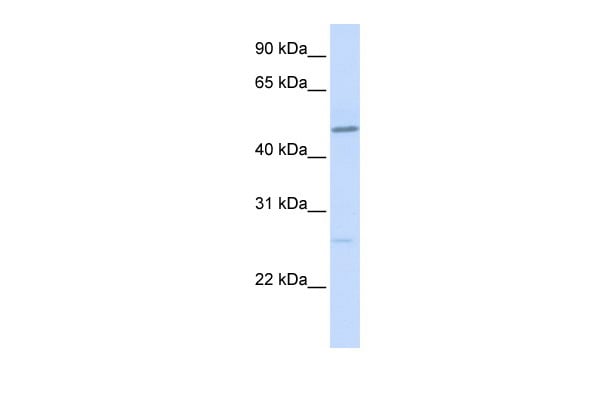
Accurate Molecular Mass: 20kDa as determined by SDS-PAGE reducing conditions.
Customer Reviews
Loading reviews...
Share Your Experience
Similar Products


Product Notes
The VDR vdr (Catalog #AAA148172) is an Active Protein produced from E. coli and is intended for research purposes only. The product is available for immediate purchase. The Active Vitamin D Receptor (VDR) reacts with Homo sapiens (Human) and may cross-react with other species as described in the data sheet. AAA Biotech's Vitamin D Receptor (VDR) can be used in a range of immunoassay formats including, but not limited to, Activity Assay, Cell Culture. Researchers should empirically determine the suitability of the VDR vdr for an application not listed in the data sheet. Researchers commonly develop new applications and it is an integral, important part of the investigative research process. It is sometimes possible for the material contained within the vial of "Vitamin D Receptor (VDR), Active Protein" to become dispersed throughout the inside of the vial, particularly around the seal of said vial, during shipment and storage. We always suggest centrifuging these vials to consolidate all of the liquid away from the lid and to the bottom of the vial prior to opening. Please be advised that certain products may require dry ice for shipping and that, if this is the case, an additional dry ice fee may also be required.Precautions
All products in the AAA Biotech catalog are strictly for research-use only, and are absolutely not suitable for use in any sort of medical, therapeutic, prophylactic, in-vivo, or diagnostic capacity. By purchasing a product from AAA Biotech, you are explicitly certifying that said products will be properly tested and used in line with industry standard. AAA Biotech and its authorized distribution partners reserve the right to refuse to fulfill any order if we have any indication that a purchaser may be intending to use a product outside of our accepted criteria.Disclaimer
Though we do strive to guarantee the information represented in this datasheet, AAA Biotech cannot be held responsible for any oversights or imprecisions. AAA Biotech reserves the right to adjust any aspect of this datasheet at any time and without notice. It is the responsibility of the customer to inform AAA Biotech of any product performance issues observed or experienced within 30 days of receipt of said product. To see additional details on this or any of our other policies, please see our Terms & Conditions page.Item has been added to Shopping Cart
If you are ready to order, navigate to Shopping Cart and get ready to checkout.