

 SDS-PAGE
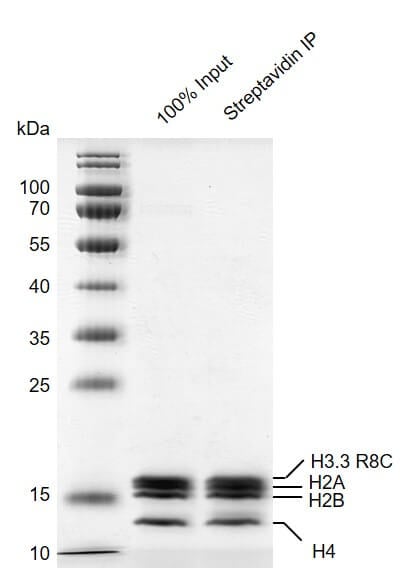
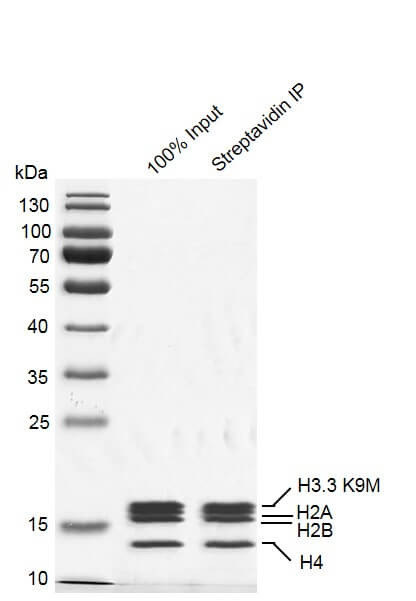
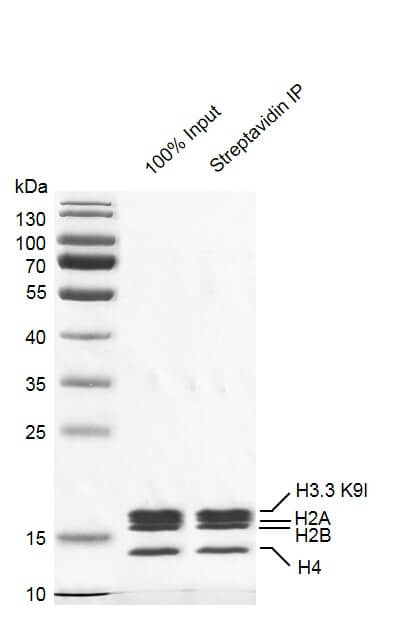
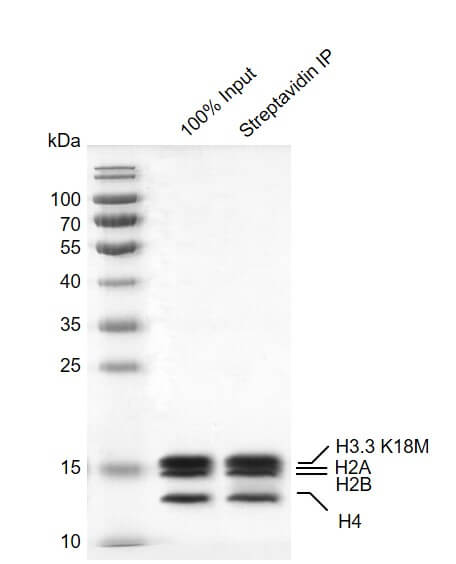
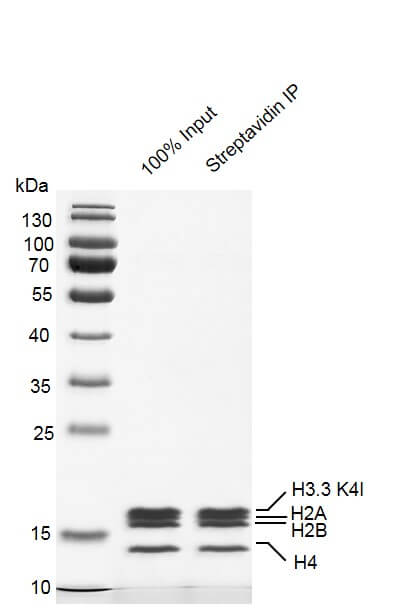
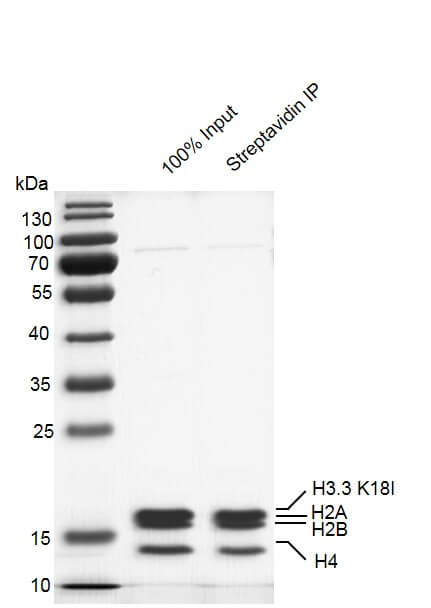
(Streptavidin pull down assay for Recombinant Mononucleosomes H3.3 (R8C) - biotin 24 ug biotinylated mononucleosomes were incubated with 10 ul streptavidin beads for 1 hr at 4 degree C. Streptavidin beads were washed 3 times with 1 ml binding buffer. Then the beads were added 60 ul 2×SDS loading buffer and boiled for 10 min at 95 degree C. 2.4 ul samples were loaded and run on a 12.5% SDS-PAGE gel and stained by Commassie blue. The SDS-PAGE gel result showed that almost all of biotinylated mononucleosomes were pulled down by streptavidin beads.)
SDS-PAGE
(Streptavidin pull down assay for Recombinant Mononucleosomes H3.3 (R8C) - biotin 24 ug biotinylated mononucleosomes were incubated with 10 ul streptavidin beads for 1 hr at 4 degree C. Streptavidin beads were washed 3 times with 1 ml binding buffer. Then the beads were added 60 ul 2×SDS loading buffer and boiled for 10 min at 95 degree C. 2.4 ul samples were loaded and run on a 12.5% SDS-PAGE gel and stained by Commassie blue. The SDS-PAGE gel result showed that almost all of biotinylated mononucleosomes were pulled down by streptavidin beads.)
Mononucleosomes H3.3 Recombinant Protein | H3.3 recombinant protein
Recombinant Mononucleosomes H3.3 (R8C)-biotin
Shipping Temp: Dry Ice
SDS-PAGE
(Streptavidin pull down assay for Recombinant Mononucleosomes H3.3 (R8C) - biotin 24 ug biotinylated mononucleosomes were incubated with 10 ul streptavidin beads for 1 hr at 4 degree C. Streptavidin beads were washed 3 times with 1 ml binding buffer. Then the beads were added 60 ul 2×SDS loading buffer and boiled for 10 min at 95 degree C. 2.4 ul samples were loaded and run on a 12.5% SDS-PAGE gel and stained by Commassie blue. The SDS-PAGE gel result showed that almost all of biotinylated mononucleosomes were pulled down by streptavidin beads.)
SDS-PAGE
(Streptavidin pull down assay for Recombinant Mononucleosomes H3.3 (R8C) - biotin 24 ug biotinylated mononucleosomes were incubated with 10 ul streptavidin beads for 1 hr at 4 degree C. Streptavidin beads were washed 3 times with 1 ml binding buffer. Then the beads were added 60 ul 2×SDS loading buffer and boiled for 10 min at 95 degree C. 2.4 ul samples were loaded and run on a 12.5% SDS-PAGE gel and stained by Commassie blue. The SDS-PAGE gel result showed that almost all of biotinylated mononucleosomes were pulled down by streptavidin beads.)
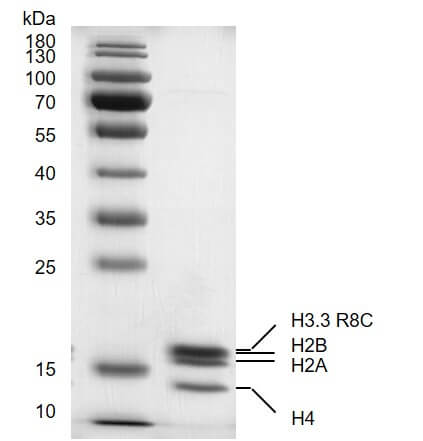
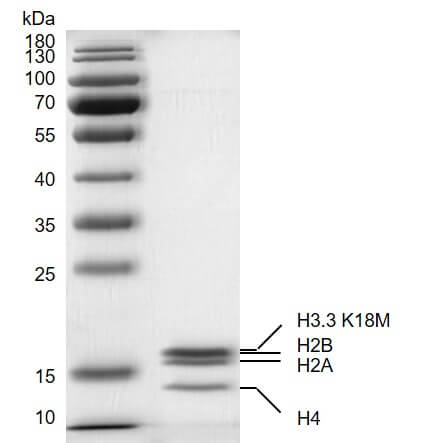
SDS-PAGE
(Recombinant Mononucleosomes H3.3 (R8C) - biotin, protein gel 12.5% SDS-PAGE gel with Coomassie blue staining MW: 108 kDa Purity: >92%)
SDS-PAGE
(Recombinant Mononucleosomes H3.3 (R8C) - biotin, protein gel 12.5% SDS-PAGE gel with Coomassie blue staining MW: 108 kDa Purity: >92%)
Application Data
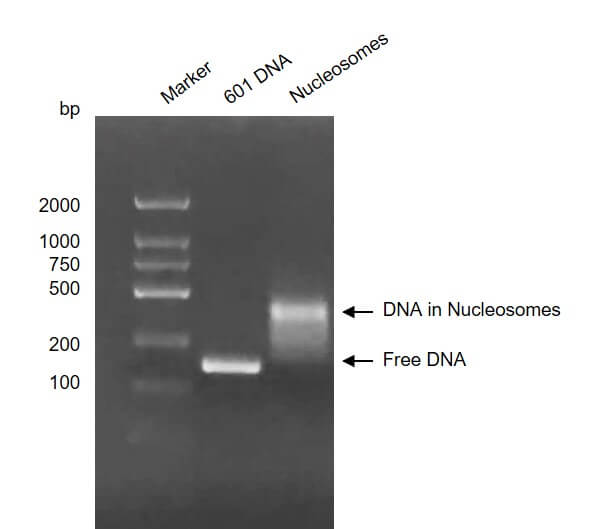
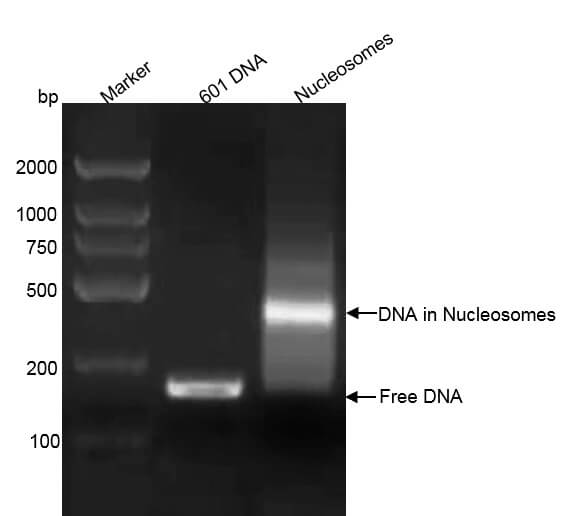
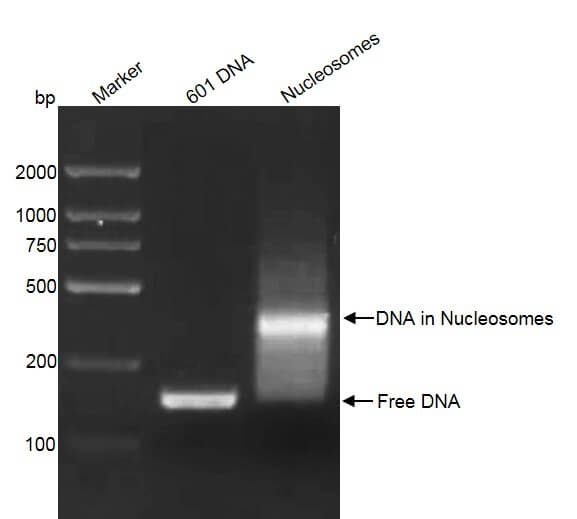
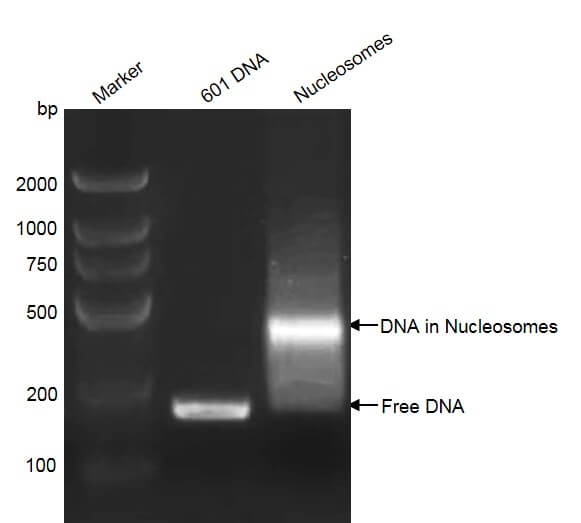
(Recombinant Mononucleosomes H3.3 (R8C) - biotin, DNA gel Recombinant Mononucleosomes H3.3 (R8C), biotin, were run on a 2 agarose gel and stained with ethidium bromide. Lane 1: DNA marker. Lane 2: Free 601 DNA which was used for assembly of nucleosome. Lane 3: Intact mononucleosomes H3.3 (R8C), biotin. Intact mononucleosomes H3.3 (R8C) migrated much higher than free 601 DNA. The agarose gel shows that almost all of 601 DNA wrapped histone octamers to form nucleosomes.)
Application Data
(Recombinant Mononucleosomes H3.3 (R8C) - biotin, DNA gel Recombinant Mononucleosomes H3.3 (R8C), biotin, were run on a 2 agarose gel and stained with ethidium bromide. Lane 1: DNA marker. Lane 2: Free 601 DNA which was used for assembly of nucleosome. Lane 3: Intact mononucleosomes H3.3 (R8C), biotin. Intact mononucleosomes H3.3 (R8C) migrated much higher than free 601 DNA. The agarose gel shows that almost all of 601 DNA wrapped histone octamers to form nucleosomes.)
Background: In vivo, histones are wrapped around by DNA in chromatin. Therefore, nucleosomes are more physiologically relevant substrates than histones and histone-derived peptides for in vitro studies. More importantly, some histone methyltransferases are signifcantly more active, as well as specifc, when using nucleosomal substrates in HMT assays, such as DOT1L and NSD family enzymes. Nucleosomes are also widely used in histone methyltransferase screening assays to identify small molecular inhibitors for drug discovery. Histone H3.1 and Histone H3.3 are the two main Histone H3 variants found in plants and animals. They are known to be important for gene regulation. Histone H3.1 and H3.3 have been shown to demonstrate unique genomic localization patterns thought to be associated with their specific functions in regulation of gene activity. Specifically, Histone H3.3 primarily colocalizes with marks associated with gene activation (H3K4me3, H2BK120ub1, and RNA pol II occupancy). Deposition of the Histone H3.1 variant into the nucleosome correlates with the canonical DNA synthesis-dependent deposition pathway, whereas Histone H3.3 primarily serves as the replacement Histone H3 variant outside of S-phase, such as during gene transcription. Histones are linked to tumorigenesis primarily through alterations in their PTMs and the enzymes regulating these modifications, suggesting that they might disrupt the reading, writing, and/or erasing of these marks. Except for being near K9, which can be methylated or acetylated, R8 site itself can be methylated too. Mutations in histone H3 occur with high genetic penetrance within rare paediatric gliomas and sarcomas. Researchers found that mutations at H3 N-terminal residues at or near PTM sites including R2, R8, K18 and R26 might act as oncohistones.
NCBI and Uniprot Product Information
Customer Reviews
Loading reviews...
Share Your Experience
Similar Products




Product Notes
The H3.3 h3f3a (Catalog #AAA60207) is a Recombinant Protein produced from E Coli and is intended for research purposes only. The product is available for immediate purchase. It is sometimes possible for the material contained within the vial of "Mononucleosomes H3.3, Recombinant Protein" to become dispersed throughout the inside of the vial, particularly around the seal of said vial, during shipment and storage. We always suggest centrifuging these vials to consolidate all of the liquid away from the lid and to the bottom of the vial prior to opening. Please be advised that certain products may require dry ice for shipping and that, if this is the case, an additional dry ice fee may also be required.Precautions
All products in the AAA Biotech catalog are strictly for research-use only, and are absolutely not suitable for use in any sort of medical, therapeutic, prophylactic, in-vivo, or diagnostic capacity. By purchasing a product from AAA Biotech, you are explicitly certifying that said products will be properly tested and used in line with industry standard. AAA Biotech and its authorized distribution partners reserve the right to refuse to fulfill any order if we have any indication that a purchaser may be intending to use a product outside of our accepted criteria.Disclaimer
Though we do strive to guarantee the information represented in this datasheet, AAA Biotech cannot be held responsible for any oversights or imprecisions. AAA Biotech reserves the right to adjust any aspect of this datasheet at any time and without notice. It is the responsibility of the customer to inform AAA Biotech of any product performance issues observed or experienced within 30 days of receipt of said product. To see additional details on this or any of our other policies, please see our Terms & Conditions page.Item has been added to Shopping Cart
If you are ready to order, navigate to Shopping Cart and get ready to checkout.