

 Application Data
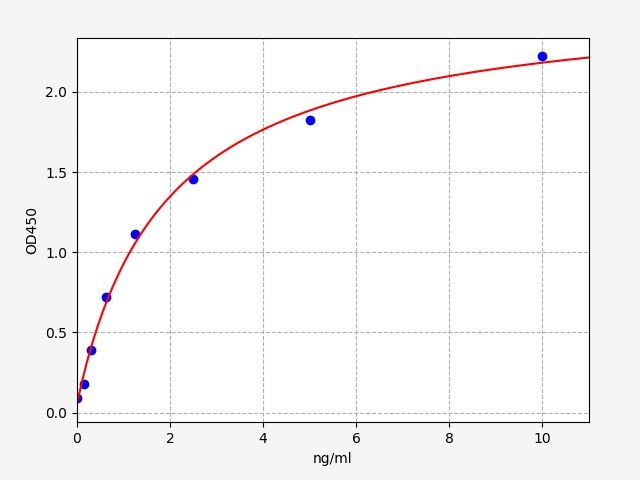
(Measured by its ability to neutralize Activin-mediated inhibition on MPC11 cell proliferation. The ED50 for this effect is typically 0.6-3 ug/mL in the presence of 10 ng/ml Recombinant Human Activin A.)
Application Data
(Measured by its ability to neutralize Activin-mediated inhibition on MPC11 cell proliferation. The ED50 for this effect is typically 0.6-3 ug/mL in the presence of 10 ng/ml Recombinant Human Activin A.)
ACVR2A active protein
ACVR2A Protein, Mouse, Recombinant (His Tag)
Gene Names
Acvr2a; Acvr2; ActrIIa; TactrII
Purity
>97% as determined by SDS-PAGE> 95% as determined by SEC-HPLC
Synonyms
ACVR2A; N/A; ACVR2A Protein, Mouse, Recombinant (His Tag); Mouse ACVR2A/ActrIIa Protein (His Tag); ActrIIa Protein, Mouse; Acvr2 Protein, Mouse; TactrII Protein, Mouse; activin A receptor, type IIA; ACVR2A active protein
Host
HEK293 Cells
Purity/Purification
>97% as determined by SDS-PAGE
> 95% as determined by SEC-HPLC
> 95% as determined by SEC-HPLC
Form/Format
Lyophilized from sterile PBS, pH7.4, 5% Trehalose, 5% Mannitol, 0.01% Tween-80
Sequence
Met1-Pro13 4
Source
Mouse
Activity
Measured by its ability to neutralize Activin-mediated inhibition on MPC11 cell proliferation. The ED50 for this effect is typically 0.6-3ug/mL in the presence of 10ng/mL Recombinant Human Activin A.
Endotoxin
<1.0EU per ug of the protein as determined by the LAL method
Predicted N Terminal
Ala 20
Tag
His
Protein Construction
A DNA sequence encoding the extracellular domain of mouse ACVR2A (NP_031422.3)(Met 1-Pro 134) was expressed, with a C-terminal polyhistidine tag.
Reconstitution
It is receommended that sterile water (400ul) be added to the vial to prepare a stock solution of 0.25mg/mL. Concentration is measured by UV-Vis.
Preparation and Storage
Store it under sterile conditions at -20 degree C to -80 degree C upon receiving. Recommend to aliquot the protein into smaller quantities for optimal storage. Avoid repeated freeze-thaw cycles.
Application Data
(Measured by its ability to neutralize Activin-mediated inhibition on MPC11 cell proliferation. The ED50 for this effect is typically 0.6-3 ug/mL in the presence of 10 ng/ml Recombinant Human Activin A.)
Application Data
(Measured by its ability to neutralize Activin-mediated inhibition on MPC11 cell proliferation. The ED50 for this effect is typically 0.6-3 ug/mL in the presence of 10 ng/ml Recombinant Human Activin A.)
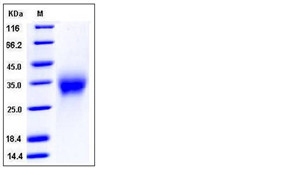
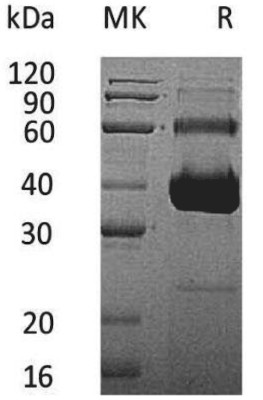
SDS-PAGE
SDS-PAGE
Related Product Information for ACVR2A active protein
Background: ACVR2A and ACVR2B are two activin type II receptors. ACVR2A has been shown to interact with INHBA, SYNJ2BP and ACVR1B. The bovine ACVR2A gene encodes a protein of 513 amino acids which is highly homologous (approximately 98% identity) to the rat, mouse, and human ACVR2A proteins. Inactivation of ACVR2A is a common event in prostate cancer cells suggesting it may play an important role in the development of prostate cancer. The ACVR2A gene is a putative tumor suppressor gene that is frequently mutated in microsatellite-unstable colon cancers (MSI-H colon cancers). Frameshift mutation of ACVR2A may contribute to MSI-H colon tumorigenesis via disruption of alternate TGF-beta effector pathways.
References
Albertson RC, et al. (2005) Zebrafish acvr2a and acvr2b exhibit distinct roles in craniofacial development. Developmental dynamics 233(4): 1405-18.Chung H, et al. (2008) Mutation rates of TGFBR2 and ACVR2 coding microsatellites in human cells with defective DNA mismatch repair. PloS one 3(10): e3463.Fitzpatrick E, et al. (2009) Genetic association of the activin A receptor gene (ACVR2A) and pre-eclampsia. Molecular human reproduction 15(3):195-204.Roten LT, et al. (2009) Association between the candidate susceptibility gene ACVR2A on chromosome 2q22 and pre-eclampsia in a large Norwegian population-based study (the HUNT study). EJHG. 17(2): 250-7.
NCBI and Uniprot Product Information
NCBI GI #
NCBI GeneID
NCBI Accession #
NCBI GenBank Nucleotide #
UniProt Accession #
Molecular Weight
The secreted recombinant mouse ACVR2A comprises 126 amino acids and has a calculated molecular mass of 14.8 kDa. As a result of glycosylation, the recombinant protein migrates as an approximately 35 kDa band in SDS-PAGE under reducing conditions.
NCBI Official Full Name
activin receptor type-2A
NCBI Official Synonym Full Names
activin receptor IIA
NCBI Official Symbol
Acvr2a
NCBI Official Synonym Symbols
Acvr2; ActrIIa; TactrII
NCBI Protein Information
activin receptor type-2A
UniProt Protein Name
Activin receptor type-2A
UniProt Gene Name
Acvr2a
UniProt Synonym Gene Names
Acvr2; ACTR-IIA
UniProt Entry Name
AVR2A_MOUSE
Customer Reviews
Loading reviews...
Share Your Experience
Similar Products


Product Notes
The ACVR2A acvr2a (Catalog #AAA258185) is an Active Protein produced from HEK293 Cells and is intended for research purposes only. The product is available for immediate purchase. The amino acid sequence is listed below: Met1-Pro13 4. It is sometimes possible for the material contained within the vial of "ACVR2A, Active Protein" to become dispersed throughout the inside of the vial, particularly around the seal of said vial, during shipment and storage. We always suggest centrifuging these vials to consolidate all of the liquid away from the lid and to the bottom of the vial prior to opening. Please be advised that certain products may require dry ice for shipping and that, if this is the case, an additional dry ice fee may also be required.Precautions
All products in the AAA Biotech catalog are strictly for research-use only, and are absolutely not suitable for use in any sort of medical, therapeutic, prophylactic, in-vivo, or diagnostic capacity. By purchasing a product from AAA Biotech, you are explicitly certifying that said products will be properly tested and used in line with industry standard. AAA Biotech and its authorized distribution partners reserve the right to refuse to fulfill any order if we have any indication that a purchaser may be intending to use a product outside of our accepted criteria.Disclaimer
Though we do strive to guarantee the information represented in this datasheet, AAA Biotech cannot be held responsible for any oversights or imprecisions. AAA Biotech reserves the right to adjust any aspect of this datasheet at any time and without notice. It is the responsibility of the customer to inform AAA Biotech of any product performance issues observed or experienced within 30 days of receipt of said product. To see additional details on this or any of our other policies, please see our Terms & Conditions page.Item has been added to Shopping Cart
If you are ready to order, navigate to Shopping Cart and get ready to checkout.