
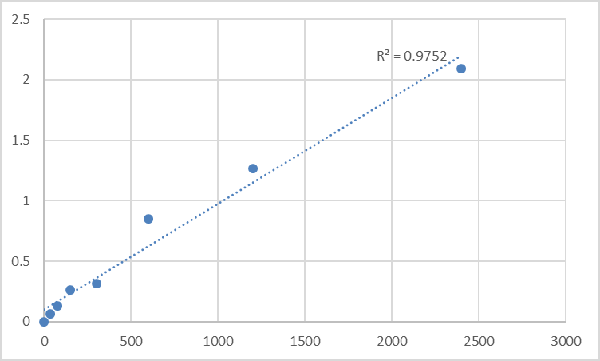
 Standard Curve (Sample)
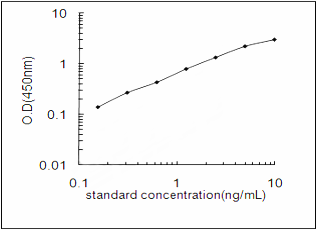
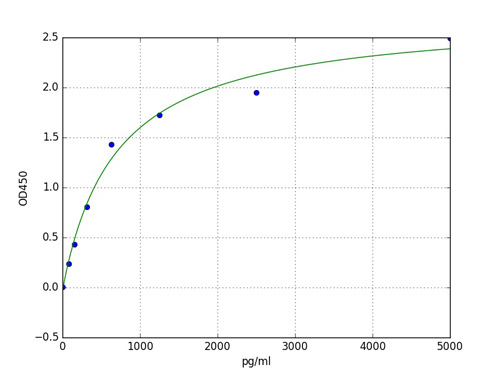
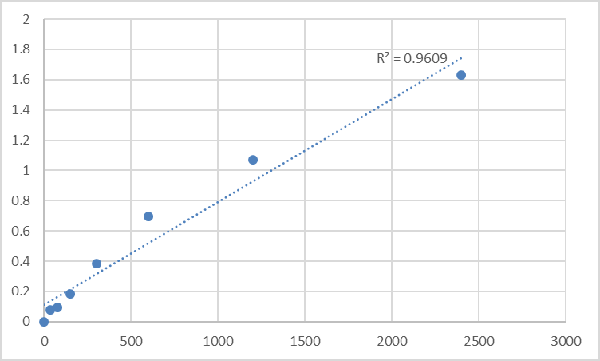
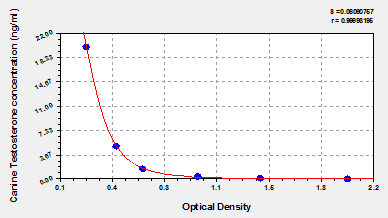
(Fig.1. Human Malignant T cell-amplified sequence 1 (MCTS1) Standard Curve.)
Standard Curve (Sample)
(Fig.1. Human Malignant T cell-amplified sequence 1 (MCTS1) Standard Curve.)
Human Malignant T Cell-Amplified Sequence 1 (MCTS1) ELISA Kit | MCTS1 elisa kit
Human Malignant T Cell-Amplified Sequence 1 (MCTS1) ELISA Kit
Gene Names
MCTS1; MCT1; MCT-1
Reactivity
Human
Synonyms
Malignant T Cell-Amplified Sequence 1 (MCTS1); N/A; Human Malignant T Cell-Amplified Sequence 1 (MCTS1) ELISA Kit; MCTS1; FLJ39637; MCT-1; MCT1; MCTS1 elisa kit
Reactivity
Human
Specificity
Human Malignant T cell-amplified sequence 1 (MCTS1) ELISA Kit has high sensitivity and excellent specificity for detection of Human MCTS1. No significant cross-reactivity or interference between Human MCTS1 and analogues was observed.
Sequence Length
182
Assay Type
Sandwich ELISA (Quantitative)
Samples
Cell Culture Supernatants, Serum, Plasma, Other Biological Fluids
Detection Method
Colorimetric
Usage Notes
* Do not mix components from different kit lots or use reagents beyond the kit expiration date.
* Allow all reagents to warm to room temperature for at least 30 minutes before opening.
* Pre-rinse the pipet tip with reagent, use fresh pipet tips for each sample, standard and reagent to avoid contamination.
* Unused wells must be kept desiccated at 4 degree C in the sealed bag provided.
* Mix Thoroughly is very important for the result. It is recommended using low frequency oscillator or slight hand shaking every 10 minutes.
* It is recommended that all samples and standards be assayed in duplicate or triplicate.
* Allow all reagents to warm to room temperature for at least 30 minutes before opening.
* Pre-rinse the pipet tip with reagent, use fresh pipet tips for each sample, standard and reagent to avoid contamination.
* Unused wells must be kept desiccated at 4 degree C in the sealed bag provided.
* Mix Thoroughly is very important for the result. It is recommended using low frequency oscillator or slight hand shaking every 10 minutes.
* It is recommended that all samples and standards be assayed in duplicate or triplicate.
Preparation and Storage
Store at 2-8 degree C.
Standard Curve (Sample)
(Fig.1. Human Malignant T cell-amplified sequence 1 (MCTS1) Standard Curve.)
Standard Curve (Sample)
(Fig.1. Human Malignant T cell-amplified sequence 1 (MCTS1) Standard Curve.)
Related Product Information for MCTS1 elisa kit
Description: This Human Malignant T cell-amplified sequence 1 (MCTS1) ELISA Kit employs a two-site sandwich ELISA to quantitate MCTS1 in samples. An antibody specific for MCTS1 has been pre-coated onto a microplate. Standards and samples are pipetted into the wells and any MCTS1 present is bound by the immobilized antibody. After removing any unbound substances, a biotin-conjugated antibody specific for MCTS1 is added to the wells. After washing, Streptavidin conjugated Horseradish Peroxidase (HRP) is added to the wells. Following a wash to remove any unbound avidin-enzyme reagent, a substrate solution is added to the wells and color develops in proportion to the amount of MCTS1 bound in the initial step. The color development is stopped and the intensity of the color is measured.
Background: MCTS1 (MCTS1, Re-Initiation And Release Factor) is a Protein Coding gene. GO annotations related to this gene include RNA binding and translation initiation factor activity. Anti-oncogene that plays a role in cell cycle regulation; decreases cell doubling time and anchorage-dependent growth; shortens the duration of G1 transit time and G1/S transition. When constituvely expressed, increases CDK4 and CDK6 kinases activity and CCND1/cyclin D1 protein level, as well as G1 cyclin/CDK complex formation. Involved in translation initiation; promotes recruitment of aminoacetyled initiator tRNA to P site of 40S ribosomes. Can promote release of deacylated tRNA and mRNA from recycled 40S subunits following ABCE1-mediated dissociation of post-termination ribosomal complexes into subunits. Plays a role as translation enhancer; recruits the density-regulated protein/DENR and binds to the cap complex of the 5-terminus of mRNAs, subsequently altering the mRNA translation profile; up-regulates protein levels of BCL2L2, TFDP1, MRE11A, CCND1 and E2F1, while mRNA levels remains constant. Hyperactivates DNA damage signaling pathway; increased gamma-irradiation-induced phosphorylation of histone H2AX, and induces damage foci formation. Increases the overall number of chromosomal abnormalities such as larger chromosomes formation and multiples chromosomal fusions when overexpressed in gamma-irradiated cells. May play a role in promoting lymphoid tumor development: lymphoid cell lines overexpressing MCTS1 exhibit increased growth rates and display increased protection against apoptosis. May contribute to the pathogenesis and progression of breast cancer via promotion of angiogenesis through the decline of inhibitory THBS1/thrombospondin-1, and inhibition of apoptosis. Involved in the process of proteasome degradation to down-regulate Tumor suppressor p53/TP53 in breast cancer cell; Positively regulates phosphorylation of MAPK1 and MAPK3. Involved in translation initiation; promotes aminoacetyled initiator tRNA to P site of 40S ribosomes. Can promote release of deacylated tRNA and mRNA from recycled 40S subunits following ABCE1-mediated dissociation of post-termination ribosomal complexes into subunits.
Background: MCTS1 (MCTS1, Re-Initiation And Release Factor) is a Protein Coding gene. GO annotations related to this gene include RNA binding and translation initiation factor activity. Anti-oncogene that plays a role in cell cycle regulation; decreases cell doubling time and anchorage-dependent growth; shortens the duration of G1 transit time and G1/S transition. When constituvely expressed, increases CDK4 and CDK6 kinases activity and CCND1/cyclin D1 protein level, as well as G1 cyclin/CDK complex formation. Involved in translation initiation; promotes recruitment of aminoacetyled initiator tRNA to P site of 40S ribosomes. Can promote release of deacylated tRNA and mRNA from recycled 40S subunits following ABCE1-mediated dissociation of post-termination ribosomal complexes into subunits. Plays a role as translation enhancer; recruits the density-regulated protein/DENR and binds to the cap complex of the 5-terminus of mRNAs, subsequently altering the mRNA translation profile; up-regulates protein levels of BCL2L2, TFDP1, MRE11A, CCND1 and E2F1, while mRNA levels remains constant. Hyperactivates DNA damage signaling pathway; increased gamma-irradiation-induced phosphorylation of histone H2AX, and induces damage foci formation. Increases the overall number of chromosomal abnormalities such as larger chromosomes formation and multiples chromosomal fusions when overexpressed in gamma-irradiated cells. May play a role in promoting lymphoid tumor development: lymphoid cell lines overexpressing MCTS1 exhibit increased growth rates and display increased protection against apoptosis. May contribute to the pathogenesis and progression of breast cancer via promotion of angiogenesis through the decline of inhibitory THBS1/thrombospondin-1, and inhibition of apoptosis. Involved in the process of proteasome degradation to down-regulate Tumor suppressor p53/TP53 in breast cancer cell; Positively regulates phosphorylation of MAPK1 and MAPK3. Involved in translation initiation; promotes aminoacetyled initiator tRNA to P site of 40S ribosomes. Can promote release of deacylated tRNA and mRNA from recycled 40S subunits following ABCE1-mediated dissociation of post-termination ribosomal complexes into subunits.
NCBI and Uniprot Product Information
NCBI GI #
NCBI GeneID
NCBI Accession #
NCBI GenBank Nucleotide #
UniProt Accession #
NCBI Official Full Name
malignant T-cell-amplified sequence 1 isoform 2
NCBI Official Synonym Full Names
MCTS1 re-initiation and release factor
NCBI Official Symbol
MCTS1
NCBI Official Synonym Symbols
MCT1; MCT-1
NCBI Protein Information
malignant T-cell-amplified sequence 1
UniProt Protein Name
Malignant T-cell-amplified sequence 1
UniProt Gene Name
MCTS1
UniProt Synonym Gene Names
MCT1; MCT-1
UniProt Entry Name
MCTS1_HUMAN
Customer Reviews
Loading reviews...
Share Your Experience
Similar Products



Product Notes
The Human MCTS1 mcts1 (Catalog #AAA331834) is an ELISA Kit and is intended for research purposes only. The product is available for immediate purchase. The AAA331834 ELISA Kit recognizes Human MCTS1. It is sometimes possible for the material contained within the vial of "Malignant T Cell-Amplified Sequence 1 (MCTS1), ELISA Kit" to become dispersed throughout the inside of the vial, particularly around the seal of said vial, during shipment and storage. We always suggest centrifuging these vials to consolidate all of the liquid away from the lid and to the bottom of the vial prior to opening. Please be advised that certain products may require dry ice for shipping and that, if this is the case, an additional dry ice fee may also be required.Precautions
All products in the AAA Biotech catalog are strictly for research-use only, and are absolutely not suitable for use in any sort of medical, therapeutic, prophylactic, in-vivo, or diagnostic capacity. By purchasing a product from AAA Biotech, you are explicitly certifying that said products will be properly tested and used in line with industry standard. AAA Biotech and its authorized distribution partners reserve the right to refuse to fulfill any order if we have any indication that a purchaser may be intending to use a product outside of our accepted criteria.Disclaimer
Though we do strive to guarantee the information represented in this datasheet, AAA Biotech cannot be held responsible for any oversights or imprecisions. AAA Biotech reserves the right to adjust any aspect of this datasheet at any time and without notice. It is the responsibility of the customer to inform AAA Biotech of any product performance issues observed or experienced within 30 days of receipt of said product. To see additional details on this or any of our other policies, please see our Terms & Conditions page.Item has been added to Shopping Cart
If you are ready to order, navigate to Shopping Cart and get ready to checkout.