
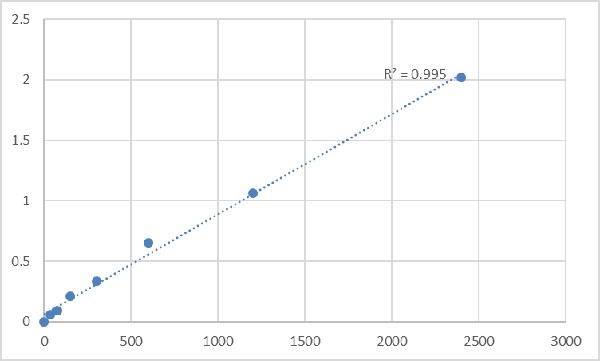
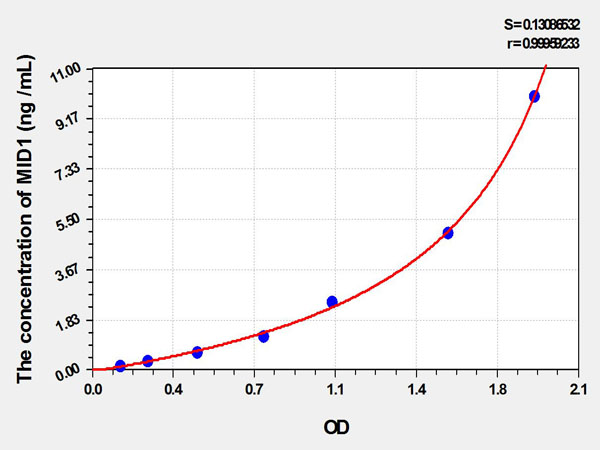
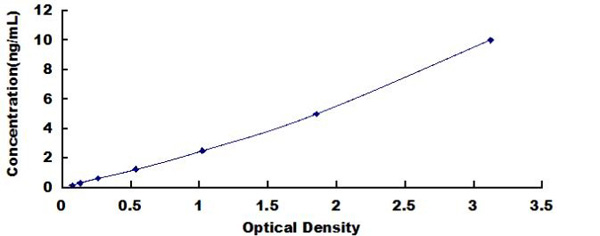
 Standard Curve (Sample)
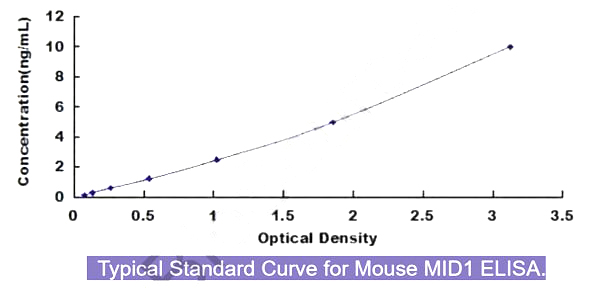
(Fig.1. Human Midline-1 (MID1) Standard Curve.)
Standard Curve (Sample)
(Fig.1. Human Midline-1 (MID1) Standard Curve.)
Human Midline-1 (MID1) ELISA Kit | MID1 elisa kit
Human Midline-1 (MID1) ELISA Kit
Gene Names
MID1; OS; FXY; OSX; OGS1; XPRF; BBBG1; GBBB1; MIDIN; RNF59; ZNFXY; TRIM18
Reactivity
Human
Synonyms
Midline-1 (MID1); N/A; Human Midline-1 (MID1) ELISA Kit; MID1; BBBG1; FXY; GBBB1; MIDIN; OGS1; OS; OSX; RNF59; TRIM18; XPRF; ZNFXY; OTTHUMP00000022896; OTTHUMP00000022898; OTTHUMP00000022900; OTTHUMP00000022901; midline 1; midline 1 ring finger; putative transcriptio; MID1 elisa kit
Reactivity
Human
Specificity
Human Midline-1 (MID1) ELISA Kit has high sensitivity and excellent specificity for detection of Human MID1. No significant cross-reactivity or interference between Human MID1 and analogues was observed.
Sequence Length
667
Assay Type
Sandwich ELISA (Quantitative)
Samples
Cell Culture Supernatants, Serum, Plasma, Other Biological Fluids
Detection Method
Colorimetric
Usage Notes
* Do not mix components from different kit lots or use reagents beyond the kit expiration date.
* Allow all reagents to warm to room temperature for at least 30 minutes before opening.
* Pre-rinse the pipet tip with reagent, use fresh pipet tips for each sample, standard and reagent to avoid contamination.
* Unused wells must be kept desiccated at 4 degree C in the sealed bag provided.
* Mix Thoroughly is very important for the result. It is recommended using low frequency oscillator or slight hand shaking every 10 minutes.
* It is recommended that all samples and standards be assayed in duplicate or triplicate.
* Allow all reagents to warm to room temperature for at least 30 minutes before opening.
* Pre-rinse the pipet tip with reagent, use fresh pipet tips for each sample, standard and reagent to avoid contamination.
* Unused wells must be kept desiccated at 4 degree C in the sealed bag provided.
* Mix Thoroughly is very important for the result. It is recommended using low frequency oscillator or slight hand shaking every 10 minutes.
* It is recommended that all samples and standards be assayed in duplicate or triplicate.
Preparation and Storage
Store at 2-8 degree C.
Standard Curve (Sample)
(Fig.1. Human Midline-1 (MID1) Standard Curve.)
Standard Curve (Sample)
(Fig.1. Human Midline-1 (MID1) Standard Curve.)
Related Product Information for MID1 elisa kit
Description: This Human Midline-1 (MID1) ELISA Kit employs a two-site sandwich ELISA to quantitate MID1 in samples. An antibody specific for MID1 has been pre-coated onto a microplate. Standards and samples are pipetted into the wells and any MID1 present is bound by the immobilized antibody. After removing any unbound substances, a biotin-conjugated antibody specific for MID1 is added to the wells. After washing, Streptavidin conjugated Horseradish Peroxidase (HRP) is added to the wells. Following a wash to remove any unbound avidin-enzyme reagent, a substrate solution is added to the wells and color develops in proportion to the amount of MID1 bound in the initial step. The color development is stopped and the intensity of the color is measured.
Background: Midline-1 encoded by MID1 is a member of the tripartite motif (TRIM) family, also known as the 'RING-B box-coiled coil' (RBCC) subgroup of RING finger proteins. The TRIM motif includes three zinc-binding domains, a RING, a B-box type 1 and a B-box type 2, and a coiled-coil region. This protein forms homodimers which associate with microtubules in the cytoplasm. The protein is likely involved in the formation of multiprotein structures acting as anchor points to microtubules. Mutations in MID1 have been associated with the X-linked form of Opitz syndrome, which is characterized by midline abnormalities such as cleft lip, laryngeal cleft, heart defects, hypospadias, and agenesis of the corpus callosum. MID1 was also the first example of a gene subject to X inactivation in human while escaping it in mouse. Alternative promoter use, alternative splicing and alternative polyadenylation result in multiple transcript variants that have different tissue specificities.
Background: Midline-1 encoded by MID1 is a member of the tripartite motif (TRIM) family, also known as the 'RING-B box-coiled coil' (RBCC) subgroup of RING finger proteins. The TRIM motif includes three zinc-binding domains, a RING, a B-box type 1 and a B-box type 2, and a coiled-coil region. This protein forms homodimers which associate with microtubules in the cytoplasm. The protein is likely involved in the formation of multiprotein structures acting as anchor points to microtubules. Mutations in MID1 have been associated with the X-linked form of Opitz syndrome, which is characterized by midline abnormalities such as cleft lip, laryngeal cleft, heart defects, hypospadias, and agenesis of the corpus callosum. MID1 was also the first example of a gene subject to X inactivation in human while escaping it in mouse. Alternative promoter use, alternative splicing and alternative polyadenylation result in multiple transcript variants that have different tissue specificities.
NCBI and Uniprot Product Information
NCBI GI #
NCBI GeneID
NCBI Accession #
NCBI GenBank Nucleotide #
UniProt Accession #
NCBI Official Full Name
E3 ubiquitin-protein ligase Midline-1 isoform 1
NCBI Official Synonym Full Names
midline 1
NCBI Official Symbol
MID1
NCBI Official Synonym Symbols
OS; FXY; OSX; OGS1; XPRF; BBBG1; GBBB1; MIDIN; RNF59; ZNFXY; TRIM18
NCBI Protein Information
E3 ubiquitin-protein ligase Midline-1
UniProt Protein Name
Midline-1
UniProt Gene Name
MID1
UniProt Synonym Gene Names
FXY; RNF59; TRIM18; XPRF
UniProt Entry Name
TRI18_HUMAN
Customer Reviews
Loading reviews...
Share Your Experience
Similar Products

Product Notes
The Human MID1 mid1 (Catalog #AAA331777) is an ELISA Kit and is intended for research purposes only. The product is available for immediate purchase. The AAA331777 ELISA Kit recognizes Human MID1. It is sometimes possible for the material contained within the vial of "Midline-1 (MID1), ELISA Kit" to become dispersed throughout the inside of the vial, particularly around the seal of said vial, during shipment and storage. We always suggest centrifuging these vials to consolidate all of the liquid away from the lid and to the bottom of the vial prior to opening. Please be advised that certain products may require dry ice for shipping and that, if this is the case, an additional dry ice fee may also be required.Precautions
All products in the AAA Biotech catalog are strictly for research-use only, and are absolutely not suitable for use in any sort of medical, therapeutic, prophylactic, in-vivo, or diagnostic capacity. By purchasing a product from AAA Biotech, you are explicitly certifying that said products will be properly tested and used in line with industry standard. AAA Biotech and its authorized distribution partners reserve the right to refuse to fulfill any order if we have any indication that a purchaser may be intending to use a product outside of our accepted criteria.Disclaimer
Though we do strive to guarantee the information represented in this datasheet, AAA Biotech cannot be held responsible for any oversights or imprecisions. AAA Biotech reserves the right to adjust any aspect of this datasheet at any time and without notice. It is the responsibility of the customer to inform AAA Biotech of any product performance issues observed or experienced within 30 days of receipt of said product. To see additional details on this or any of our other policies, please see our Terms & Conditions page.Item has been added to Shopping Cart
If you are ready to order, navigate to Shopping Cart and get ready to checkout.