
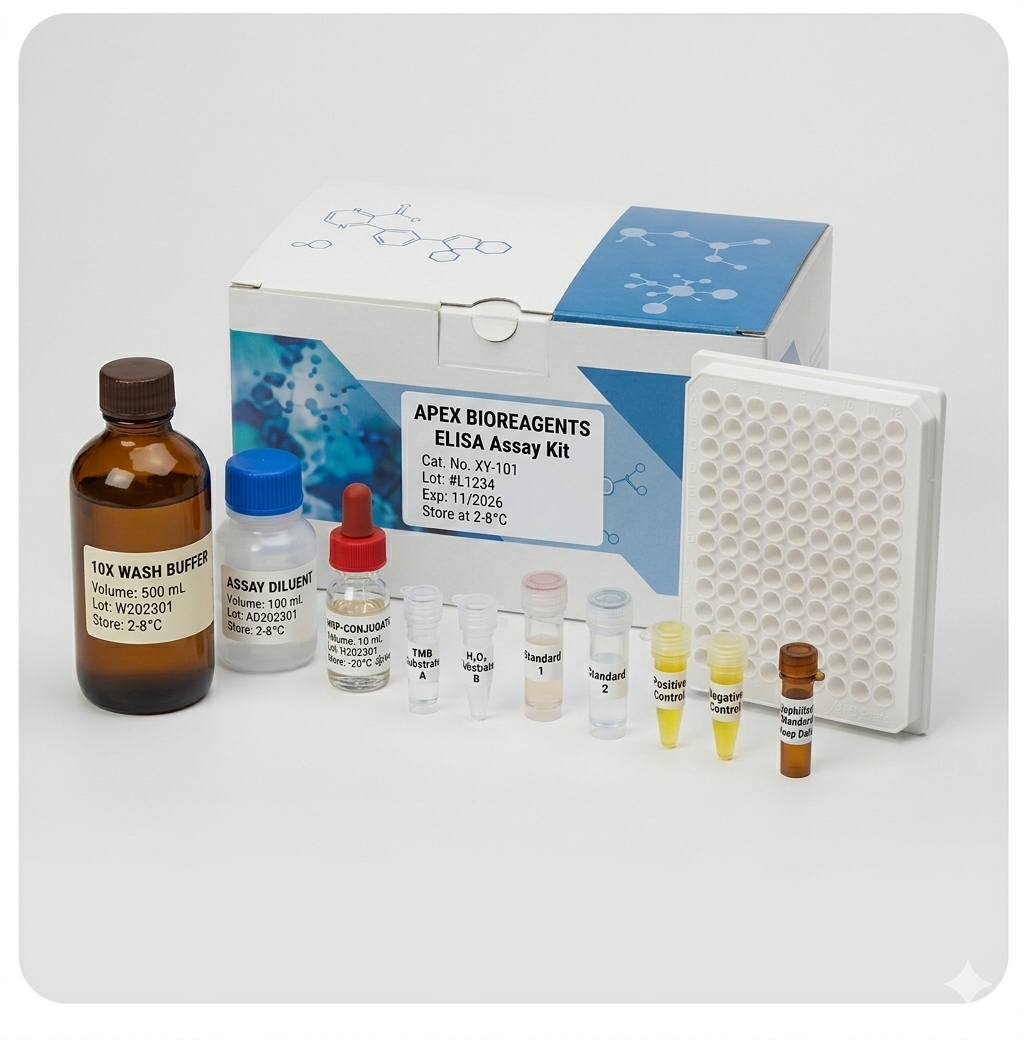
JAK/STAT Pathway Assay Kit | JAK/STAT assay kit
JAK/STAT Pathway Sampler Kit
Reactivity
Human , Mouse , Rat
Synonyms
JAK/STAT Pathway; N/A; JAK/STAT Pathway Sampler Kit; JAK/STAT assay kit
Reactivity
Human , Mouse , Rat
Source
Rabbit
Related Product Information for JAK/STAT assay kit
Background: The serine-threonine protein kinase encoded by the AKT1 gene is catalytically inactive in serum-starved primary and immortalized fibroblasts. AKT1 and the related AKT2 are activated by platelet-derived growth factor. The activation is rapid and specific, and it is abrogated by mutations in the pleckstrin homology domain of AKT1. It was shown that the activation occurs through phosphatidylinositol 3-kinase. In the developing nervous system AKT is a critical mediator of growth factor-induced neuronal survival. Survival factors can suppress apoptosis in a transcription-independent manner by activating the serine/threonine kinase AKT1, which then phosphorylates and inactivates components of the apoptotic machinery. Multiple alternatively spliced transcript variants have been found for this gene. General protein kinase capable of phosphorylating several known proteins. Phosphorylates TBC1D4. Signals downstream of phosphatidylinositol 3-kinase (PI(3)K) to mediate the effects of various growth factors such as platelet-derived growth factor (PDGF), epidermal growth factor (EGF), insulin and insulin-like growth factor I (IGF-I). Plays a role in glucose transport by mediating insulin-induced translocation of the GLUT4 glucose transporter to the cell surface. Mediates the antiapoptotic effects of IGF-I. Mediates insulin-stimulated protein synthesis by phosphorylating TSC2 at 'Ser-939' and 'Thr-1462', thereby activating mTORC1 signaling and leading to both phosphorylation of 4E-BP1 and in activation of RPS6KB1. Promotes glycogen synthesis by mediating the insulin-induced activation of glycogen synthase. Akt (Protein kinase B, PKB) is a serine/threonine kinase that plays a key in regulating cell survival, insulin signaling, angiogenesis and tumor formation. Akt is a downstream mediator of the PI 3-K pathway, resulting in the recruitment of Akt to the plasma membrane via the PH (plexstrin homology domain) of Akt. Akt is fully activated by phosphorylation at two key sites: Ser308 (phosphorylated by PDK1) and Thr478 (phosphorylated by mTOR and DNA-PK). Akt can then phosphorylated a wide range of substrates including transcription factors (e.g. FOXO1), kinases (GSK-3, Raf-1, ASK, Chk1) and other proteins with important signaling roles (e.g. Bad, MDM2). There are three isoforms of Akt; Akt 1, 2 and 3 (also known as PKBalpha, beta and gamma). Phosphorylation of AKT on Thr-308, Ser-473 and Tyr-474 is required for full activity. Ser-473 phosphorylation by mTORC2 favors, Thr-308 phosphorylation by PDPK1. Ser-473 phosphorylation is enhanced by interaction with AGAP2 isoform 2 (PIKE-A). Ser-473 phosphorylation is enhanced in focal cortical dysplasias with Taylor-type balloon cells.
Janus kinase 1 (JAK1), is a member of a new class of protein-tyrosine kinases (PTK) characterized by the presence of a second phosphotransferase-related domain immediately N-terminal to the PTK domain. The second phosphotransferase domain bears all the hallmarks of a protein kinase, although its structure differs significantly from that of the PTK and threonine/serine kinase family members. JAK1 is a large, widely expressed membrane-associated phosphoprotein. JAK1 is involved in the interferonalpha/beta and -gamma signal transduction pathways. The reciprocal interdependence between JAK1 and TYK2 activities in the interferon-alpha pathway, and between JAK1 and JAK2 in the interferon-gamma pathway, may reflect a requirement for these kinases in the correct assembly of interferon receptor complexes. These kinases couple cytokine ligand binding to tyrosine phosphorylation of various known signaling proteins and of a unique family of transcription factors termed the signal transducers and activators of transcription, or STATs. Tyrosine kinase of the non-receptor type, involved in the IFN-alpha/beta/gamma signal pathway. Kinase partner for the interleukin (IL)-2 receptor.
JAKs (or Janus kinases) are a family of tyrosine kinases that associated with cytokine receptors. Upon receptor activation JAKs phosphorylate the transcription factors known as STATs and initiate the JAK-STAT signaling pathway. Four JAK family members have been identified (JAK1, JAK2, JAK3 and Tyk2), which share a similar protein domain structure: a kinase domain, a regulatory pseudo-kinase domain, a SH2 domain and a FERM domain. The FERM domain of JAK family members mediates the association of JAK with other enzymes and cytokine receptors. The JAK Tyk2 associates with the IFN-1, IL-6, 10, 12, and 23 cytokine receptor families. JAK1 mediates signals from IFN-alpha, beta, gamma and IL-2, 6 receptors. JAK2 transduces signals from the single chain and IL-3 cytokine receptor families, and from the IFN-gamma receptors. JAK3 associates with the IL-2 receptor gamma-chain.
STAT1 is a member of the STAT protein family. In response to cytokines and growth factors, STAT family members are phosphorylated by the receptor associated kinases, and then form homo- or heterodimers that translocate to the cell nucleus where they act as transcription activators. This protein can be activated by various ligands including interferon-alpha, interferon-gamma, EGF, PDGF and IL6. This protein mediates the expression of a variety of genes, which is thought to be important for cell viability in response to different cell stimuli and pathogens. Two alternatively spliced transcript variants encoding distinct isoforms have been described. Signal transducer and activator of transcription that mediates signaling by interferons (IFNs). Following type I IFN (IFN-alpha and IFN-beta) binding to cell surface receptors, Jak kinases (TYK2 and JAK1) are activated, leading to tyrosine phosphorylation of STAT1 and STAT2. The phosphorylated STATs dimerize, associate with ISGF3G/IRF-9 to form a complex termed ISGF3 transcription factor, that enters the nucleus. ISGF3 binds to the IFN stimulated response element (ISRE) to activate the transcription of interferon stimulated genes which drive the cell in an antiviral state. In response to type II IFN (IFN-gamma), STAT1 is tyrosine- and serine-phosphorylated. It then forms a homodimer termed IFN-gamma-activated factor (GAF), migrates into the nucleus and binds to the IFN gamma activated sequence (GAS) to drive the expression of the target genes, inducing a cellular antiviral state.
STAT3 is a member of the STAT protein family. In response to cytokines and growth factors, STAT family members are phosphorylated by the receptor associated kinases, and then form homo- or heterodimers that translocate to the cell nucleus where they act as transcription activators. This protein is activated through phosphorylation in response to various cytokines and growth factors including IFNs, EGF, IL5, IL6, HGF, LIF and BMP2. This protein mediates the expression of a variety of genes in response to cell stimuli, and thus plays a key role in many cellular processes such as cell growth and apoptosis. The small GTPase Rac1 has been shown to bind and regulate the activity of this protein. PIAS3 protein is a specific inhibitor of this protein. Three alternatively spliced transcript variants encoding distinct isoforms have been described. Transcription factor that binds to the interleukin-6 (IL-6)-responsive elements identified in the promoters of various acute-phase protein genes. Activated by IL31 through IL31RA.
STATs (signal transducers and activators of transcription) are a family of 7 transcription factors that form part of the JAK-STAT signaling cascade. This cascade is the basis of the signal transduction mechanism for many cytokine receptors. Once activated by phosphorylation by JAKs, STATs translocate to the nucleus. Accumulation of STATs in the nucleus is both rapid and tightly controlled. A number of factors regulate the JAK-STAT pathway including STAT dephosphorylation by phosphatases, altered nuclear import-export dynamics of STAT, and STAT gene activation antagonists such as SOCS (suppressors of cytokine signaling) and PIAS (Protein Inhibitors of Activated STATs).
SRC may play a role in the regulation of embryonic development and cell growth. The protein encoded by this gene is a tyrosine-protein kinase whose activity can be inhibited by phosphorylation by c-SRC kinase. Mutations in this gene could be involved in the malignant progression of colon cancer. Two transcript variants encoding the same protein have been found for this gene. Src kinases consist of eight non-receptor tyrosine kinases (Src, Fyn, Yes, Lck, Lyn, Hck, Fgr and Blk) that interact with the intracellular domains of growth factor/cytokine receptors, GPCRs and integrins. Members of the Src kinase family have a very similar domain structure with a high degree of homology in the SH1 (catalytic), linker, SH2 (p-Tyr binding), SH3 (protein-protein interaction) and SH4 (membrane association) domains. c-Src, Fyn and Yes are ubiquitously expressed, although high levels of c-Src are found in platelets, neural tissue and osteoclasts. For c-Src, autophosphorylation of Tyr418 and dephosphorylation of Tyr530 is required to switch the kinase from the inactive closed formation to the active open formation. c-Src can be inactivated by two kinases, c-Src kinase (CSK) and CSK homologous kinase (CHK), both of which phosphorylate Tyr530 of c-Src. The activity of the Src kinase family can also be regulated by phosphatases (e.g. SHP1), binding to adaptor proteins (e.g. Cbp) and proteasomal degradation. Src kinases are key upstream mediators of both the PI 3-K and MAPK signaling pathways, and have been shown to have important roles in cell proliferation, migration and survival.
Janus kinase 1 (JAK1), is a member of a new class of protein-tyrosine kinases (PTK) characterized by the presence of a second phosphotransferase-related domain immediately N-terminal to the PTK domain. The second phosphotransferase domain bears all the hallmarks of a protein kinase, although its structure differs significantly from that of the PTK and threonine/serine kinase family members. JAK1 is a large, widely expressed membrane-associated phosphoprotein. JAK1 is involved in the interferonalpha/beta and -gamma signal transduction pathways. The reciprocal interdependence between JAK1 and TYK2 activities in the interferon-alpha pathway, and between JAK1 and JAK2 in the interferon-gamma pathway, may reflect a requirement for these kinases in the correct assembly of interferon receptor complexes. These kinases couple cytokine ligand binding to tyrosine phosphorylation of various known signaling proteins and of a unique family of transcription factors termed the signal transducers and activators of transcription, or STATs. Tyrosine kinase of the non-receptor type, involved in the IFN-alpha/beta/gamma signal pathway. Kinase partner for the interleukin (IL)-2 receptor.
JAKs (or Janus kinases) are a family of tyrosine kinases that associated with cytokine receptors. Upon receptor activation JAKs phosphorylate the transcription factors known as STATs and initiate the JAK-STAT signaling pathway. Four JAK family members have been identified (JAK1, JAK2, JAK3 and Tyk2), which share a similar protein domain structure: a kinase domain, a regulatory pseudo-kinase domain, a SH2 domain and a FERM domain. The FERM domain of JAK family members mediates the association of JAK with other enzymes and cytokine receptors. The JAK Tyk2 associates with the IFN-1, IL-6, 10, 12, and 23 cytokine receptor families. JAK1 mediates signals from IFN-alpha, beta, gamma and IL-2, 6 receptors. JAK2 transduces signals from the single chain and IL-3 cytokine receptor families, and from the IFN-gamma receptors. JAK3 associates with the IL-2 receptor gamma-chain.
STAT1 is a member of the STAT protein family. In response to cytokines and growth factors, STAT family members are phosphorylated by the receptor associated kinases, and then form homo- or heterodimers that translocate to the cell nucleus where they act as transcription activators. This protein can be activated by various ligands including interferon-alpha, interferon-gamma, EGF, PDGF and IL6. This protein mediates the expression of a variety of genes, which is thought to be important for cell viability in response to different cell stimuli and pathogens. Two alternatively spliced transcript variants encoding distinct isoforms have been described. Signal transducer and activator of transcription that mediates signaling by interferons (IFNs). Following type I IFN (IFN-alpha and IFN-beta) binding to cell surface receptors, Jak kinases (TYK2 and JAK1) are activated, leading to tyrosine phosphorylation of STAT1 and STAT2. The phosphorylated STATs dimerize, associate with ISGF3G/IRF-9 to form a complex termed ISGF3 transcription factor, that enters the nucleus. ISGF3 binds to the IFN stimulated response element (ISRE) to activate the transcription of interferon stimulated genes which drive the cell in an antiviral state. In response to type II IFN (IFN-gamma), STAT1 is tyrosine- and serine-phosphorylated. It then forms a homodimer termed IFN-gamma-activated factor (GAF), migrates into the nucleus and binds to the IFN gamma activated sequence (GAS) to drive the expression of the target genes, inducing a cellular antiviral state.
STAT3 is a member of the STAT protein family. In response to cytokines and growth factors, STAT family members are phosphorylated by the receptor associated kinases, and then form homo- or heterodimers that translocate to the cell nucleus where they act as transcription activators. This protein is activated through phosphorylation in response to various cytokines and growth factors including IFNs, EGF, IL5, IL6, HGF, LIF and BMP2. This protein mediates the expression of a variety of genes in response to cell stimuli, and thus plays a key role in many cellular processes such as cell growth and apoptosis. The small GTPase Rac1 has been shown to bind and regulate the activity of this protein. PIAS3 protein is a specific inhibitor of this protein. Three alternatively spliced transcript variants encoding distinct isoforms have been described. Transcription factor that binds to the interleukin-6 (IL-6)-responsive elements identified in the promoters of various acute-phase protein genes. Activated by IL31 through IL31RA.
STATs (signal transducers and activators of transcription) are a family of 7 transcription factors that form part of the JAK-STAT signaling cascade. This cascade is the basis of the signal transduction mechanism for many cytokine receptors. Once activated by phosphorylation by JAKs, STATs translocate to the nucleus. Accumulation of STATs in the nucleus is both rapid and tightly controlled. A number of factors regulate the JAK-STAT pathway including STAT dephosphorylation by phosphatases, altered nuclear import-export dynamics of STAT, and STAT gene activation antagonists such as SOCS (suppressors of cytokine signaling) and PIAS (Protein Inhibitors of Activated STATs).
SRC may play a role in the regulation of embryonic development and cell growth. The protein encoded by this gene is a tyrosine-protein kinase whose activity can be inhibited by phosphorylation by c-SRC kinase. Mutations in this gene could be involved in the malignant progression of colon cancer. Two transcript variants encoding the same protein have been found for this gene. Src kinases consist of eight non-receptor tyrosine kinases (Src, Fyn, Yes, Lck, Lyn, Hck, Fgr and Blk) that interact with the intracellular domains of growth factor/cytokine receptors, GPCRs and integrins. Members of the Src kinase family have a very similar domain structure with a high degree of homology in the SH1 (catalytic), linker, SH2 (p-Tyr binding), SH3 (protein-protein interaction) and SH4 (membrane association) domains. c-Src, Fyn and Yes are ubiquitously expressed, although high levels of c-Src are found in platelets, neural tissue and osteoclasts. For c-Src, autophosphorylation of Tyr418 and dephosphorylation of Tyr530 is required to switch the kinase from the inactive closed formation to the active open formation. c-Src can be inactivated by two kinases, c-Src kinase (CSK) and CSK homologous kinase (CHK), both of which phosphorylate Tyr530 of c-Src. The activity of the Src kinase family can also be regulated by phosphatases (e.g. SHP1), binding to adaptor proteins (e.g. Cbp) and proteasomal degradation. Src kinases are key upstream mediators of both the PI 3-K and MAPK signaling pathways, and have been shown to have important roles in cell proliferation, migration and survival.
Product Categories/Family for JAK/STAT assay kit
Customer Reviews
Loading reviews...
Share Your Experience
Similar Products



Product Notes
The Human, Mouse, Rat JAK/STAT (Catalog #AAA266908) is an Assay Kit and is intended for research purposes only. The product is available for immediate purchase. The AAA266908 Assay Kit recognizes Human, Mouse, Rat JAK/STAT. It is sometimes possible for the material contained within the vial of "JAK/STAT Pathway, Assay Kit" to become dispersed throughout the inside of the vial, particularly around the seal of said vial, during shipment and storage. We always suggest centrifuging these vials to consolidate all of the liquid away from the lid and to the bottom of the vial prior to opening. Please be advised that certain products may require dry ice for shipping and that, if this is the case, an additional dry ice fee may also be required.Precautions
All products in the AAA Biotech catalog are strictly for research-use only, and are absolutely not suitable for use in any sort of medical, therapeutic, prophylactic, in-vivo, or diagnostic capacity. By purchasing a product from AAA Biotech, you are explicitly certifying that said products will be properly tested and used in line with industry standard. AAA Biotech and its authorized distribution partners reserve the right to refuse to fulfill any order if we have any indication that a purchaser may be intending to use a product outside of our accepted criteria.Disclaimer
Though we do strive to guarantee the information represented in this datasheet, AAA Biotech cannot be held responsible for any oversights or imprecisions. AAA Biotech reserves the right to adjust any aspect of this datasheet at any time and without notice. It is the responsibility of the customer to inform AAA Biotech of any product performance issues observed or experienced within 30 days of receipt of said product. To see additional details on this or any of our other policies, please see our Terms & Conditions page.Item has been added to Shopping Cart
If you are ready to order, navigate to Shopping Cart and get ready to checkout.