
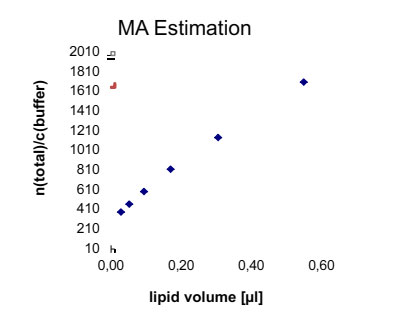
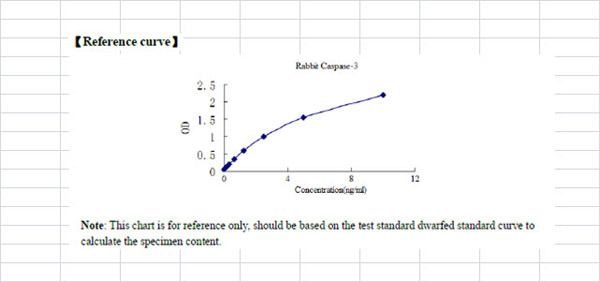
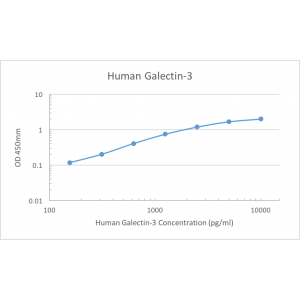
 Standard Curve (Sample)
Microsomal Kit
TRANSIL Microsomal Binding Kit
Synonyms
Microsomal; N/A; TRANSIL Microsomal Binding Kit; Microsomal kit
Preparation and Storage
Store at -20 degree C
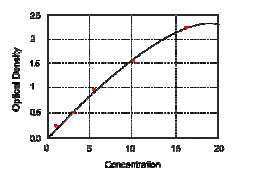
Standard Curve (Sample)
Standard Curve (Sample)
Related Product Information for Microsomal kit
Background: The complex, costly, and often uncertain outcome of the drug discovery and development process requires the simultaneous optimization of several properties. It has now long been recognized that favorable potency and selectivity characteristics are not the sole hallmarks of a successful drug discovery program, nor is the safety profile considered to be the only hurdle to be overcome, although it is of paramount importance. The ability to prospectively predict the pharmacokinetics of new chemical entities in humans is a powerful means by which scientists involved in the discovery of new drugs can select for further development only those compounds with the potential to be successful therapeutic agents. The half-life of a drug is a major contributor to the dosing regimen, and it is a function of the clearance and apparent volume of distribution (VD), each of which can be predicted and combined to predict the half-life. Drugs with short half-lives are more likely to be required to be administered more frequently than those with long half-lives. Dosing regimen is also intrinsically linked to other factors such as the pharmacodynamics of the drug and the difference between systemic concentrations associated with side effects vs those minimally required for efficacy. However, these latter attributes are much more difficult to predict from in vitro or animal data and will be different for each therapeutic target. Thus, a great deal of focus has been placed on the prediction of human half-life. While methods using allometric scaling or correlative methods exist for prediction of half-life, greater success is attained if the two major components of half-life, clearance and volume of distribution (note that the TRANSIL Intestinal Absorption Kit is well suited for VD predictions), are predicted separately and combined to generate a half-life prediction (Obach et al 1997). When estimating intrinsic clearance in metabolic stability incubations with microsomes or hepatocytes, the disappearance of the parent compound is measured over a time course. The clearance rate derived from these experiments is only reflecting the intrinsic clearance rate, if the test compound is available to interact freely with the CYP enzymes at the assumed target concentration. However, this is frequently not the case, because compounds tend to bind quantitatively to microsomal membranes, which can significantly reduce the available concentration - even to 1/100 or less of the total concentration in the incubation (Obach, 1999; McLure et al., 2000; Austin et al., 2002; Hallifax and Houston, 2006). Consequently, it is important to estimate microsomal binding in these in vitro incubations. Often, the binding to microsomal membranes is estimated as the free fraction of drug in incubations of microsomes (without cofactor) in dialysis rigs. As equilibration of microsomal binding in dialysis systems tends to require overnight incubations and may suffer more than other experiments from compound instability through hydrolysis and precipitation of poorly soluble drugs. Moreover, the experimentally determined free fraction relates to the experimental concentration of microsomes which will in many cases differ from the incubations of metabolic stability experiments. Microsomal binding not only reduces the concentration of free drug available to be metabolised by CYP enzymes, it also reduces the concentration which is available to inhibit the enzymes. It has been demonstrated that non-specific microsomal binding can account for underestimation of inhibitor potency (i.e., overestimation of IC50 or Ki values) when dealing with lipophilic basic drugs. This in turn can lead to an underestimation of risk of drug-drug interactions. In particular, mechanism based inhibitor studies can be affected to a large extent by microsomal binding, because of the high microsome concentrations that a typically employed in these experiments. Hence, the fraction of drug bound to microsomes is also an important correction of experiments assessing the inhibition potential.
Principle of the Assay: The principle of the TRANSIL Microsomal Binding assay is to assess the affinity of test compounds to microsomal membranes (Figure 1). The membrane affinity is determined by incubating a fixed concentration of the drug candidate with varying concentrations of membrane surface area immobilized on the silica beads. A total of 8 wells of a tube unit/plate are used to determine the microsomal membrane affinity for each compound (Figure 2). Six wells contain microsomal membrane silica beads while two serve as references to account for non-specific binding and contain buffer only. Using the spreadsheet and algorithms supplied with the assay, the affinity to the microsomal membranes is calculated from remaining free compound concentration in the supernatant of each well with membrane beads. Any of the available detection systems, such as HPLC-UV, LC-MS/MS, scintillation counting, etc. can be used for quantification, as long as it can quantify uM concentrations in volumes of 50 ul or less.
Principle of the Assay: The principle of the TRANSIL Microsomal Binding assay is to assess the affinity of test compounds to microsomal membranes (Figure 1). The membrane affinity is determined by incubating a fixed concentration of the drug candidate with varying concentrations of membrane surface area immobilized on the silica beads. A total of 8 wells of a tube unit/plate are used to determine the microsomal membrane affinity for each compound (Figure 2). Six wells contain microsomal membrane silica beads while two serve as references to account for non-specific binding and contain buffer only. Using the spreadsheet and algorithms supplied with the assay, the affinity to the microsomal membranes is calculated from remaining free compound concentration in the supernatant of each well with membrane beads. Any of the available detection systems, such as HPLC-UV, LC-MS/MS, scintillation counting, etc. can be used for quantification, as long as it can quantify uM concentrations in volumes of 50 ul or less.
Product Categories/Family for Microsomal kit
Customer Reviews
Loading reviews...
Share Your Experience
Similar Products




Product Notes
The Microsomal (Catalog #AAA60727) is a Kit and is intended for research purposes only. The product is available for immediate purchase. It is sometimes possible for the material contained within the vial of "Microsomal, Kit" to become dispersed throughout the inside of the vial, particularly around the seal of said vial, during shipment and storage. We always suggest centrifuging these vials to consolidate all of the liquid away from the lid and to the bottom of the vial prior to opening. Please be advised that certain products may require dry ice for shipping and that, if this is the case, an additional dry ice fee may also be required.Precautions
All products in the AAA Biotech catalog are strictly for research-use only, and are absolutely not suitable for use in any sort of medical, therapeutic, prophylactic, in-vivo, or diagnostic capacity. By purchasing a product from AAA Biotech, you are explicitly certifying that said products will be properly tested and used in line with industry standard. AAA Biotech and its authorized distribution partners reserve the right to refuse to fulfill any order if we have any indication that a purchaser may be intending to use a product outside of our accepted criteria.Disclaimer
Though we do strive to guarantee the information represented in this datasheet, AAA Biotech cannot be held responsible for any oversights or imprecisions. AAA Biotech reserves the right to adjust any aspect of this datasheet at any time and without notice. It is the responsibility of the customer to inform AAA Biotech of any product performance issues observed or experienced within 30 days of receipt of said product. To see additional details on this or any of our other policies, please see our Terms & Conditions page.Item has been added to Shopping Cart
If you are ready to order, navigate to Shopping Cart and get ready to checkout.