
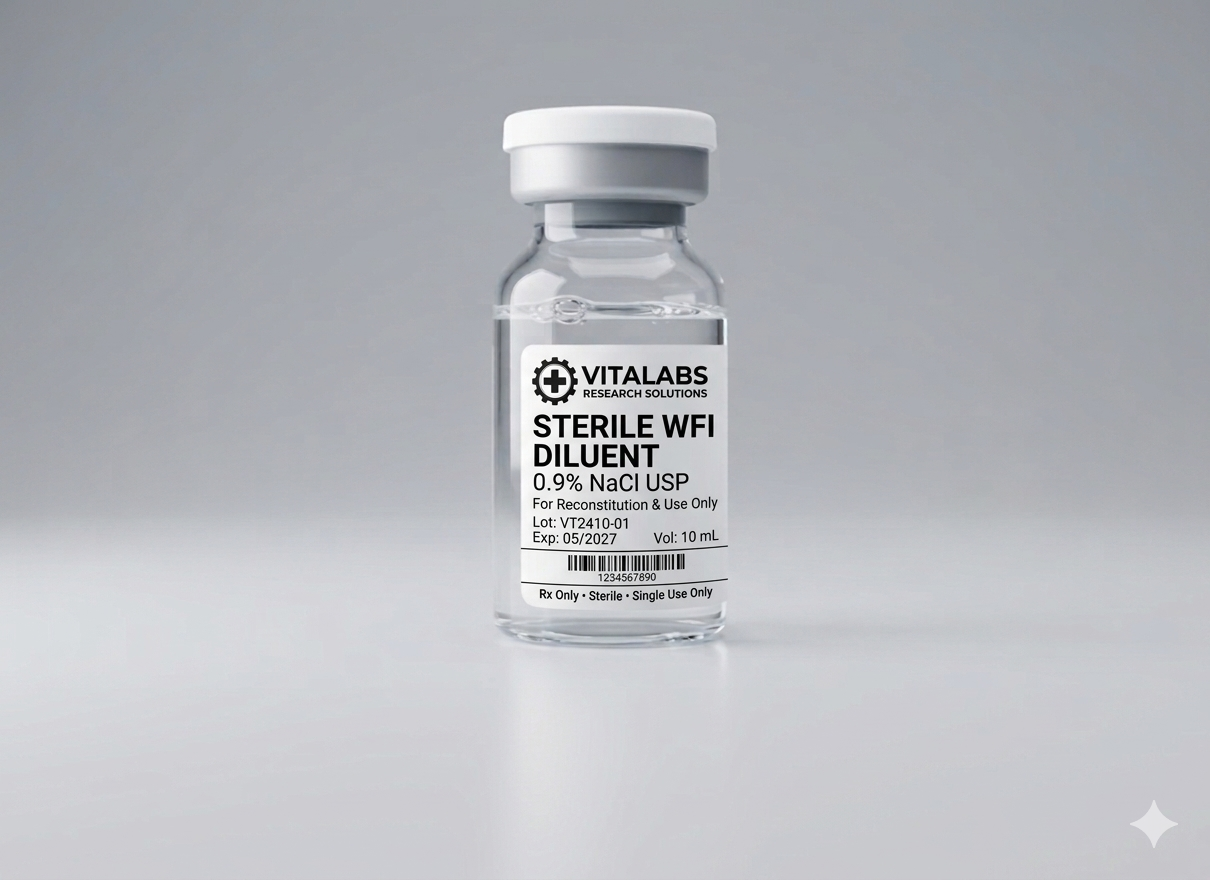
RIPA Lysis Buffer
RIPA Lysis Buffer
Applications
Western Blot
Synonyms
RIPA; N/A; RIPA Lysis Buffer; RIPA lysis buffer
Form/Format
50 mM Tris (pH7.4), 150 mM NaCl, 1% Triton X-100, 1% C24H39O4Na, 1 mM EDTA, 0.1% SDS, 10 mM NaF, 1 mM Na3VO4, 1 mM PMSF
Sequence Length
227
Applicable Applications for RIPA lysis buffer
WB (Western Blot)
Instructions
1. For Tissue Samples
a. Take the samples, wash the tissue thoroughly with pre-cooled PBS (0.01M, pH7.4) to remove the surface blood and internal debris.
b. Weigh and smash the tissue, add an appropriate ratio of RIPA Lysis Buffer (add 10 uL PMSF and 10 uL Na3VO4 to 1 mL RIPA Lysis) and homogenizely lyse the tissue. It is recommended to homogenize according to the ratio of tissue weight: RIPA volume = 3:10. For example, add 1 mL RIPA Lysis Buffer to 0.3 g tissue sample, the specific volume can be adjusted according to experimental requirements.
c. Shake and lyse on the ice for 30 min after homogenization. Blow the sample repeatedly with a Pipette gun for about 50 times (under ice water bath conditions) to Make sure the DNA strand is broken and reduce the viscosity of sample.
d. Centrifuge at 12,000 rpm for 10 min at 4°C.
e. Take the supernatant and measure the protein protein concentration.
2. For Cell Sample
a. Collect the cells, wash them thoroughly with pre-cooled PBS (0.01 M, pH 7.4) to remove the medium off (it is generally recommended to wash 3 times).
b. Add an appropriate ratio of RIPA Lysis Buffer (10 uL PMSF and 10 uL Na3VO4 in 1 mL RIPA Lysis) and lyse on the ice for 30 min. It is recommended to add 0.1 mL of RIPA Lysis Buffer to each well of a 6-well plates (the protein content in different cells may vary, and the volume of the lysate added can be appropriately adjusted).
c. Blow the sample repeatedly with a Pipette gun for about 50 times (under ice water bath conditions) to make sure the DNA strand is broken and reduce the viscosity of the sample.
d. Centrifuge at 12,000 rpm for 10 min at 4°C.
e. Take the supernatant and measure the protein concentration.
a. Take the samples, wash the tissue thoroughly with pre-cooled PBS (0.01M, pH7.4) to remove the surface blood and internal debris.
b. Weigh and smash the tissue, add an appropriate ratio of RIPA Lysis Buffer (add 10 uL PMSF and 10 uL Na3VO4 to 1 mL RIPA Lysis) and homogenizely lyse the tissue. It is recommended to homogenize according to the ratio of tissue weight: RIPA volume = 3:10. For example, add 1 mL RIPA Lysis Buffer to 0.3 g tissue sample, the specific volume can be adjusted according to experimental requirements.
c. Shake and lyse on the ice for 30 min after homogenization. Blow the sample repeatedly with a Pipette gun for about 50 times (under ice water bath conditions) to Make sure the DNA strand is broken and reduce the viscosity of sample.
d. Centrifuge at 12,000 rpm for 10 min at 4°C.
e. Take the supernatant and measure the protein protein concentration.
2. For Cell Sample
a. Collect the cells, wash them thoroughly with pre-cooled PBS (0.01 M, pH 7.4) to remove the medium off (it is generally recommended to wash 3 times).
b. Add an appropriate ratio of RIPA Lysis Buffer (10 uL PMSF and 10 uL Na3VO4 in 1 mL RIPA Lysis) and lyse on the ice for 30 min. It is recommended to add 0.1 mL of RIPA Lysis Buffer to each well of a 6-well plates (the protein content in different cells may vary, and the volume of the lysate added can be appropriately adjusted).
c. Blow the sample repeatedly with a Pipette gun for about 50 times (under ice water bath conditions) to make sure the DNA strand is broken and reduce the viscosity of the sample.
d. Centrifuge at 12,000 rpm for 10 min at 4°C.
e. Take the supernatant and measure the protein concentration.
Cautions
1. All steps to lyse samples should be performed on ice or at 4°C.
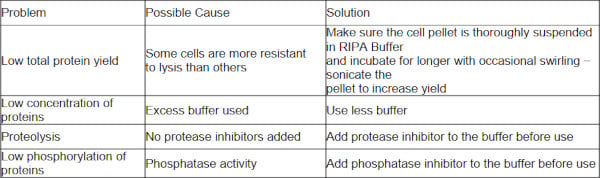
2. It is recommended to add 10 uL PMSF and 10 uL Na3VO4 to 1 mL RAPI Lysis before use. If RIPA Lysis is precipitated, please dissolve at room temperature or in a warm water bath.
3. It is normal for a clean gelatinous substance to appear in the lysate of RIPA lysate. This transparent gel is a complex containing genomic DNA. Repeatedly blowing the sample with a pipette about 50 times can effectively reduce the viscosity of the sample. After centrifugation, the supernatant can be taken for subsequent experiments.
4. The tissue or cell sample lysed by RIPA cannot be measured by the Bradford method because of the high concentration of detergent in the lysis. It is recommended to measure the protein concentration by the BCA method.
5. For your safety and health, please wear the lab coat and disposable gloves before the experiments.
2. It is recommended to add 10 uL PMSF and 10 uL Na3VO4 to 1 mL RAPI Lysis before use. If RIPA Lysis is precipitated, please dissolve at room temperature or in a warm water bath.
3. It is normal for a clean gelatinous substance to appear in the lysate of RIPA lysate. This transparent gel is a complex containing genomic DNA. Repeatedly blowing the sample with a pipette about 50 times can effectively reduce the viscosity of the sample. After centrifugation, the supernatant can be taken for subsequent experiments.
4. The tissue or cell sample lysed by RIPA cannot be measured by the Bradford method because of the high concentration of detergent in the lysis. It is recommended to measure the protein concentration by the BCA method.
5. For your safety and health, please wear the lab coat and disposable gloves before the experiments.
Preparation and Storage
Store at -20°C for 12 months
Related Product Information for RIPA lysis buffer
Introduction: RIPA Lysis Buffer is a traditional rapid cell tissue lysate used as the preferred lysate for protein extraction from tissues or cells in the Western Blot assay.
NCBI and Uniprot Product Information
NCBI GI #
NCBI Official Full Name
RIPA
Customer Reviews
Loading reviews...
Share Your Experience
Similar Products


Product Notes
The RIPA (Catalog #AAA174677) is a Lysis Buffer and is intended for research purposes only. The product is available for immediate purchase. AAA Biotech's RIPA can be used in a range of immunoassay formats including, but not limited to, WB (Western Blot). Researchers should empirically determine the suitability of the RIPA for an application not listed in the data sheet. Researchers commonly develop new applications and it is an integral, important part of the investigative research process. It is sometimes possible for the material contained within the vial of "RIPA, Lysis Buffer" to become dispersed throughout the inside of the vial, particularly around the seal of said vial, during shipment and storage. We always suggest centrifuging these vials to consolidate all of the liquid away from the lid and to the bottom of the vial prior to opening. Please be advised that certain products may require dry ice for shipping and that, if this is the case, an additional dry ice fee may also be required.Precautions
All products in the AAA Biotech catalog are strictly for research-use only, and are absolutely not suitable for use in any sort of medical, therapeutic, prophylactic, in-vivo, or diagnostic capacity. By purchasing a product from AAA Biotech, you are explicitly certifying that said products will be properly tested and used in line with industry standard. AAA Biotech and its authorized distribution partners reserve the right to refuse to fulfill any order if we have any indication that a purchaser may be intending to use a product outside of our accepted criteria.Disclaimer
Though we do strive to guarantee the information represented in this datasheet, AAA Biotech cannot be held responsible for any oversights or imprecisions. AAA Biotech reserves the right to adjust any aspect of this datasheet at any time and without notice. It is the responsibility of the customer to inform AAA Biotech of any product performance issues observed or experienced within 30 days of receipt of said product. To see additional details on this or any of our other policies, please see our Terms & Conditions page.Item has been added to Shopping Cart
If you are ready to order, navigate to Shopping Cart and get ready to checkout.