
 Application Data
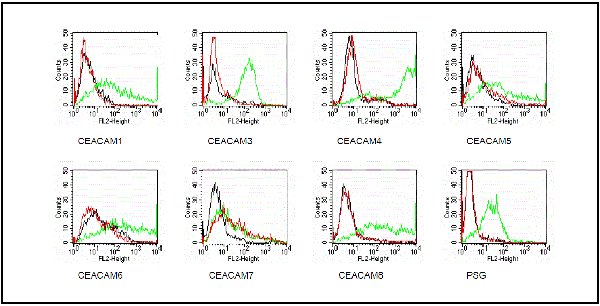
(Fig. 2: Members of the CEACAM family were expressed on BOSC cells after transient transfection with expression vectors containing either the cDNA of CEACAM1, 5, 6, 7, 8 or a recombinant trans-membraneanchored PSG1 fusion protein. Recognition of CEACAM3, CEACAM4 and PSG1 was tested on stably transfected HeLa (CEACAM3, PSG) and CHO cells (CEACAM4), respectively. Expression of the constructs was confirmed with monoclonal antibodies known to recognize the corresponding proteins (CEACAM1, 3, 4, 5 and 6: D14HD11; CEACAM7: CAC2; CEACAM8: TET2; PSG: BAP1; green curves). An irrelevant monoclonal antibody served as a negative control (black curves). For specificity testing, protein G purified BAC2 was tested on all CEACAM transfectants. A positive signal was only obtained with CEACAM7 expressing cells (red curves).)
Application Data
(Fig. 2: Members of the CEACAM family were expressed on BOSC cells after transient transfection with expression vectors containing either the cDNA of CEACAM1, 5, 6, 7, 8 or a recombinant trans-membraneanchored PSG1 fusion protein. Recognition of CEACAM3, CEACAM4 and PSG1 was tested on stably transfected HeLa (CEACAM3, PSG) and CHO cells (CEACAM4), respectively. Expression of the constructs was confirmed with monoclonal antibodies known to recognize the corresponding proteins (CEACAM1, 3, 4, 5 and 6: D14HD11; CEACAM7: CAC2; CEACAM8: TET2; PSG: BAP1; green curves). An irrelevant monoclonal antibody served as a negative control (black curves). For specificity testing, protein G purified BAC2 was tested on all CEACAM transfectants. A positive signal was only obtained with CEACAM7 expressing cells (red curves).)
Mouse anti-Human CEACAM7 Monoclonal Antibody | anti-CEACAM7 antibody
anti-human CEACAM7 monoclonal antibody
Application Data
(Fig. 2: Members of the CEACAM family were expressed on BOSC cells after transient transfection with expression vectors containing either the cDNA of CEACAM1, 5, 6, 7, 8 or a recombinant trans-membraneanchored PSG1 fusion protein. Recognition of CEACAM3, CEACAM4 and PSG1 was tested on stably transfected HeLa (CEACAM3, PSG) and CHO cells (CEACAM4), respectively. Expression of the constructs was confirmed with monoclonal antibodies known to recognize the corresponding proteins (CEACAM1, 3, 4, 5 and 6: D14HD11; CEACAM7: CAC2; CEACAM8: TET2; PSG: BAP1; green curves). An irrelevant monoclonal antibody served as a negative control (black curves). For specificity testing, protein G purified BAC2 was tested on all CEACAM transfectants. A positive signal was only obtained with CEACAM7 expressing cells (red curves).)
Application Data
(Fig. 2: Members of the CEACAM family were expressed on BOSC cells after transient transfection with expression vectors containing either the cDNA of CEACAM1, 5, 6, 7, 8 or a recombinant trans-membraneanchored PSG1 fusion protein. Recognition of CEACAM3, CEACAM4 and PSG1 was tested on stably transfected HeLa (CEACAM3, PSG) and CHO cells (CEACAM4), respectively. Expression of the constructs was confirmed with monoclonal antibodies known to recognize the corresponding proteins (CEACAM1, 3, 4, 5 and 6: D14HD11; CEACAM7: CAC2; CEACAM8: TET2; PSG: BAP1; green curves). An irrelevant monoclonal antibody served as a negative control (black curves). For specificity testing, protein G purified BAC2 was tested on all CEACAM transfectants. A positive signal was only obtained with CEACAM7 expressing cells (red curves).)
Application Data
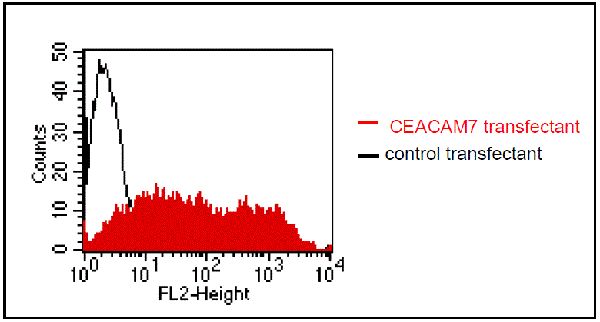
(Fig.1: FACS analysis of BOSC23 cells using BAC2 Cat.# GM-0508. BOSC23 cells were transiently transfected with an expression vector encoding either CEACAM7 (red curve) or an irrelevant protein (control transfectant). Binding of BAC2 was detected with a PE-conjugated secondary antibody. A positive signal was obtained only with CEACAM7 transfected cells.)
Application Data
(Fig.1: FACS analysis of BOSC23 cells using BAC2 Cat.# GM-0508. BOSC23 cells were transiently transfected with an expression vector encoding either CEACAM7 (red curve) or an irrelevant protein (control transfectant). Binding of BAC2 was detected with a PE-conjugated secondary antibody. A positive signal was obtained only with CEACAM7 transfected cells.)
Schoelzel S et al. (2000): Carcinoembryonic antigen family members CEACAM6 and CEACAM7 are differentially expressed in normal tissues and oppositely deregulated in hyperplastic colorectal polyps and early adenomas. Am J Pathol, 156/2: 595-605
Hammarström S (1999). The carcinoembryonic antigen (CEA) family: structures, suggested functions and expression in normal and malignant tissues. Semin. Cancer Biol. 9, 67-81.
Grunert F, Stocks SC, Nagel G., Zimmermann W, Thompson JA, Jantscheff P and Kromer B. (1996). CD66 family Workshop: Binding of myeloid blind panel antibodies and CD66 Subsection antibodies to HeLa transfectants expressing individual CD66 molecules. In Leukocyte Typing VI: White cell Differentiation Antigens (T. Kishimoto et al., eds.), Garland Publishing Inc., New York and London, pp. 1012-1025.
NCBI and Uniprot Product Information
Customer Reviews
Loading reviews...
Share Your Experience
Similar Products

Product Notes
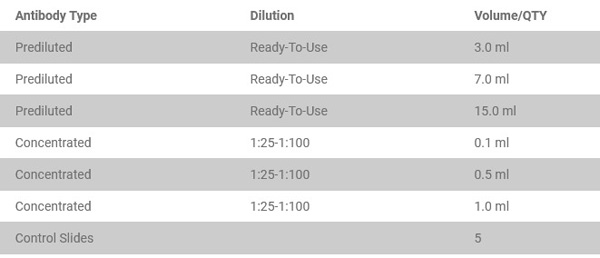
The CEACAM7 ceacam7 (Catalog #AAA71457) is an Antibody produced from Mouse and is intended for research purposes only. The product is available for immediate purchase. The anti-human CEACAM7 monoclonal antibody reacts with Human and may cross-react with other species as described in the data sheet. AAA Biotech's CEACAM7 can be used in a range of immunoassay formats including, but not limited to, WB (Western Blot), ELISA, ELISA (Competitive ELISA), FCM/FACS (Flow Cytometry). Researchers should empirically determine the suitability of the CEACAM7 ceacam7 for an application not listed in the data sheet. Researchers commonly develop new applications and it is an integral, important part of the investigative research process. It is sometimes possible for the material contained within the vial of "CEACAM7, Monoclonal Antibody" to become dispersed throughout the inside of the vial, particularly around the seal of said vial, during shipment and storage. We always suggest centrifuging these vials to consolidate all of the liquid away from the lid and to the bottom of the vial prior to opening. Please be advised that certain products may require dry ice for shipping and that, if this is the case, an additional dry ice fee may also be required.Precautions
All products in the AAA Biotech catalog are strictly for research-use only, and are absolutely not suitable for use in any sort of medical, therapeutic, prophylactic, in-vivo, or diagnostic capacity. By purchasing a product from AAA Biotech, you are explicitly certifying that said products will be properly tested and used in line with industry standard. AAA Biotech and its authorized distribution partners reserve the right to refuse to fulfill any order if we have any indication that a purchaser may be intending to use a product outside of our accepted criteria.Disclaimer
Though we do strive to guarantee the information represented in this datasheet, AAA Biotech cannot be held responsible for any oversights or imprecisions. AAA Biotech reserves the right to adjust any aspect of this datasheet at any time and without notice. It is the responsibility of the customer to inform AAA Biotech of any product performance issues observed or experienced within 30 days of receipt of said product. To see additional details on this or any of our other policies, please see our Terms & Conditions page.Item has been added to Shopping Cart
If you are ready to order, navigate to Shopping Cart and get ready to checkout.