
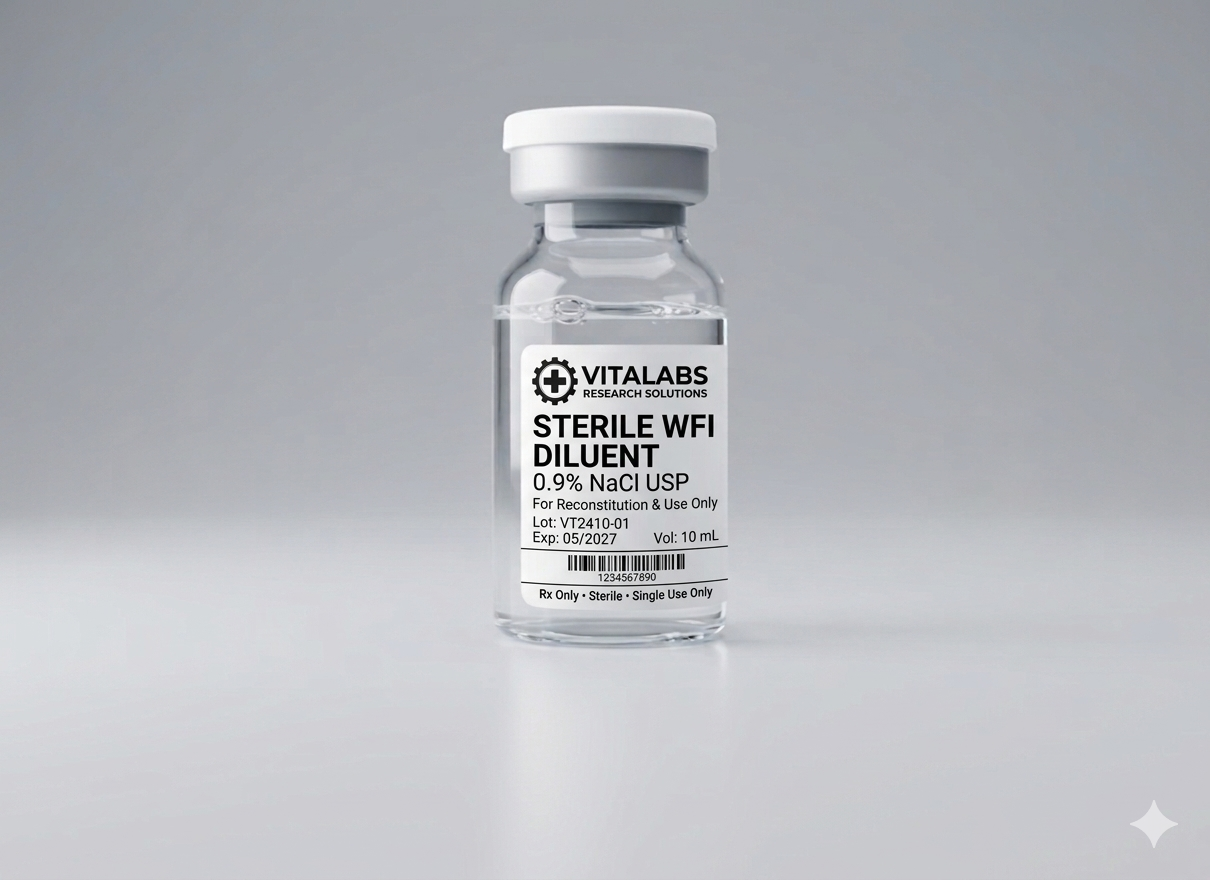
Rat anti-Mouse F4/80 Monoclonal Antibody | anti-F4/80 antibody
RAT ANTI MOUSE F4/80:FITC
Gene Names
Emr1; Ly71; F4/80; Gpf480; TM7LN3; DD7A5-7; EGF-TM7
Reactivity
Mouse
Applications
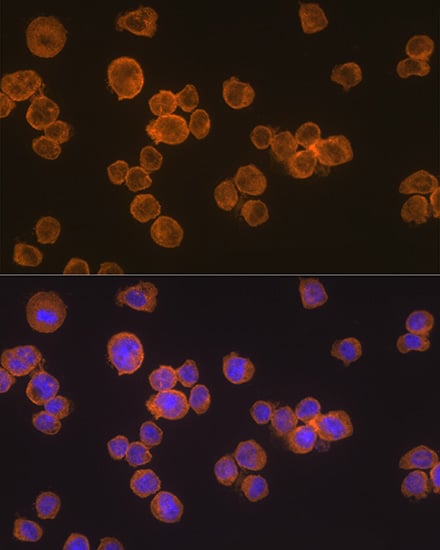
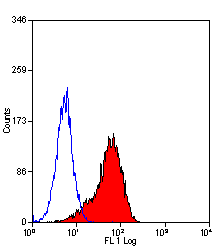
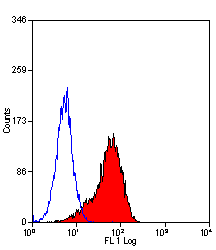
Immunofluorescence, Flow Cytometry, Functional Assay
Synonyms
F4/80, Antibody; RAT ANTI MOUSE F4/80:FITC; Gpf480; anti-F4/80 antibody
Host
Rat
Reactivity
Mouse
Clonality
Monoclonal
Isotype
IgG2b
Clone Number
A3-1
Specificity
Rat anti mouse F4/80 antibody, clone Cl:A3-1 recognises the murine F4/80 antigen, a ~160 kDa cell surface glycoprotein member of the EGF-TM7 family of proteins which shares 68% overall amino acid identity with human EGF module-containing mucin-like hormone receptor 1 (EMR1).
Expression of F4/80 is heterogeneous and is modulated during macrophage maturation and activation. The F4/80 antigen is expressed on a wide range of mature tissue macrophages including Kupffer cells, Langerhans cells, microglia, macrophages located in the gut lamina propria, peritoneal cavity, lung, thymus, bone marrow stroma and macrophages in the red pulp of the spleen (Hume, et al. 1984). F4/80 antigen is also expressed on a subpopulation of dendritic cells but is absent from macrophages located in T cell areas of the spleen and lymph node (Gordon, et al. 1994). The ligands and biological functions of the F4/80 antigen have not been fully determined but a role for F4/80 in the generation of efferent CD8+ve regulatory T cells is proposed (Lin, et al. 2005)
Rat anti mouse F4/80 antibody, clone Cl:A3-1 modulates cytokine levels released in response to Listeria monocytogenes (Warschkau & Kiderlen, 1999).
A Human anti-idiotypic CI:A31 antibody, clone 17867 (HCA154 ) which binds to and blocks activity of Rat anti mouse F4/80 antibody, clone Cl:A3-1 is also available for use as a control in experiments utilizing clone A3-1.
Expression of F4/80 is heterogeneous and is modulated during macrophage maturation and activation. The F4/80 antigen is expressed on a wide range of mature tissue macrophages including Kupffer cells, Langerhans cells, microglia, macrophages located in the gut lamina propria, peritoneal cavity, lung, thymus, bone marrow stroma and macrophages in the red pulp of the spleen (Hume, et al. 1984). F4/80 antigen is also expressed on a subpopulation of dendritic cells but is absent from macrophages located in T cell areas of the spleen and lymph node (Gordon, et al. 1994). The ligands and biological functions of the F4/80 antigen have not been fully determined but a role for F4/80 in the generation of efferent CD8+ve regulatory T cells is proposed (Lin, et al. 2005)
Rat anti mouse F4/80 antibody, clone Cl:A3-1 modulates cytokine levels released in response to Listeria monocytogenes (Warschkau & Kiderlen, 1999).
A Human anti-idiotypic CI:A31 antibody, clone 17867 (HCA154 ) which binds to and blocks activity of Rat anti mouse F4/80 antibody, clone Cl:A3-1 is also available for use as a control in experiments utilizing clone A3-1.
Form/Format
Purified IgG conjugated to Fluorescein Isothiocyanate Isomer 1 (FITC) - liquid
Concentration
IgG concentration 0.1 mg/ml (varies by lot)
Applicable Applications for anti-F4/80 antibody
IF (Immunofluorescence), FCM/FACS (Flow Cytometry)
Target Species
Mouse
Max Ex/Em
Fluorophore: FITC
Excitation Max (nm): 490
Emission Max (nm): 525
Excitation Max (nm): 490
Emission Max (nm): 525
Preparation
Purified IgG prepared by affinity chromatography on Protein G from tissue culture supernatant.
Buffer Solution
Phosphate buffered saline
Preservative Stabilizers
0.09% Sodium Azide
1% Bovine Serum Albumin
1% Bovine Serum Albumin
Immunogen
Thioglycollate stimulated peritoneal macrophages from C57BL/6 mice.
Fusion Partners
Spleen cells from immunised HOB2 rats were fused with cells of the mouse NS1 myeloma cell line.
Preparation and Storage
Store at +4°C or at -20°C if preferred.
This product should be stored undiluted.
Storage in frost-free freezers is not recommended. This product is photosensitive and should be protected from light.
Avoid repeated freezing and thawing as this may denature the antibody. Should this product contain a precipitate we recommend microcentrifugation before use.
This product should be stored undiluted.
Storage in frost-free freezers is not recommended. This product is photosensitive and should be protected from light.
Avoid repeated freezing and thawing as this may denature the antibody. Should this product contain a precipitate we recommend microcentrifugation before use.
NCBI and Uniprot Product Information
NCBI GI #
NCBI GeneID
NCBI Accession #
NCBI GenBank Nucleotide #
UniProt Accession #
NCBI Official Full Name
EGF-like module-containing mucin-like hormone receptor-like 1
NCBI Official Synonym Full Names
EGF-like module containing, mucin-like, hormone receptor-like sequence 1
NCBI Official Symbol
Emr1
NCBI Official Synonym Symbols
Ly71; F4/80; Gpf480; TM7LN3; DD7A5-7; EGF-TM7
NCBI Protein Information
EGF-like module-containing mucin-like hormone receptor-like 1; EGF-like module receptor 1; EMR1 hormone receptor; cell surface glycoprotein F4/80; lymphocyte antigen 71
UniProt Protein Name
EGF-like module-containing mucin-like hormone receptor-like 1
UniProt Gene Name
Emr1
UniProt Synonym Gene Names
Gpf480
UniProt Entry Name
EMR1_MOUSE
Customer Reviews
Loading reviews...
Share Your Experience
Similar Products






Product Notes
The F4/80 emr1 (Catalog #AAA49693) is an Antibody produced from Rat and is intended for research purposes only. The product is available for immediate purchase. The RAT ANTI MOUSE F4/80:FITC reacts with Mouse and may cross-react with other species as described in the data sheet. AAA Biotech's F4/80 can be used in a range of immunoassay formats including, but not limited to, IF (Immunofluorescence), FCM/FACS (Flow Cytometry). Researchers should empirically determine the suitability of the F4/80 emr1 for an application not listed in the data sheet. Researchers commonly develop new applications and it is an integral, important part of the investigative research process. It is sometimes possible for the material contained within the vial of "F4/80, Monoclonal Antibody" to become dispersed throughout the inside of the vial, particularly around the seal of said vial, during shipment and storage. We always suggest centrifuging these vials to consolidate all of the liquid away from the lid and to the bottom of the vial prior to opening. Please be advised that certain products may require dry ice for shipping and that, if this is the case, an additional dry ice fee may also be required.Precautions
All products in the AAA Biotech catalog are strictly for research-use only, and are absolutely not suitable for use in any sort of medical, therapeutic, prophylactic, in-vivo, or diagnostic capacity. By purchasing a product from AAA Biotech, you are explicitly certifying that said products will be properly tested and used in line with industry standard. AAA Biotech and its authorized distribution partners reserve the right to refuse to fulfill any order if we have any indication that a purchaser may be intending to use a product outside of our accepted criteria.Disclaimer
Though we do strive to guarantee the information represented in this datasheet, AAA Biotech cannot be held responsible for any oversights or imprecisions. AAA Biotech reserves the right to adjust any aspect of this datasheet at any time and without notice. It is the responsibility of the customer to inform AAA Biotech of any product performance issues observed or experienced within 30 days of receipt of said product. To see additional details on this or any of our other policies, please see our Terms & Conditions page.Item has been added to Shopping Cart
If you are ready to order, navigate to Shopping Cart and get ready to checkout.