
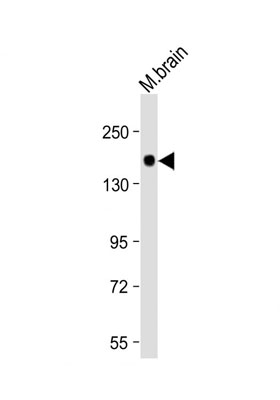
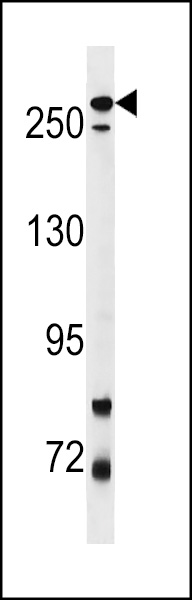
 WB (Western Blot)
(Anti-PARK8 (LRRK2) Antibody at 1:1000 dilution + Mouse brain lysate Lysates/proteins at 20ug per lane. Secondary Goat Anti-mouse IgG, (H+L), Peroxidase conjugated at 1/10000 dilution. Predicted band size : 286 kDa Blocking/Dilution buffer: 5% NFDM/TBST.)
WB (Western Blot)
(Anti-PARK8 (LRRK2) Antibody at 1:1000 dilution + Mouse brain lysate Lysates/proteins at 20ug per lane. Secondary Goat Anti-mouse IgG, (H+L), Peroxidase conjugated at 1/10000 dilution. Predicted band size : 286 kDa Blocking/Dilution buffer: 5% NFDM/TBST.)
Mouse anti-Human, mouse PARK8 (LRRK2) Monoclonal Antibody | anti-LRRK2 antibody
PARK8 (LRRK2) Antibody
Gene Names
LRRK2; PARK8; RIPK7; ROCO2; AURA17; DARDARIN
Reactivity
Human, mouse
Applications
ELISA, Western Blot
Purity
Purified Mouse Monoclonal Antibody (Mab)
Synonyms
PARK8 (LRRK2), Antibody; PARK8 (LRRK2) Antibody; Leucine-rich repeat serine/threonine-protein kinase 2; Dardarin; LRRK2; PARK8; anti-LRRK2 antibody
Host
Mouse
Reactivity
Human, mouse
Clonality
Monoclonal
Isotype
Mouse IgG1
Specificity
This PARK8 (LRRK2) antibody was raised in mice using purified His-tagged recombinant protein comprised of the C-terminal 261 residues of LRRK2.
Purity/Purification
Purified Mouse Monoclonal Antibody (Mab)
Form/Format
Purified polyclonal antibody supplied in PBS with 0.09% (W/V) sodium azide. This antibody is purified through a protein G column, followed by dialysis against PBS.
Sequence Length
2527
Applicable Applications for anti-LRRK2 antibody
ELISA, WB (Western Blot)
Function
Serine/threonine-protein kinase which phosphorylates a broad range of proteins involved in multiple processes such as neuronal plasticity, autophagy, and vesicle trafficking
Cellular Location
Cytoplasmic vesicle. Perikaryon. Golgi apparatus membrane; Peripheral membrane protein. Cell projection, axon. Cell projection, dendrite. Endoplasmic reticulum membrane; Peripheral membrane protein. Cytoplasmic vesicle, secretory vesicle, synaptic vesicle membrane. Endosome {ECO:0000250|UniProtKB:Q5S006}. Lysosome Mitochondrion outer membrane; Peripheral membrane protein Note=Colocalized with RAB29 along tubular structures emerging from Golgi apparatus (PubMed:23395371). Localizes to endoplasmic reticulum exit sites (ERES), also known as transitional endoplasmic reticulum (tER) (PubMed:25201882).
Tissue Location
Expressed in pyramidal neurons in all cortical laminae of the visual cortex, in neurons of the substantia nigra pars compacta and caudate putamen (at protein level). Expressed in neutrophils (at protein level) (PubMed:29127255). Expressed in the brain. Expressed throughout the adult brain, but at a lower level than in heart and liver. Also expressed in placenta, lung, skeletal muscle, kidney and pancreas. In the brain, expressed in the cerebellum, cerebral cortex, medulla, spinal cord occipital pole, frontal lobe, temporal lobe and putamen. Expression is particularly high in brain dopaminoceptive areas.
Preparation and Storage
Maintain refrigerated at 2-8°C for up to 2 weeks. For long term storage store at -20°C in small aliquots to prevent freeze-thaw cycles.
WB (Western Blot)
(Anti-PARK8 (LRRK2) Antibody at 1:1000 dilution + Mouse brain lysate Lysates/proteins at 20ug per lane. Secondary Goat Anti-mouse IgG, (H+L), Peroxidase conjugated at 1/10000 dilution. Predicted band size : 286 kDa Blocking/Dilution buffer: 5% NFDM/TBST.)
WB (Western Blot)
(Anti-PARK8 (LRRK2) Antibody at 1:1000 dilution + Mouse brain lysate Lysates/proteins at 20ug per lane. Secondary Goat Anti-mouse IgG, (H+L), Peroxidase conjugated at 1/10000 dilution. Predicted band size : 286 kDa Blocking/Dilution buffer: 5% NFDM/TBST.)
Related Product Information for anti-LRRK2 antibody
This gene is a member of the leucine-rich repeat kinase family and encodes a protein with an ankryin repeat region, a leucine-rich repeat (LRR) domain, a kinase domain, a DFG-like motif, a RAS domain, a GTPase domain, a MLK-like domain, and a WD40 domain. The protein is present largely in the cytoplasm but also associates with the mitochondrial outer membrane. Mutations in this gene have been associated with Parkinson disease-8.
Product Categories/Family for anti-LRRK2 antibody
References
Olfactory heterogeneity in LRRK2 related Parkinsonism. Silveira-Moriyama L, et al. Mov Disord, 2010 Sep 3. PMID 20818658.
LRRK2 G2019S mutations are associated with an increased cancer risk in Parkinson disease. Saunders-Pullman R, et al. Mov Disord, 2010 Sep 3. PMID 20818610.
Low frequency of common LRRK2 mutations in Mexican patients with Parkinson's disease. Yescas P, et al. Neurosci Lett, 2010 Aug 18. PMID 20727385.
Absence of Commonly Reported Leucine-Rich Repeat Kinase 2 Mutations in Eastern Indian Parkinson's Disease Patients. Sanyal J, et al. Genet Test Mol Biomarkers, 2010 Aug 19. PMID 20722494.
Penetrance in Parkinson's disease related to the LRRK2 R1441G mutation in the Basque country (Spain). Ruiz-Martínez J, et al. Mov Disord, 2010 Aug 18. PMID 20721916.
LRRK2 G2019S mutations are associated with an increased cancer risk in Parkinson disease. Saunders-Pullman R, et al. Mov Disord, 2010 Sep 3. PMID 20818610.
Low frequency of common LRRK2 mutations in Mexican patients with Parkinson's disease. Yescas P, et al. Neurosci Lett, 2010 Aug 18. PMID 20727385.
Absence of Commonly Reported Leucine-Rich Repeat Kinase 2 Mutations in Eastern Indian Parkinson's Disease Patients. Sanyal J, et al. Genet Test Mol Biomarkers, 2010 Aug 19. PMID 20722494.
Penetrance in Parkinson's disease related to the LRRK2 R1441G mutation in the Basque country (Spain). Ruiz-Martínez J, et al. Mov Disord, 2010 Aug 18. PMID 20721916.
NCBI and Uniprot Product Information
NCBI GI #
NCBI GeneID
NCBI Accession #
NCBI GenBank Nucleotide #
NCBI Official Full Name
leucine-rich repeat serine/threonine-protein kinase 2
NCBI Official Synonym Full Names
leucine-rich repeat kinase 2
NCBI Official Symbol
LRRK2
NCBI Official Synonym Symbols
PARK8; RIPK7; ROCO2; AURA17; DARDARIN
NCBI Protein Information
leucine-rich repeat serine/threonine-protein kinase 2
UniProt Protein Name
Leucine-rich repeat serine/threonine-protein kinase 2
UniProt Gene Name
LRRK2
UniProt Synonym Gene Names
PARK8
UniProt Entry Name
LRRK2_HUMAN
Customer Reviews
Loading reviews...
Share Your Experience
Similar Products
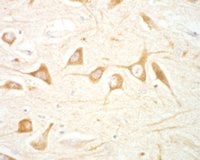


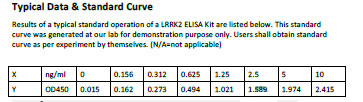
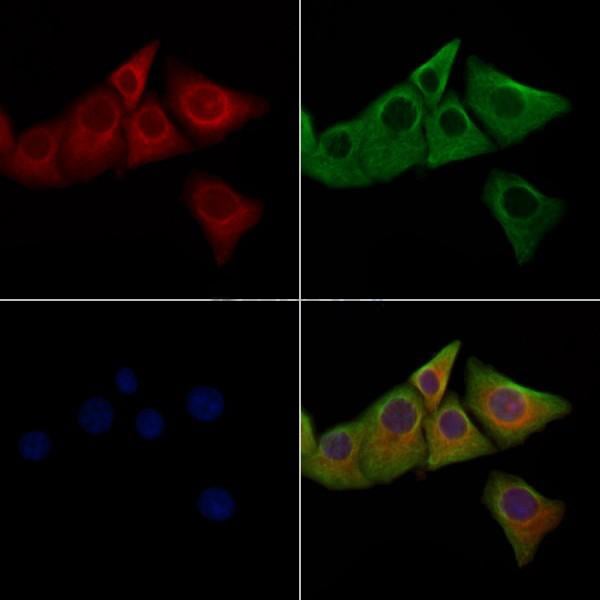





Product Notes
The LRRK2 lrrk2 (Catalog #AAA283416) is an Antibody produced from Mouse and is intended for research purposes only. The product is available for immediate purchase. The PARK8 (LRRK2) Antibody reacts with Human, mouse and may cross-react with other species as described in the data sheet. AAA Biotech's PARK8 (LRRK2) can be used in a range of immunoassay formats including, but not limited to, ELISA, WB (Western Blot). Researchers should empirically determine the suitability of the LRRK2 lrrk2 for an application not listed in the data sheet. Researchers commonly develop new applications and it is an integral, important part of the investigative research process. It is sometimes possible for the material contained within the vial of "PARK8 (LRRK2), Monoclonal Antibody" to become dispersed throughout the inside of the vial, particularly around the seal of said vial, during shipment and storage. We always suggest centrifuging these vials to consolidate all of the liquid away from the lid and to the bottom of the vial prior to opening. Please be advised that certain products may require dry ice for shipping and that, if this is the case, an additional dry ice fee may also be required.Precautions
All products in the AAA Biotech catalog are strictly for research-use only, and are absolutely not suitable for use in any sort of medical, therapeutic, prophylactic, in-vivo, or diagnostic capacity. By purchasing a product from AAA Biotech, you are explicitly certifying that said products will be properly tested and used in line with industry standard. AAA Biotech and its authorized distribution partners reserve the right to refuse to fulfill any order if we have any indication that a purchaser may be intending to use a product outside of our accepted criteria.Disclaimer
Though we do strive to guarantee the information represented in this datasheet, AAA Biotech cannot be held responsible for any oversights or imprecisions. AAA Biotech reserves the right to adjust any aspect of this datasheet at any time and without notice. It is the responsibility of the customer to inform AAA Biotech of any product performance issues observed or experienced within 30 days of receipt of said product. To see additional details on this or any of our other policies, please see our Terms & Conditions page.Item has been added to Shopping Cart
If you are ready to order, navigate to Shopping Cart and get ready to checkout.