
 WB (Western Blot)
(Western Blot;Sample: Recombinant RNASE3, Mouse.)
WB (Western Blot)
(Western Blot;Sample: Recombinant RNASE3, Mouse.)
Mouse anti-Mouse Ribonuclease A3 (RNASE3) Monoclonal Antibody | anti-RNASE3 antibody
Ribonuclease A3 (RNASE3) Monoclonal Antibody
Immunohistochemistry: 5-20ug/mL
Immunocytochemistry: 5-20ug/mL
Optimal working dilutions must be determined by end user.
Avoid repeated freeze/thaw cycles.
Store at 4 degree C for frequent use.
Aliquot and store at -20 degree C for 24 months.
Stability Test:
The thermal stability is described by the loss rate. The loss rate was determined by accelerated thermal degradation test, that is, incubate the protein at 37 degree C for 48h, and no obvious degradation and precipitation were observed. The loss rate is less than 5% within the expiration date under appropriate storage condition.
WB (Western Blot)
(Western Blot;Sample: Recombinant RNASE3, Mouse.)
WB (Western Blot)
(Western Blot;Sample: Recombinant RNASE3, Mouse.)
NCBI and Uniprot Product Information
Customer Reviews
Loading reviews...
Share Your Experience
Similar Products








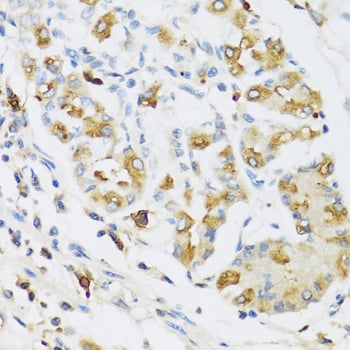


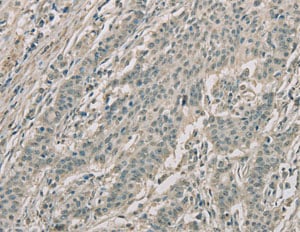
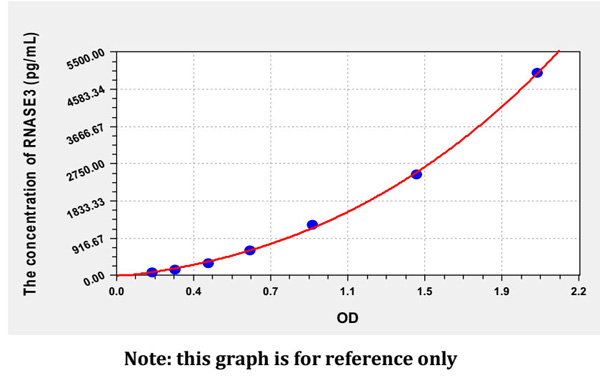
Product Notes
The RNASE3 ear3 (Catalog #AAA21091) is an Antibody produced from Mouse and is intended for research purposes only. The product is available for immediate purchase. The Ribonuclease A3 (RNASE3) Monoclonal Antibody reacts with Mouse and may cross-react with other species as described in the data sheet. AAA Biotech's Ribonuclease A3 (RNASE3) can be used in a range of immunoassay formats including, but not limited to, WB (Westen Blot), IHC (Immunohistochemistry), ICC (Immunocytochemistry), IP (Immunoprecipitation). Western Blotting: 0.01-2ug/mL Immunohistochemistry: 5-20ug/mL Immunocytochemistry: 5-20ug/mL Optimal working dilutions must be determined by end user. Researchers should empirically determine the suitability of the RNASE3 ear3 for an application not listed in the data sheet. Researchers commonly develop new applications and it is an integral, important part of the investigative research process. It is sometimes possible for the material contained within the vial of "Ribonuclease A3 (RNASE3), Monoclonal Antibody" to become dispersed throughout the inside of the vial, particularly around the seal of said vial, during shipment and storage. We always suggest centrifuging these vials to consolidate all of the liquid away from the lid and to the bottom of the vial prior to opening. Please be advised that certain products may require dry ice for shipping and that, if this is the case, an additional dry ice fee may also be required.Precautions
All products in the AAA Biotech catalog are strictly for research-use only, and are absolutely not suitable for use in any sort of medical, therapeutic, prophylactic, in-vivo, or diagnostic capacity. By purchasing a product from AAA Biotech, you are explicitly certifying that said products will be properly tested and used in line with industry standard. AAA Biotech and its authorized distribution partners reserve the right to refuse to fulfill any order if we have any indication that a purchaser may be intending to use a product outside of our accepted criteria.Disclaimer
Though we do strive to guarantee the information represented in this datasheet, AAA Biotech cannot be held responsible for any oversights or imprecisions. AAA Biotech reserves the right to adjust any aspect of this datasheet at any time and without notice. It is the responsibility of the customer to inform AAA Biotech of any product performance issues observed or experienced within 30 days of receipt of said product. To see additional details on this or any of our other policies, please see our Terms & Conditions page.Frequently Asked Questions
What cells or tissues express Ribonuclease A3 and can be detected with this antibody?
Ribonuclease A3 (RNase A3), also known as Eosinophil-associated ribonuclease (Ear) in mice, is primarily expressed in eosinophils and lung tissue. It is also found in various immune-related tissues like the spleen and bone marrow. This antibody from AAA Biotech allows for the detection of RNase A3 in these specific cell types, making it a valuable tool for researchers studying eosinophil biology and the localized immune environment of the respiratory system.
Can mouse anti‑mouse RNase A3 antibody be used for immunofluorescence or Western blot?
Yes, this antibody is validated for both Western blot (WB) and immunofluorescence (IF). In WB, it is used to identify the presence and quantify the levels of the RNase A3 protein in mouse tissue or cell extracts. In IF, it enables the visualization of the protein's localization within the cytoplasm or secretory granules of mouse cells, providing spatial context to its biological function during experimental observations.
Is RNase A3 expression linked to immune response or inflammation?
RNase A3 is significantly involved in the innate immune response and inflammatory processes. As a member of the RNase A superfamily, it possesses potent antiviral and antibacterial properties. Its expression is often upregulated during allergic reactions, asthma, and parasitic infections, where eosinophils are recruited to the site of inflammation. Studying this protein helps researchers understand how the body defends itself against pathogens and manages inflammatory damage.
Does this antibody detect endogenous RNase A3 in mouse samples?
The antibody is specifically designed to detect endogenous RNase A3, meaning it recognizes the protein as it is naturally produced by mouse cells. This is essential for studying the physiological roles of the enzyme without the need for artificial overexpression. AAA Biotech ensures that the antibody has the sensitivity required to detect the protein at its natural levels in mouse models of health and disease.
Can this antibody be used for flow cytometry or ELISA applications?
While primarily used for WB and IF, this antibody can often be adapted for flow cytometry to identify and sort RNase A3-positive cell populations, such as activated eosinophils. It can also serve as a capture or detection reagent in ELISA formats for quantifying soluble RNase A3 in biological fluids. Researchers should verify specific protocol optimizations, but the high affinity of the antibody makes it suitable for these quantitative applications.
How does RNase A3 differ from other RNase family members in function or detection?
RNase A3 is distinguished by its specific biological roles, particularly its high ribonuclease activity and its unique involvement in eosinophil-mediated immunity. Unlike the more general RNase 1 (pancreatic RNase), RNase A3 has specialized functions in host defense against viruses. Detection requires specific antibodies because, despite structural similarities within the RNase A superfamily, the specific epitopes of RNase A3 are distinct, allowing for its isolated study using AAA Biotech reagents.
Item has been added to Shopping Cart
If you are ready to order, navigate to Shopping Cart and get ready to checkout.