
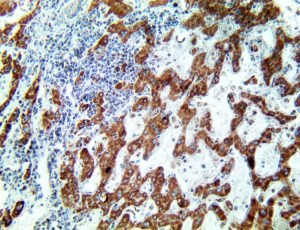
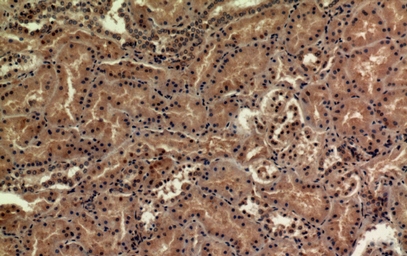
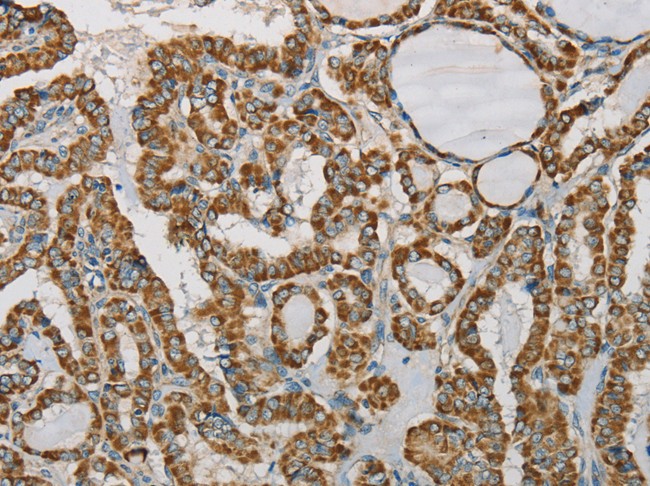
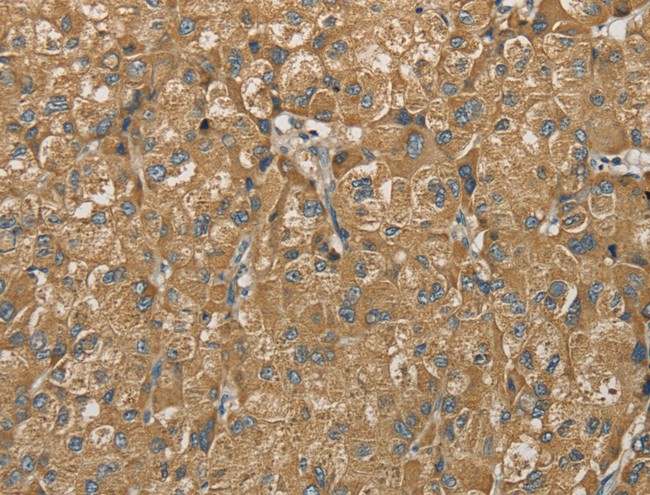
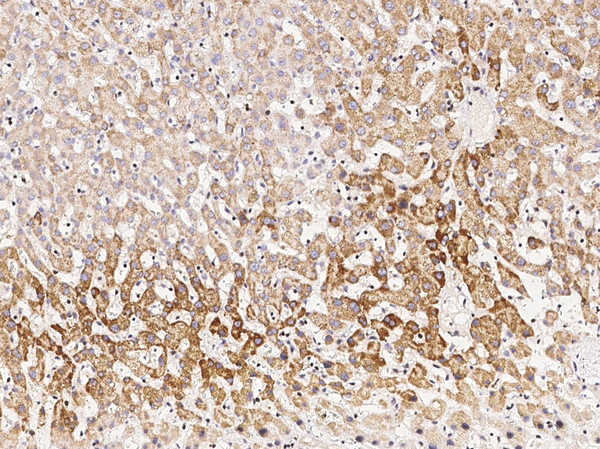
 IHC (Immunohiostchemistry)
Mouse SDHB Monoclonal Antibody | anti-SDHB antibody
SDHB, Mmab
Applications
Immunohistochemistry
Synonyms
SDHB, Antibody; SDHB, Mmab; anti-SDHB antibody
Host
Mouse
Clonality
Monoclonal
Isotype
IgG1/K
Clone Number
BSB-131
Form/Format
Concentrate or Prediluted
Sequence Length
249
Applicable Applications for anti-SDHB antibody
IHC (Immunohistochemistry)
Immunogen
A Recombinant full length of the human succinate dehydrogenase iron-sulfur protein.
Localization
Cytoplasmic, Membranous
Control
Breast, Adrenal, Prostate, Kidney, Spleen, Tonsil, Breast Carcinoma, Hepatocellular Carcinoma, Lung Adeno Carcinoma, Prostate Carcinoma, Papillary Thyroid Carcinoma
Intended Use
This antibody is intended for use in Immunohistochemical applications on formalinfixed paraffin-embedded tissues (FFPE), frozen tissue sections and cell preparations. Interpretation of results should be performed by a qualified medical professional.
Preparation and Storage
Store at 2-8 degree C.
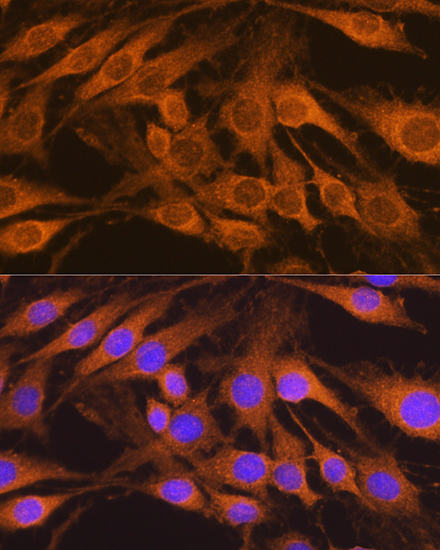
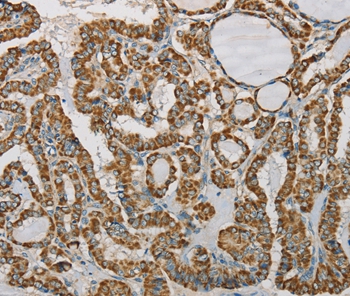
IHC (Immunohiostchemistry)
IHC (Immunohiostchemistry)
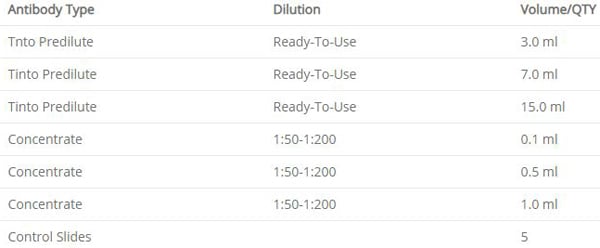
Dilution Info
Dilution Info
Related Product Information for anti-SDHB antibody
Succinate dehydrogenase [ubiquinone] iron-sulfur subunit, mitochondrial (SDHB) also known as iron-sulfur subunit of complex II (Ip) is a protein that in humans is encoded by the SDHB gene. The gene that codes for the SDHB protein is nuclear, not mitochondrial DNA. However, the expressed protein is located in the inner membrane of the mitochondria. Four subunits comprise the SDH protein complex: a flavochrome subunit (SDHA), an iron-sulfur protein (SDHB) and two membrane-bound subunits (SDHC and SDHD) anchored to the inner mitochondrial membrane. Mutation in this protein is associated with wide range of diseases such as Renal Cell Carcinoma, Paraganglioma, Gastrointestinal Stromal Tumors (GISTs), Pituitary Adenoma, and many others.
Mutations in the tumor suppressor genes SDHB, SDHC, and SDHD (or collectively SDHx) cause the inherited paraganglioma syndromes, characterized by pheochromocytomas and paragangliomas. The IHC for SDHB is negative in all SDH mutated paragangliomas regardless of whether the B, C or D subunit is involved. However, other tumors have been associated with SDHx mutations, such as Gastrointestinal Stromal Tumors, specifically in the context of Carney-Stratakis syndrome. It has been shown that SDHB immunohistochemistry is a reliable technique for the identification of pheochromocytomas and paragangliomas caused by SDHx mutations. It’s been shown that Carney-Stratakis syndrome- and Carney-triad-associated GISTs are negative by immunohistochemistry for SDHB in contrast to KIT- or PDGFRA-mutated GISTs and a majority of sporadic GISTs, and it has been suggested that GISTs of epithelioid cell morphology are tested for SDHB immunohistochemically.
Mutations in the tumor suppressor genes SDHB, SDHC, and SDHD (or collectively SDHx) cause the inherited paraganglioma syndromes, characterized by pheochromocytomas and paragangliomas. The IHC for SDHB is negative in all SDH mutated paragangliomas regardless of whether the B, C or D subunit is involved. However, other tumors have been associated with SDHx mutations, such as Gastrointestinal Stromal Tumors, specifically in the context of Carney-Stratakis syndrome. It has been shown that SDHB immunohistochemistry is a reliable technique for the identification of pheochromocytomas and paragangliomas caused by SDHx mutations. It’s been shown that Carney-Stratakis syndrome- and Carney-triad-associated GISTs are negative by immunohistochemistry for SDHB in contrast to KIT- or PDGFRA-mutated GISTs and a majority of sporadic GISTs, and it has been suggested that GISTs of epithelioid cell morphology are tested for SDHB immunohistochemically.
NCBI and Uniprot Product Information
NCBI GI #
NCBI Official Full Name
SdhB (mitochondrion)
Customer Reviews
Loading reviews...
Share Your Experience
Similar Products




Product Notes
The SDHB (Catalog #AAA59317) is an Antibody produced from Mouse and is intended for research purposes only. The product is available for immediate purchase. AAA Biotech's SDHB can be used in a range of immunoassay formats including, but not limited to, IHC (Immunohistochemistry). Researchers should empirically determine the suitability of the SDHB for an application not listed in the data sheet. Researchers commonly develop new applications and it is an integral, important part of the investigative research process. It is sometimes possible for the material contained within the vial of "SDHB, Monoclonal Antibody" to become dispersed throughout the inside of the vial, particularly around the seal of said vial, during shipment and storage. We always suggest centrifuging these vials to consolidate all of the liquid away from the lid and to the bottom of the vial prior to opening. Please be advised that certain products may require dry ice for shipping and that, if this is the case, an additional dry ice fee may also be required.Precautions
All products in the AAA Biotech catalog are strictly for research-use only, and are absolutely not suitable for use in any sort of medical, therapeutic, prophylactic, in-vivo, or diagnostic capacity. By purchasing a product from AAA Biotech, you are explicitly certifying that said products will be properly tested and used in line with industry standard. AAA Biotech and its authorized distribution partners reserve the right to refuse to fulfill any order if we have any indication that a purchaser may be intending to use a product outside of our accepted criteria.Disclaimer
Though we do strive to guarantee the information represented in this datasheet, AAA Biotech cannot be held responsible for any oversights or imprecisions. AAA Biotech reserves the right to adjust any aspect of this datasheet at any time and without notice. It is the responsibility of the customer to inform AAA Biotech of any product performance issues observed or experienced within 30 days of receipt of said product. To see additional details on this or any of our other policies, please see our Terms & Conditions page.Item has been added to Shopping Cart
If you are ready to order, navigate to Shopping Cart and get ready to checkout.