Loading...

Skip to main content
Call us at +1-800-604-9114 for more information about our products or contact us online Need help? +1-800-604-9114 or contact us
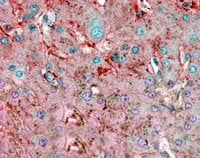
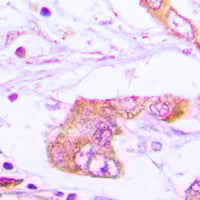
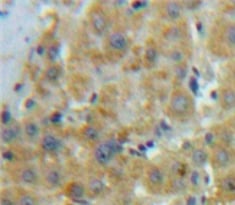
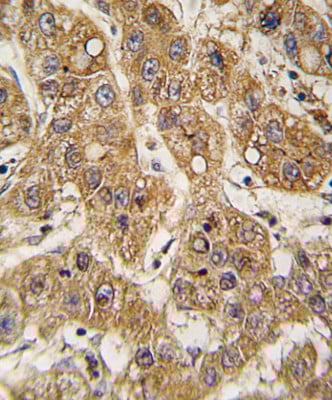
product-image-AAA290138_IHC11.jpg IHC (Immunohistochemisry) (Formalin-fixed and paraffin-embedded human hepatocarcinoma tissue reacted with APOE antibody (C-term) , which was peroxidase-conjugated to the secondary antibody, followed by DAB staining. This data demonstrates the use of this antibody for immunohistochemistry; clinical relevance has not been evaluated.)

Rabbit APOE Polyclonal Antibody | anti-APOE antibody

APOE Antibody (C-term)

Gene Names
APOE; AD2; LPG; APO-E; LDLCQ5
Reactivity
Human, Mouse (Predicted Reactivity: Monkey, Rabbit)
Applications
Western Blot, Immunohistochemistry, ELISA
Purity
This antibody is purified through a protein A column, followed by peptide affinity purification.
Synonyms
APOE, Antibody; APOE Antibody (C-term); Apolipoprotein E; Apo-E; APOE; anti-APOE antibody
Ordering
Host
Rabbit
Reactivity
Human, Mouse (Predicted Reactivity: Monkey, Rabbit)
Clonality
Polyclonal
Isotype
Rabbit Ig
Specificity
This APOE antibody is generated from rabbits immunized with a KLH conjugated synthetic peptide between 263-292 amino acids from the C-terminal region of human APOE.
Purity/Purification
This antibody is purified through a protein A column, followed by peptide affinity purification.
Form/Format
Purified polyclonal antibody supplied in PBS with 0.09% (W/V) sodium azide.
Concentration
Vial Concentration: 0.5 (varies by lot)
Sequence Positions
263-292
Sequence Length
317
Applicable Applications for anti-APOE antibody
WB (Western Blot), IHC (Immunohistochemistry), ELISA
Function
APOE is an apolipoprotein, a protein associating with lipid particles, that mainly unctions in lipoprotein-mediated lipid transport between organs via the plasma and interstitial fluids (PubMed:6860692, PubMed:1911868, PubMed:14754908). APOE is a core component of plasma lipoproteins and is involved in their production, conversion and clearance (PubMed:6860692, PubMed:2762297, PubMed:1911868, PubMed:1917954, PubMed:9395455, PubMed:14754908, PubMed:23620513). Apoliproteins are amphipathic molecules that interact both with lipids of the lipoprotein particle core and the aqueous environment of the plasma (PubMed:6860692, PubMed:2762297, PubMed:9395455). As such, APOE associates with chylomicrons, chylomicron remnants, very low density lipoproteins (VLDL) and intermediate density lipoproteins (IDL) but shows a preferential binding to high-density lipoproteins (HDL) (PubMed:6860692, PubMed:1911868). It also binds a wide range of cellular receptors including the LDL receptor/LDLR, the LDL receptor-related proteins LRP1, LRP2 and LRP8 and the very low-density lipoprotein receptor/VLDLR that mediate the cellular uptake of the APOE-containing lipoprotein particles (PubMed:2762297, PubMed:1917954, PubMed:7768901, PubMed:8939961, PubMed:12950167, PubMed:20030366, PubMed:2063194, PubMed:8756331, PubMed:20303980, PubMed:1530612, PubMed:7635945). Finally, APOE has also a heparin-binding activity and binds heparan- sulfate proteoglycans on the surface of cells, a property that supports the capture and the receptor-mediated uptake of APOE-containing lipoproteins by cells (PubMed:9395455, PubMed:9488694, PubMed:23676495, PubMed:7635945). A main function of APOE is to mediate lipoprotein clearance through the uptake of chylomicrons, VLDLs, and HDLs by hepatocytes (PubMed:1911868, PubMed:1917954, PubMed:9395455, PubMed:23676495, PubMed:29516132). APOE is also involved in the biosynthesis by the liver of VLDLs as well as their uptake by peripheral tissues ensuring the delivery of triglycerides and energy storage in muscle, heart and adipose tissues (PubMed:2762297, PubMed:29516132). By participating in the lipoprotein-mediated distribution of lipids among tissues, APOE plays a critical role in plasma and tissues lipid homeostasis (PubMed:2762297, PubMed:1917954, PubMed:29516132). APOE is also involved in two steps of reverse cholesterol transport, the HDLs-mediated transport of cholesterol from peripheral tissues to the liver, and thereby plays an important role in cholesterol homeostasis (PubMed:9395455, PubMed:14754908, PubMed:23620513). First, it is functionally associated with ABCA1 in the biogenesis of HDLs in tissues (PubMed:14754908, PubMed:23620513). Second, it is enriched in circulating HDLs and mediates their uptake by hepatocytes (PubMed:9395455). APOE also plays an important role in lipid transport in the central nervous system, regulating neuron survival and sprouting (PubMed:8939961, PubMed:25173806). APOE is also involved in innate and adaptive immune responses, controlling for instance the survival of myeloid-derived suppressor cells (By similarity). APOE, may also play a role in transcription regulation through a receptor-dependent and cholesterol-independent mechanism, that activates MAP3K12 and a non-canonical MAPK signal transduction pathway that results in enhanced AP-1-mediated transcription of APP (PubMed:28111074).
Cellular Location
Secreted. Secreted, extracellular space. Secreted, extracellular space, extracellular matrix Note=In the plasma, APOE is associated with chylomicrons, chylomicrons remnants, VLDL, LDL and HDL lipoproteins (PubMed:1911868, PubMed:8340399). Lipid poor oligomeric APOE is associated with the extracellular matrix in a calcium- and heparan-sulfate proteoglycans- dependent manner (PubMed:9488694). Lipidation induces the release from the extracellular matrix (PubMed:9488694).
Tissue Location
Produced by several tissues and cell types and mainly found associated with lipid particles in the plasma, the interstitial fluid and lymph (PubMed:25173806). Mainly synthesized by liver hepatocytes (PubMed:25173806). Significant quantities are also produced in brain, mainly by astrocytes and glial cells in the cerebral cortex, but also by neurons in frontal cortex and hippocampus (PubMed:3115992, PubMed:10027417). It is also expressed by cells of the peripheral nervous system (PubMed:10027417, PubMed:25173806). Also expressed by adrenal gland, testis, ovary, skin, kidney, spleen and adipose tissue and macrophages in various tissues (PubMed:25173806)
Preparation and Storage
Maintain refrigerated at 2-8 degree C for up to 2 weeks. For long term storage store at -20 degree C in small aliquots to prevent freeze-thaw cycles.

IHC (Immunohistochemisry)

(Formalin-fixed and paraffin-embedded human hepatocarcinoma tissue reacted with APOE antibody (C-term) , which was peroxidase-conjugated to the secondary antibody, followed by DAB staining. This data demonstrates the use of this antibody for immunohistochemistry; clinical relevance has not been evaluated.)

product-image-AAA290138_IHC11.jpg IHC (Immunohistochemisry) (Formalin-fixed and paraffin-embedded human hepatocarcinoma tissue reacted with APOE antibody (C-term) , which was peroxidase-conjugated to the secondary antibody, followed by DAB staining. This data demonstrates the use of this antibody for immunohistochemistry; clinical relevance has not been evaluated.)

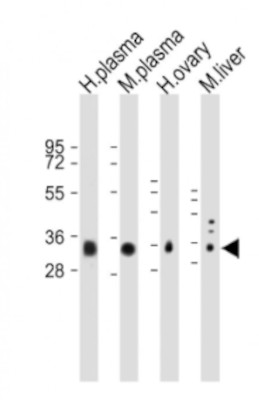
WB (Western Blot)

(All lanes : Anti-APOE Antibody (C-term) at 1:1000 dilution Lane 1: Human plasma lysate Lane 2: Mouse plasma lysate Lane 3: Human ovary lysate Lane 4: Mouse liver lysate Lysates/proteins at 20 ?g per lane. Secondary Goat Anti-Rabbit IgG, (H+L), Peroxidase conjugated at 1/10000 dilution. Predicted band size : 36 kDa Blocking/Dilution buffer: 5% NFDM/TBST.)

product-image-AAA290138_WB13.jpg WB (Western Blot) (All lanes : Anti-APOE Antibody (C-term) at 1:1000 dilution Lane 1: Human plasma lysate Lane 2: Mouse plasma lysate Lane 3: Human ovary lysate Lane 4: Mouse liver lysate Lysates/proteins at 20 ?g per lane. Secondary Goat Anti-Rabbit IgG, (H+L), Peroxidase conjugated at 1/10000 dilution. Predicted band size : 36 kDa Blocking/Dilution buffer: 5% NFDM/TBST.)

WB (Western Blot)

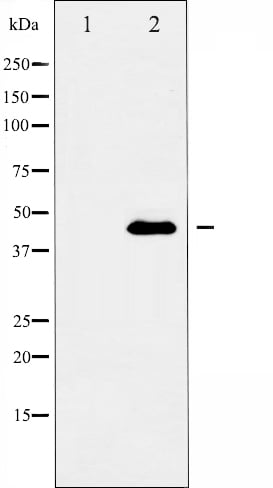
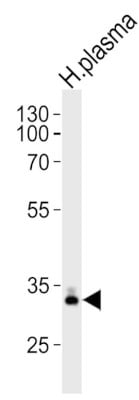
(Western blot analysis of lysate from human plasma tissue lysate, using APOE Antibody (C-term). AAA290138 was diluted at 1:1000. A goat anti-rabbit IgG H&L(HRP) at 1:10000 dilution was used as the secondary antibody. Lysate at 20ug.)

product-image-AAA290138_WB15.jpg WB (Western Blot) (Western blot analysis of lysate from human plasma tissue lysate, using APOE Antibody (C-term). AAA290138 was diluted at 1:1000. A goat anti-rabbit IgG H&L(HRP) at 1:10000 dilution was used as the secondary antibody. Lysate at 20ug.)
Related Product Information for anti-APOE antibody
Chylomicron remnants and very low density lipoprotein (VLDL) remnants are rapidly removed from the circulation by receptor-mediated endocytosis in the liver. Apolipoprotein E, a main apoprotein of the chylomicron, binds to a specific receptor on liver cells and peripheral cells. ApoE is essential for the normal catabolism of triglyceride-rich lipoprotein constituents. The APOE gene is mapped to chromosome 19 in a cluster with APOC1 and APOC2. Defects in apolipoprotein E result in familial dysbetalipoproteinemia, or type III hyperlipoproteinemia (HLP III),in which increased plasma cholesterol and triglycerides are the consequence of impaired clearance of chylomicron and VLDL remnants.
References
Wood,K.C., Appl Physiol Nutr Metab 33 (4), 761-768 (2008) Pemberton,L., (er) HIV Med. (2008) In press Sundermann,E.E., (er) Horm Behav (2008) In press Christensen,H.,(er) BMC Geriatr 8, 14 (2008)

NCBI and Uniprot Product Information

NCBI GI #
NCBI GeneID
348
NCBI Accession #
NCBI GenBank Nucleotide #
UniProt Accession #
NCBI Official Full Name
apolipoprotein E isoform b
NCBI Official Synonym Full Names
apolipoprotein E
NCBI Official Symbol
APOE
NCBI Official Synonym Symbols
AD2; LPG; APO-E; LDLCQ5
NCBI Protein Information
apolipoprotein E
UniProt Protein Name
Apolipoprotein E
UniProt Gene Name
APOE
UniProt Synonym Gene Names
Apo-E
UniProt Entry Name
APOE_HUMAN

Similar Products

Product Notes

The APOE apoe (Catalog #AAA290138) is an Antibody produced from Rabbit and is intended for research purposes only. The product is available for immediate purchase. The immunogen sequence is 263-292. The APOE Antibody (C-term) reacts with Human, Mouse (Predicted Reactivity: Monkey, Rabbit) and may cross-react with other species as described in the data sheet. AAA Biotech's APOE can be used in a range of immunoassay formats including, but not limited to, WB (Western Blot), IHC (Immunohistochemistry), ELISA. Researchers should empirically determine the suitability of the APOE apoe for an application not listed in the data sheet. Researchers commonly develop new applications and it is an integral, important part of the investigative research process. It is sometimes possible for the material contained within the vial of "APOE, Polyclonal Antibody" to become dispersed throughout the inside of the vial, particularly around the seal of said vial, during shipment and storage. We always suggest centrifuging these vials to consolidate all of the liquid away from the lid and to the bottom of the vial prior to opening. Please be advised that certain products may require dry ice for shipping and that, if this is the case, an additional dry ice fee may also be required.

Precautions

All products in the AAA Biotech catalog are strictly for research-use only, and are absolutely not suitable for use in any sort of medical, therapeutic, prophylactic, in-vivo, or diagnostic capacity. By purchasing a product from AAA Biotech, you are explicitly certifying that said products will be properly tested and used in line with industry standard. AAA Biotech and its authorized distribution partners reserve the right to refuse to fulfill any order if we have any indication that a purchaser may be intending to use a product outside of our accepted criteria.

Disclaimer

Though we do strive to guarantee the information represented in this datasheet, AAA Biotech cannot be held responsible for any oversights or imprecisions. AAA Biotech reserves the right to adjust any aspect of this datasheet at any time and without notice. It is the responsibility of the customer to inform AAA Biotech of any product performance issues observed or experienced within 30 days of receipt of said product. To see additional details on this or any of our other policies, please see our Terms & Conditions page.

Item has been added to Shopping Cart

If you are ready to order, navigate to Shopping Cart and get ready to checkout.

Submit a Question

Please complete the form below and a representative will contact you as soon as possible.

Request more Information

Please complete the form below and a representative will contact you as soon as possible.

Request a Manual

Please complete the form below and a representative will contact you as soon as possible.

Request a Quote

Please complete the form below and a representative will contact you as soon as possible.