
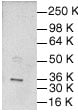
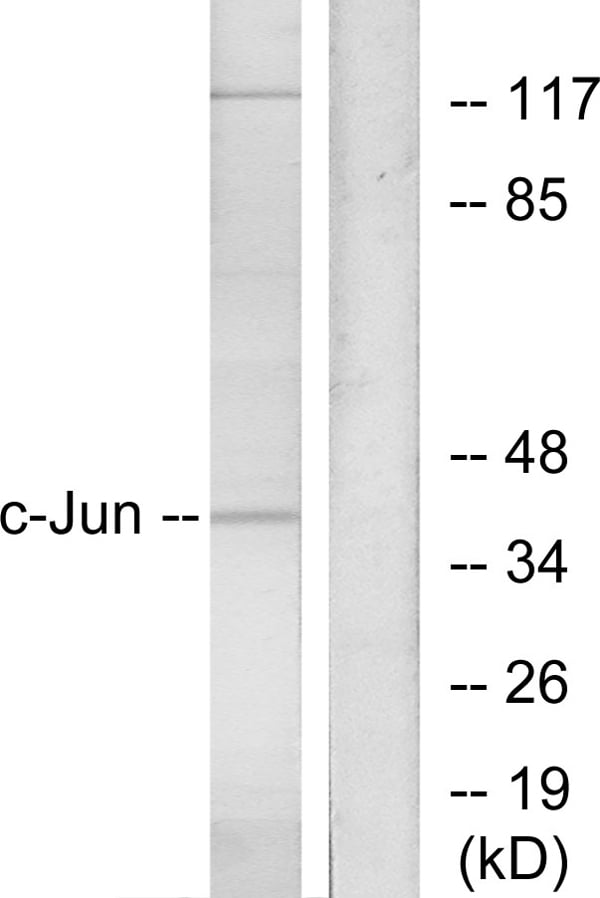
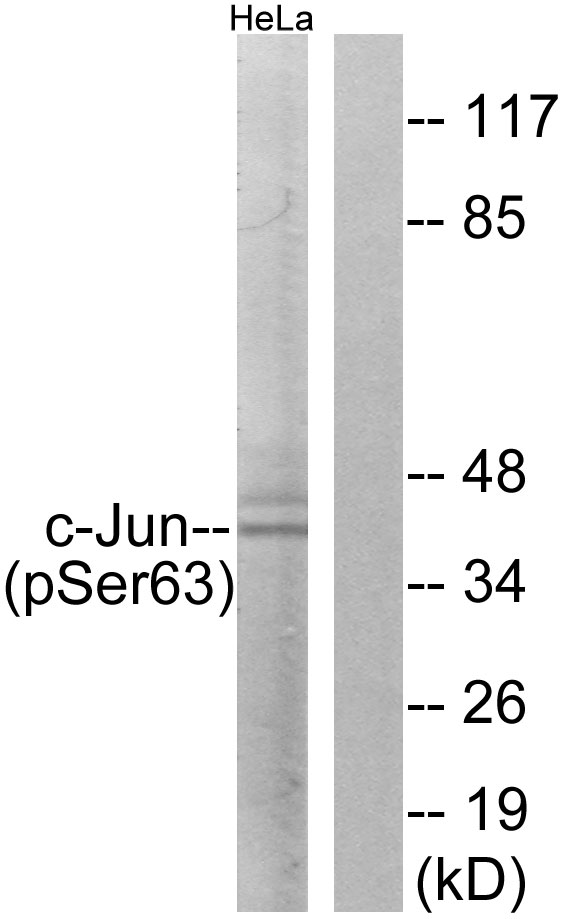
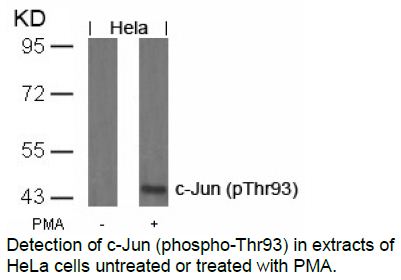
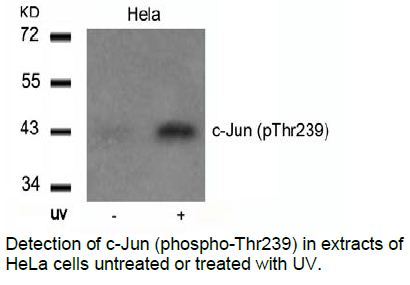
 WB (Western Blot)
Rabbit c-Jun Polyclonal Antibody | anti-c-Jun antibody
c-Jun (A15) Antibody
Gene Names
jun; c-Jun; fj36h07; zgc:65863; wu:fj36h07
Reactivity
Mouse, rat, human
Applications
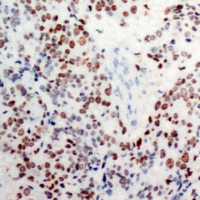
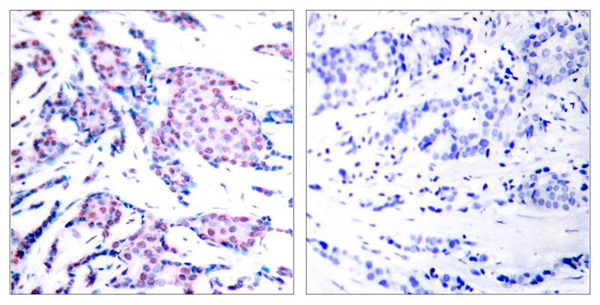
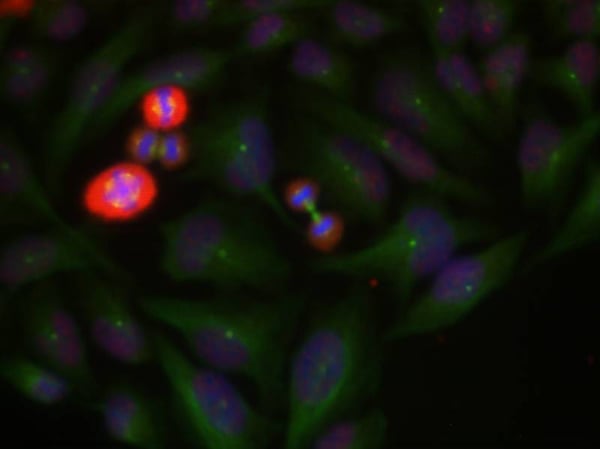
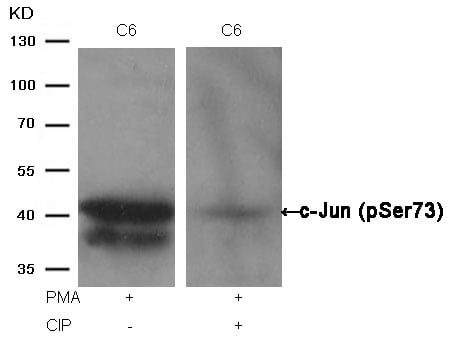
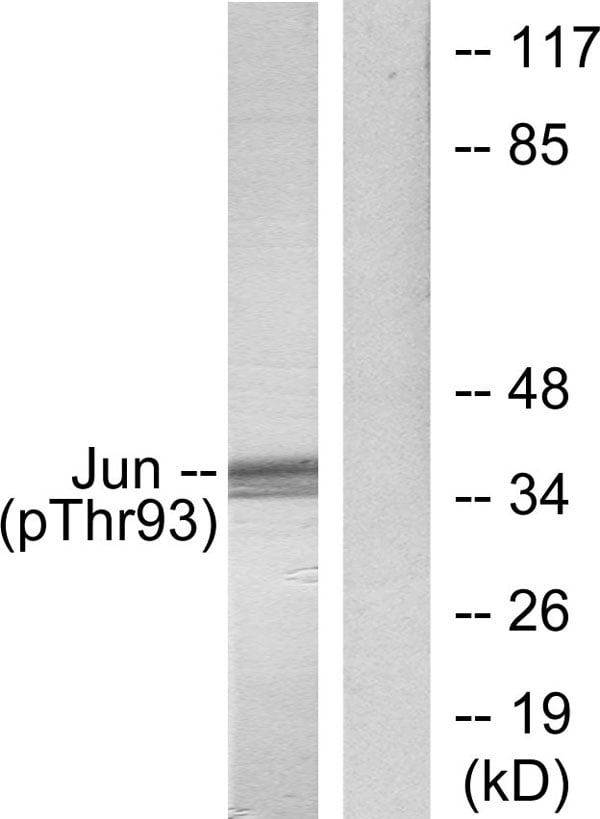
Immunohistochemistry, Immunoprecipitation, Western Blot
Synonyms
c-Jun, Antibody; c-Jun (A15) Antibody; anti-c-Jun antibody
Host
Rabbit
Reactivity
Mouse, rat, human
Clonality
Polyclonal
Specificity
Mouse, rat and human c-Jun p39
Form/Format
Each vial contains 200 µg/ml of affinity purified rabbit IgG in 1 ml PBS containing 0.1 % sodium azide and 0.2% gelatin.
Sequence Length
308
Applicable Applications for anti-c-Jun antibody
IHC (Immunohistochemistry), IP (Immunoprecipitation), WB (Western Blot)
Origin
c-Jun (A15) is provided as an affinity purified rabbit polyclonal antibody, raised against a peptide mapping to the amino terminus of mouse c-Jun p39.
Immunogen
Synthetic peptide mapping to the amino terminus of mouse c-Jun p39.
Competition Studies
A blocking peptide is also available, ( ), for use in competition studies. Each vial contains 100 µg of peptide in 0.5 ml PBS with 0.1% sodium azide and 100 µg BSA.
Preparation and Storage
Store this product at 46C, do not freeze. The product is stable for one year from the date of shipment.
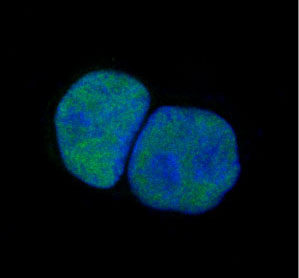
WB (Western Blot)
WB (Western Blot)
Related Product Information for anti-c-Jun antibody
The products of the proto-oncogenes c-Jun (c-Jun was previously known as the Fos-binding protein p39) and c-Fos are known to form a complex in the nucleus (2, 6). AP-1 (activating protein-1) is a collective term referring to these dimeric transcription factors composed of Jun, Fos or ATF (activating transcription factor) subunits that bind to a common DNA site, the AP-1-binding site (1). There is evidence that AP-1 proteins, mostly those that belong to the Jun group, control cell life and death through their ability to regulate the expression and function of cell cycle regulators such as Cyclin D1, p53, p21 (cip1/waf1), p19 (ARF) and p16 (3). The Fos and Jun proto-oncogenes expression is induced transiently by a great variety of extracellular stimuli associated with mitogenesis, differentiation processes or depolarization of neurons (5). Studies have established a unique role for Fos in determining the differentiation and activity of progenitors of the osteoclast lineage (4). c-Jun is a transcription factor belonging to the activator protein 1 family. A mutated version of c-Jun (v-Jun) transduced by the avian retrovirus ASV17 induces oncogenic transformation in avian cell cultures and sarcomas in young galliform birds. The oncogenicity of c-Jun probably results from transcriptional deregulation of v-Jun-responsive target genes (7).
References
1.) Himes SR, Sester DP, Ravasi T, Cronau SL, Sasmono T, Hume DA. 2006. The JNK are important for development and survival of macrophages. J Immunol. Feb 15;176(4):2219-28.2.) Dann SG, Ted Allison W, Veldhoen K, Johnson T, Hawryshyn CW. 2004. Chromatin immunoprecipitation assay on the rainbow trout opsin proximal promoters illustrates binding of NF-kappaB and c-jun to the SWS1 promoter in the retina. Exp Eye Res. May;78(5):1015-24.
1. Karin M, Liu Zg, Zandi E. AP-1 function and regulation.Curr Opin Cell Biol. 1997 Apr;9(2):240-6.2. Bos TJ, Rauscher FJ 3rd, Curran T, Vogt PK. The carboxy terminus of the viral Jun oncoprotein is required for complex formation with the cellular Fos protein. Oncogene. 1989 Feb;4(2):123-6.3. Shaulian E, Karin M. AP-1 in cell proliferation and survival. Oncogene. 2001 Apr 30;20(19):2390-400.4. Liebermann DA, Gregory B, Hoffman B. AP-1 (Fos/Jun) transcription factors in hematopoietic differentiation and apoptosis. Int J Oncol. 1998 Mar;12(3):685-7005. Curran T. Fos and Jun: oncogenic transcription factors.Tohoku J Exp Med. 1992 Oct;168(2):169-74.6. Rauscher FJ 3rd, Voulalas PJ, Franza BR Jr, Curran T. Fos and Jun bind cooperatively to the AP-1 site: reconstitution in vitro. Genes Dev. 1988 Dec;2(12B):1687-99.7. Fu Sl, Bottoli I, Goller M, Vogt PK. Heparin-binding epidermal growth factor-like growth factor, a v-Jun target gene, induces oncogenic transformation.. Proc Natl Acad Sci U S A. 1999 May 11;96(10):5716-21.
1. Karin M, Liu Zg, Zandi E. AP-1 function and regulation.Curr Opin Cell Biol. 1997 Apr;9(2):240-6.2. Bos TJ, Rauscher FJ 3rd, Curran T, Vogt PK. The carboxy terminus of the viral Jun oncoprotein is required for complex formation with the cellular Fos protein. Oncogene. 1989 Feb;4(2):123-6.3. Shaulian E, Karin M. AP-1 in cell proliferation and survival. Oncogene. 2001 Apr 30;20(19):2390-400.4. Liebermann DA, Gregory B, Hoffman B. AP-1 (Fos/Jun) transcription factors in hematopoietic differentiation and apoptosis. Int J Oncol. 1998 Mar;12(3):685-7005. Curran T. Fos and Jun: oncogenic transcription factors.Tohoku J Exp Med. 1992 Oct;168(2):169-74.6. Rauscher FJ 3rd, Voulalas PJ, Franza BR Jr, Curran T. Fos and Jun bind cooperatively to the AP-1 site: reconstitution in vitro. Genes Dev. 1988 Dec;2(12B):1687-99.7. Fu Sl, Bottoli I, Goller M, Vogt PK. Heparin-binding epidermal growth factor-like growth factor, a v-Jun target gene, induces oncogenic transformation.. Proc Natl Acad Sci U S A. 1999 May 11;96(10):5716-21.
NCBI and Uniprot Product Information
NCBI GI #
NCBI GeneID
NCBI Accession #
NCBI GenBank Nucleotide #
UniProt Accession #
NCBI Official Full Name
transcription factor AP-1
NCBI Official Synonym Full Names
jun proto-oncogene
NCBI Official Symbol
jun
NCBI Official Synonym Symbols
c-Jun; fj36h07; zgc:65863; wu:fj36h07
NCBI Protein Information
transcription factor AP-1; v-jun sarcoma virus 17 oncogene homolog
UniProt Protein Name
C-Jun
UniProt Gene Name
jun
UniProt Entry Name
Q4ZJE9_DANRE
Customer Reviews
Loading reviews...
Share Your Experience
Similar Products


Product Notes
The c-Jun jun (Catalog #AAA63008) is an Antibody produced from Rabbit and is intended for research purposes only. The product is available for immediate purchase. The c-Jun (A15) Antibody reacts with Mouse, rat, human and may cross-react with other species as described in the data sheet. AAA Biotech's c-Jun can be used in a range of immunoassay formats including, but not limited to, IHC (Immunohistochemistry), IP (Immunoprecipitation), WB (Western Blot). Researchers should empirically determine the suitability of the c-Jun jun for an application not listed in the data sheet. Researchers commonly develop new applications and it is an integral, important part of the investigative research process. It is sometimes possible for the material contained within the vial of "c-Jun, Polyclonal Antibody" to become dispersed throughout the inside of the vial, particularly around the seal of said vial, during shipment and storage. We always suggest centrifuging these vials to consolidate all of the liquid away from the lid and to the bottom of the vial prior to opening. Please be advised that certain products may require dry ice for shipping and that, if this is the case, an additional dry ice fee may also be required.Precautions
All products in the AAA Biotech catalog are strictly for research-use only, and are absolutely not suitable for use in any sort of medical, therapeutic, prophylactic, in-vivo, or diagnostic capacity. By purchasing a product from AAA Biotech, you are explicitly certifying that said products will be properly tested and used in line with industry standard. AAA Biotech and its authorized distribution partners reserve the right to refuse to fulfill any order if we have any indication that a purchaser may be intending to use a product outside of our accepted criteria.Disclaimer
Though we do strive to guarantee the information represented in this datasheet, AAA Biotech cannot be held responsible for any oversights or imprecisions. AAA Biotech reserves the right to adjust any aspect of this datasheet at any time and without notice. It is the responsibility of the customer to inform AAA Biotech of any product performance issues observed or experienced within 30 days of receipt of said product. To see additional details on this or any of our other policies, please see our Terms & Conditions page.Item has been added to Shopping Cart
If you are ready to order, navigate to Shopping Cart and get ready to checkout.