Loading...

Skip to main content
Call us at +1-800-604-9114 for more information about our products or contact us online Need help? +1-800-604-9114 or contact us
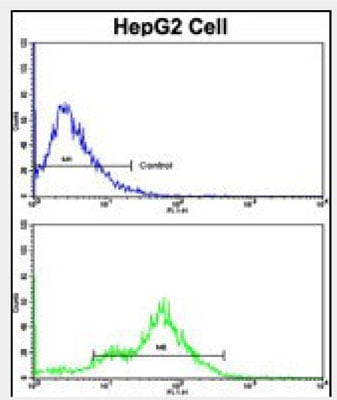
product-image-AAA285413_FCM10.jpg FCM/FACS (Flow Cytometry) (Flow cytometric analysis of HepG2 cells using CEACAM Antibody (N-term)(bottom histogram) compared to a negative control cell (top histogram). FITC-conjugated goat-anti-rabbit secondary antibodies were used for the analysis.)

Rabbit anti-Human CEACAM Polyclonal Antibody | anti-CEACAM1 antibody

CEACAM Antibody (N-term)

Gene Names
CEACAM1; BGP; BGP1; BGPI
Reactivity
Human
Applications
Flow Cytometry, Functional Assay, Immunohistochemistry, ELISA, Western Blot
Purity
Purified Rabbit Polyclonal Antibody (Pab)
Synonyms
CEACAM, Antibody; CEACAM Antibody (N-term); Carcinoembryonic antigen-related cell adhesion molecule 1; Biliary glycoprotein 1; BGP-1; CD66a; CEACAM1; BGP; BGP1; anti-CEACAM1 antibody
Ordering
Host
Rabbit
Reactivity
Human
Clonality
Polyclonal
Isotype
Rabbit Ig
Specificity
This CEACAM antibody is generated from rabbits immunized with a KLH conjugated synthetic peptide between 50-77 amino acids from the N-terminal region of human CEACAM.
Purity/Purification
Purified Rabbit Polyclonal Antibody (Pab)
Form/Format
Purified polyclonal antibody supplied in PBS with 0.09% (W/V) sodium azide. This antibody is purified through a protein A column, followed by peptide affinity purification.
Sequence Positions
50-77
Sequence Length
368
Applicable Applications for anti-CEACAM1 antibody
FCM/FACS (Flow Cytometry), IHC (Immunohistochemistry), ELISA, WB (Western Blot)
Function
[Isoform 1]: Cell adhesion protein that mediates homophilic cell adhesion in a calcium-independent manner (By similarity). Plays a role as coinhibitory receptor in immune response, insulin action and functions also as an activator during angiogenesis (PubMed: , PubMed: , PubMed: ). Its coinhibitory receptor function is phosphorylation- and PTPN6 -dependent, which in turn, suppress signal transduction of associated receptors by dephosphorylation of their downstream effectors. Plays a role in immune response, of T cells, natural killer (NK) and neutrophils (PubMed: , PubMed: ). Upon TCR/CD3 complex stimulation, inhibits TCRmediated cytotoxicity by blocking granule exocytosis by mediating homophilic binding to adjacent cells, allowing interaction with and phosphorylation by LCK and interaction with the TCR/CD3 complex which recruits PTPN6 resulting in dephosphorylation of CD247 and ZAP70 (PubMed: ). Also inhibits T cell proliferation and cytokine production through inhibition of JNK cascade and plays a crucial role in regulating autoimmunity and anti-tumor immunity by inhibiting T cell through its interaction with HAVCR2 (PubMed: ). Upon natural killer (NK) cells activation, inhibit KLRK1-mediated cytolysis of CEACAM1-bearing tumor cells by trans-homophilic interactions with CEACAM1 on the target cell and lead to cis-interaction between CEACAM1 and KLRK1, allowing PTPN6 recruitment and then VAV1 dephosphorylation (PubMed:23696226). Upon neutrophils activation negatively regulates IL1B production by recruiting PTPN6 to a SYK-TLR4-CEACAM1 complex, that dephosphorylates SYK, reducing the production of reactive oxygen species (ROS) and lysosome disruption, which in turn, reduces the activity of the inflammasome. Downregulates neutrophil production by acting as a coinhibitory receptor for CSF3R by downregulating the CSF3R-STAT3 pathway through recruitment of PTPN6 that dephosphorylates CSF3R (By similarity). Also regulates insulin action by promoting INS clearance and regulating lipogenesis in liver through regulating insulin signaling (By similarity). Upon INS stimulation, undergoes phosphorylation by INSR leading to INS clearance by increasing receptor-mediated insulin endocytosis. This inernalization promotes interaction with FASN leading to receptor-mediated insulin degradation and to reduction of FASN activity leading to negative regulation of fatty acid synthesis. INSR-mediated phosphorylation also provokes a down-regulation of cell proliferation through SHC1 interaction resulting in decrease coupling of SHC1 to the MAPK3/ERK1-MAPK1/ERK2 and phosphatidylinositol 3-kinase pathways (By similarity). Functions as activator in angiogenesis by promoting blood vessel remodeling through endothelial cell differentiation and migration and in arteriogenesis by increasing the number of collateral arteries and collateral vessel calibers after ischemia. Also regulates vascular permeability through the VEGFR2 signaling pathway resulting in control of nitric oxide production (By similarity). Downregulates cell growth in response to EGF through its interaction with SHC1 that mediates interaction with EGFR resulting in decrease coupling of SHC1 to the MAPK3/ERK1- MAPK1/ERK2 pathway (By similarity). Negatively regulates platelet aggregation by decreasing platelet adhesion on type I collagen through the GPVI-FcRgamma complex (By similarity). Inhibits cell migration and cell scattering through interaction with FLNA; interfers with the interaction of FLNA with RALA (PubMed: ). Mediates bile acid transport activity in a phosphorylation dependent manner (By similarity). Negatively regulates osteoclastogenesis (By similarity).
Cellular Location
[Isoform 1]: Cell membrane {ECO:0000250|UniProtKB:P16573}; Single-pass type I membrane protein {ECO:0000250|UniProtKB:P16573}. Lateral cell membrane {ECO:0000250|UniProtKB:P16573}. Apical cell membrane {ECO:0000250|UniProtKB:P16573}. Basal cell membrane {ECO:0000250|UniProtKB:P16573}. Cell junction. Cell junction, adherens junction {ECO:0000250|UniProtKB:P16573}. Note=Canalicular domain of hepatocyte plasma membranes. Found as a mixture of monomer, dimer and oligomer in the plasma membrane. Occurs predominantly as cis-dimers and/or small cis-oligomers in the cell junction regions. Found as dimer in the solution. Predominantly localized to the lateral cell membranes {ECO:0000250|UniProtKB:P16573} [Isoform3]: Secreted [Isoform 5]: Cell membrane; Single-pass type I membrane protein [Isoform 7]: Cell membrane; Single-pass type I membrane protein Cell projection, microvillus membrane {ECO:0000250|UniProtKB:P31809}; Single-pass type I membrane protein. Apical cell membrane; Single-pass type I membrane protein. Note=Localized to the apical glycocalyx surface (PubMed:10436421). Colocalizes with CEACAM20 at the apical brush border of intestinal cells {ECO:0000250|UniProtKB:P31809, ECO:0000269|PubMed:10436421}
Tissue Location
Expressed in columnar epithelial cells of the colon (at protein level) (PubMed:10436421). The predominant forms expressed by T cells are those containing a long cytoplasmic domain (PubMed:18424730). Expressed in granulocytes and lymphocytes Leukocytes only express isoforms 6 and isoform 1 (PubMed:11994468)
Preparation and Storage
Maintain refrigerated at 2-8 degree C for up to 2 weeks. For long term storage store at -20 degree C in small aliquots to prevent freeze-thaw cycles.

FCM/FACS (Flow Cytometry)

(Flow cytometric analysis of HepG2 cells using CEACAM Antibody (N-term)(bottom histogram) compared to a negative control cell (top histogram). FITC-conjugated goat-anti-rabbit secondary antibodies were used for the analysis.)

product-image-AAA285413_FCM10.jpg FCM/FACS (Flow Cytometry) (Flow cytometric analysis of HepG2 cells using CEACAM Antibody (N-term)(bottom histogram) compared to a negative control cell (top histogram). FITC-conjugated goat-anti-rabbit secondary antibodies were used for the analysis.)

IHC (Immunohistochemisry)

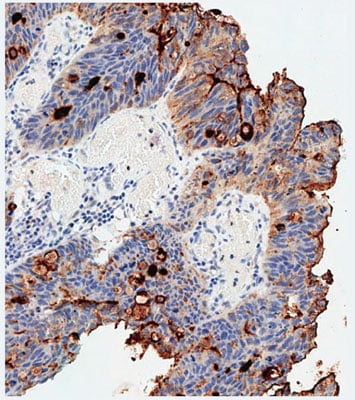
(Immunohistochemical analysis of paraffin-embedded Human colon carcinoma tissue using AP7364a performed on the Leica® BOND RXm. Tissue was fixed with formaldehyde at room temperature, antigen retrieval was by heat mediation with a EDTA buffer (pH9. 0). Samples were incubated with primary antibody(1:500) for 1 hours at room temperature. A undiluted biotinylated CRF Anti-Polyvalent HRP Polymer antibody was used as the secondary antibody.)

product-image-AAA285413_IHC11.jpg IHC (Immunohistochemisry) (Immunohistochemical analysis of paraffin-embedded Human colon carcinoma tissue using AP7364a performed on the Leica® BOND RXm. Tissue was fixed with formaldehyde at room temperature, antigen retrieval was by heat mediation with a EDTA buffer (pH9. 0). Samples were incubated with primary antibody(1:500) for 1 hours at room temperature. A undiluted biotinylated CRF Anti-Polyvalent HRP Polymer antibody was used as the secondary antibody.)

WB (Western Blot)

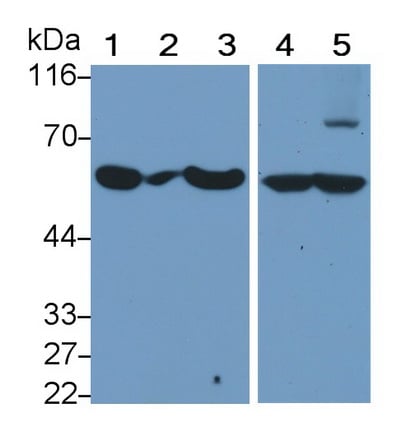
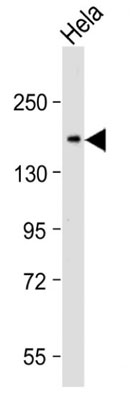
(Anti-CEACAM Antibody (N-term) at 1:2000 dilution + Hela whole cell lysate Lysates/proteins at 20 ug per lane.Secondary Goat Anti-Rabbit IgG, (H+L), Peroxidase conjugated at 1/10000 dilution.Predicted band size : 58 kDaBlocking/Dilution buffer: 5% NFDM/TBST.)

product-image-AAA285413_WB13.jpg WB (Western Blot) (Anti-CEACAM Antibody (N-term) at 1:2000 dilution + Hela whole cell lysate Lysates/proteins at 20 ug per lane.Secondary Goat Anti-Rabbit IgG, (H+L), Peroxidase conjugated at 1/10000 dilution.Predicted band size : 58 kDaBlocking/Dilution buffer: 5% NFDM/TBST.)

WB (Western Blot)

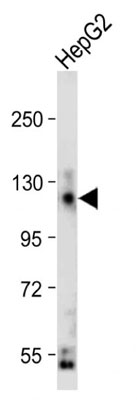
(Anti-CEACAM Antibody (N-term) at 1:2000 dilution + HepG2 whole cell lysate Lysates/proteins at 20 ug per lane.Secondary Goat Anti-Rabbit IgG, (H+L), Peroxidase conjugated at 1/10000 dilution.Predicted band size : 58 kDaBlocking/Dilution buffer: 5% NFDM/TBST.)

product-image-AAA285413_WB15.jpg WB (Western Blot) (Anti-CEACAM Antibody (N-term) at 1:2000 dilution + HepG2 whole cell lysate Lysates/proteins at 20 ug per lane.Secondary Goat Anti-Rabbit IgG, (H+L), Peroxidase conjugated at 1/10000 dilution.Predicted band size : 58 kDaBlocking/Dilution buffer: 5% NFDM/TBST.)
Related Product Information for anti-CEACAM1 antibody
CEACAM is a member of the carcinoembryonic antigen (CEA) family, which belongs to the immunoglobulin superfamily. The protein was originally described in bile ducts of liver as biliary glycoprotein. Subsequently, it was found to be a cell-cell adhesion molecule detected on leukocytes, epithelia, and endothelia. The protein mediates cell adhesion via homophilic as well as heterophilic binding to other proteins of the subgroup. Multiple cellular activities have been attributed to the protein, including roles in the differentiation and arrangement of tissue three-dimensional structure, angiogenesis, apoptosis, tumor suppression, metastasis, and the modulation of innate and adaptive immune responses.
Product Categories/Family for anti-CEACAM1 antibody
References
Gambichler,T., Am. J. Clin. Pathol. 131 (6), 782-787 (2009)
Li,C., Exp. Cell Res. 315 (7), 1225-1233 (2009)
Nouvion,A.L., Med Sci (Paris) 25 (3), 247-252 (2009)

NCBI and Uniprot Product Information

NCBI GI #
NCBI GeneID
634
NCBI GenBank Nucleotide #
NCBI Official Full Name
carcinoembryonic antigen-related cell adhesion molecule 1 isoform 2
NCBI Official Synonym Full Names
carcinoembryonic antigen-related cell adhesion molecule 1 (biliary glycoprotein)
NCBI Official Symbol
CEACAM1
NCBI Official Synonym Symbols
BGP; BGP1; BGPI
NCBI Protein Information
carcinoembryonic antigen-related cell adhesion molecule 1
UniProt Protein Name
Carcinoembryonic antigen-related cell adhesion molecule 1
UniProt Gene Name
CEACAM1
UniProt Synonym Gene Names
BGP; BGP1; BGP-1
UniProt Entry Name
CEAM1_HUMAN

Similar Products

Product Notes

The CEACAM1 ceacam1 (Catalog #AAA285413) is an Antibody produced from Rabbit and is intended for research purposes only. The product is available for immediate purchase. The immunogen sequence is 50-77. The CEACAM Antibody (N-term) reacts with Human and may cross-react with other species as described in the data sheet. AAA Biotech's CEACAM can be used in a range of immunoassay formats including, but not limited to, FCM/FACS (Flow Cytometry), IHC (Immunohistochemistry), ELISA, WB (Western Blot). Researchers should empirically determine the suitability of the CEACAM1 ceacam1 for an application not listed in the data sheet. Researchers commonly develop new applications and it is an integral, important part of the investigative research process. It is sometimes possible for the material contained within the vial of "CEACAM, Polyclonal Antibody" to become dispersed throughout the inside of the vial, particularly around the seal of said vial, during shipment and storage. We always suggest centrifuging these vials to consolidate all of the liquid away from the lid and to the bottom of the vial prior to opening. Please be advised that certain products may require dry ice for shipping and that, if this is the case, an additional dry ice fee may also be required.

Precautions

All products in the AAA Biotech catalog are strictly for research-use only, and are absolutely not suitable for use in any sort of medical, therapeutic, prophylactic, in-vivo, or diagnostic capacity. By purchasing a product from AAA Biotech, you are explicitly certifying that said products will be properly tested and used in line with industry standard. AAA Biotech and its authorized distribution partners reserve the right to refuse to fulfill any order if we have any indication that a purchaser may be intending to use a product outside of our accepted criteria.

Disclaimer

Though we do strive to guarantee the information represented in this datasheet, AAA Biotech cannot be held responsible for any oversights or imprecisions. AAA Biotech reserves the right to adjust any aspect of this datasheet at any time and without notice. It is the responsibility of the customer to inform AAA Biotech of any product performance issues observed or experienced within 30 days of receipt of said product. To see additional details on this or any of our other policies, please see our Terms & Conditions page.

Item has been added to Shopping Cart

If you are ready to order, navigate to Shopping Cart and get ready to checkout.

Submit a Question

Please complete the form below and a representative will contact you as soon as possible.

Request more Information

Please complete the form below and a representative will contact you as soon as possible.

Request a Manual

Please complete the form below and a representative will contact you as soon as possible.

Request a Quote

Please complete the form below and a representative will contact you as soon as possible.