
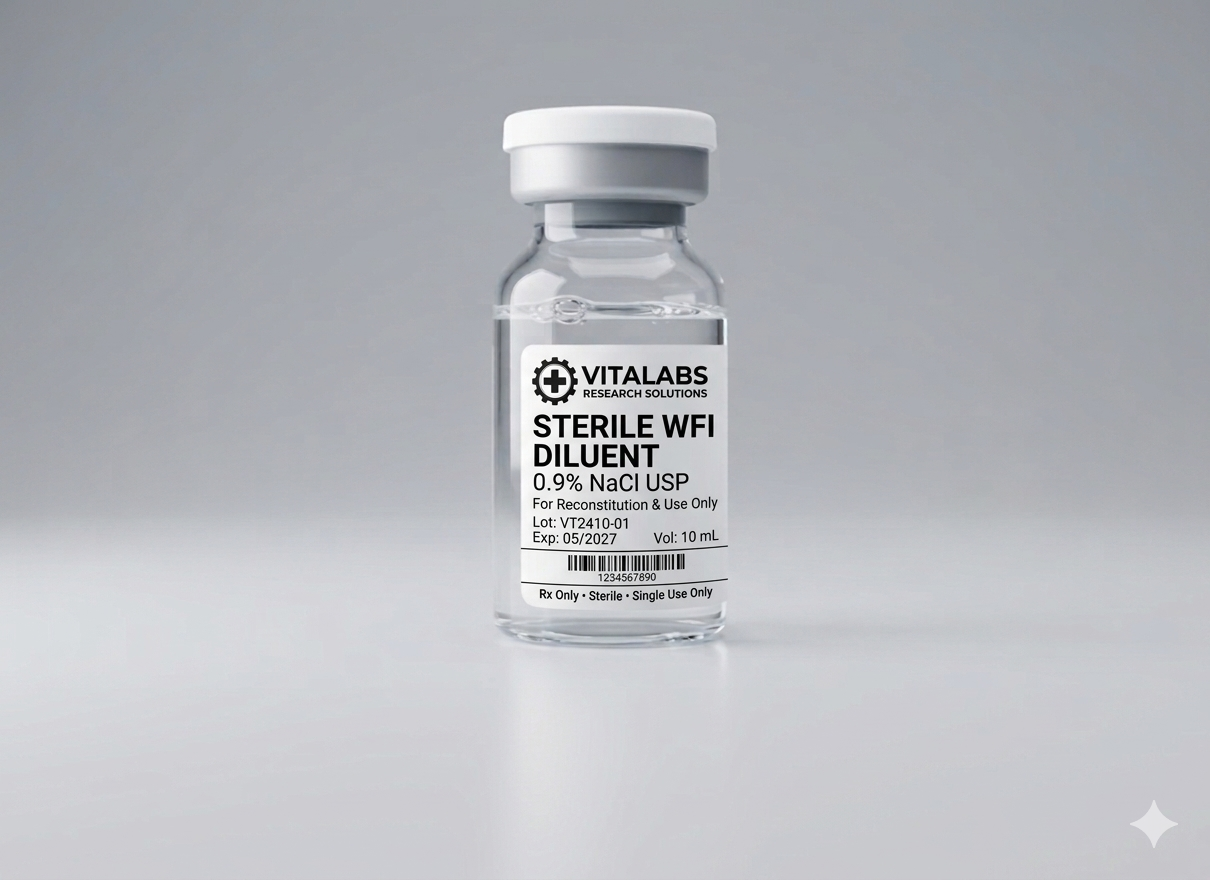
Rabbit KCNH2 / HERG Polyclonal Antibody | anti-KCNH2 antibody
Rabbit Polyclonal to Human KCNH2 / HERG
Gene Names
KCNH2; ERG1; HERG; LQT2; SQT1; ERG-1; H-ERG; HERG1; Kv11.1
Reactivity
Human, Monkey, Mouse, Rat, Bovine, Dog, Hamster, Horse, Pig, Rabbit; Predicted: Bat, Guinea pig
Applications
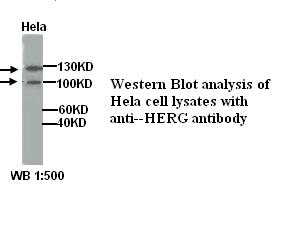
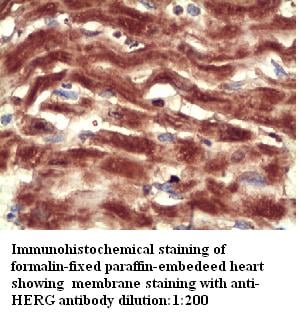
Immunohistochemistry, Immunohistochemistry
Purity
Immunoaffinity purified
Synonyms
KCNH2 / HERG, Antibody; Rabbit Polyclonal to Human KCNH2 / HERG; Anti-KCNH2 / HERG Antibody (Internal) IHC-plus; KCNH2; Eag homolog; HERG-1; ERG1; HERG; KV11.1; M-erg1; H-ERG; HERG1; SQT1; LQT2; Merg1; Eag-related protein 1; ERG-1; Human KCNH2; anti-KCNH2 antibody
Host
Rabbit
Reactivity
Human, Monkey, Mouse, Rat, Bovine, Dog, Hamster, Horse, Pig, Rabbit; Predicted: Bat, Guinea pig
Clonality
Polyclonal
Specificity
Human KCNH2 / Kv11.1. BLAST analysis of the peptide immunogen showed no homolgy with other human proteins.
Purity/Purification
Immunoaffinity purified
Form/Format
PBS, 0.1% Sodium Azide
Concentration
0.9 mg/ml (varies by lot)
Applicable Applications for anti-KCNH2 antibody
IHC (Immunohistochemistry), IHC (Immunohistochemistry)
Target
KCNH2 / HERG
Family / Subfamily
Ion Channel / Potassium channel - Eag-related
Host Note
KCNH2 / HERG antibody was produced in Rabbit
Immunogen Species
KCNH2 / HERG antibody was raised against Human
Antigen Type
Synthetic peptide
Immunogen
KCNH2 / HERG antibody was raised against synthetic 16 amino acid peptide from internal region of human KCNH2 / Kv11.1. Percent identity with other species by BLAST analysis: Human, Gibbon, Monkey, Marmoset, Mouse, Rat, Hamster, Elephant, Panda, Bovine, Dog, Horse, Rabbit, Pig, (100%); Bat, Guinea pig (94%)
Epitope
Internal
Disclaimer
Due to the highly specific nature of antibodies and antigens, we cannot predict or be held responsible with respect to how this antibody will behave in your systems. Researchers using this antibody should conduct optimization studies to achieve the most optimal result possible for their intended application.
Recommended Immunohistochemistry Protocol
The following protocol is a recommendation only, and AAA Biotech makes no guarantee of the results:
Tissue Preparation:
Formalin fixation and embedding in paraffin wax.
Tissue Sectioning:
Make 4-um sections and place on pre-cleaned and charged microscope slides. Heat in a tissue-dryingoven for 45 minutes at 60°C.
Deparaffinization:
Wash dry slides in 3 changes of xylene - 5 minutes each @ RT
Rehydration:
Wash slides in 3 changes of 100% alcohol - 3 minutes each @ RT
Wash slides in 2 changes of 95% alcohol - 3 minutes each @ RT
Wash slides in 1 change of 80% alcohol - 3 minutes @ RT
Rinse slides in gentle running distilled water - 5 minutes @ RT
Antigen retrieval:
Steam slides in 0.01 M sodium citrate buffer, pH 6.0 at 99-100°C - 20 minutes
Remove from heat and let stand at room temperature in buffer - 20 minutes
Rinse in 1X TBS with Tween (TBST) -1 minute @ RT
Immunostaining:
(Do not allow tissues to dry at any time during the staining procedure)
Apply a universal protein block - 20 minutes @ RT
Drain protein block from slides, apply diluted primary antibody - 45 minutes @ RT
Rinse slides in 1 X TBST - 1 minute @ RT
Apply a biotinylated secondary antibody appropriate for the primary antibody - 30 minutes @ RT
Rinse slides in 1X TBST -1 minute @ RT
Apply alkaline phosphatase streptavidin - 30 minutes @ RT
Rinse slides in 1X TBST -1 minute @ RT
Apply alkaline phosphatase chromogen substrate - 30 minutes @ RT
Wash slides in distilled water - 1 minute @ RT
Dehydrate:
(This method should only be used if the chromogen substrate is alcohol insoluble (e.g. Vector Red, DAB)
Wash slides in 2 changes of 80% alcohol - 1 minute each @ RT
Wash slides in 2 changes of 95% alcohol - 1 minute each @ RT
Wash slides in 3 changes of 100% alcohol - 1 minute each @ RT
Wash slides in 3 changes of xylene - 1 minute each @ RT
Apply coverslip
Tissue Preparation:
Formalin fixation and embedding in paraffin wax.
Tissue Sectioning:
Make 4-um sections and place on pre-cleaned and charged microscope slides. Heat in a tissue-dryingoven for 45 minutes at 60°C.
Deparaffinization:
Wash dry slides in 3 changes of xylene - 5 minutes each @ RT
Rehydration:
Wash slides in 3 changes of 100% alcohol - 3 minutes each @ RT
Wash slides in 2 changes of 95% alcohol - 3 minutes each @ RT
Wash slides in 1 change of 80% alcohol - 3 minutes @ RT
Rinse slides in gentle running distilled water - 5 minutes @ RT
Antigen retrieval:
Steam slides in 0.01 M sodium citrate buffer, pH 6.0 at 99-100°C - 20 minutes
Remove from heat and let stand at room temperature in buffer - 20 minutes
Rinse in 1X TBS with Tween (TBST) -1 minute @ RT
Immunostaining:
(Do not allow tissues to dry at any time during the staining procedure)
Apply a universal protein block - 20 minutes @ RT
Drain protein block from slides, apply diluted primary antibody - 45 minutes @ RT
Rinse slides in 1 X TBST - 1 minute @ RT
Apply a biotinylated secondary antibody appropriate for the primary antibody - 30 minutes @ RT
Rinse slides in 1X TBST -1 minute @ RT
Apply alkaline phosphatase streptavidin - 30 minutes @ RT
Rinse slides in 1X TBST -1 minute @ RT
Apply alkaline phosphatase chromogen substrate - 30 minutes @ RT
Wash slides in distilled water - 1 minute @ RT
Dehydrate:
(This method should only be used if the chromogen substrate is alcohol insoluble (e.g. Vector Red, DAB)
Wash slides in 2 changes of 80% alcohol - 1 minute each @ RT
Wash slides in 2 changes of 95% alcohol - 1 minute each @ RT
Wash slides in 3 changes of 100% alcohol - 1 minute each @ RT
Wash slides in 3 changes of xylene - 1 minute each @ RT
Apply coverslip
Preparation and Storage
Aliquot and store undiluted at -20°C or below for up to 1 year. Can be stored undiluted at 4°C for up to 1 month. Avoid freeze-thaw cycles.
Product Categories/Family for anti-KCNH2 antibody
NCBI and Uniprot Product Information
NCBI GI #
NCBI GeneID
NCBI Accession #
NCBI GenBank Nucleotide #
NCBI Official Full Name
potassium voltage-gated channel subfamily H member 2 isoform a
NCBI Official Synonym Full Names
potassium voltage-gated channel, subfamily H (eag-related), member 2
NCBI Official Symbol
KCNH2
NCBI Official Synonym Symbols
ERG1; HERG; LQT2; SQT1; ERG-1; H-ERG; HERG1; Kv11.1
NCBI Protein Information
potassium voltage-gated channel subfamily H member 2; eag homolog; eag-related protein 1; ether-a-go-go-related protein 1; ether-a-go-go-related gene potassium channel 1; voltage-gated potassium channel subunit Kv11.1; ether-a-go-go-related potassium channel protein
UniProt Protein Name
Potassium voltage-gated channel subfamily H member 2
UniProt Gene Name
KCNH2
UniProt Synonym Gene Names
ERG; ERG1; HERG; ERG-1; Eag-related protein 1; Ether-a-go-go-related protein 1; H-ERG; hERG-1; hERG1
UniProt Entry Name
KCNH2_HUMAN
Customer Reviews
Loading reviews...
Share Your Experience
Similar Products



Product Notes
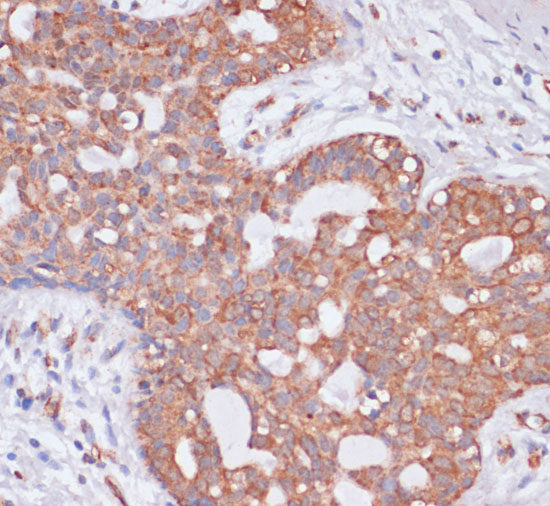
The KCNH2 kcnh2 (Catalog #AAA52076) is an Antibody produced from Rabbit and is intended for research purposes only. The product is available for immediate purchase. The Rabbit Polyclonal to Human KCNH2 / HERG reacts with Human, Monkey, Mouse, Rat, Bovine, Dog, Hamster, Horse, Pig, Rabbit; Predicted: Bat, Guinea pig and may cross-react with other species as described in the data sheet. AAA Biotech's KCNH2 / HERG can be used in a range of immunoassay formats including, but not limited to, IHC (Immunohistochemistry), IHC (Immunohistochemistry). Researchers should empirically determine the suitability of the KCNH2 kcnh2 for an application not listed in the data sheet. Researchers commonly develop new applications and it is an integral, important part of the investigative research process. It is sometimes possible for the material contained within the vial of "KCNH2 / HERG, Polyclonal Antibody" to become dispersed throughout the inside of the vial, particularly around the seal of said vial, during shipment and storage. We always suggest centrifuging these vials to consolidate all of the liquid away from the lid and to the bottom of the vial prior to opening. Please be advised that certain products may require dry ice for shipping and that, if this is the case, an additional dry ice fee may also be required.Precautions
All products in the AAA Biotech catalog are strictly for research-use only, and are absolutely not suitable for use in any sort of medical, therapeutic, prophylactic, in-vivo, or diagnostic capacity. By purchasing a product from AAA Biotech, you are explicitly certifying that said products will be properly tested and used in line with industry standard. AAA Biotech and its authorized distribution partners reserve the right to refuse to fulfill any order if we have any indication that a purchaser may be intending to use a product outside of our accepted criteria.Disclaimer
Though we do strive to guarantee the information represented in this datasheet, AAA Biotech cannot be held responsible for any oversights or imprecisions. AAA Biotech reserves the right to adjust any aspect of this datasheet at any time and without notice. It is the responsibility of the customer to inform AAA Biotech of any product performance issues observed or experienced within 30 days of receipt of said product. To see additional details on this or any of our other policies, please see our Terms & Conditions page.Item has been added to Shopping Cart
If you are ready to order, navigate to Shopping Cart and get ready to checkout.