
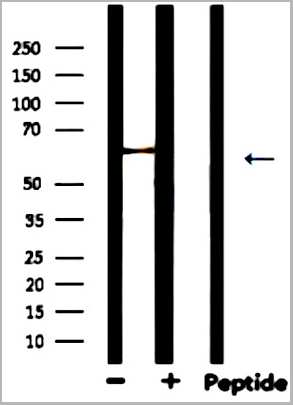
 WB (Western Blot)
(Western blot analysis of extracts from rat brain, using MMP14 Ab.)
WB (Western Blot)
(Western blot analysis of extracts from rat brain, using MMP14 Ab.)
Rabbit MMP14 Polyclonal Antibody | anti-MMP14 antibody
MMP14 Antibody
IHC: 1:50-1:200
IF/ICC: 1:100-1:500
The optimal dilution should be determined by the end user.
IMPORTANT: For western blots, incubate membrane with diluted antibody in 5% w/v milk , 1X TBS, 0.1% Tween®20 at 4°C with gentle shaking, overnight.
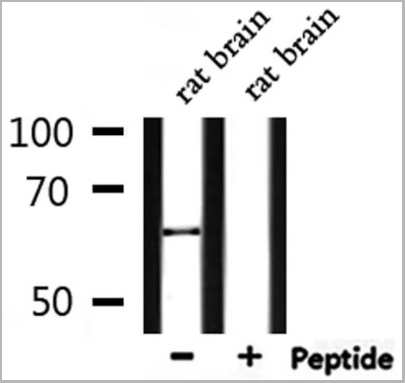
WB (Western Blot)
(Western blot analysis of extracts from rat brain, using MMP14 Ab.)
WB (Western Blot)
(Western blot analysis of extracts from rat brain, using MMP14 Ab.)
WB (Western Blot)
(Western blot analysis of extracts from rat brain, using MMP14 Antibody.)
WB (Western Blot)
(Western blot analysis of extracts from rat brain, using MMP14 Antibody.)
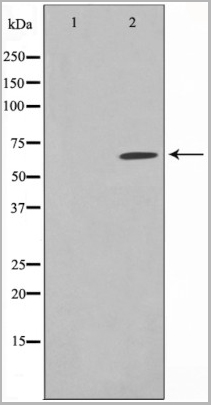
WB (Western Blot)
(Western blot analysis on NIH-3T3 cell lysate using MMP14 Antibody. The lane on the left is treated with the antigen-specific peptide.)
WB (Western Blot)
(Western blot analysis on NIH-3T3 cell lysate using MMP14 Antibody. The lane on the left is treated with the antigen-specific peptide.)
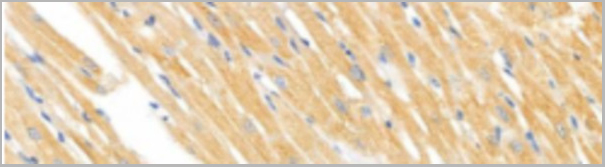
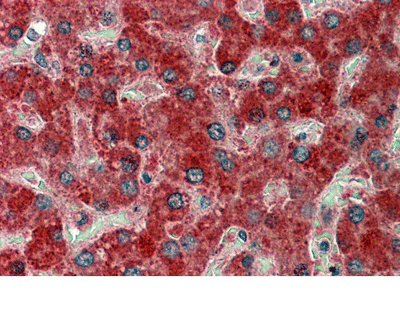
IHC (Immunohistochemistry)
(AAA30926 at 1/100 staining Rat heart tissue by IHC-P. The sample was formaldehyde fixed and a heat mediated antigen retrieval step in citrate buffer was performed. The sample was then blocked and incubated with the primary Ab at 4°C overnight. An HRP conjugated anti-Rabbit Ab was used as the secondary Ab.)
IHC (Immunohistochemistry)
(AAA30926 at 1/100 staining Rat heart tissue by IHC-P. The sample was formaldehyde fixed and a heat mediated antigen retrieval step in citrate buffer was performed. The sample was then blocked and incubated with the primary Ab at 4°C overnight. An HRP conjugated anti-Rabbit Ab was used as the secondary Ab.)
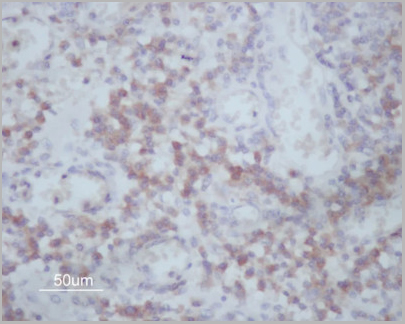
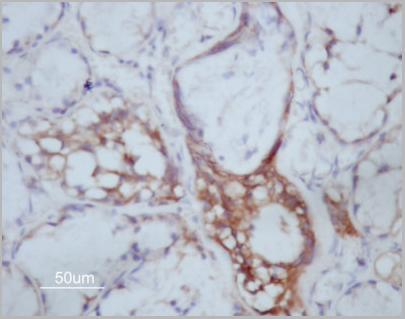
IHC (Immunohistochemistry)
(AAA30926 at 1/200 staining human Oral squamous cell carcinoma sections by IHC-P. The tissue was formaldehyde fixed and a heat mediated antigen retrieval step in citrate buffer was performed. The tissue was then blocked and incubated with the antibody for 1.5 hours at 22 degree C. An HRP conjugated goat anti-rabbit antibody was used as the secondary.)
IHC (Immunohistochemistry)
(AAA30926 at 1/200 staining human Oral squamous cell carcinoma sections by IHC-P. The tissue was formaldehyde fixed and a heat mediated antigen retrieval step in citrate buffer was performed. The tissue was then blocked and incubated with the antibody for 1.5 hours at 22 degree C. An HRP conjugated goat anti-rabbit antibody was used as the secondary.)
IHC (Immunohistochemistry)
(AAA30926 at 1/200 staining human Oral squamous cell carcinoma sections by IHC-P. The tissue was formaldehyde fixed and a heat mediated antigen retrieval step in citrate buffer was performed. The tissue was then blocked and incubated with the antibody for 1.5 hours at 22 degree C. An HRP conjugated goat anti-rabbit antibody was used as the secondary.)
IHC (Immunohistochemistry)
(AAA30926 at 1/200 staining human Oral squamous cell carcinoma sections by IHC-P. The tissue was formaldehyde fixed and a heat mediated antigen retrieval step in citrate buffer was performed. The tissue was then blocked and incubated with the antibody for 1.5 hours at 22 degree C. An HRP conjugated goat anti-rabbit antibody was used as the secondary.)
NCBI and Uniprot Product Information
Customer Reviews
Loading reviews...
Share Your Experience
Similar Products

Product Notes
The MMP14 mmp14 (Catalog #AAA30926) is an Antibody produced from Rabbit and is intended for research purposes only. The product is available for immediate purchase. The MMP14 Antibody reacts with Human, Mouse, Rat and may cross-react with other species as described in the data sheet. AAA Biotech's MMP14 can be used in a range of immunoassay formats including, but not limited to, WB (Western Blot), IHC (Immunohistochemistry), IF (Immunofluorescence), ICC (Immunocytochemistry). WB: 1:500-1:3000 IHC: 1:50-1:200 IF/ICC: 1:100-1:500 The optimal dilution should be determined by the end user. IMPORTANT: For western blots, incubate membrane with diluted antibody in 5% w/v milk, 1X TBS, 0.1% Tween®20 at 4°C with gentle shaking, overnight. . Researchers should empirically determine the suitability of the MMP14 mmp14 for an application not listed in the data sheet. Researchers commonly develop new applications and it is an integral, important part of the investigative research process. It is sometimes possible for the material contained within the vial of "MMP14, Polyclonal Antibody" to become dispersed throughout the inside of the vial, particularly around the seal of said vial, during shipment and storage. We always suggest centrifuging these vials to consolidate all of the liquid away from the lid and to the bottom of the vial prior to opening. Please be advised that certain products may require dry ice for shipping and that, if this is the case, an additional dry ice fee may also be required.Precautions
All products in the AAA Biotech catalog are strictly for research-use only, and are absolutely not suitable for use in any sort of medical, therapeutic, prophylactic, in-vivo, or diagnostic capacity. By purchasing a product from AAA Biotech, you are explicitly certifying that said products will be properly tested and used in line with industry standard. AAA Biotech and its authorized distribution partners reserve the right to refuse to fulfill any order if we have any indication that a purchaser may be intending to use a product outside of our accepted criteria.Disclaimer
Though we do strive to guarantee the information represented in this datasheet, AAA Biotech cannot be held responsible for any oversights or imprecisions. AAA Biotech reserves the right to adjust any aspect of this datasheet at any time and without notice. It is the responsibility of the customer to inform AAA Biotech of any product performance issues observed or experienced within 30 days of receipt of said product. To see additional details on this or any of our other policies, please see our Terms & Conditions page.Frequently Asked Questions
What is MMP14 used as a marker for in cell invasion and extracellular matrix studies?
MMP14 (matrix metalloproteinase-14/MT1-MMP) is a membrane-anchored collagenase marking active tissue remodeling, cell invasion, and extracellular matrix (ECM) degradation. MMP14 is the only membrane-bound collagenase and uniquely activates pro-MMP2, amplifying proteolytic activity. In cell invasion studies, MMP14 marks invadopodia—specialized invasion structures. MMP14 expression correlates with metastatic potential, making it essential for studying cancer invasion, angiogenesis, tissue development, and pathological ECM remodeling.
Can a rabbit MMP14 antibody be used for immunohistochemistry or immunofluorescence?
Yes, rabbit MMP14 antibodies are well-suited for IHC and IF applications. MMP14 is membrane-localized, producing characteristic cell-surface staining. In IHC, elevated MMP14 marks invasive cancer cells and activated fibroblasts within tumor microenvironments. Standard antigen retrieval protocols optimize signal in paraffin-embedded tissue. Immunofluorescence requires no permeabilization (membrane protein) or gentle permeabilization (for intracellular visualization). AAA Biotech's rabbit MMP14 antibody provides specific membrane detection in tissue sections.
Is MMP14 expression associated with cancer progression or metastasis?
Yes, MMP14 strongly correlates with cancer progression and metastasis. MMP14 overexpression promotes cancer cell invasion through ECM remodeling and MMP2 activation. High MMP14 expression marks aggressive tumors (ovarian, gastric, breast, colorectal cancers) with enhanced metastatic capacity. Paradoxically, excessive MMP14 can impair invasion by over-degrading ECM; optimal intermediate levels maximize metastasis. MMP14 serves as a prognostic marker and therapeutic target; MMP14 inhibitors show promise in limiting cancer dissemination.
Can this antibody detect active versus pro-MMP14 forms in Western blot?
MMP14 exists as pro-MMP14 (~72 kDa, inactive) and active MMP14 (~64 kDa, processed form). Verify AAA Biotech antibody specificity: some antibodies recognize both forms, others specifically detect activated MMP14. Western blots reveal MMP14 processing in response to cellular activation signals. Detection of mature MMP14 indicates proteolytic activation and ECM remodeling engagement. Serine/threonine phosphorylation regulates MMP14 activity; phospho-specific antibodies can assess functional state.
Does MMP14 antibody work for detecting membrane-bound MMP14 on cells?
Yes, MMP14's transmembrane domain anchors it to cell plasma membranes, enabling direct detection on live and fixed cells. Immunofluorescence on cultured cells shows punctate membrane staining, particularly enriched at invadopodia. Flow cytometry using fluorescently-conjugated MMP14 antibodies quantifies surface MMP14 expression per cell. However, live-cell staining may be limited (N-terminal epitope accessibility); fixed cells generally yield a stronger signal. Choose antibodies targeting extracellular domains for optimal membrane recognition.
Is MMP14 commonly studied in tissue remodeling or inflammation research?
Yes, MMP14 is extensively studied in both contexts. In tissue remodeling, MMP14 drives angiogenesis (vessel formation), bone resorption, and developmental morphogenesis. In inflammation, MMP14 contributes to leukocyte recruitment and tissue damage by ECM degradation. MMP14 is upregulated in inflammatory diseases (rheumatoid arthritis, periodontitis), enhancing leukocyte infiltration and tissue destruction. MMP14 inhibition represents a therapeutic strategy for limiting inflammatory tissue damage while preserving protective immune responses.
Item has been added to Shopping Cart
If you are ready to order, navigate to Shopping Cart and get ready to checkout.