
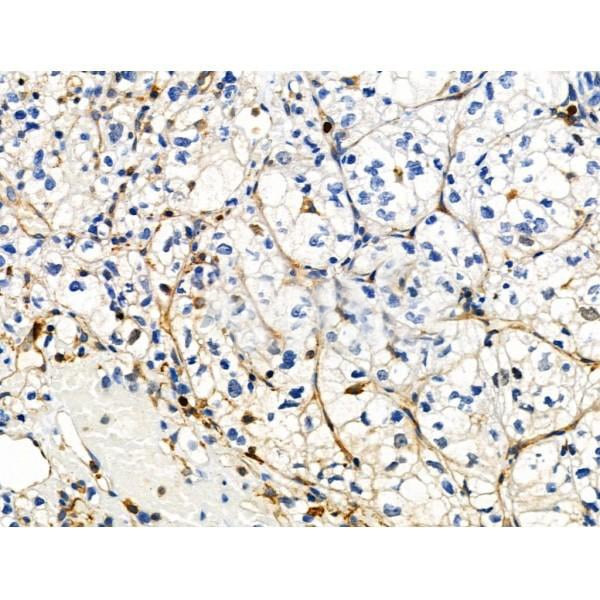
 IHC (Immunohistochemistry)
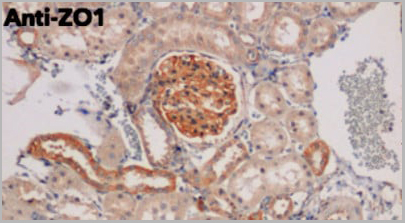
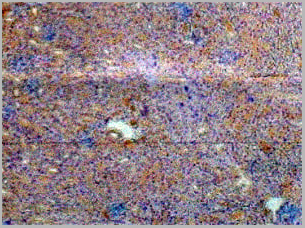
(IHC of Mouse kidney using Z01 antibody and FFPE tissue after heat-induced retrieval. Anti-Z01 Ab at 1:750/DAB detection.)
IHC (Immunohistochemistry)
(IHC of Mouse kidney using Z01 antibody and FFPE tissue after heat-induced retrieval. Anti-Z01 Ab at 1:750/DAB detection.)
Goat ZO-1 Polyclonal Antibody | anti-ZO-1 antibody
ZO-1 Polyclonal Antibody
lmmunofluorescence: 1:50-1:250
Immunohistochemistry (paraffin): 1:200-1:1000
Immunohistochemistry (frozen): 1:200-1:1000
Special instructions: The antibody solution should be gently mixed before use. Avoid freeze/thaw cycles..
IHC (Immunohistochemistry)
(IHC of Mouse kidney using Z01 antibody and FFPE tissue after heat-induced retrieval. Anti-Z01 Ab at 1:750/DAB detection.)
IHC (Immunohistochemistry)
(IHC of Mouse kidney using Z01 antibody and FFPE tissue after heat-induced retrieval. Anti-Z01 Ab at 1:750/DAB detection.)
IHC (Immunohistochemistry)
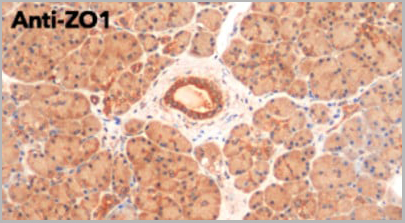
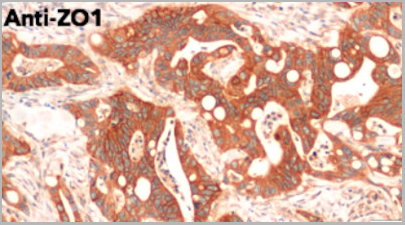
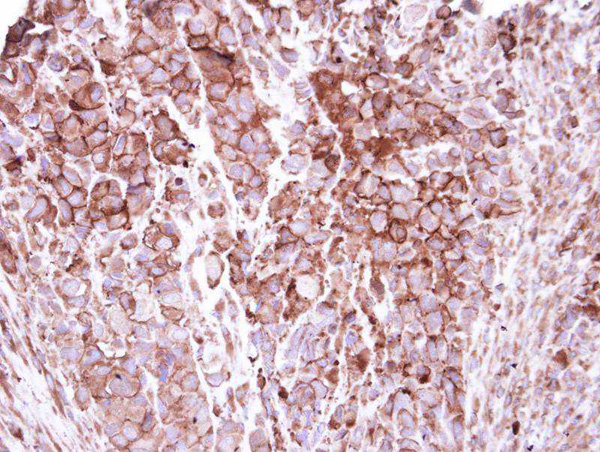
(IHC of human pancreas using Z01 antibody and FFPE tissue after heat-induced antigen retrieval Anti-Z01 Ab at 1:750/DAB detection.)
IHC (Immunohistochemistry)
(IHC of human pancreas using Z01 antibody and FFPE tissue after heat-induced antigen retrieval Anti-Z01 Ab at 1:750/DAB detection.)
IHC (Immunohistchemistry)
(IHC of human pancreas using Z01 antibody and FFPE tissue after heat-induced antigen retrieval Anti-Z01 Ab at 1:750/DAB detection.)
IHC (Immunohistchemistry)
(IHC of human pancreas using Z01 antibody and FFPE tissue after heat-induced antigen retrieval Anti-Z01 Ab at 1:750/DAB detection.)
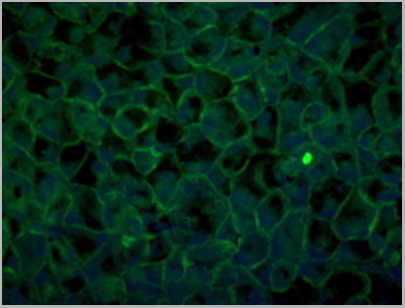
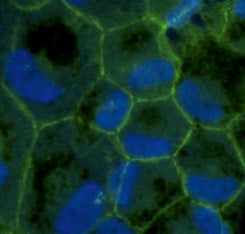
IF (Immunofluorescence)
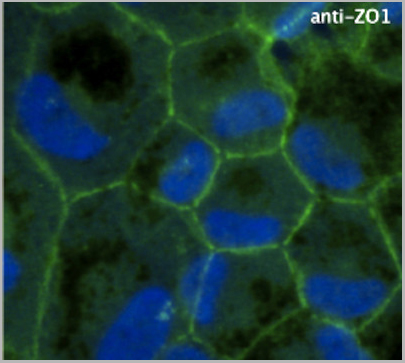
(Immunofluorescence of primary RPE cells with ZO1 Ab at 1/100 dilution.)
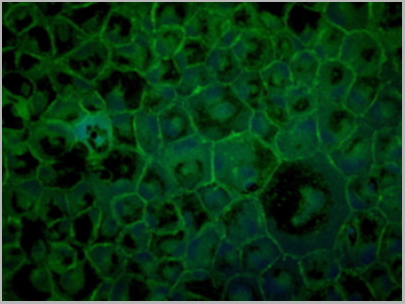
IF (Immunofluorescence)
(Immunofluorescence of primary RPE cells with ZO1 Ab at 1/100 dilution.)
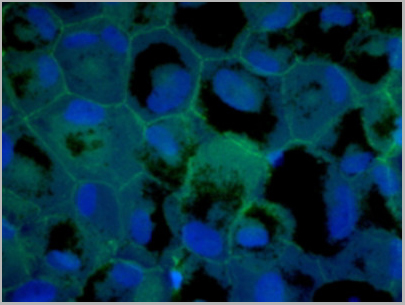
IF (Immunofluorescence)
(Immunofluorescence of primary RPE cells with Z01 Ab at 1/100 dilution.)
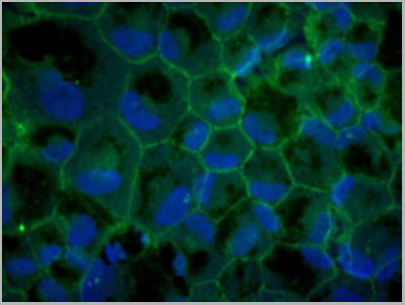
IF (Immunofluorescence)
(Immunofluorescence of primary RPE cells with Z01 Ab at 1/100 dilution.)
IF (Immunofluorescence)
(Immunofluorescence of primary RPE cells with Z01 Ab at 1/100 dilution.)
IF (Immunofluorescence)
(Immunofluorescence of primary RPE cells with Z01 Ab at 1/100 dilution.)
IF (Immunofluorescence)
(Immunofluorescence of primary RPE cells with Z01 Ab at 1/100 dilution.)
IF (Immunofluorescence)
(Immunofluorescence of primary RPE cells with Z01 Ab at 1/100 dilution.)
IF (Immunofluorescence)
(Immunofluorescence of primary RPE cells with Z01 Ab at 1/100 dilution.)
IF (Immunofluorescence)
(Immunofluorescence of primary RPE cells with Z01 Ab at 1/100 dilution.)
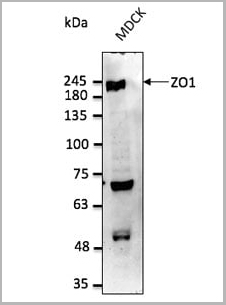
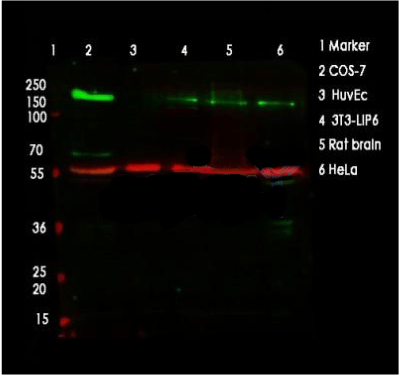
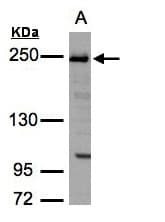
WB (Western Blot)
(Anti-ZO1 Ab at 1/2,500 dilution; 50ug of total protein per lane; rabbit polyclonal to goat IgG (HRP) at 1/10,000 dilution.)
WB (Western Blot)
(Anti-ZO1 Ab at 1/2,500 dilution; 50ug of total protein per lane; rabbit polyclonal to goat IgG (HRP) at 1/10,000 dilution.)
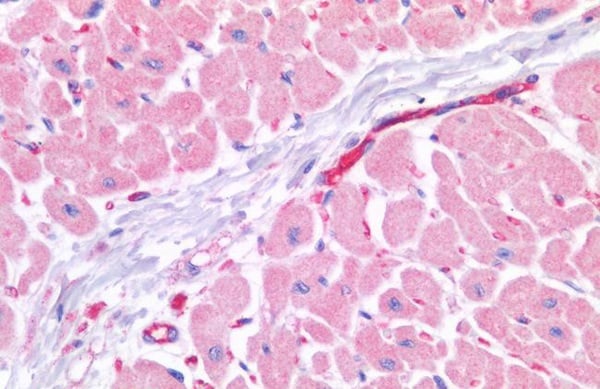
Immunoperoxidase
(Immunoperoxidase of polyclonal antibody to ZO-1 (1/200) on paraformaldehyde-fixed paraffin-embedded mouse kidney.)
Immunoperoxidase
(Immunoperoxidase of polyclonal antibody to ZO-1 (1/200) on paraformaldehyde-fixed paraffin-embedded mouse kidney.)
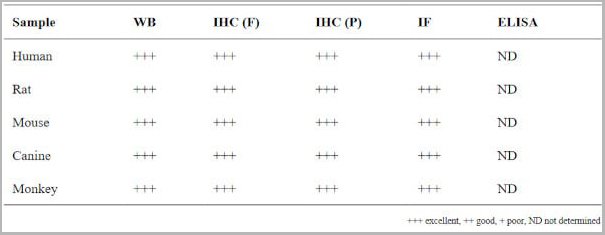
Reactivity Chart
Reactivity Chart
NCBI and Uniprot Product Information
Customer Reviews
Loading reviews...
Share Your Experience
Similar Products





Product Notes
The ZO-1 tjp1 (Catalog #AAA13861) is an Antibody produced from Goat and is intended for research purposes only. The product is available for immediate purchase. The ZO-1 Polyclonal Antibody reacts with Reacts against Human, Rat, Mouse, Canine and Monkey proteins. and may cross-react with other species as described in the data sheet. AAA Biotech's ZO-1 can be used in a range of immunoassay formats including, but not limited to, WB (Western Blot), IF (Immunofluorescence), IHC (Immunohistochemistry). Western blot: 1:500-1:2,000 lmmunofluorescence: 1:50-1:250 Immunohistochemistry (paraffin): 1:200-1:1000 Immunohistochemistry (frozen): 1:200-1:1000 Special instructions: The antibody solution should be gently mixed before use. Avoid freeze/thaw cycles.. Researchers should empirically determine the suitability of the ZO-1 tjp1 for an application not listed in the data sheet. Researchers commonly develop new applications and it is an integral, important part of the investigative research process. It is sometimes possible for the material contained within the vial of "ZO-1, Polyclonal Antibody" to become dispersed throughout the inside of the vial, particularly around the seal of said vial, during shipment and storage. We always suggest centrifuging these vials to consolidate all of the liquid away from the lid and to the bottom of the vial prior to opening. Please be advised that certain products may require dry ice for shipping and that, if this is the case, an additional dry ice fee may also be required.Precautions
All products in the AAA Biotech catalog are strictly for research-use only, and are absolutely not suitable for use in any sort of medical, therapeutic, prophylactic, in-vivo, or diagnostic capacity. By purchasing a product from AAA Biotech, you are explicitly certifying that said products will be properly tested and used in line with industry standard. AAA Biotech and its authorized distribution partners reserve the right to refuse to fulfill any order if we have any indication that a purchaser may be intending to use a product outside of our accepted criteria.Disclaimer
Though we do strive to guarantee the information represented in this datasheet, AAA Biotech cannot be held responsible for any oversights or imprecisions. AAA Biotech reserves the right to adjust any aspect of this datasheet at any time and without notice. It is the responsibility of the customer to inform AAA Biotech of any product performance issues observed or experienced within 30 days of receipt of said product. To see additional details on this or any of our other policies, please see our Terms & Conditions page.Frequently Asked Questions
What is ZO-1 used in tight junction studies?
ZO-1 is used as a marker protein to study tight junctions between cells. Researchers use it to see how cells stick together and form barriers, especially in epithelial and endothelial tissues. It reveals if tight junctions are normal or damaged.
Can a ZO-1 antibody be used to assess epithelial or endothelial barrier integrity?
Yes, a ZO-1 antibody is commonly used to check barrier strength in epithelial and endothelial cells. Weak or broken ZO-1 staining means a damaged, leaky barrier. Strong, continuous staining shows a healthy barrier.
Is ZO-1 expression altered during inflammation or cancer progression?
Yes, ZO-1 expression often changes during inflammation and cancer. It may decrease, move away from cell junctions, or become irregular. These changes indicate loss of tight junctions, which is common when tissues become inflamed or cancer cells start spreading.
Can ZO-1 antibody be used for immunofluorescence to visualize cell junctions?
Yes, the ZO-1 antibody can be used for immunofluorescence. It allows researchers to visually see tight junctions under a microscope by glowing at cell borders, making it easy to study junction structure and location.
How does ZO-1 staining change during epithelial–mesenchymal transition (EMT)?
During EMT, ZO-1 staining weakens or becomes discontinuous. The signal spreads or vanishes instead of clear cell-border lines, showing tight junction loss as cells turn mobile and invasive.
Is ZO-1 commonly studied in gut, lung, or blood–brain barrier research?
Yes, ZO-1 is widely studied in the gut, lungs, and blood–brain barrier. These tissues rely on strong tight junctions. Researchers use ZO-1 antibodies to study barrier function, permeability changes, and disease-related damage in these organs.
Item has been added to Shopping Cart
If you are ready to order, navigate to Shopping Cart and get ready to checkout.