
 Application Data
Glycogen Phosphorylase, Muscle (PYGM) Recombinant Protein | PYGM recombinant protein
Recombinant Glycogen Phosphorylase, Muscle (PYGM)
Gene Names
Pygm; PG; AI115133
Applications
Immunoprecipitation, Immunoprecipitation, ELISA, Western Blot, SDS-Page
Purity
>98%
Synonyms
Glycogen Phosphorylase, Muscle (PYGM); N/A; Recombinant Glycogen Phosphorylase, Muscle (PYGM); PYGM recombinant protein
Host
E Coli
Purity/Purification
>98%
Form/Format
20mM Tris, 150mM NaCl, pH8.0, containing 1mM EDTA, 1mM DTT, 0.01% sarcosyl, 5%Trehalose and Proclin300.
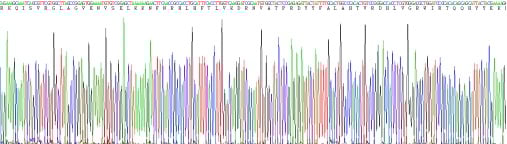
Sequence
Thetargetp roteinisfu sedwithN-t erminalHis -Tag,itsse quenceisli stedbelow.
MGHHHH HHSGSEF-RK QISVRGLAGV ENVSELKKNF NRHLHFTLVK DRNVATPRDY YFALAHTVRD HLVGRWIRTQ QHYYEKDPKR IYYLSLEFYM GRTLQNTMVN LALENACDEA TYQLGLDMEE LEEIEEDAGL GNGGLGRLAA CFLDSMATLG LAAYGYGIRY EFGIFNQKIC GGWQMEEADD WLRYG
MGHHHH HHSGSEF-RK QISVRGLAGV ENVSELKKNF NRHLHFTLVK DRNVATPRDY YFALAHTVRD HLVGRWIRTQ QHYYEKDPKR IYYLSLEFYM GRTLQNTMVN LALENACDEA TYQLGLDMEE LEEIEEDAGL GNGGLGRLAA CFLDSMATLG LAAYGYGIRY EFGIFNQKIC GGWQMEEADD WLRYG
Sequence Length
842
Applicable Applications for PYGM recombinant protein
IP (CoImmunoprecipitation), IP (Immunoprecipitation), ELISA, WB (Western Blot), SDS-PAGE
Organism
Mus musculus (Mouse)
Expression System
Prokaryotic expression
Residues
Arg11~Gly187 with N-terminal His-Tag
Endotoxin Level
<1.0EU per 1ug (determined by the LAL method)
Predicted isoelectric point
6.0
Predicted Molecular Mass
21.7kDa
Accurate Molecular Mass
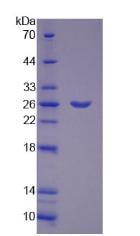
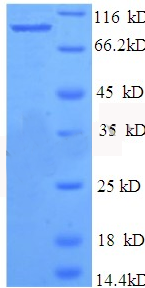
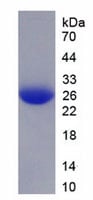
26kDa as determined by SDS-PAGE reducing conditions.
Usage
Reconstitute in 20mM Tris, 150mM NaCl (pH8.0) to a concentration of 0.1-1.0mg/mL. Do not vortex.
Tissue Specificity
Skeletal Muscle, Brain, Heart, Kidney.
Traits
Freeze-dried powder
Note
The possible reasons that the actual band size differs from the predicted are as follows:
1. Splice variants: Alternative splicing may create different sized proteins from the same gene.
2. Relative charge: The composition of amino acids may affect the charge of the protein.
3. Post-translational modification:Phosphorylation, glycosylation, methylation etc.
4. Post-translation clevage: Many proteins are synthesized as pro-proteins, and then cleaved to give the active form.
5. Polymerization of the target protein: Dimerization, multimerization etc.
1. Splice variants: Alternative splicing may create different sized proteins from the same gene.
2. Relative charge: The composition of amino acids may affect the charge of the protein.
3. Post-translational modification:Phosphorylation, glycosylation, methylation etc.
4. Post-translation clevage: Many proteins are synthesized as pro-proteins, and then cleaved to give the active form.
5. Polymerization of the target protein: Dimerization, multimerization etc.
Preparation and Storage
Avoid repeated freeze/thaw cycles. Store at 2-8 degree C for one month. Aliquot and store at -80 degree C for 12 months.
Stability Test: The thermal stability is described by the loss rate of the targetprotein. The loss rate was determined by accelerated thermal degradation test,that is, incubate the protein at 37 degree C for 48h, and no obvious degradation andprecipitation were observed. (Referring from China Biological Products Standard,which was calculated by the Arrhenius equation.) The loss of this protein is lessthan 5% within the expiration date under appropriate storage condition.
Stability Test: The thermal stability is described by the loss rate of the targetprotein. The loss rate was determined by accelerated thermal degradation test,that is, incubate the protein at 37 degree C for 48h, and no obvious degradation andprecipitation were observed. (Referring from China Biological Products Standard,which was calculated by the Arrhenius equation.) The loss of this protein is lessthan 5% within the expiration date under appropriate storage condition.
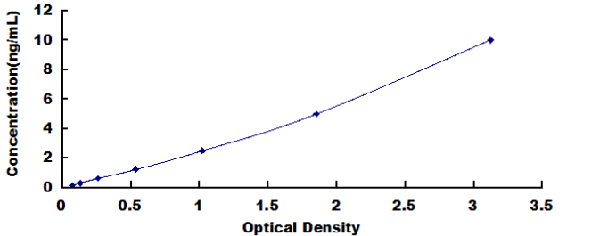
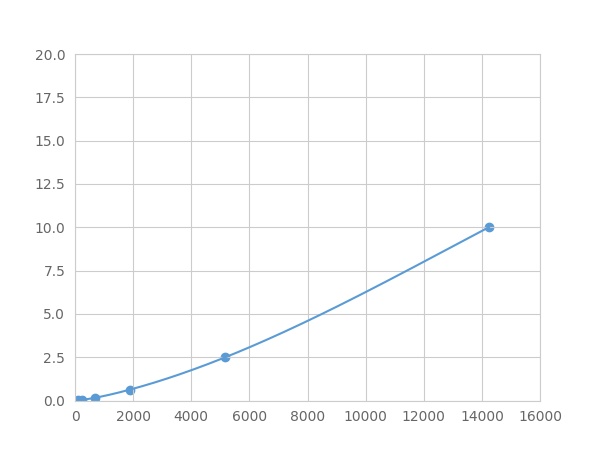
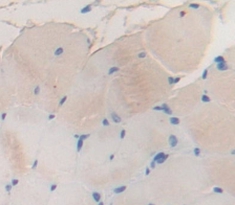
Application Data
Application Data
SDS-PAGE
SDS-PAGE
Sequence
Sequence
NCBI and Uniprot Product Information
NCBI GI #
NCBI GeneID
NCBI Accession #
NCBI GenBank Nucleotide #
UniProt Accession #
Molecular Weight
Predicted Molecular Weight: 22.0kDa
Accurate Molecular Mass: 26kDa as determined by SDS-PAGE reducing conditions.
Accurate Molecular Mass: 26kDa as determined by SDS-PAGE reducing conditions.
NCBI Official Full Name
glycogen phosphorylase, muscle form
NCBI Official Synonym Full Names
muscle glycogen phosphorylase
NCBI Official Symbol
Pygm
NCBI Official Synonym Symbols
PG; AI115133
NCBI Protein Information
glycogen phosphorylase, muscle form; myophosphorylase
UniProt Protein Name
Glycogen phosphorylase, muscle form
UniProt Gene Name
Pygm
UniProt Entry Name
PYGM_MOUSE
Customer Reviews
Loading reviews...
Share Your Experience
Similar Products


Product Notes
The PYGM pygm (Catalog #AAA134557) is a Recombinant Protein produced from E Coli and is intended for research purposes only. The product is available for immediate purchase. AAA Biotech's Glycogen Phosphorylase, Muscle (PYGM) can be used in a range of immunoassay formats including, but not limited to, IP (CoImmunoprecipitation), IP (Immunoprecipitation), ELISA, WB (Western Blot), SDS-PAGE. Researchers should empirically determine the suitability of the PYGM pygm for an application not listed in the data sheet. Researchers commonly develop new applications and it is an integral, important part of the investigative research process. The amino acid sequence is listed below: The target protein is fused with N-terminal His-Tag, its sequence is listed below. MGHHHHHHSG SEF-RKQISV RGLA GVENVSELKK NFNRHLHFTL VKDRNVATPR DYYFALAHTV RDHLVGRWIR TQQHYYEKDP KRIYYLSLEF YMGRTLQNTM VNLALENACD EATYQLGLDM EELEEIEEDA GLGNGGLGRL AACFLDSMAT LGLAAYGYGI RYEFGIFNQK ICGGWQMEEA DDWLRYG. It is sometimes possible for the material contained within the vial of "Glycogen Phosphorylase, Muscle (PYGM), Recombinant Protein" to become dispersed throughout the inside of the vial, particularly around the seal of said vial, during shipment and storage. We always suggest centrifuging these vials to consolidate all of the liquid away from the lid and to the bottom of the vial prior to opening. Please be advised that certain products may require dry ice for shipping and that, if this is the case, an additional dry ice fee may also be required.Precautions
All products in the AAA Biotech catalog are strictly for research-use only, and are absolutely not suitable for use in any sort of medical, therapeutic, prophylactic, in-vivo, or diagnostic capacity. By purchasing a product from AAA Biotech, you are explicitly certifying that said products will be properly tested and used in line with industry standard. AAA Biotech and its authorized distribution partners reserve the right to refuse to fulfill any order if we have any indication that a purchaser may be intending to use a product outside of our accepted criteria.Disclaimer
Though we do strive to guarantee the information represented in this datasheet, AAA Biotech cannot be held responsible for any oversights or imprecisions. AAA Biotech reserves the right to adjust any aspect of this datasheet at any time and without notice. It is the responsibility of the customer to inform AAA Biotech of any product performance issues observed or experienced within 30 days of receipt of said product. To see additional details on this or any of our other policies, please see our Terms & Conditions page.Item has been added to Shopping Cart
If you are ready to order, navigate to Shopping Cart and get ready to checkout.