
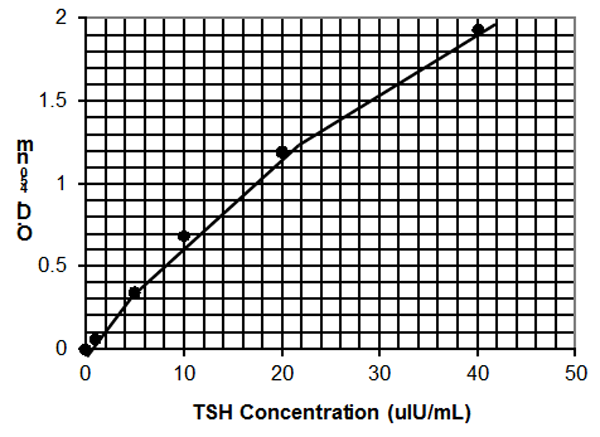
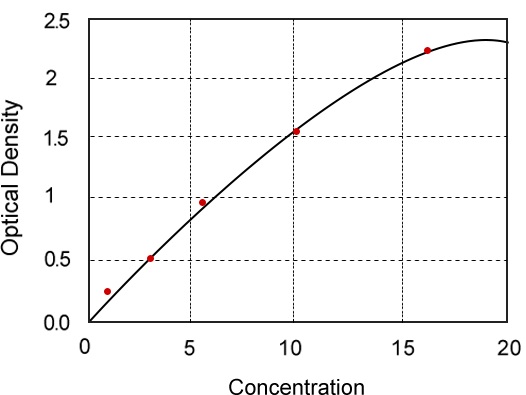
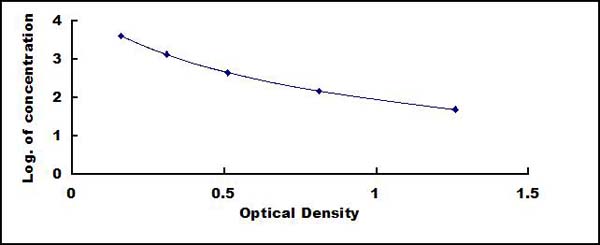
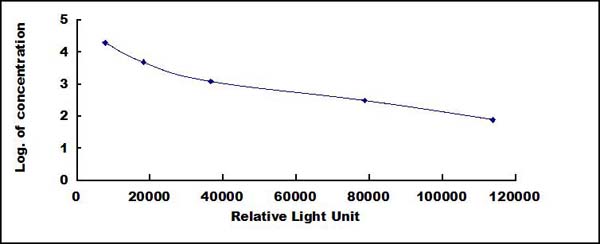
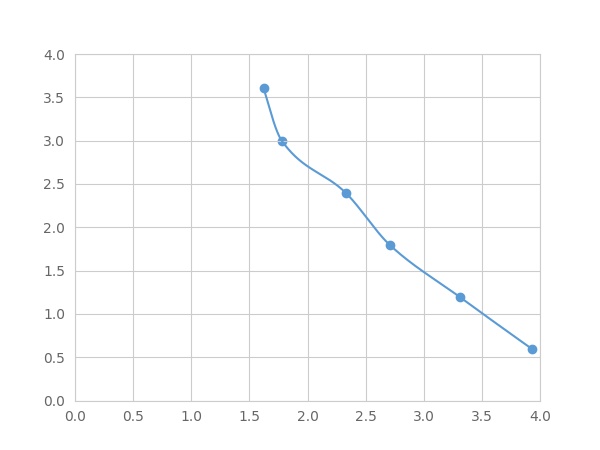
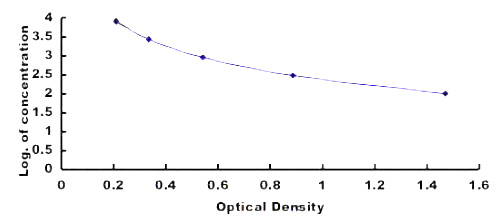
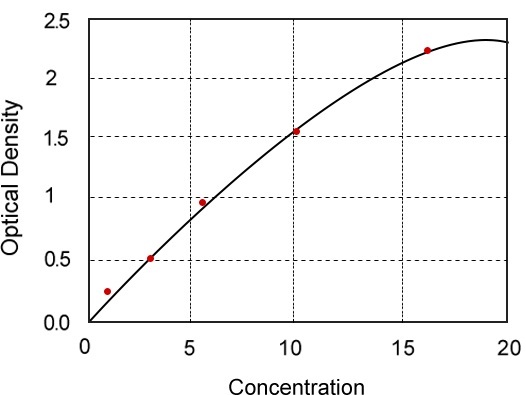
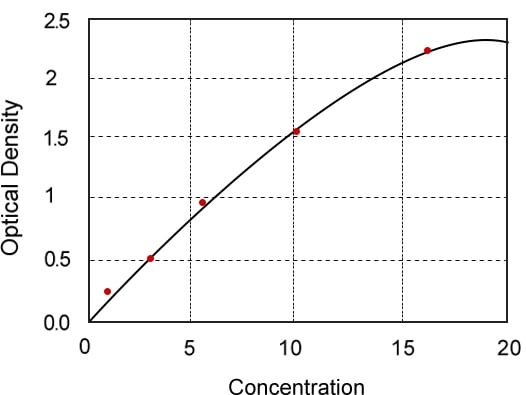
 Standard Curve (Sample)
Thyroid Stimulating Hormone ELISA Kit | TSH elisa kit
Thyroid Stimulating Hormone (TSH) regular
Synonyms
Thyroid Stimulating Hormone; N/A; Thyroid Stimulating Hormone (TSH) regular; TSH elisa kit
Specificity
This kit exhibits no detectable cross-reaction with human FSH, LH, Prolactin, or CG. Human GH can be detected in this assay.
Sequence Length
1377
Samples
Serum
Assay Type
Sandwich
Sensitivity
The minimal detectable concentration of TSH by this assay is estimated to be 0.2 muIU/mL.
Intended Uses
This Human TSH ELISA Kit is to be used for the in vitro quantitative determination of human thyroid stimulating hormone (TSH) concentrations in serum. This kit is intended LABORATORY FOR RESEARCH USE ONLY and is not for use in therapeutic procedures.
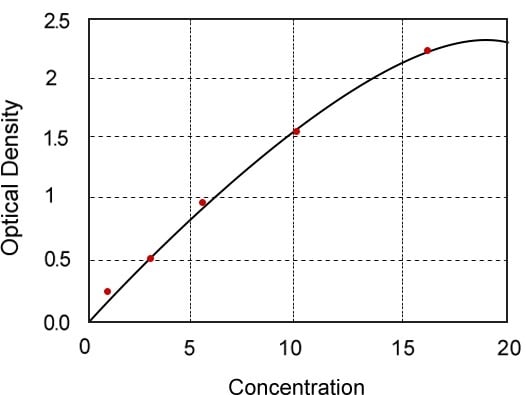
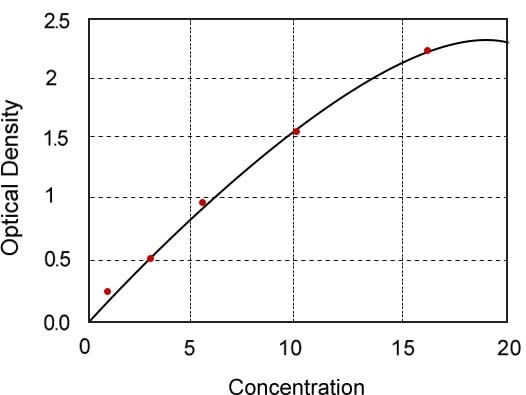
Standard Curve (Sample)
Standard Curve (Sample)
Related Product Information for TSH elisa kit
Principle of the assay: This TSH enzyme linked immunosorbent assay (ELISA) applies a technique called a quantitative sandwich immunoassay. The microtiter plate provided in this kit has been pre-coated with a monoclonal antibody specific for TSH. Standards or samples are then added to the microtiter plate wells and TSH if present, will bind to the antibody pre-coated wells. In order to quantitatively determine the amount of TSH present in the sample, a standardized preparation of horseradish peroxidase (HRP)-conjugated monoclonal antibody, specific for TSH are added to each well to "sandwich" the TSH immobilized on the plate. The microtiter plate undergoes incubation, and then the wells are thoroughly washed to remove all unbound components. Next, a TMB (3,3',5,5' tetramethyl-benzidine) substrate solution is added to each well. The enzyme (HRP) and substrate are allowed to react over a short incubation period. Only those wells that contain TSH and enzyme-conjugated antibody will exhibit a change in colour. The enzyme-substrate reaction is terminated by the addition of a sulphuric acid solution and the colour change is measured spectrophotometrically at a wavelength of 450 nm. In order to measure the concentration of TSH in the sample, this Human TSH ELISA Kit includes a set of calibration standards (6 standards). The calibration standards are assayed at the same time as the samples and allow the operator to produce a standard curve of Optical Density (O.D.) versus TSH concentration (muIU/mL). The concentration of TSH in the samples is then determined by comparing the O.D. of the samples to the standard curve.
Background: The determination of serum or plasma levels of thyroid-stimulating hormone (TSH, or thyrotropin) is recognized as a sensitive method in the identification of primary and secondary hypothyroidism. Thyroid-stimulating hormone is secreted by the anterior lobe of the pituitary gland and induces the production and release of thyroxine and triiodothyronine from the thyroid gland. It is glycoprotein with a molecular weight of approximately 28,000 Daltons, consisting of two chemically different subunits, alpha and beta. Although the concentration of TSH in the blood is extremely low, it is essential for the maintenance of normal thyroid function. The release of TSH is regulated by a TSH-releasing hormone (TRH) produced by the hypothalamus. The levels of TSH and TRH are inversely related to the level of thyroid hormone. When there is a high level of thyroid hormone in the blood, less TRH is released by the hypothalamus, so the pituitary secretes less TSH. The opposite action will occur when there is decreased thyroid hormone in the blood. This process is known as a negative feedback mechanism and is responsible for maintaining the proper blood levels of these hormones. TSH and the pituitary glycoproteins: luteinizing hormone (LH), follicle-stimulating hormone (FSH), and human chorionic gonadotropin (hCG) have identical alpha chains. The beta chain is distinct but does contain identical amino acid sequences, which can cause considerable cross-reactivity with some polyclonal TSH antisera. The use of monoclonal antibodies in this Human TSH ELISA Kit eliminates this interference, which could result in falsely elevated TSH values in either menopausal or pregnant females, a population whose evaluation of thyroid status is clinically significant.
Background: The determination of serum or plasma levels of thyroid-stimulating hormone (TSH, or thyrotropin) is recognized as a sensitive method in the identification of primary and secondary hypothyroidism. Thyroid-stimulating hormone is secreted by the anterior lobe of the pituitary gland and induces the production and release of thyroxine and triiodothyronine from the thyroid gland. It is glycoprotein with a molecular weight of approximately 28,000 Daltons, consisting of two chemically different subunits, alpha and beta. Although the concentration of TSH in the blood is extremely low, it is essential for the maintenance of normal thyroid function. The release of TSH is regulated by a TSH-releasing hormone (TRH) produced by the hypothalamus. The levels of TSH and TRH are inversely related to the level of thyroid hormone. When there is a high level of thyroid hormone in the blood, less TRH is released by the hypothalamus, so the pituitary secretes less TSH. The opposite action will occur when there is decreased thyroid hormone in the blood. This process is known as a negative feedback mechanism and is responsible for maintaining the proper blood levels of these hormones. TSH and the pituitary glycoproteins: luteinizing hormone (LH), follicle-stimulating hormone (FSH), and human chorionic gonadotropin (hCG) have identical alpha chains. The beta chain is distinct but does contain identical amino acid sequences, which can cause considerable cross-reactivity with some polyclonal TSH antisera. The use of monoclonal antibodies in this Human TSH ELISA Kit eliminates this interference, which could result in falsely elevated TSH values in either menopausal or pregnant females, a population whose evaluation of thyroid status is clinically significant.
Product Categories/Family for TSH elisa kit
NCBI and Uniprot Product Information
NCBI GI #
Molecular Weight
148,227 Da
NCBI Official Full Name
Tsh
UniProt Protein Name
Temperature-sensitive hemagglutinin tsh autotransporter
UniProt Gene Name
tsh
UniProt Entry Name
TSH_ECOLX
Customer Reviews
Loading reviews...
Share Your Experience
Similar Products



Product Notes
The TSH tsh (Catalog #AAA77869) is an ELISA Kit and is intended for research purposes only. The product is available for immediate purchase. It is sometimes possible for the material contained within the vial of "Thyroid Stimulating Hormone, ELISA Kit" to become dispersed throughout the inside of the vial, particularly around the seal of said vial, during shipment and storage. We always suggest centrifuging these vials to consolidate all of the liquid away from the lid and to the bottom of the vial prior to opening. Please be advised that certain products may require dry ice for shipping and that, if this is the case, an additional dry ice fee may also be required.Precautions
All products in the AAA Biotech catalog are strictly for research-use only, and are absolutely not suitable for use in any sort of medical, therapeutic, prophylactic, in-vivo, or diagnostic capacity. By purchasing a product from AAA Biotech, you are explicitly certifying that said products will be properly tested and used in line with industry standard. AAA Biotech and its authorized distribution partners reserve the right to refuse to fulfill any order if we have any indication that a purchaser may be intending to use a product outside of our accepted criteria.Disclaimer
Though we do strive to guarantee the information represented in this datasheet, AAA Biotech cannot be held responsible for any oversights or imprecisions. AAA Biotech reserves the right to adjust any aspect of this datasheet at any time and without notice. It is the responsibility of the customer to inform AAA Biotech of any product performance issues observed or experienced within 30 days of receipt of said product. To see additional details on this or any of our other policies, please see our Terms & Conditions page.Item has been added to Shopping Cart
If you are ready to order, navigate to Shopping Cart and get ready to checkout.