
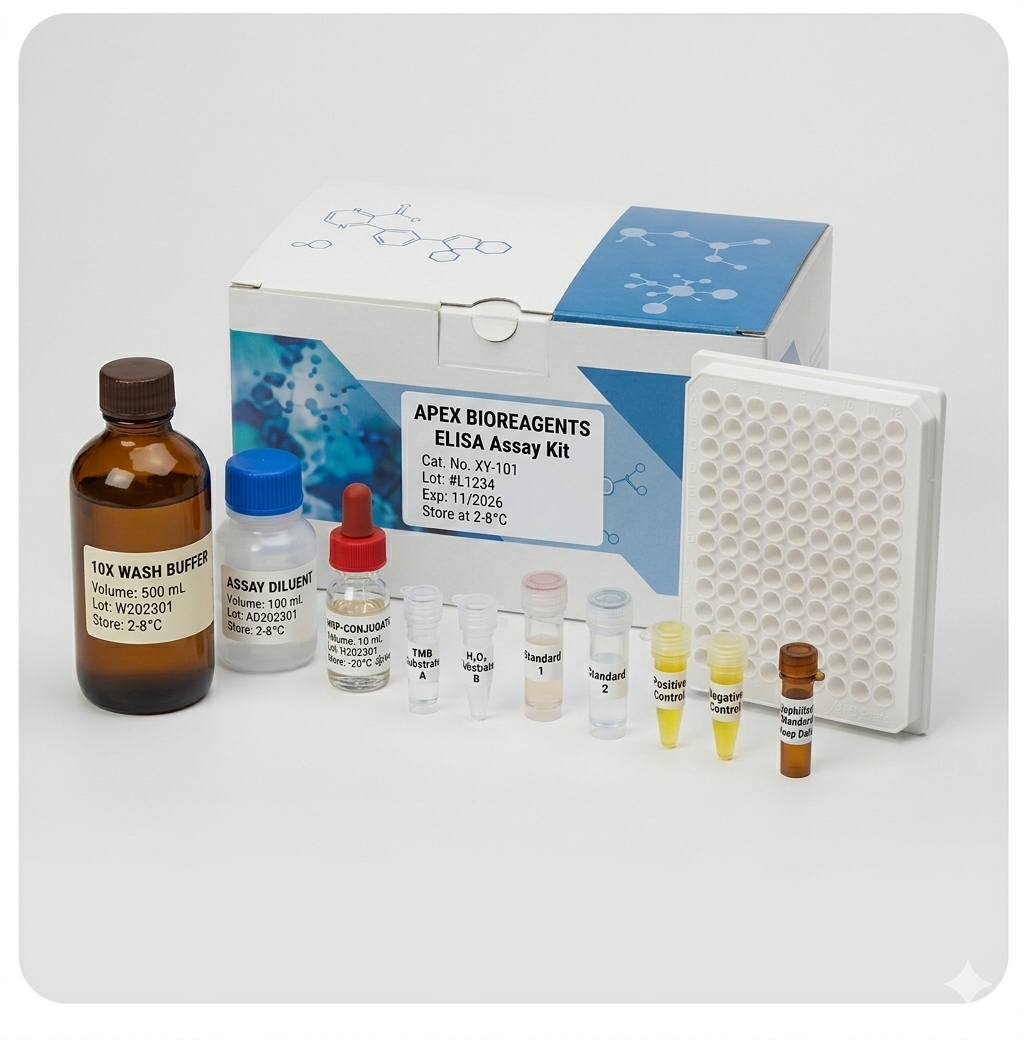
AAV-DJ assay kit
AAV-DJ Helper Free Packaging System
Synonyms
AAV-DJ; N/A; AAV-DJ Helper Free Packaging System; AAV-DJ assay kit
Product Note
Product is available for ACADEMIC, GOVERNMENT AND NON-PROFIT RESEARCH USE ONLY. For-profit institutions and other entities, please for additional information.
Preparation and Storage
Store at -20 degree C.
Related Product Information for AAV-DJ assay kit
Background: Adeno-associated viruses (AAVs) are derived from defective parvoviruses, which depend on essential helper functions provided by other viruses, such as adenovirus and herpes virus, for efficient viral replication and propagation. AAV has no etiologic association with any known diseases and has been successfully used to establish efficient and long-term gene expression in vivo in a variety of tissues without significant cellular immune responses or toxicity. AAV has a single-stranded DNA genome which consists of approximately 4.7 kb. All characterized AAV serotypes share three key features, including two copies of AAV terminal repeats (ITRs), one rep region and one cap region. The ITRs are capable of forming T-shape secondary structure and are the only cis elements that are required for AAV replication, packaging, integration, and rescue. The rep region encodes four overlapping proteins designated as Rep78, Rep68, Rep52, and Rep40, according to the apparent molecular mass of the protein. In addition to their well-defined roles in AAV replication, Rep proteins also regulate AAV packaging and site-specific integration. The cap region encodes three structural proteins, VP1, VP2, and VP3. These three proteins share the same reading frame (see Figure 1). AAV Helper-Free System allows the production of infectious recombinant human adenoassociated virus (rAAV) virions without the use of a helper virus (Figure 2). In the AAV Helper-Free System, most of the adenovirus gene products required for the production of infective AAV particles are supplied on the plasmid pHelper (i.e. E2A, E4, and VA RNA genes) that is co-transfected into cells with human AAV vector DNA. The remaining adenoviral gene product is supplied by the 293 host cells, which stably express the adenovirus E1 gene. By eliminating the requirement for live helper virus the AAV Helper-Free System provides a safer and more convenient gene delivery system. In the AAV Helper-Free System, the rep and cap genes have been removed from the viral vector that contains AAV-2 ITRs and are supplied in trans on the plasmid pAAV-RC. The removal of the AAV rep and cap genes allows for insertion of a gene of interest in the viral genome. AAV Helper-Free System can accommodate inserts of up to 3 kb, depending on the expression vector used (see Table 1 for detail). Adeno-associated virus (AAV) serotypes differ broadly in transduction efficacies and tissue tropisms. DNA family shuffling technology was used to create a complex library of hybrid capsids from eight different wild-type viruses (Figure 3). Stringent selection of AAV variants on human liver cells and with human anti-AAV antisera result in AAV-DJ (a clone named after the first two authors, see ref. 11), and AAV-DJ/8 (a heparin binding domain mutant of AAV-DJ). Recombinant AAV-DJ vectors mediate superior in vitro transduction efficacies in comparison with any other wild type serotypes. Transduction on cell types from different species and tissues, including primary human hepatocytes, melanoma cells, and embryonic stem cells, showed that AAV-DJ vectors were not only superior to all HBD-negative wild-type viruses (up to 100,000-fold better than AAV-8 or AAV-9), but also substantially better than AAV-2. (See Table 2 for detail). The heparin binding domain (HBD) plays important role for in vivo viral infection as demonstrated by comparing AAV-DJ to the DJ/8 mutant: HBD deletion alleviated the liver restriction and expanded transduction to all nonhepatic tissues, including the brain, identical to the transduction patterns of AAV-8 and AAV-9. Recombinant adeno-associated viruses are important tools for gene delivery and expression. AAV has not been reported to cause any diseases. Together with its replication defective nature, AAV has good safety profile to be used in gene transfer in vivo, and as potential gene therapy vehicles. Recombinant AAV is capable of infecting a broad range of cell types including non-dividing cells and remaining as concatemers for long-term expression. Compared with other viral vectors such as adenovirus, AAV elicits very mild immune response in animal models.
Product Categories/Family for AAV-DJ assay kit
Customer Reviews
Loading reviews...
Share Your Experience
Similar Products



Product Notes
The AAV-DJ (Catalog #AAA44658) is an Assay Kit and is intended for research purposes only. The product is available for immediate purchase. It is sometimes possible for the material contained within the vial of "AAV-DJ, Assay Kit" to become dispersed throughout the inside of the vial, particularly around the seal of said vial, during shipment and storage. We always suggest centrifuging these vials to consolidate all of the liquid away from the lid and to the bottom of the vial prior to opening. Please be advised that certain products may require dry ice for shipping and that, if this is the case, an additional dry ice fee may also be required.Precautions
All products in the AAA Biotech catalog are strictly for research-use only, and are absolutely not suitable for use in any sort of medical, therapeutic, prophylactic, in-vivo, or diagnostic capacity. By purchasing a product from AAA Biotech, you are explicitly certifying that said products will be properly tested and used in line with industry standard. AAA Biotech and its authorized distribution partners reserve the right to refuse to fulfill any order if we have any indication that a purchaser may be intending to use a product outside of our accepted criteria.Disclaimer
Though we do strive to guarantee the information represented in this datasheet, AAA Biotech cannot be held responsible for any oversights or imprecisions. AAA Biotech reserves the right to adjust any aspect of this datasheet at any time and without notice. It is the responsibility of the customer to inform AAA Biotech of any product performance issues observed or experienced within 30 days of receipt of said product. To see additional details on this or any of our other policies, please see our Terms & Conditions page.Item has been added to Shopping Cart
If you are ready to order, navigate to Shopping Cart and get ready to checkout.