
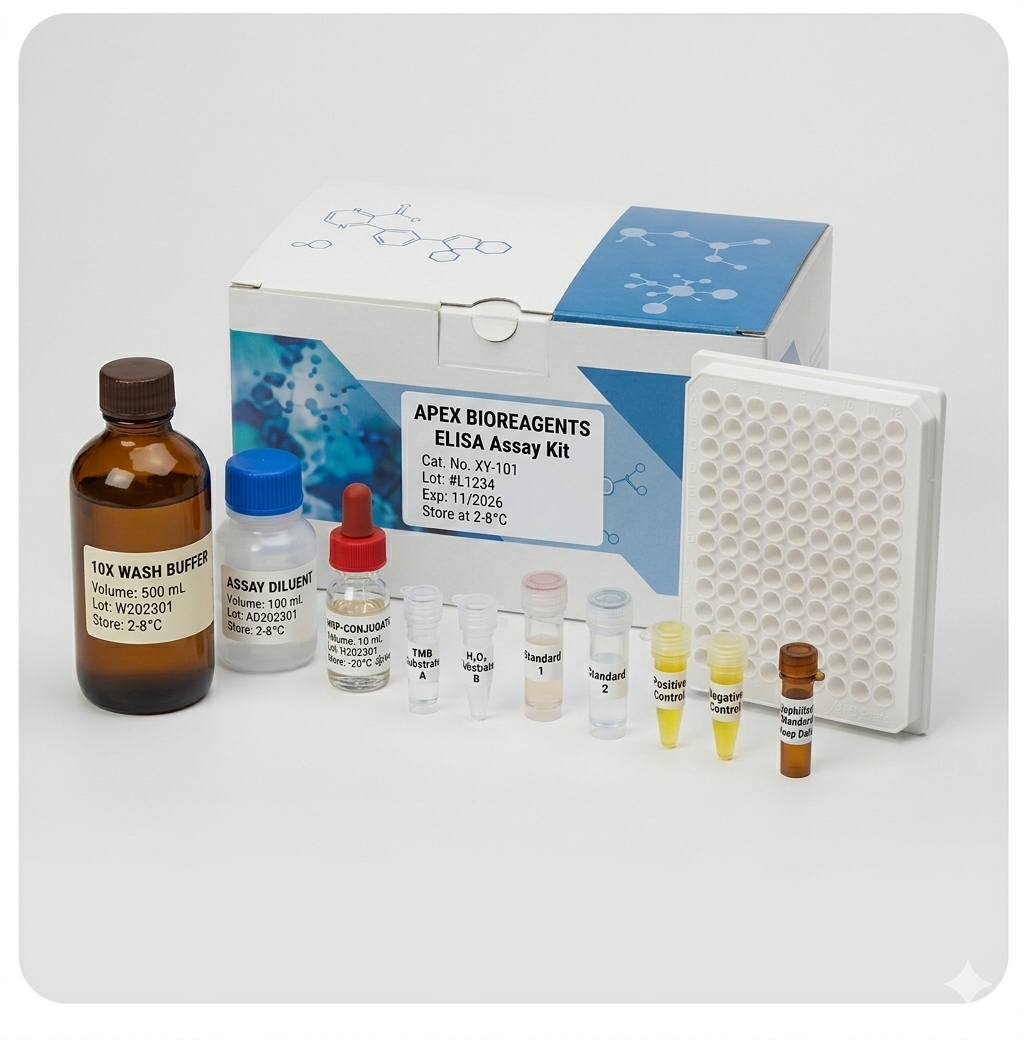
Francisella tularensis IgG ELISA Kit | IgG elisa kit
Francisella tularensis IgG ELISA Kit
Synonyms
Francisella tularensis IgG; N/A; Francisella tularensis IgG ELISA Kit; IgG elisa kit
Specificity
The Francisella tularensis IgG and IgM ELISA were verified in an internal study.
Samples
Various kinds of samples
Preparation and Storage
2 - 8 degree C
Related Product Information for IgG elisa kit
Intended Uses: The Francisella tularensis IgG and IgM tests are qualitative immunoassays for the detection of human antibodies in serum or plasma directed against the lipopolysaccharide (LPS) of Francisella tularensis. These assays are recommended for the sensitive detection of such antibodies in various kinds of samples. These kits are for research use only.
Principle of the Assay: The ELISA (Enzyme Linked Immunosorbent Assay) is an immunoassay, which is particularly suited to the determination of antibodies in various kinds of samples. The reaction is based on the specific interaction of antibodies with their corresponding antigen. The test strips of the microtiter plate are coated with specific antigens of the pathogen of interest. If antibodies in the sample are present, they bind to the fixed antigen. A secondary antibody, which has been conjugated with the enzyme alkaline phosphatase, detects and binds to the immune complex. The colourless substrate p-nitrophenylphosphate is then converted into the coloured product p-nitrophenol. The signal intensity of this reaction product is proportional to the concentration of the analyte in the sample and is measured photometrically.
Background/Introduction: Tularemia is a zoonosis caused by the Francisella tularensis bacterium and which can manifest in a variety of clinical conditions. Since the condition in animals resembles that of plague and the disease often affects hares and wild rabbits, it is also called rodent plague. Other traditional names for it are rabbit fever, lemming fever or Parinaud's disease. Francisella tularensis (formerly also called Pasteurella tularensis) is a gram-negative pleomorphic bacterium. The three relevant forms of the four subspecies are difficult to differentiate. Two types can be distinguished epidemiologically, biochemically and genotypically: Francisella tularensis biovar tularensis (type A) is highly virulent and, untreated, the infection has a high mortality rate. Francisella tularensis biovar holarctica (type B) is much less virulent but can also cause severe illness. Various small mammals, such as hares, rabbits, mice, rats and squirrels, are natural reservoirs of Francisella tularensis. The pathogen has also been detected in soil samples and water courses and can survive there for a prolonged period depending on climatic conditions. Human infection can occur through direct skin and mucosal contact with infected animals or their excreta. Extoparasites can also be considered as vectors. Consumption of infected and insufficiently cooked meat and inhalation of infectious dust are also potential routes of infection. ELISA test-systems are especially suited for the differential analysis of immunoglobulin classes directed against the virus.
Principle of the Assay: The ELISA (Enzyme Linked Immunosorbent Assay) is an immunoassay, which is particularly suited to the determination of antibodies in various kinds of samples. The reaction is based on the specific interaction of antibodies with their corresponding antigen. The test strips of the microtiter plate are coated with specific antigens of the pathogen of interest. If antibodies in the sample are present, they bind to the fixed antigen. A secondary antibody, which has been conjugated with the enzyme alkaline phosphatase, detects and binds to the immune complex. The colourless substrate p-nitrophenylphosphate is then converted into the coloured product p-nitrophenol. The signal intensity of this reaction product is proportional to the concentration of the analyte in the sample and is measured photometrically.
Background/Introduction: Tularemia is a zoonosis caused by the Francisella tularensis bacterium and which can manifest in a variety of clinical conditions. Since the condition in animals resembles that of plague and the disease often affects hares and wild rabbits, it is also called rodent plague. Other traditional names for it are rabbit fever, lemming fever or Parinaud's disease. Francisella tularensis (formerly also called Pasteurella tularensis) is a gram-negative pleomorphic bacterium. The three relevant forms of the four subspecies are difficult to differentiate. Two types can be distinguished epidemiologically, biochemically and genotypically: Francisella tularensis biovar tularensis (type A) is highly virulent and, untreated, the infection has a high mortality rate. Francisella tularensis biovar holarctica (type B) is much less virulent but can also cause severe illness. Various small mammals, such as hares, rabbits, mice, rats and squirrels, are natural reservoirs of Francisella tularensis. The pathogen has also been detected in soil samples and water courses and can survive there for a prolonged period depending on climatic conditions. Human infection can occur through direct skin and mucosal contact with infected animals or their excreta. Extoparasites can also be considered as vectors. Consumption of infected and insufficiently cooked meat and inhalation of infectious dust are also potential routes of infection. ELISA test-systems are especially suited for the differential analysis of immunoglobulin classes directed against the virus.
Product Categories/Family for IgG elisa kit
Customer Reviews
Loading reviews...
Share Your Experience
Similar Products
Product Notes
The IgG (Catalog #AAA72662) is an ELISA Kit and is intended for research purposes only. The product is available for immediate purchase. It is sometimes possible for the material contained within the vial of "Francisella tularensis IgG, ELISA Kit" to become dispersed throughout the inside of the vial, particularly around the seal of said vial, during shipment and storage. We always suggest centrifuging these vials to consolidate all of the liquid away from the lid and to the bottom of the vial prior to opening. Please be advised that certain products may require dry ice for shipping and that, if this is the case, an additional dry ice fee may also be required.Precautions
All products in the AAA Biotech catalog are strictly for research-use only, and are absolutely not suitable for use in any sort of medical, therapeutic, prophylactic, in-vivo, or diagnostic capacity. By purchasing a product from AAA Biotech, you are explicitly certifying that said products will be properly tested and used in line with industry standard. AAA Biotech and its authorized distribution partners reserve the right to refuse to fulfill any order if we have any indication that a purchaser may be intending to use a product outside of our accepted criteria.Disclaimer
Though we do strive to guarantee the information represented in this datasheet, AAA Biotech cannot be held responsible for any oversights or imprecisions. AAA Biotech reserves the right to adjust any aspect of this datasheet at any time and without notice. It is the responsibility of the customer to inform AAA Biotech of any product performance issues observed or experienced within 30 days of receipt of said product. To see additional details on this or any of our other policies, please see our Terms & Conditions page.Item has been added to Shopping Cart
If you are ready to order, navigate to Shopping Cart and get ready to checkout.