
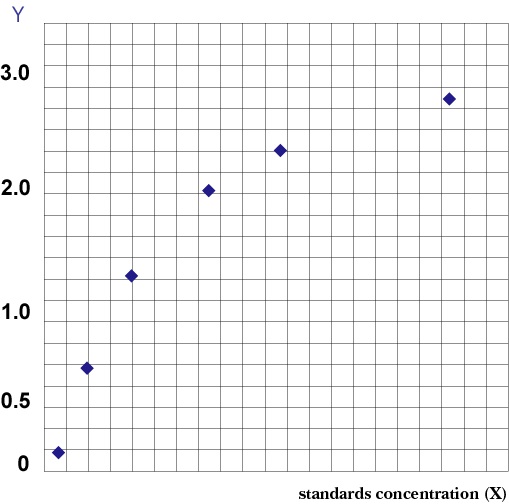
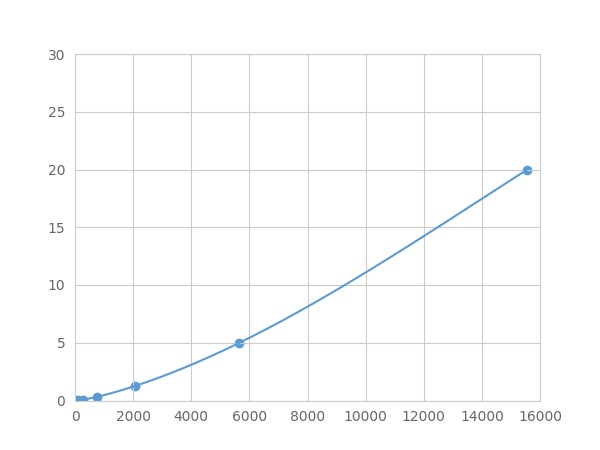
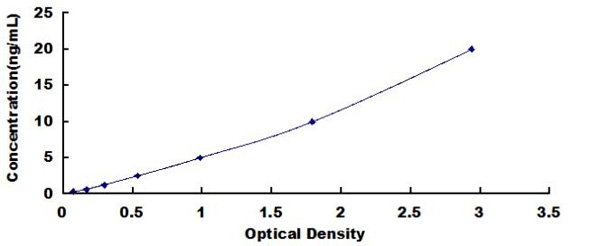
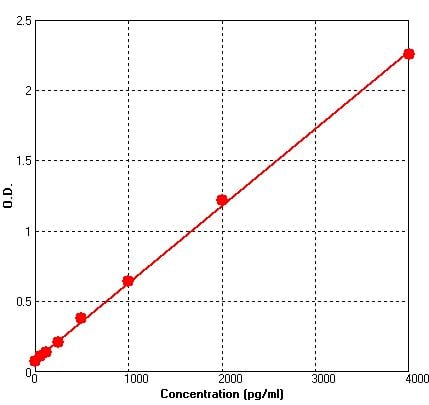
 Standard Curve (Sample)
Survivin ELISA Kit | LOC398389 elisa kit
Survivin ELISA Kit
Synonyms
Survivin; N/A; Survivin ELISA Kit; Baculoviral inhibitor of apoptosis repeat-containing 5; BIRC5; LOC398389 elisa kit
Specificity
The specificity is defined as the probability of the assay of scoring negative in the absence of the spe-cific analyte. It is 95,8%.
Sequence Length
160
Samples
Human Serum Or Plasma
Preparation and Storage
2 - 8 degree C
Standard Curve (Sample)
Standard Curve (Sample)
Related Product Information for LOC398389 elisa kit
Intended Uses: The Strongyloides ELISA test is an enzyme immunoassay for the detection of antibodies to Strongyloi-des, in human serum or plasma (citrate or heparin). For research use only.
Principle of the Assay: The qualitative immunoenzymatic determination of IgG and IgM antibodies against Strongyloides is based on the ELISA (Enzyme-linked Immunosorbent Assay) technique. Microtiter strip wells are pre-coated with recombinant Strongyloides antigens to bind corresponding antibodies of the specimen. Af-ter washing the wells to remove all unbound sample material horseradish peroxidase (HRP) labelled anti-human IgG and IgM conjugate is added. This conjugate binds to the captured Strongyloides-spe-cific antibodies. The immune complex formed by the bound conjugate is visualized by adding Tetra-methylbenzidine (TMB) substrate which gives a blue reaction product. The intensity of this prod-uct is proportional to the amount of Strongyloides-specific antibodies in the specimen. Sulphuric acid is added to stop the reaction. This produces a yellow endpoint colour. Absorbance at 450 nm is read us-ing an ELISA microwell plate reader!!Background/Introduction: Strongyloides is a genus containing some 50 species of obligate gastrointestinal parasites of verte-brates. Strongyloides stercoralis is the scientific name of a human parasitic roundworm causing the disease of strongyloidiasis. Its common name is pinworm in the UK and threadworm in the US. The Strongyloides stercoralis nematode can parasitize humans. The adult parasitic stage lives in tunnels in the mucosa of the small intestine. S. stercoralis can be found in areas with tropical and subtropical cli-mates but cases also occur in temperate area, more frequently in rural areas. S. stercoralis has a very low prevalence in societies where fecal contamination of soil or water is rare. Many people in-fected are usually asymptomatic at first. Symptoms include dermatitis: swelling, itching, larva currens, and mild hemorrhage at the site where the skin has been penetrated. If the parasite reaches the lungs, the chest may feel as if it is burning, and wheezing and coughing may result, along with pneumonia-like symptoms (Löffler's syndrome). The intestines could eventually be invaded, leading to burning pain, tissue damage, sepsis, and ulcers. In severe cases, edema may result in obstruction of the in-testinal tract, as well as loss of peristaltic contractions. Strongyloides infection in immunocompro-mised indi-viduals (particularly following the administration of steroids, for example following trans-plant surgery) can result in disseminated strongyloidiasis, in which worms move beyond the confines of the gut into other organs. This is fatal unless anti-Strongyloides therapy is given. Locating juvenile larvae, either rhabditiform or filariform, in recent stool samples will confirm the presence of this para-site. Other tech-niques used include direct fecal smears, culturing fecal samples on agar plates, sero-identification through ELISA, and duodenal fumigation.
Principle of the Assay: The qualitative immunoenzymatic determination of IgG and IgM antibodies against Strongyloides is based on the ELISA (Enzyme-linked Immunosorbent Assay) technique. Microtiter strip wells are pre-coated with recombinant Strongyloides antigens to bind corresponding antibodies of the specimen. Af-ter washing the wells to remove all unbound sample material horseradish peroxidase (HRP) labelled anti-human IgG and IgM conjugate is added. This conjugate binds to the captured Strongyloides-spe-cific antibodies. The immune complex formed by the bound conjugate is visualized by adding Tetra-methylbenzidine (TMB) substrate which gives a blue reaction product. The intensity of this prod-uct is proportional to the amount of Strongyloides-specific antibodies in the specimen. Sulphuric acid is added to stop the reaction. This produces a yellow endpoint colour. Absorbance at 450 nm is read us-ing an ELISA microwell plate reader!!Background/Introduction: Strongyloides is a genus containing some 50 species of obligate gastrointestinal parasites of verte-brates. Strongyloides stercoralis is the scientific name of a human parasitic roundworm causing the disease of strongyloidiasis. Its common name is pinworm in the UK and threadworm in the US. The Strongyloides stercoralis nematode can parasitize humans. The adult parasitic stage lives in tunnels in the mucosa of the small intestine. S. stercoralis can be found in areas with tropical and subtropical cli-mates but cases also occur in temperate area, more frequently in rural areas. S. stercoralis has a very low prevalence in societies where fecal contamination of soil or water is rare. Many people in-fected are usually asymptomatic at first. Symptoms include dermatitis: swelling, itching, larva currens, and mild hemorrhage at the site where the skin has been penetrated. If the parasite reaches the lungs, the chest may feel as if it is burning, and wheezing and coughing may result, along with pneumonia-like symptoms (Löffler's syndrome). The intestines could eventually be invaded, leading to burning pain, tissue damage, sepsis, and ulcers. In severe cases, edema may result in obstruction of the in-testinal tract, as well as loss of peristaltic contractions. Strongyloides infection in immunocompro-mised indi-viduals (particularly following the administration of steroids, for example following trans-plant surgery) can result in disseminated strongyloidiasis, in which worms move beyond the confines of the gut into other organs. This is fatal unless anti-Strongyloides therapy is given. Locating juvenile larvae, either rhabditiform or filariform, in recent stool samples will confirm the presence of this para-site. Other tech-niques used include direct fecal smears, culturing fecal samples on agar plates, sero-identification through ELISA, and duodenal fumigation.
Product Categories/Family for LOC398389 elisa kit
NCBI and Uniprot Product Information
NCBI GI #
NCBI GeneID
NCBI Accession #
NCBI GenBank Nucleotide #
NCBI Official Full Name
survivin
NCBI Official Symbol
LOC398389
NCBI Protein Information
survivin
Customer Reviews
Loading reviews...
Share Your Experience
Similar Products






Product Notes
The LOC398389 (Catalog #AAA72656) is an ELISA Kit and is intended for research purposes only. The product is available for immediate purchase. It is sometimes possible for the material contained within the vial of "Survivin, ELISA Kit" to become dispersed throughout the inside of the vial, particularly around the seal of said vial, during shipment and storage. We always suggest centrifuging these vials to consolidate all of the liquid away from the lid and to the bottom of the vial prior to opening. Please be advised that certain products may require dry ice for shipping and that, if this is the case, an additional dry ice fee may also be required.Precautions
All products in the AAA Biotech catalog are strictly for research-use only, and are absolutely not suitable for use in any sort of medical, therapeutic, prophylactic, in-vivo, or diagnostic capacity. By purchasing a product from AAA Biotech, you are explicitly certifying that said products will be properly tested and used in line with industry standard. AAA Biotech and its authorized distribution partners reserve the right to refuse to fulfill any order if we have any indication that a purchaser may be intending to use a product outside of our accepted criteria.Disclaimer
Though we do strive to guarantee the information represented in this datasheet, AAA Biotech cannot be held responsible for any oversights or imprecisions. AAA Biotech reserves the right to adjust any aspect of this datasheet at any time and without notice. It is the responsibility of the customer to inform AAA Biotech of any product performance issues observed or experienced within 30 days of receipt of said product. To see additional details on this or any of our other policies, please see our Terms & Conditions page.Item has been added to Shopping Cart
If you are ready to order, navigate to Shopping Cart and get ready to checkout.