
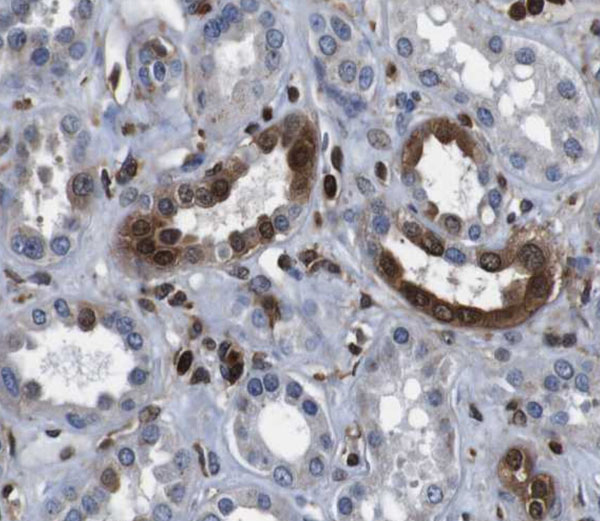
 IHC (Immunohistochemisry)
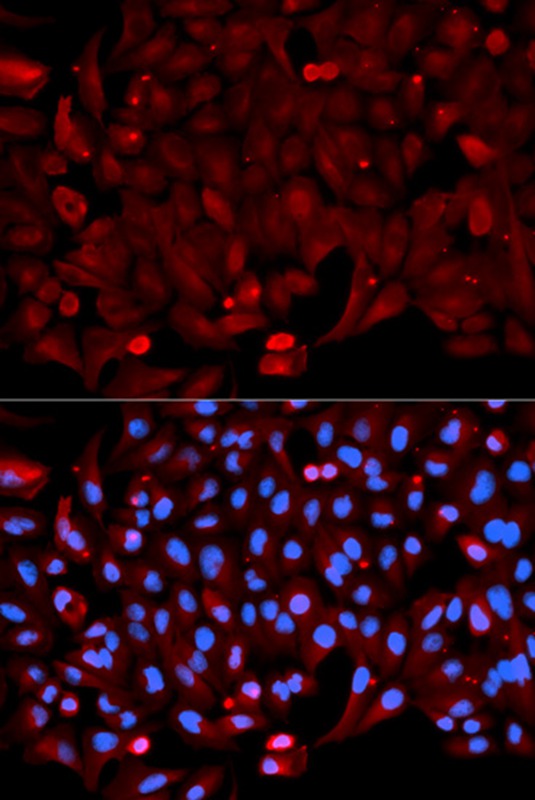
(IHC analysis of Annexin I expression in COLO.)
IHC (Immunohistochemisry)
(IHC analysis of Annexin I expression in COLO.)
Rabbit Annexin I Polyclonal Antibody | anti-ANXA1 antibody
Annexin I Antibody
Gene Names
ANXA1; ANX1; LPC1
Reactivity
Human, Mouse, Rat
Applications
ELISA, Immunohistochemistry, Western Blot
Purity
The antiserum was purified by peptide affinity chromatography using SulfoLink Coupling Resin.
Synonyms
Annexin I, Antibody; Annexin I Antibody; Annexin 1; Annexin A1; Annexin I (lipocortin I); Annexin I; Annexin-1; AnnexinA1; AnnexinI; ANX 1; ANX A1; ANX1; ANXA 1; ANXA1; ANXA1 protein; ANXA1_HUMAN; Calpactin 2; Calpactin II; Calpactin-2; CalpactinII; Chromobindin 9; Chromobindin-9; Chromobindin9; HGNC:533; Lipocortin 1; Lipocortin I; Lipocortin1; LipocortinI; LPC 1; LPC1; p35; Phospholipase A2 inhibitory protein; anti-ANXA1 antibody
Host
Rabbit
Reactivity
Human, Mouse, Rat
Clonality
Polyclonal
Isotype
IgG
Specificity
Annexin I antibody detects endogenous levels of total Annexin I
Purity/Purification
The antiserum was purified by peptide affinity chromatography using SulfoLink Coupling Resin.
Form/Format
Liquid
Phosphate buffered saline, pH 7.4, 150mM NaCl, 0.02% sodium azide and 50% glycerol.
Phosphate buffered saline, pH 7.4, 150mM NaCl, 0.02% sodium azide and 50% glycerol.
Concentration
1mg/ml (varies by lot)
Sequence Length
346
Applicable Applications for anti-ANXA1 antibody
ELISA, IHC (Immunohistochemistry), WB (Western Blot)
Immunogen
A synthesized peptide derived from human Annexin I
Subcellular Location
Nucleus. Cytoplasm. Cell Projection > Cilium. Basolateral Cell Membrane. Found in the cilium, nucleus and basolateral Cell Membrane of ciliated cells in the tracheal endothelium (By similarity). Found in the cytoplasm of type II pneumocytes and alveolar macrophages.
Tissue Specificity
Detected in resting neutrophils (PubMed:10772777). Detected in peripheral blood T-cells (PubMed:17008549). Detected in extracellular vesicles in blood serum from patients with inflammatory bowel disease, but not in serum from healthy donors (PubMed:25664854). Detected in placenta (at protein level) (PubMed:2532504). Detected in liver.
Predicted Cross Reactivity
Pig, Bovine, Horse, Sheep, Rabbit
Similarity
Pig (81%), Bovine (88%), Horse (94%), Sheep (93%), Rabbit (94%)
Conjugation
Unconjugated
Preparation and Storage
Store at -20 degree C. Stable for 12 months from date of receipt.
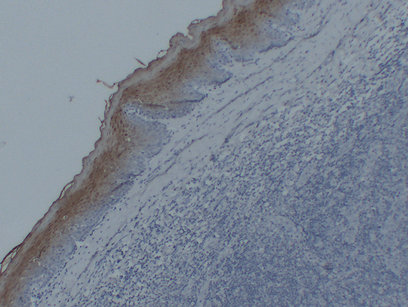
IHC (Immunohistochemisry)
(IHC analysis of Annexin I expression in COLO.)
IHC (Immunohistochemisry)
(IHC analysis of Annexin I expression in COLO.)
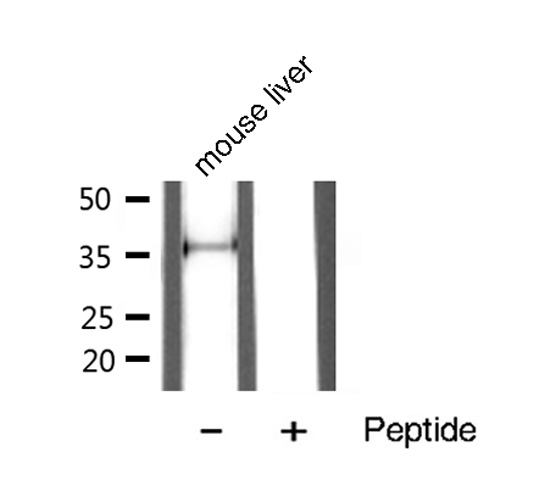
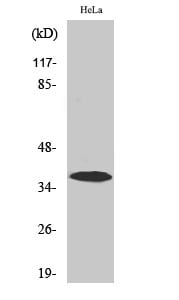
WB (Western Blot)
(Western blot analysis of Annexin I Antibody expression in mouse liver tissue lysates.The lane on the right is treated with the antigen-specific peptide.)
WB (Western Blot)
(Western blot analysis of Annexin I Antibody expression in mouse liver tissue lysates.The lane on the right is treated with the antigen-specific peptide.)
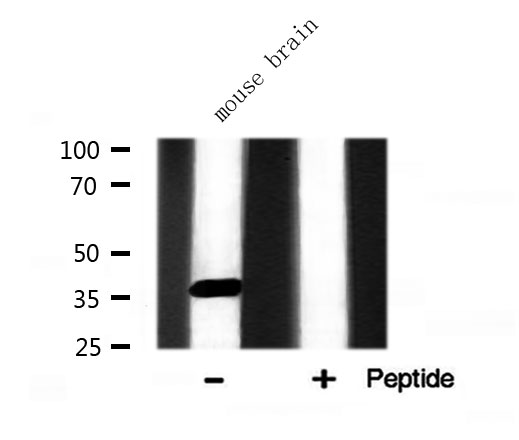
WB (Western Blot)
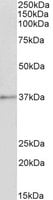
(Western blot analysis of Annexin I expression in Mouse brain lysate)
WB (Western Blot)
(Western blot analysis of Annexin I expression in Mouse brain lysate)
Related Product Information for anti-ANXA1 antibody
Description: Calcium/phospholipid-binding protein which promotes membrane fusion and is involved in exocytosis. This protein regulates phospholipase A2 activity. It seems to bind from two to four calcium ions with high affinity.
Function: Plays important roles in the innate immune response as effector of glucocorticoid-mediated responses and regulator of the inflammatory process. Has anti-inflammatory activity (PubMed:8425544). Plays a role in glucocorticoid-mediated down-regulation of the early phase of the inflammatory response (By similarity). Promotes resolution of inflammation and wound healing (PubMed:25664854). Functions at least in part by activating the formyl peptide receptors and downstream signaling cascades (PubMed:15187149, PubMed:25664854). Promotes chemotaxis of granulocytes and monocytes via activation of the formyl peptide receptors (PubMed:15187149). Contributes to the adaptive immune response by enhancing signaling cascades that are triggered by T-cell activation, regulates differentiation and proliferation of activated T-cells (PubMed:17008549). Promotes the differentiation of T-cells into Th1 cells and negatively regulates differentiation into Th2 cells (PubMed:17008549). Has no effect on unstimulated T cells (PubMed:17008549). Promotes rearrangement of the actin cytoskeleton, cell polarization and cell migration (PubMed:15187149). Negatively regulates hormone exocytosis via activation of the formyl peptide receptors and reorganization of the actin cytoskeleton (PubMed:19625660). Has high affinity for Ca2+ and can bind up to eight Ca2+ ions (By similarity). Displays Ca2+-dependent binding to phospholipid membranes (PubMed:2532504, PubMed:8557678). Plays a role in the formation of phagocytic cups and phagosomes. Plays a role in phagocytosis by mediating the Ca2+-dependent interaction between phagosomes and the actin cytoskeleton (By similarity).
Subunit Structure: Homodimer; non-covalently linked (By similarity). Homodimer; linked by transglutamylation (PubMed:2532504). Homodimers linked by transglutamylation are observed in placenta, but not in other tissues (PubMed:2532504). Interacts with S100A11 (PubMed:8557678, PubMed:10673436). Heterotetramer, formed by two molecules each of S100A11 and ANXA1 (PubMed:10673436). Interacts with DYSF (By similarity). Interacts with EGFR (By similarity).
Post-translational Modifications: Phosphorylated by protein kinase C, EGFR and TRPM7 (PubMed:2457390, PubMed:15485879). Phosphorylated in response to EGF treatment (PubMed:2532504). Sumoylated.
Similarity: The full-length protein can bind eight Ca2+ ions via the annexin repeats. Calcium binding causes a major conformation change that modifies dimer contacts and leads to surface exposure of the N-terminal phosphorylation sites; in the absence of Ca2+, these sites are buried in the interior of the protein core. The N-terminal region becomes disordered in response to calcium-binding.The N-terminal 26 amino acids are sufficient for its extracellular functions in the regulation of inflammation and wound healing (PubMed:25664854). Acylated peptides that contain the first 26 amino acids of the mature protein can activate signaling via the formyl peptide receptors (PubMed:15187149, PubMed:25664854). Belongs to the annexin family.
Function: Plays important roles in the innate immune response as effector of glucocorticoid-mediated responses and regulator of the inflammatory process. Has anti-inflammatory activity (PubMed:8425544). Plays a role in glucocorticoid-mediated down-regulation of the early phase of the inflammatory response (By similarity). Promotes resolution of inflammation and wound healing (PubMed:25664854). Functions at least in part by activating the formyl peptide receptors and downstream signaling cascades (PubMed:15187149, PubMed:25664854). Promotes chemotaxis of granulocytes and monocytes via activation of the formyl peptide receptors (PubMed:15187149). Contributes to the adaptive immune response by enhancing signaling cascades that are triggered by T-cell activation, regulates differentiation and proliferation of activated T-cells (PubMed:17008549). Promotes the differentiation of T-cells into Th1 cells and negatively regulates differentiation into Th2 cells (PubMed:17008549). Has no effect on unstimulated T cells (PubMed:17008549). Promotes rearrangement of the actin cytoskeleton, cell polarization and cell migration (PubMed:15187149). Negatively regulates hormone exocytosis via activation of the formyl peptide receptors and reorganization of the actin cytoskeleton (PubMed:19625660). Has high affinity for Ca2+ and can bind up to eight Ca2+ ions (By similarity). Displays Ca2+-dependent binding to phospholipid membranes (PubMed:2532504, PubMed:8557678). Plays a role in the formation of phagocytic cups and phagosomes. Plays a role in phagocytosis by mediating the Ca2+-dependent interaction between phagosomes and the actin cytoskeleton (By similarity).
Subunit Structure: Homodimer; non-covalently linked (By similarity). Homodimer; linked by transglutamylation (PubMed:2532504). Homodimers linked by transglutamylation are observed in placenta, but not in other tissues (PubMed:2532504). Interacts with S100A11 (PubMed:8557678, PubMed:10673436). Heterotetramer, formed by two molecules each of S100A11 and ANXA1 (PubMed:10673436). Interacts with DYSF (By similarity). Interacts with EGFR (By similarity).
Post-translational Modifications: Phosphorylated by protein kinase C, EGFR and TRPM7 (PubMed:2457390, PubMed:15485879). Phosphorylated in response to EGF treatment (PubMed:2532504). Sumoylated.
Similarity: The full-length protein can bind eight Ca2+ ions via the annexin repeats. Calcium binding causes a major conformation change that modifies dimer contacts and leads to surface exposure of the N-terminal phosphorylation sites; in the absence of Ca2+, these sites are buried in the interior of the protein core. The N-terminal region becomes disordered in response to calcium-binding.The N-terminal 26 amino acids are sufficient for its extracellular functions in the regulation of inflammation and wound healing (PubMed:25664854). Acylated peptides that contain the first 26 amino acids of the mature protein can activate signaling via the formyl peptide receptors (PubMed:15187149, PubMed:25664854). Belongs to the annexin family.
NCBI and Uniprot Product Information
NCBI GI #
NCBI GeneID
NCBI Accession #
NCBI GenBank Nucleotide #
Molecular Weight
Observed: 38 kDa
Predicted: 39 kDa
Predicted: 39 kDa
NCBI Official Full Name
annexin A1
NCBI Official Synonym Full Names
annexin A1
NCBI Official Symbol
ANXA1
NCBI Official Synonym Symbols
ANX1; LPC1
NCBI Protein Information
annexin A1
UniProt Protein Name
Annexin A1
UniProt Gene Name
ANXA1
UniProt Synonym Gene Names
ANX1; LPC1
Customer Reviews
Loading reviews...
Share Your Experience
Similar Products



Product Notes
The ANXA1 anxa1 (Catalog #AAA321831) is an Antibody produced from Rabbit and is intended for research purposes only. The product is available for immediate purchase. The Annexin I Antibody reacts with Human, Mouse, Rat and may cross-react with other species as described in the data sheet. AAA Biotech's Annexin I can be used in a range of immunoassay formats including, but not limited to, ELISA, IHC (Immunohistochemistry), WB (Western Blot). Researchers should empirically determine the suitability of the ANXA1 anxa1 for an application not listed in the data sheet. Researchers commonly develop new applications and it is an integral, important part of the investigative research process. It is sometimes possible for the material contained within the vial of "Annexin I, Polyclonal Antibody" to become dispersed throughout the inside of the vial, particularly around the seal of said vial, during shipment and storage. We always suggest centrifuging these vials to consolidate all of the liquid away from the lid and to the bottom of the vial prior to opening. Please be advised that certain products may require dry ice for shipping and that, if this is the case, an additional dry ice fee may also be required.Precautions
All products in the AAA Biotech catalog are strictly for research-use only, and are absolutely not suitable for use in any sort of medical, therapeutic, prophylactic, in-vivo, or diagnostic capacity. By purchasing a product from AAA Biotech, you are explicitly certifying that said products will be properly tested and used in line with industry standard. AAA Biotech and its authorized distribution partners reserve the right to refuse to fulfill any order if we have any indication that a purchaser may be intending to use a product outside of our accepted criteria.Disclaimer
Though we do strive to guarantee the information represented in this datasheet, AAA Biotech cannot be held responsible for any oversights or imprecisions. AAA Biotech reserves the right to adjust any aspect of this datasheet at any time and without notice. It is the responsibility of the customer to inform AAA Biotech of any product performance issues observed or experienced within 30 days of receipt of said product. To see additional details on this or any of our other policies, please see our Terms & Conditions page.Item has been added to Shopping Cart
If you are ready to order, navigate to Shopping Cart and get ready to checkout.