
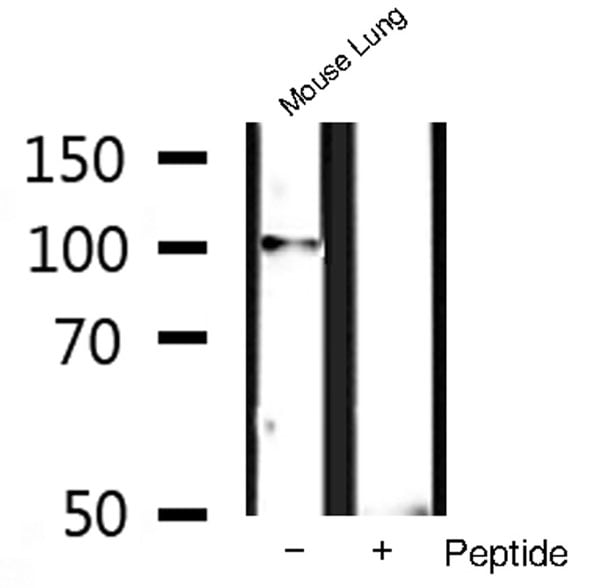
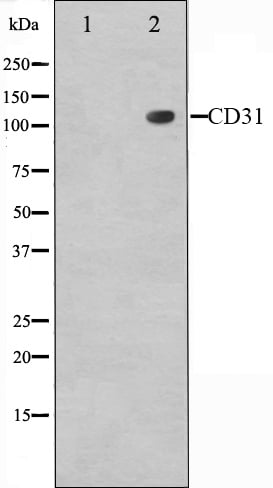
 WB (Western Blot)
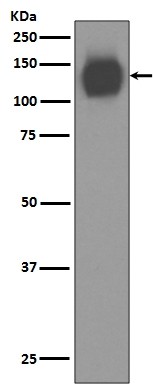
(Western blot analysis of CD31 expression in mouse lung tissue lysates.)
WB (Western Blot)
(Western blot analysis of CD31 expression in mouse lung tissue lysates.)
Rabbit CD31 Polyclonal Antibody | anti-CD31 antibody
CD31 Antibody
Gene Names
PECAM1; CD31; PECA1; GPIIA'; PECAM-1; endoCAM; CD31/EndoCAM
Reactivity
Human, Mouse, Rat
Applications
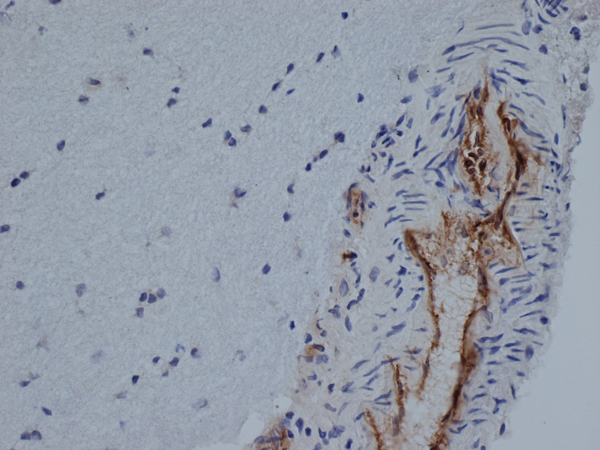
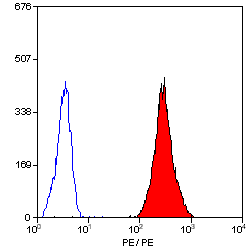
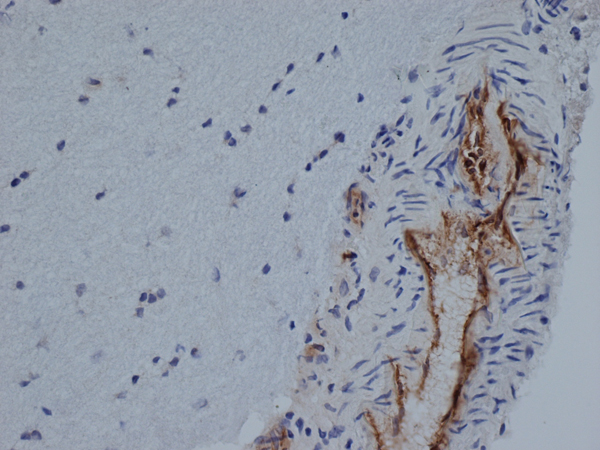
ELISA, Immunocytochemistry, Immunofluorescence, Immunohistochemistry, Western Blot
Purity
The antiserum was purified by peptide affinity chromatography using SulfoLink Coupling Resin.
Synonyms
CD31, Antibody; CD31 Antibody; Adhesion molecule; CD31; CD31 antigen; CD31 EndoCAM; EndoCAM; FLJ34100; FLJ58394; GPIIA; GPIIA'; PECA1; PECA1_HUMAN; Pecam 1; PECAM 1 CD31 EndoCAM; PECAM; PECAM-1; Pecam1; Platelet and endothelial cell adhesion molecule 1; Platelet endothelial cell adhesion molecule; Platelet/endothelial cell adhesion molecule 1; anti-CD31 antibody
Host
Rabbit
Reactivity
Human, Mouse, Rat
Clonality
Polyclonal
Isotype
IgG
Specificity
PECAM-1 antibody detects endogenous levels of total PECAM-1
Purity/Purification
The antiserum was purified by peptide affinity chromatography using SulfoLink Coupling Resin.
Form/Format
Liquid
Phosphate buffered saline, pH 7.4, 150mM NaCl, 0.02% sodium azide and glycerol.
Phosphate buffered saline, pH 7.4, 150mM NaCl, 0.02% sodium azide and glycerol.
Concentration
1mg/ml (varies by lot)
Sequence Length
738
Applicable Applications for anti-CD31 antibody
ELISA, ICC (Immunocytochemistry), IF (Immunofluorescence), IHC (Immunohistochemistry), WB (Western Blot)
Immunogen
A synthesized peptide derived from human PECAM-1
Subcellular Location
Membrane. Cell junction. Localizes to the lateral border recycling compartment (LBRC) and recycles from the LBRC to the junction in resting endothelial cells and Cell junction. Localizes to the lateral border recycling compartment (LBRC) and recycles from the LBRC to the junction in resting endothelial cells.
Tissue Specificity
Expressed on platelets and leukocytes and is primarily concentrated at the borders between endothelial cells (PubMed:18388311, PubMed:21464369). Expressed in human umbilical vein endothelial cells (HUVECs) (at protein level) (PubMed:19342684, PubMed:17580308). Expressed on neutrophils (at protein level) (PubMed:17580308). Isoform Long predominates in all tissues examined (PubMed:12433657). Isoform Delta12 is detected only in trachea (PubMed:12433657). Isoform Delta14-15 is only detected in lung (PubMed:12433657). Isoform Delta14 is detected in all tissues examined with the strongest expression in heart (PubMed:12433657). Isoform Delta15 is expressed in brain, testis, ovary, cell surface of platelets, human umbilical vein endothelial cells (HUVECs), Jurkat T-cell leukemia, human erythroleukemia (HEL) and U-937 histiocytic lymphoma cell lines (at protein level) (PubMed:12433657, PubMed:18388311).
Predicted Cross Reactivity
Pig, Bovine, Horse, Sheep, Rabbit, Dog
Similarity
Pig (90%), Bovine (90%), Horse (90%), Sheep (90%), Rabbit (90%), Dog (90%)
Conjugation
Unconjugated
Preparation and Storage
Store at -20 degree C. Stable for 12 months from date of receipt.
WB (Western Blot)
(Western blot analysis of CD31 expression in mouse lung tissue lysates.)
WB (Western Blot)
(Western blot analysis of CD31 expression in mouse lung tissue lysates.)
WB (Western Blot)
(Western blot analysis of PECAM-1 expression in Jurkat whole cell lysates, The lane on the left is treated with the antigen-specific peptide.)
WB (Western Blot)
(Western blot analysis of PECAM-1 expression in Jurkat whole cell lysates, The lane on the left is treated with the antigen-specific peptide.)
Related Product Information for anti-CD31 antibody
Description: PECAM-1 is a cell adhesion molecule expressed on platelets and at endothelial cell intercellular junctions.
Function: Cell adhesion molecule which is required for leukocyte transendothelial migration (TEM) under most inflammatory conditions (PubMed:19342684, PubMed:17580308). Tyr-690 plays a critical role in TEM and is required for efficient trafficking of PECAM1 to and from the lateral border recycling compartment (LBRC) and is also essential for the LBRC membrane to be targeted around migrating leukocytes (PubMed:19342684). Trans-homophilic interaction may play a role in endothelial cell-cell adhesion via cell junctions (PubMed:27958302). Heterophilic interaction with CD177 plays a role in transendothelial migration of neutrophils (PubMed:17580308). Homophilic ligation of PECAM1 prevents macrophage-mediated phagocytosis of neighboring viable leukocytes by transmitting a detachment signal (PubMed:12110892). Promotes macrophage-mediated phagocytosis of apoptotic leukocytes by tethering them to the phagocytic cells; PECAM1-mediated detachment signal appears to be disabled in apoptotic leukocytes (PubMed:12110892). Modulates bradykinin receptor BDKRB2 activation (PubMed:18672896). Regulates bradykinin-and hyperosmotic shock-induced ERK1/2 activation in endothelial cells (PubMed:18672896). Induces susceptibility to atherosclerosis (By similarity).
Subunit Structure: Trans-homodimer (via Ig-like C2-type 1 and Ig-like C2-type 2 domains); trans-homodimerization is required for cell-cell interaction (PubMed:26702061, PubMed:27958302). Forms a complex with BDKRB2 and GNAQ (PubMed:18672896). Interacts with BDKRB2 and GNAQ (PubMed:18672896).Interacts with PTPN11; Tyr-713 is critical for PTPN11 recruitment (PubMed:18388311, PubMed:19342684). Interacts with FER (By similarity). Interacts (via Ig-like C2-type domain 6) with CD177; the interaction is Ca2+-dependent; the interaction is direct (PubMed:17580308).
Post-translational Modifications: Phosphorylated on Ser and Tyr residues after cellular activation by src kinases (PubMed:21464369, PubMed:9298995, PubMed:19342684, PubMed:18710921). Upon activation, phosphorylated on Ser-729 which probably initiates the dissociation of the membrane-interaction segment (residues 709-729) from the cell membrane allowing the sequential phosphorylation of Tyr-713 and Tyr-690 (PubMed:21464369). Constitutively phosphorylated on Ser-734 in resting platelets (PubMed:21464369). Phosphorylated on tyrosine residues by FER and FES in response to FCER1 activation (By similarity). In endothelial cells Fyn mediates mechanical-force (stretch or pull) induced tyrosine phosphorylation (PubMed:18710921). Palmitoylation by ZDHHC21 is necessary for cell surface expression in endothelial cells and enrichment in membrane rafts.
Similarity: The Ig-like C2-type domains 2 and 3 contribute to formation of the complex with BDKRB2 and in regulation of its activity.
Function: Cell adhesion molecule which is required for leukocyte transendothelial migration (TEM) under most inflammatory conditions (PubMed:19342684, PubMed:17580308). Tyr-690 plays a critical role in TEM and is required for efficient trafficking of PECAM1 to and from the lateral border recycling compartment (LBRC) and is also essential for the LBRC membrane to be targeted around migrating leukocytes (PubMed:19342684). Trans-homophilic interaction may play a role in endothelial cell-cell adhesion via cell junctions (PubMed:27958302). Heterophilic interaction with CD177 plays a role in transendothelial migration of neutrophils (PubMed:17580308). Homophilic ligation of PECAM1 prevents macrophage-mediated phagocytosis of neighboring viable leukocytes by transmitting a detachment signal (PubMed:12110892). Promotes macrophage-mediated phagocytosis of apoptotic leukocytes by tethering them to the phagocytic cells; PECAM1-mediated detachment signal appears to be disabled in apoptotic leukocytes (PubMed:12110892). Modulates bradykinin receptor BDKRB2 activation (PubMed:18672896). Regulates bradykinin-and hyperosmotic shock-induced ERK1/2 activation in endothelial cells (PubMed:18672896). Induces susceptibility to atherosclerosis (By similarity).
Subunit Structure: Trans-homodimer (via Ig-like C2-type 1 and Ig-like C2-type 2 domains); trans-homodimerization is required for cell-cell interaction (PubMed:26702061, PubMed:27958302). Forms a complex with BDKRB2 and GNAQ (PubMed:18672896). Interacts with BDKRB2 and GNAQ (PubMed:18672896).Interacts with PTPN11; Tyr-713 is critical for PTPN11 recruitment (PubMed:18388311, PubMed:19342684). Interacts with FER (By similarity). Interacts (via Ig-like C2-type domain 6) with CD177; the interaction is Ca2+-dependent; the interaction is direct (PubMed:17580308).
Post-translational Modifications: Phosphorylated on Ser and Tyr residues after cellular activation by src kinases (PubMed:21464369, PubMed:9298995, PubMed:19342684, PubMed:18710921). Upon activation, phosphorylated on Ser-729 which probably initiates the dissociation of the membrane-interaction segment (residues 709-729) from the cell membrane allowing the sequential phosphorylation of Tyr-713 and Tyr-690 (PubMed:21464369). Constitutively phosphorylated on Ser-734 in resting platelets (PubMed:21464369). Phosphorylated on tyrosine residues by FER and FES in response to FCER1 activation (By similarity). In endothelial cells Fyn mediates mechanical-force (stretch or pull) induced tyrosine phosphorylation (PubMed:18710921). Palmitoylation by ZDHHC21 is necessary for cell surface expression in endothelial cells and enrichment in membrane rafts.
Similarity: The Ig-like C2-type domains 2 and 3 contribute to formation of the complex with BDKRB2 and in regulation of its activity.
References
Song P, Hai Y, Wang X, Zhao L, Chen B, Cui P, Xie Q, Yu L, Li Y, Wu Z, Li H; Journal: Arch Pharm Res. Realgar transforming solution suppresses angiogenesis and tumor growth by inhibiting VEGF receptor 2 signaling in vein endothelial cells. Liu X, Huang YG, Jin CG, Zhou YC, Chen XQ, Li J, Chen Y, Li M, Yao Q, Li K, Lan M, Ye JG, Wang XC; Journal: Oncotarget. MicroRNA-370 inhibits the growth and metastasis of lung cancer by down-regulating epidermal growth factor receptor expression. Li H, Chen LP, Wang T, Wang SG, Liu JH; Journal: Asian J Androl. Calpain inhibition improves erectile function in diabetic mice via upregulating endothelial nitric oxide synthase expression and reducing apoptosis.
NCBI and Uniprot Product Information
NCBI GI #
NCBI GeneID
NCBI Accession #
NCBI GenBank Nucleotide #
UniProt Accession #
Molecular Weight
Observed: 82 kDa
Predicted: 83 kDa
Predicted: 83 kDa
NCBI Official Full Name
platelet endothelial cell adhesion molecule
NCBI Official Synonym Full Names
platelet and endothelial cell adhesion molecule 1
NCBI Official Symbol
PECAM1
NCBI Official Synonym Symbols
CD31; PECA1; GPIIA'; PECAM-1; endoCAM; CD31/EndoCAM
NCBI Protein Information
platelet endothelial cell adhesion molecule
UniProt Protein Name
Platelet endothelial cell adhesion molecule
UniProt Gene Name
PECAM1
UniProt Synonym Gene Names
PECAM-1
Customer Reviews
Loading reviews...
Share Your Experience
Similar Products

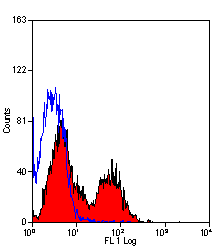
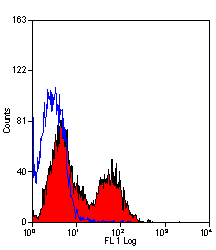
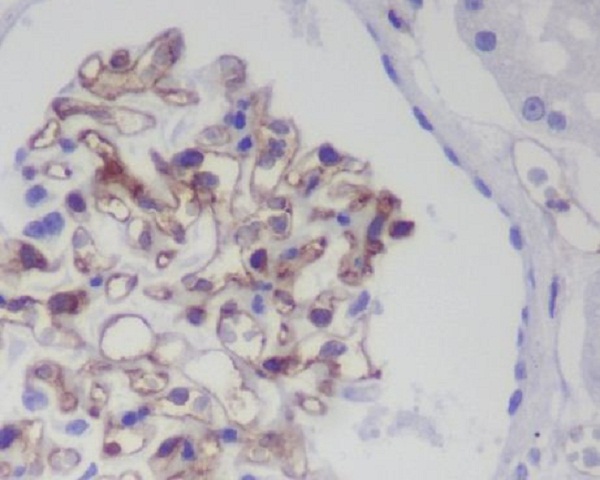
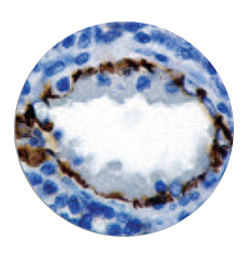
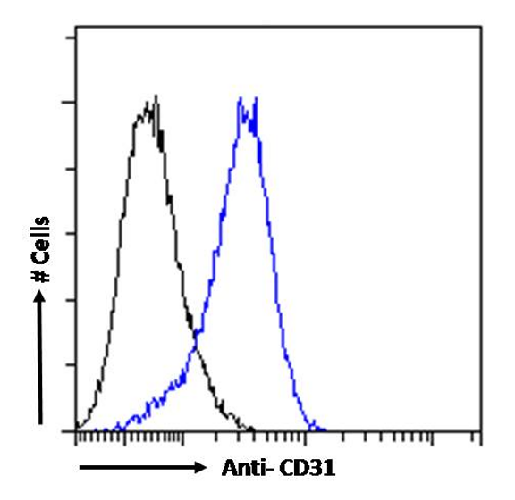
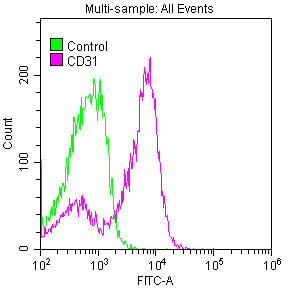


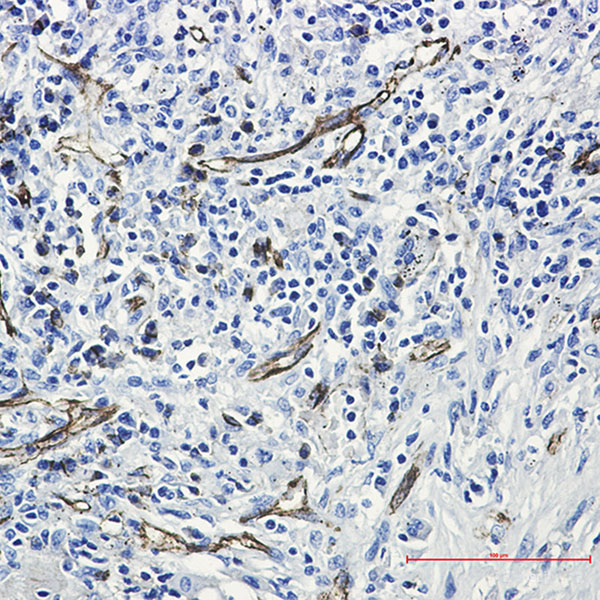
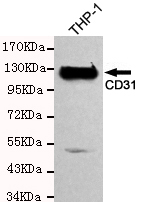

Product Notes
The CD31 pecam1 (Catalog #AAA322240) is an Antibody produced from Rabbit and is intended for research purposes only. The product is available for immediate purchase. The CD31 Antibody reacts with Human, Mouse, Rat and may cross-react with other species as described in the data sheet. AAA Biotech's CD31 can be used in a range of immunoassay formats including, but not limited to, ELISA, ICC (Immunocytochemistry), IF (Immunofluorescence), IHC (Immunohistochemistry), WB (Western Blot). Researchers should empirically determine the suitability of the CD31 pecam1 for an application not listed in the data sheet. Researchers commonly develop new applications and it is an integral, important part of the investigative research process. It is sometimes possible for the material contained within the vial of "CD31, Polyclonal Antibody" to become dispersed throughout the inside of the vial, particularly around the seal of said vial, during shipment and storage. We always suggest centrifuging these vials to consolidate all of the liquid away from the lid and to the bottom of the vial prior to opening. Please be advised that certain products may require dry ice for shipping and that, if this is the case, an additional dry ice fee may also be required.Precautions
All products in the AAA Biotech catalog are strictly for research-use only, and are absolutely not suitable for use in any sort of medical, therapeutic, prophylactic, in-vivo, or diagnostic capacity. By purchasing a product from AAA Biotech, you are explicitly certifying that said products will be properly tested and used in line with industry standard. AAA Biotech and its authorized distribution partners reserve the right to refuse to fulfill any order if we have any indication that a purchaser may be intending to use a product outside of our accepted criteria.Disclaimer
Though we do strive to guarantee the information represented in this datasheet, AAA Biotech cannot be held responsible for any oversights or imprecisions. AAA Biotech reserves the right to adjust any aspect of this datasheet at any time and without notice. It is the responsibility of the customer to inform AAA Biotech of any product performance issues observed or experienced within 30 days of receipt of said product. To see additional details on this or any of our other policies, please see our Terms & Conditions page.Item has been added to Shopping Cart
If you are ready to order, navigate to Shopping Cart and get ready to checkout.