
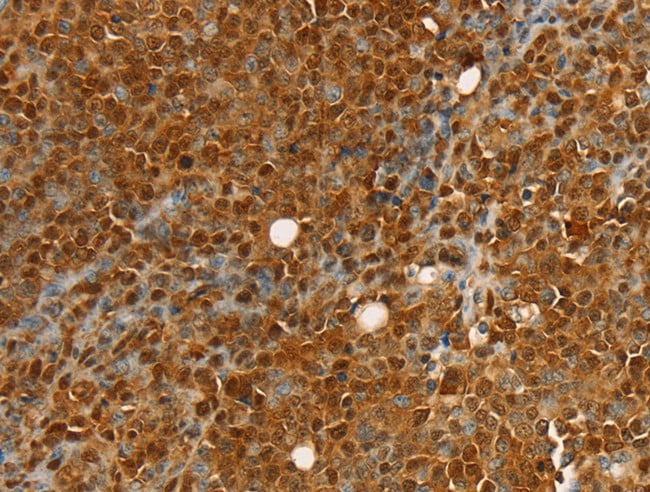
 IHC (Immunohistochemisry)
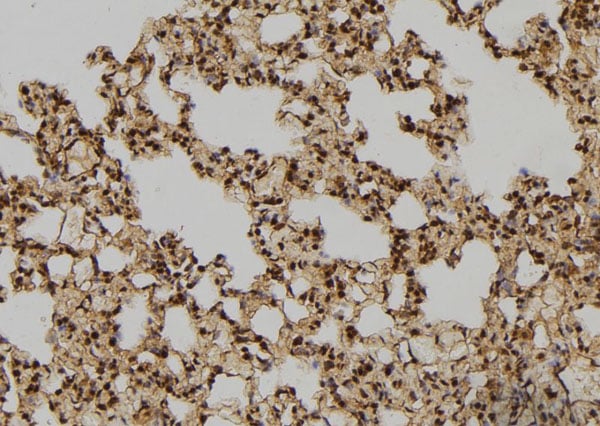
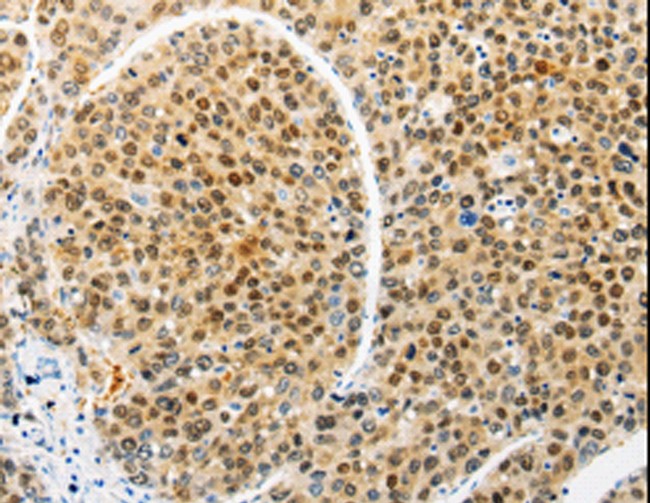
(AAA325940 at 1/100 staining Rat lung tissue by IHC-P. The sample was formaldehyde fixed and a heat mediated antigen retrieval step in citrate buffer was performed. The sample was then blocked and incubated with the antibody for 1.5 hours at 22 degree C. An HRP conjugated goat anti-rabbit antibody was used as the secondary.)
IHC (Immunohistochemisry)
(AAA325940 at 1/100 staining Rat lung tissue by IHC-P. The sample was formaldehyde fixed and a heat mediated antigen retrieval step in citrate buffer was performed. The sample was then blocked and incubated with the antibody for 1.5 hours at 22 degree C. An HRP conjugated goat anti-rabbit antibody was used as the secondary.)
Rabbit RAN Polyclonal Antibody | anti-RAN antibody
RAN Antibody
Phosphate buffered saline, pH 7.4, 150mM NaCl, 0.02% sodium azide and 50% glycerol.
IHC (Immunohistochemisry)
(AAA325940 at 1/100 staining Rat lung tissue by IHC-P. The sample was formaldehyde fixed and a heat mediated antigen retrieval step in citrate buffer was performed. The sample was then blocked and incubated with the antibody for 1.5 hours at 22 degree C. An HRP conjugated goat anti-rabbit antibody was used as the secondary.)
IHC (Immunohistochemisry)
(AAA325940 at 1/100 staining Rat lung tissue by IHC-P. The sample was formaldehyde fixed and a heat mediated antigen retrieval step in citrate buffer was performed. The sample was then blocked and incubated with the antibody for 1.5 hours at 22 degree C. An HRP conjugated goat anti-rabbit antibody was used as the secondary.)
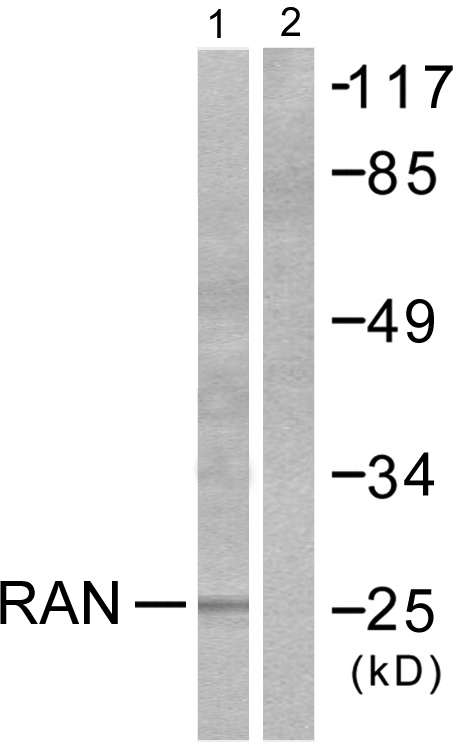
WB (Western Blot)
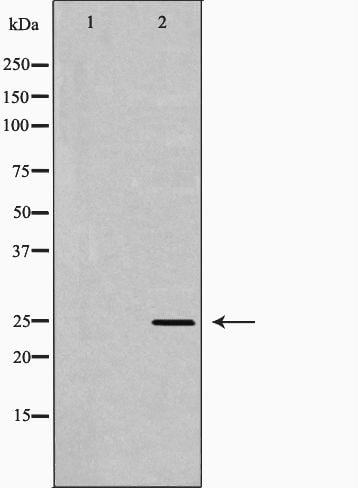
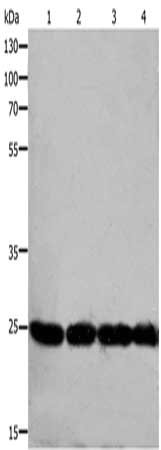
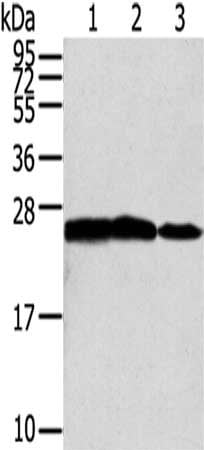
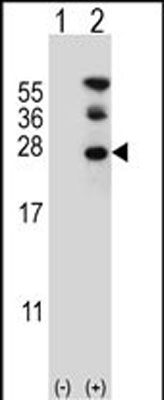
(Western blot analysis of lovo cell lysate, using RAN Antibody. The lane on the left is treated with the antigen-specific peptide.)
WB (Western Blot)
(Western blot analysis of lovo cell lysate, using RAN Antibody. The lane on the left is treated with the antigen-specific peptide.)
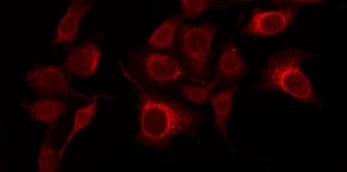
IF (Immunofluorescence)
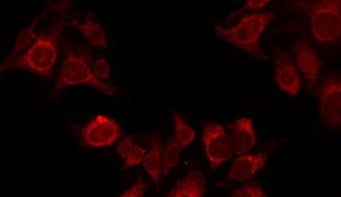
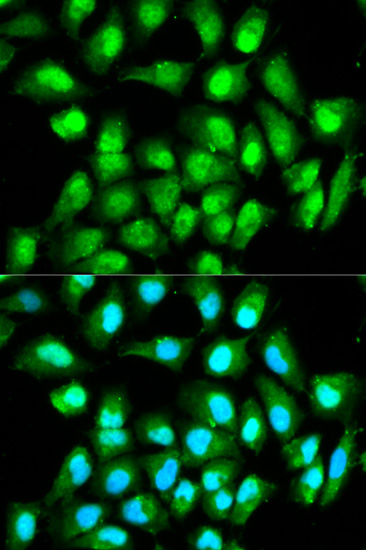
(AAA325940 staining LOVO by IF/ICC. The sample were fixed with PFA and permeabilized in 0.1% Triton X-100, then blocked in 10% serum for 45 minutes at 25 degree C. The primary antibody was diluted at 1/200 and incubated with the sample for 1 hour at 37 degree C. An Alexa Fluor 594 conjugated goat anti-rabbit IgG (H+L) Ab, diluted at 1/600, was used as the secondary antibody.)
IF (Immunofluorescence)
(AAA325940 staining LOVO by IF/ICC. The sample were fixed with PFA and permeabilized in 0.1% Triton X-100, then blocked in 10% serum for 45 minutes at 25 degree C. The primary antibody was diluted at 1/200 and incubated with the sample for 1 hour at 37 degree C. An Alexa Fluor 594 conjugated goat anti-rabbit IgG (H+L) Ab, diluted at 1/600, was used as the secondary antibody.)
Function: GTPase involved in nucleocytoplasmic transport, participating both to the import and the export from the nucleus of proteins and RNAs (PubMed:10400640, PubMed:8276887, PubMed:8896452, PubMed:8636225, PubMed:8692944, PubMed:9351834, PubMed:9428644, PubMed:9822603, PubMed:26272610). Switches between a cytoplasmic GDP-and a nuclear GTP-bound state by nucleotide exchange and GTP hydrolysis (PubMed:7819259, PubMed:8896452, PubMed:8636225, PubMed:8692944, PubMed:9351834, PubMed:9428644, PubMed:9822603, PubMed:29040603, PubMed:11336674, PubMed:26272610). Nuclear import receptors such as importin beta bind their substrates only in the absence of GTP-bound RAN and release them upon direct interaction with GTP-bound RAN, while export receptors behave in the opposite way. Thereby, RAN controls cargo loading and release by transport receptors in the proper compartment and ensures the directionality of the transport (PubMed:8896452, PubMed:9351834, PubMed:9428644). Interaction with RANBP1 induces a conformation change in the complex formed by XPO1 and RAN that triggers the release of the nuclear export signal of cargo proteins (PubMed:20485264). RAN (GTP-bound form) triggers microtubule assembly at mitotic chromosomes and is required for normal mitotic spindle assembly and chromosome segregation (PubMed:10408446, PubMed:29040603). Required for normal progress through mitosis (PubMed:8421051, PubMed:12194828, PubMed:29040603). The complex with BIRC5/survivin plays a role in mitotic spindle formation by serving as a physical scaffold to help deliver the RAN effector molecule TPX2 to microtubules (PubMed:18591255). Acts as a negative regulator of the kinase activity of VRK1 and VRK2 (PubMed:18617507). Enhances AR-mediated transactivation. Transactivation decreases as the poly-Gln length within AR increases (PubMed:10400640).
Subunit Structure: Monomer. Interacts with RANGAP1, which promotes RAN-mediated GTP hydrolysis (PubMed:7819259, PubMed:9428644). Interacts with KPNB1 (PubMed:8896452, PubMed:9428644, PubMed:10367892). Interaction with KPNB1 inhibits RANGAP1-mediated stimulation of GTPase activity (PubMed:9428644). Interacts with RCC1 which promotes the exchange of RAN-bound GDP by GTP (PubMed:1961752, PubMed:7819259, PubMed:12194828, PubMed:11336674). Interaction with KPNB1 inhibits RCC1-mediated exchange of RAN-bound GDP by GTP (PubMed:8896452). Interacts (GTP-bound form) with TNPO1; the interaction is direct (PubMed:9351834). Interacts with KPNB1 and with TNPO1; both inhibit RAN GTPase activity (PubMed:8896452, PubMed:9428644). Interacts (via C-terminus) with RANBP1, which alleviates the inhibition of RAN GTPase activity (PubMed:7891706, PubMed:8896452, PubMed:9428644, PubMed:11832950). Interacts with RANGRF, which promotes the release of bound guanine nucleotide (PubMed:29040603). RANGRF and RCC1 compete for an overlapping binding site on RAN (PubMed:29040603). Identified in a complex with KPNA2 and CSE1L; interaction with RANBP1 mediates dissociation of RAN from this complex (PubMed:9428644). Interaction with both RANBP1 and KPNA2 promotes dissociation of the complex between RAN and KPNB1 (PubMed:9428644). Identified in a complex composed of RAN, RANGAP1 and RANBP1 (PubMed:16428860). Identified in a complex that contains TNPO1, RAN and RANBP1 (PubMed:9428644). Identified in a nuclear export complex with XPO1 (PubMed:9323133, PubMed:15574331, PubMed:10209022). Found in a nuclear export complex with RANBP3 and XPO1 (PubMed:11571268, PubMed:11425870). Interacts with RANBP2/NUP358 (PubMed:10078529, PubMed:26272610). Interaction with RANBP1 or RANBP2 induces a conformation change in the complex formed by XPO1 and RAN that triggers the release of the nuclear export signal of cargo proteins (PubMed:20485264). Component of a nuclear export receptor complex composed of KPNB1, RAN, SNUPN and XPO1 (PubMed:10209022, PubMed:19389996). Found in a nuclear export complex with RAN, XPO5 and pre-miRNA (By similarity). Interacts (GTP-bound form) with XPO5 (By similarity). Part of a complex consisting of RANBP9, RAN, DYRK1B and COPS5 (PubMed:14500717). Interacts with RANBP9 and RANBP10 (PubMed:14684163). Interacts in its GTP-bound form with BIRC5/survivin at S and M phases of the cell cycle (PubMed:18591255). Interacts with TERT; the interaction requires hydrogen peroxide-mediated phosphorylation of TERT and transports TERT to the nucleus (PubMed:12808100). Interacts with MAD2L2 (PubMed:19753112). Interacts with VRK1 and VRK3 (PubMed:18617507). Interacts with isoform 1 and isoform 2 of VRK2 (PubMed:18617507). Interacts with NEMP1 and KPNB1 (By similarity). Interacts (GDP-bound form) with NUTF2; regulates RAN nuclear import (PubMed:9822603, PubMed:10679025, PubMed:18266911). Interacts with CAPG; mediates CAPG nuclear import (PubMed:10679025, PubMed:18266911). Interacts with NUP153 (PubMed:18611384, PubMed:19505478). Interacts with the AR N-terminal poly-Gln region; the interaction with AR is inversely correlated with the poly-Gln length (PubMed:10400640).
Post-translational Modifications: Acetylation by KAT5 at Lys-134 is increased during mitosis, impairs RANGRF binding and enhances RCC1 binding.
Similarity: Belongs to the small GTPase superfamily. Ran family.
NCBI and Uniprot Product Information
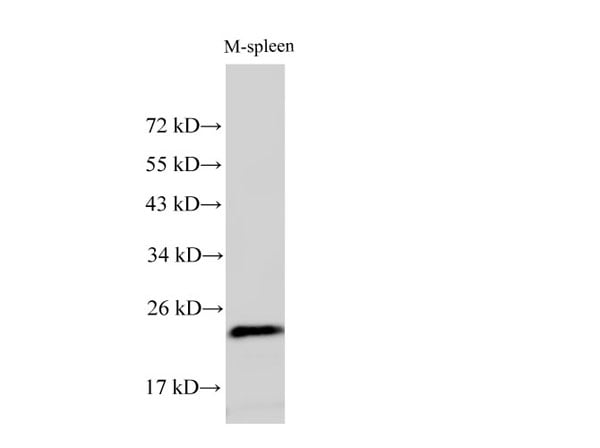
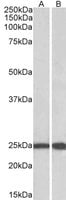
Predicted: 25 kDa
Customer Reviews
Loading reviews...
Share Your Experience
Similar Products

Product Notes
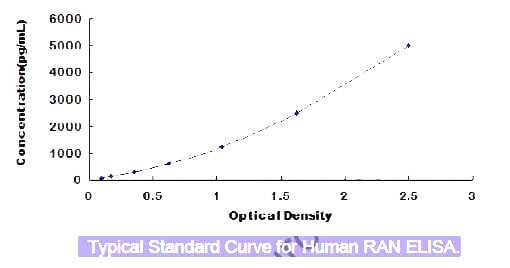
The RAN ran (Catalog #AAA325940) is an Antibody produced from Rabbit and is intended for research purposes only. The product is available for immediate purchase. The RAN Antibody reacts with Human, Mouse, Rat and may cross-react with other species as described in the data sheet. AAA Biotech's RAN can be used in a range of immunoassay formats including, but not limited to, ELISA, ICC (Immunocytochemistry), IF (Immunofluorescence), IHC (Immunohistochemistry), WB (Western Blot). Researchers should empirically determine the suitability of the RAN ran for an application not listed in the data sheet. Researchers commonly develop new applications and it is an integral, important part of the investigative research process. It is sometimes possible for the material contained within the vial of "RAN, Polyclonal Antibody" to become dispersed throughout the inside of the vial, particularly around the seal of said vial, during shipment and storage. We always suggest centrifuging these vials to consolidate all of the liquid away from the lid and to the bottom of the vial prior to opening. Please be advised that certain products may require dry ice for shipping and that, if this is the case, an additional dry ice fee may also be required.Precautions
All products in the AAA Biotech catalog are strictly for research-use only, and are absolutely not suitable for use in any sort of medical, therapeutic, prophylactic, in-vivo, or diagnostic capacity. By purchasing a product from AAA Biotech, you are explicitly certifying that said products will be properly tested and used in line with industry standard. AAA Biotech and its authorized distribution partners reserve the right to refuse to fulfill any order if we have any indication that a purchaser may be intending to use a product outside of our accepted criteria.Disclaimer
Though we do strive to guarantee the information represented in this datasheet, AAA Biotech cannot be held responsible for any oversights or imprecisions. AAA Biotech reserves the right to adjust any aspect of this datasheet at any time and without notice. It is the responsibility of the customer to inform AAA Biotech of any product performance issues observed or experienced within 30 days of receipt of said product. To see additional details on this or any of our other policies, please see our Terms & Conditions page.Item has been added to Shopping Cart
If you are ready to order, navigate to Shopping Cart and get ready to checkout.