
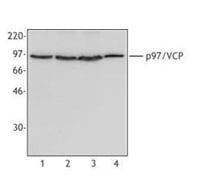
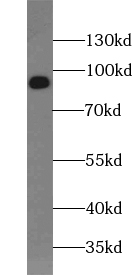
 WB (Western Blot)
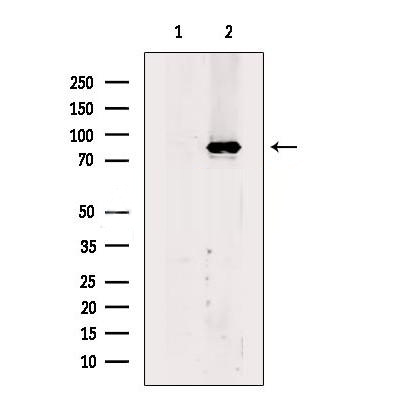
(Western blot analysis of VCP in lysates of HeLa, using VCP Antibody(AF4747).)
WB (Western Blot)
(Western blot analysis of VCP in lysates of HeLa, using VCP Antibody(AF4747).)
Rabbit VCP Polyclonal Antibody | anti-VCP antibody
VCP Antibody
Gene Names
VCP; p97; TERA; ALS14; IBMPFD
Reactivity
Human, Mouse, Rat, MonkeyPredicted Reactivity: Pig (100%), Zebrafish (100%), Bovine (100%), Horse (100%), Sheep (100%), Rabbit (100%), Dog (100%), Xenopus (100%)
Applications
ELISA, Western Blot
Purity
The antiserum was purified by peptide affinity chromatography using SulfoLink Coupling Resin
Synonyms
VCP, Antibody; VCP Antibody; 15S Mg (2+) ATPase p97 subunit; 15S Mg (2+)-ATPase p97 subunit; ALS14; ATPase p97; CDC48; IBMPFD; MGC131997; MGC148092; MGC8560; p97; TER ATPase; TERA; TERA_HUMAN; Transitional endoplasmic reticulum ATPase; Valosin containing protein; Valosin-containing protein; VCP; Yeast Cdc48p homolog; anti-VCP antibody
Host
Rabbit
Reactivity
Human, Mouse, Rat, Monkey
Predicted Reactivity: Pig (100%), Zebrafish (100%), Bovine (100%), Horse (100%), Sheep (100%), Rabbit (100%), Dog (100%), Xenopus (100%)
Predicted Reactivity: Pig (100%), Zebrafish (100%), Bovine (100%), Horse (100%), Sheep (100%), Rabbit (100%), Dog (100%), Xenopus (100%)
Clonality
Polyclonal
Isotype
Rabbit IgG
Specificity
VCP Antibody detects endogenous levels of total VCP.
Purity/Purification
The antiserum was purified by peptide affinity chromatography using SulfoLink Coupling Resin
Form/Format
Liquid. Rabbit IgG in phosphate buffered saline, pH7.4, 150mM NaCl, 0.02% sodium azide and 50% glycerol.
Concentration
1mg/ml (varies by lot)
Applicable Applications for anti-VCP antibody
ELISA (Peptide ELISA), WB (Western Blot)
Immunogen
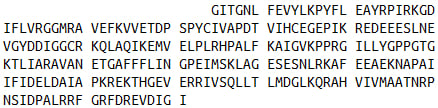
A synthesized peptide derived from human VCP, corresponding to a region within the internal amino acids.
Conjugation
Unconjugated
Fragment
Fab fragment
Post Translational Modifications
Phosphorylated by tyrosine kinases in response to T-cell antigen receptor activation. Phosphorylated in mitotic cells.ISGylated.Methylation at Lys-315 catalyzed by VCPKMT is increased in the presence of ASPSCR1. Lys-315 methylation may decrease ATPase activity.
Subunit Structure
Homohexamer. Forms a ring-shaped particle of 12.5 nm diameter, that displays 6-fold radial symmetry. Part of a ternary complex containing STX5A, NSFL1C and VCP. NSFL1C forms a homotrimer that binds to one end of a VCP homohexamer. The complex binds to membranes enriched in phosphatidylethanolamine-containing lipids and promotes Golgi membrane fusion. Binds to a heterodimer of NPLOC4 and UFD1, binding to this heterodimer inhibits Golgi-membrane fusion. Interaction with VCIP135 leads to dissociation of the complex via ATP hydrolysis by VCP. Part of a ternary complex containing NPLOC4, UFD1 and VCP. Interacts with NSFL1C-like protein p37; the complex has membrane fusion activity and is required for Golgi and endoplasmic reticulum biogenesis. Interacts with SELENOS and SYVN1, as well as with DERL1, DERL2 and DERL3; which probably transfer misfolded proteins from the ER to VCP. Interacts with SVIP. Component of a complex required to couple retrotranslocation, ubiquitination and deglycosylation composed of NGLY1, SAKS1, AMFR, VCP and RAD23B. Directly interacts with UBXN4 and RNF19A. Interacts with CASR. Interacts with UBE4B and YOD1. Interacts with clathrin. Interacts with RNF103. Interacts with TRIM13 and TRIM21. Component of a VCP/p97-AMFR/gp78 complex that participates in the final step of the endoplasmic reticulum-associated degradation (ERAD) of HMGCR. Interacts directly with AMFR/gp78 (via its VIM). Interacts with RHBDD1 (via C-terminal domain). Interacts with SPRTN; leading to recruitment to stalled replication forks. Interacts with WASHC5. Interacts with UBOX5. Interacts (via N-terminus) with UBXN7, UBXN8, and probably several other UBX domain-containing proteins (via UBX domains); the interactions are mutually exclusive with VIM-dependent interactions such as those with AMFR and SELENOS. Forms a complex with UBQLN1 and UBXN4. Interacts (via the PIM motif) with RNF31 (via the PUB domain). Interacts with DDX58/RIG-I and RNF125; interaction takes place when DDX58/RIG-I is ubiquitinated via 'Lys-63'-linked ubiquitin on its CARD domains, leading to recruit RNF125 and promote ubiquitination and degradation of DDX58/RIG-I. Interacts with BAG6. Interacts with UBXN10. Interacts with UBXN6; the interaction with UBXN6 is direct and competitive with UFD1. Forms a ternary complex with CAV1 and UBXN6. Interacts with PLAA, UBXN6 and YOD1; may form a complex involved in macroautophagy. Interacts with ANKZF1. Interacts with ubiquitin-binding protein FAF1. Interacts with ZFAND2B (via VIM motif); the interaction is direct. Interacts with ZFAND1 (via its ubiquitin-like region); this interaction occurs in an arsenite-dependent manner. Interacts with CCDC47 (By similarity). Interacts with UBAC2 (By similarity). Interacts with LMBR1L. Interacts with ATXN3.
Similarity
The PIM (PUB-interaction motif) motif mediates interaction with the PUB domain of RNF31.Belongs to the AAA ATPase family.
Subcellular Location
Cytoplasm>Cytosol. Endoplasmic reticulum. Nucleus. Cytoplasm>Stress granule.
Note: Present in the neuronal hyaline inclusion bodies specifically found in motor neurons from amyotrophic lateral sclerosis patients (PubMed:15456787). Present in the Lewy bodies specifically found in neurons from Parkinson disease patients (PubMed:15456787). Recruited to the cytoplasmic surface of the endoplasmic reticulum via interaction with AMFR/gp78 (PubMed:16168377). Following DNA double-strand breaks, recruited to the sites of damage (PubMed:22120668). Recruited to stalled replication forks via interaction with SPRTN (PubMed:23042605). Recruited to damaged lysosomes decorated with K48-linked ubiquitin chains (PubMed:27753622). Colocalizes with TIA1, ZFAND1 and G3BP1 in cytoplasmic stress granules (SGs) in response to arsenite-induced stress treatment (PubMed:29804830).
Note: Present in the neuronal hyaline inclusion bodies specifically found in motor neurons from amyotrophic lateral sclerosis patients (PubMed:15456787). Present in the Lewy bodies specifically found in neurons from Parkinson disease patients (PubMed:15456787). Recruited to the cytoplasmic surface of the endoplasmic reticulum via interaction with AMFR/gp78 (PubMed:16168377). Following DNA double-strand breaks, recruited to the sites of damage (PubMed:22120668). Recruited to stalled replication forks via interaction with SPRTN (PubMed:23042605). Recruited to damaged lysosomes decorated with K48-linked ubiquitin chains (PubMed:27753622). Colocalizes with TIA1, ZFAND1 and G3BP1 in cytoplasmic stress granules (SGs) in response to arsenite-induced stress treatment (PubMed:29804830).
Preparation and Storage
Store at -20 degree C. Stable for 12 months from date of receipt.
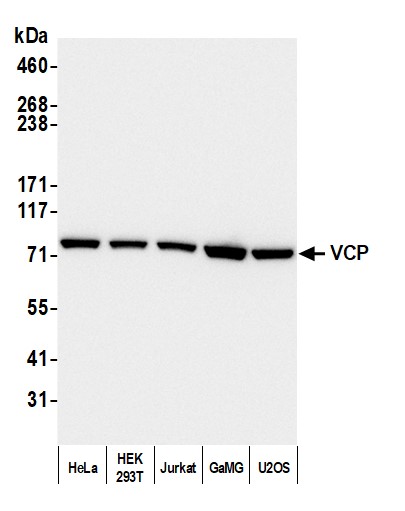
WB (Western Blot)
(Western blot analysis of VCP in lysates of HeLa, using VCP Antibody(AF4747).)
WB (Western Blot)
(Western blot analysis of VCP in lysates of HeLa, using VCP Antibody(AF4747).)
WB (Western Blot)
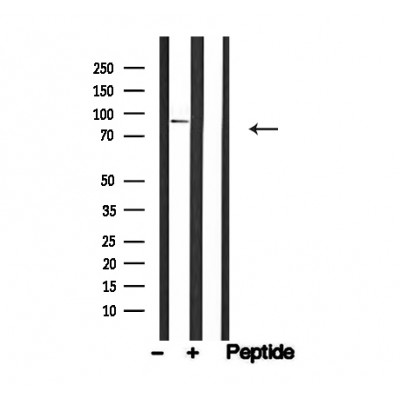
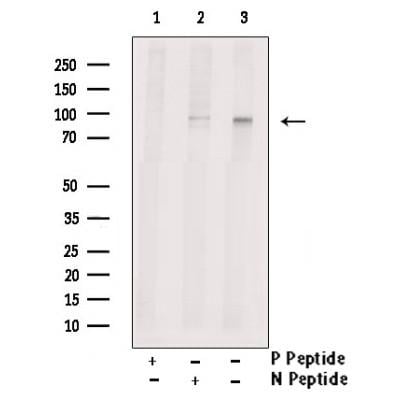
(Western blot analysis of extracts from COS-7, using VCP Antibody. The lane on the left was treated with blocking peptide.)
WB (Western Blot)
(Western blot analysis of extracts from COS-7, using VCP Antibody. The lane on the left was treated with blocking peptide.)
Related Product Information for anti-VCP antibody
Necessary for the fragmentation of Golgi stacks during mitosis and for their reassembly after mitosis. Involved in the formation of the transitional endoplasmic reticulum (tER). The transfer of membranes from the endoplasmic reticulum to the Golgi apparatus occurs via 50-70 nm transition vesicles which derive from part-rough, part-smooth transitional elements of the endoplasmic reticulum (tER). Vesicle budding from the tER is an ATP-dependent process. The ternary complex containing UFD1, VCP and NPLOC4 binds ubiquitinated proteins and is necessary for the export of misfolded proteins from the ER to the cytoplasm, where they are degraded by the proteasome. The NPLOC4-UFD1-VCP complex regulates spindle disassembly at the end of mitosis and is necessary for the formation of a closed nuclear envelope. Regulates E3 ubiquitin-protein ligase activity of RNF19A. Component of the VCP/p97-AMFR/gp78 complex that participates in the final step of the sterol-mediated ubiquitination and endoplasmic reticulum-associated degradation (ERAD) of HMGCR. Involved in endoplasmic reticulum stress-induced pre-emptive quality control, a mechanism that selectively attenuates the translocation of newly synthesized proteins into the endoplasmic reticulum and reroutes them to the cytosol for proteasomal degradation. Plays a role in the regulation of stress granules (SGs) clearance process upon arsenite-induced response. Also involved in DNA damage response: recruited to double-strand breaks (DSBs) sites in a RNF8- and RNF168-dependent manner and promotes the recruitment of TP53BP1 at DNA damage sites. Recruited to stalled replication forks by SPRTN: may act by mediating extraction of DNA polymerase eta (POLH) to prevent excessive translesion DNA synthesis and limit the incidence of mutations induced by DNA damage. Required for cytoplasmic retrotranslocation of stressed/damaged mitochondrial outer-membrane proteins and their subsequent proteasomal degradation. Essential for the maturation of ubiquitin-containing autophagosomes and the clearance of ubiquitinated protein by autophagy. Acts as a negative regulator of type I interferon production by interacting with DDX58/RIG-I: interaction takes place when DDX58/RIG-I is ubiquitinated via 'Lys-63'-linked ubiquitin on its CARD domains, leading to recruit RNF125 and promote ubiquitination and degradation of DDX58/RIG-I. May play a role in the ubiquitin-dependent sorting of membrane proteins to lysosomes where they undergo degradation. May more particularly play a role in caveolins sorting in cells. By controlling the steady-state expression of the IGF1R receptor, indirectly regulates the insulin-like growth factor receptor signaling pathway.
NCBI and Uniprot Product Information
NCBI GI #
NCBI GeneID
NCBI Accession #
NCBI GenBank Nucleotide #
Molecular Weight
89,322 Da
NCBI Official Full Name
transitional endoplasmic reticulum ATPase
NCBI Official Synonym Full Names
valosin containing protein
NCBI Official Symbol
VCP
NCBI Official Synonym Symbols
p97; TERA; ALS14; IBMPFD
NCBI Protein Information
transitional endoplasmic reticulum ATPase; TER ATPase; yeast Cdc48p homolog; valosin-containing protein; 15S Mg(2+)-ATPase p97 subunit
UniProt Protein Name
Transitional endoplasmic reticulum ATPase
UniProt Gene Name
VCP
UniProt Synonym Gene Names
TER ATPase; VCP
UniProt Entry Name
TERA_HUMAN
Customer Reviews
Loading reviews...
Share Your Experience
Similar Products

Product Notes
The VCP vcp (Catalog #AAA329550) is an Antibody produced from Rabbit and is intended for research purposes only. The product is available for immediate purchase. The VCP Antibody reacts with Human, Mouse, Rat, Monkey Predicted Reactivity: Pig (100%), Zebrafish (100%), Bovine (100%), Horse (100%), Sheep (100%), Rabbit (100%), Dog (100%), Xenopus (100%) and may cross-react with other species as described in the data sheet. AAA Biotech's VCP can be used in a range of immunoassay formats including, but not limited to, ELISA (Peptide ELISA), WB (Western Blot). Researchers should empirically determine the suitability of the VCP vcp for an application not listed in the data sheet. Researchers commonly develop new applications and it is an integral, important part of the investigative research process. It is sometimes possible for the material contained within the vial of "VCP, Polyclonal Antibody" to become dispersed throughout the inside of the vial, particularly around the seal of said vial, during shipment and storage. We always suggest centrifuging these vials to consolidate all of the liquid away from the lid and to the bottom of the vial prior to opening. Please be advised that certain products may require dry ice for shipping and that, if this is the case, an additional dry ice fee may also be required.Precautions
All products in the AAA Biotech catalog are strictly for research-use only, and are absolutely not suitable for use in any sort of medical, therapeutic, prophylactic, in-vivo, or diagnostic capacity. By purchasing a product from AAA Biotech, you are explicitly certifying that said products will be properly tested and used in line with industry standard. AAA Biotech and its authorized distribution partners reserve the right to refuse to fulfill any order if we have any indication that a purchaser may be intending to use a product outside of our accepted criteria.Disclaimer
Though we do strive to guarantee the information represented in this datasheet, AAA Biotech cannot be held responsible for any oversights or imprecisions. AAA Biotech reserves the right to adjust any aspect of this datasheet at any time and without notice. It is the responsibility of the customer to inform AAA Biotech of any product performance issues observed or experienced within 30 days of receipt of said product. To see additional details on this or any of our other policies, please see our Terms & Conditions page.Item has been added to Shopping Cart
If you are ready to order, navigate to Shopping Cart and get ready to checkout.