
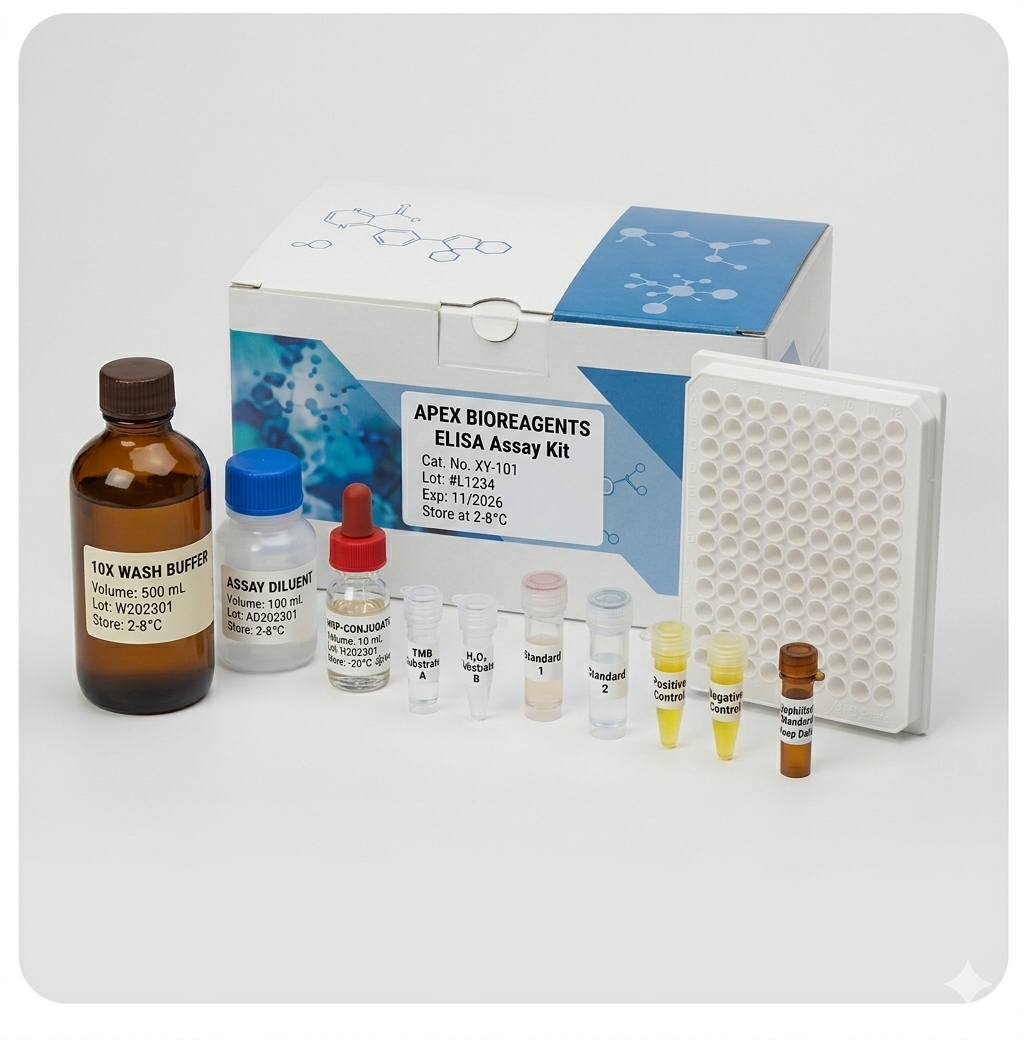
Reactive Oxygen Species (ROS) Detection Assay Kit | ROS assay kit
Reactive Oxygen Species (ROS) Detection Fluorometric Assay Kit
Synonyms
Reactive Oxygen Species (ROS) Detection; N/A; Reactive Oxygen Species (ROS) Detection Fluorometric Assay Kit; ROS assay kit
Tag
Reactive Oxygen Species, ROS
Features & Benefits
provides a simple, sensitive, rapid ROS detection method.
based on the fluorescent probe DCFH-DA.
suitable for flow cytometry or fluorescence microscopy.
Provides detailed sample preparation and results calculation methods.
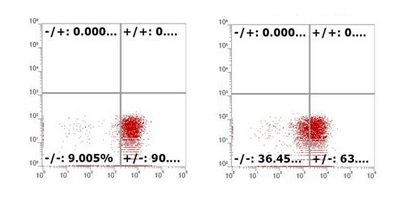
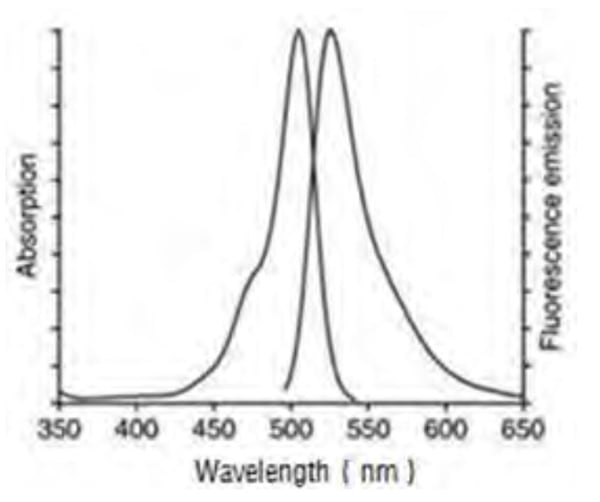
Reactive Oxygen Species: ROS Detection Assay Kit provides a simple, sensitive, rapid ROS detection method. ROS detection is based on the fluorescent probe DCFH-DA. DCFH-DA is a cell-permeable sensitive probe used to detect intracellular reactive oxygen species: ROS This probe could be hydrolyzed into DCFH by esterase in the cell while passing through the living cell membrane. DCFH is no fluorescence and cannot transmit the cell membrane, which then can be could be oxidated by ROS and produce the fluorescent DCF. Then the fluorescent could be detect by flow cytometry or fluorescence microscopy, and according which the level of cellular reactive oxygen species can be analyzed.
based on the fluorescent probe DCFH-DA.
suitable for flow cytometry or fluorescence microscopy.
Provides detailed sample preparation and results calculation methods.
Reactive Oxygen Species: ROS Detection Assay Kit provides a simple, sensitive, rapid ROS detection method. ROS detection is based on the fluorescent probe DCFH-DA. DCFH-DA is a cell-permeable sensitive probe used to detect intracellular reactive oxygen species: ROS This probe could be hydrolyzed into DCFH by esterase in the cell while passing through the living cell membrane. DCFH is no fluorescence and cannot transmit the cell membrane, which then can be could be oxidated by ROS and produce the fluorescent DCF. Then the fluorescent could be detect by flow cytometry or fluorescence microscopy, and according which the level of cellular reactive oxygen species can be analyzed.
Kit Components
DCFH-DA (10mM)
Usage Notes
Do not mix the components between different batch numbers and manufacturers; otherwise, the results may be abnormal.
Avoid bubbles while mixing or redissolving components.
Change pipette tips frequently to avoid cross contamination between components.
Ensure that all components and equipment are at the proper temperature before starting the experiment.
The working concentration of positive control H2O2 should be 100 uM (Recommend during 50-200 uM depend on the cell types). The level of Reactive Oxygen Species (ROS) will increase significantly after stimulated 30 min-4 h. The level of Reactive Oxygen Species (ROS) maybe very different for different cells while stimulating with the positive control. The stimulating time and the concentration of positive control could be prolonged or increased, if there is no obvious rise after 30 min. Or shorten the time or reduce the concentration of positive control, while the fluorescent signal is too strong.
During the experiment, the fluorescent probe DCFH-DA can be diluted in 1: 2000-1: 5000, and make the final concentration of DCFH-DA to 2-5 uM if the signal of negative control also too strong. The time of probe incubating can be adjusted in 15-60 minutes, and minimize the exposure time while reading the film, and the exposure time of the control group and test groups should to be consistent.
Reactive Oxygen Species (ROS) positive control (H2O2) is only used as a sample as a positive control, and not all test groups need positive control.
Please wash away the unbound prode after incubating the prode, otherwise it will cause a high background.
Try to shorten the detection time after incubating the probe (except for stimulation time) to reduce various possible errors.
Avoid bubbles while mixing or redissolving components.
Change pipette tips frequently to avoid cross contamination between components.
Ensure that all components and equipment are at the proper temperature before starting the experiment.
The working concentration of positive control H2O2 should be 100 uM (Recommend during 50-200 uM depend on the cell types). The level of Reactive Oxygen Species (ROS) will increase significantly after stimulated 30 min-4 h. The level of Reactive Oxygen Species (ROS) maybe very different for different cells while stimulating with the positive control. The stimulating time and the concentration of positive control could be prolonged or increased, if there is no obvious rise after 30 min. Or shorten the time or reduce the concentration of positive control, while the fluorescent signal is too strong.
During the experiment, the fluorescent probe DCFH-DA can be diluted in 1: 2000-1: 5000, and make the final concentration of DCFH-DA to 2-5 uM if the signal of negative control also too strong. The time of probe incubating can be adjusted in 15-60 minutes, and minimize the exposure time while reading the film, and the exposure time of the control group and test groups should to be consistent.
Reactive Oxygen Species (ROS) positive control (H2O2) is only used as a sample as a positive control, and not all test groups need positive control.
Please wash away the unbound prode after incubating the prode, otherwise it will cause a high background.
Try to shorten the detection time after incubating the probe (except for stimulation time) to reduce various possible errors.
Preparation and Storage
Please store the whole kit at -20 degree C upon receipt, and protect from light. The kit is valid for 12 months. Please refer to the table below Materials supplied and Storage conditions to store all the components.
Shipping||Gel pack with blue ice.
Shipping||Gel pack with blue ice.
Related Product Information for ROS assay kit
Principle of the Assay: Reactive Oxygen Species (ROS) is a natural by-products of oxygen normal metabolism, plays an important role in cell signalingand homeostasis. Under conditions associated with oxidative stress, ROS levels can be significantly increased. The accumulationof ROS could seriously damage the cell structure. Oxidative stress plays an important role in the research of cardiovasculardisease, diabetes, osteoporosis, stroke, inflammatory disease, and neurodegenerative diseases and cancer, etc. ROS detectioncould help determine how oxidative stress adjusts various intracellular pathways. CheKine™ Reactive Oxygen Species (ROS)Detection Fluorometric Assay Kit provides a simple, sensitive, rapid ROS detection method. Its principle is based on thefluorescent probe DCFH-DA. DCFH-DA is a cell-permeable sensitive probe used to detect intracellular reactive oxygen species(ROS). This probe could be hydrolyzed into DCFH by esterase in the cell while passing through the living cell membrane. DCFHhas no fluorescence and cannot penetrate the cell membrane, which could be oxidized by intracellular ROS and produce thefluorescent DCF. And then the level of cellular reactive oxygen species can be analyzed via the fluorescent is detected by flowcytometry or fluorescence microscopy.
Product Categories/Family for ROS assay kit
Customer Reviews
Loading reviews...
Share Your Experience
Similar Products

Product Notes
The ROS (Catalog #AAA332522) is an Assay Kit and is intended for research purposes only. The product is available for immediate purchase. It is sometimes possible for the material contained within the vial of "Reactive Oxygen Species (ROS) Detection, Assay Kit" to become dispersed throughout the inside of the vial, particularly around the seal of said vial, during shipment and storage. We always suggest centrifuging these vials to consolidate all of the liquid away from the lid and to the bottom of the vial prior to opening. Please be advised that certain products may require dry ice for shipping and that, if this is the case, an additional dry ice fee may also be required.Precautions
All products in the AAA Biotech catalog are strictly for research-use only, and are absolutely not suitable for use in any sort of medical, therapeutic, prophylactic, in-vivo, or diagnostic capacity. By purchasing a product from AAA Biotech, you are explicitly certifying that said products will be properly tested and used in line with industry standard. AAA Biotech and its authorized distribution partners reserve the right to refuse to fulfill any order if we have any indication that a purchaser may be intending to use a product outside of our accepted criteria.Disclaimer
Though we do strive to guarantee the information represented in this datasheet, AAA Biotech cannot be held responsible for any oversights or imprecisions. AAA Biotech reserves the right to adjust any aspect of this datasheet at any time and without notice. It is the responsibility of the customer to inform AAA Biotech of any product performance issues observed or experienced within 30 days of receipt of said product. To see additional details on this or any of our other policies, please see our Terms & Conditions page.Item has been added to Shopping Cart
If you are ready to order, navigate to Shopping Cart and get ready to checkout.