
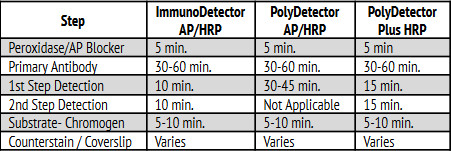

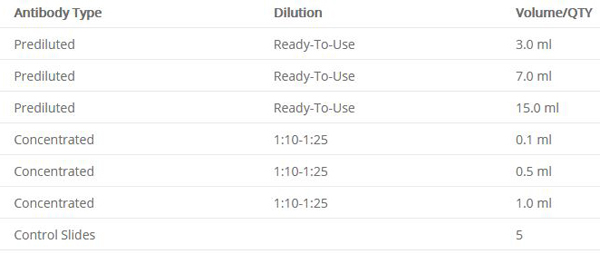
 Application Data
Mouse BCOR Monoclonal Antibody | anti-BCOR antibody
BCOR, MMab
Gene Names
BCOR; MAA2; ANOP2; MCOPS2
Reactivity
Paraffin, Frozen
Applications
Immunohistochemistry
Synonyms
BCOR, Antibody; BCOR, MMab; anti-BCOR antibody
Host
Mouse
Reactivity
Paraffin, Frozen
Clonality
Monoclonal
Isotype
IgG1/K
Clone Number
BSB-128
Form/Format
Concentrate or Prediluted
Sequence Length
1703
Applicable Applications for anti-BCOR antibody
IHC (Immunohistochemistry)
Immunogen
Synthetic peptide corresponding to residues of the N-terminus of the human BCOR protein.
Species Reactivity
Human
Localization
Nuclear
Control
Testis, Cervix, Prostate, TCC, Angiosarcoma
Precautions
1. This product contains <0.1% sodium azide (NaN3) as a preservative. Ensure proper handling procedures are used with this reagent.
2. Always wear personal protective equipment such as a laboratory coat, goggles, and gloves when handling reagents.
3. Dispose of unused solution with copious amounts of water.
4. Do not ingest reagent. If reagent is ingested, seek medical advice immediately.
5. Avoid contact with eyes. If contact occurs, flush with large quantities of water.
6. Follow safety precautions of the heating device used for epitope retrieval (TintoRetriever Pressure Cooker or similar).
7. For additional safety information refer to Safety Data Sheet for this product.
8. For complete recommendations for handling biological specimens, please refer to the CDC document,“Guidelines for Safe Work Practices in Human and AMDL" (see References in this document).
2. Always wear personal protective equipment such as a laboratory coat, goggles, and gloves when handling reagents.
3. Dispose of unused solution with copious amounts of water.
4. Do not ingest reagent. If reagent is ingested, seek medical advice immediately.
5. Avoid contact with eyes. If contact occurs, flush with large quantities of water.
6. Follow safety precautions of the heating device used for epitope retrieval (TintoRetriever Pressure Cooker or similar).
7. For additional safety information refer to Safety Data Sheet for this product.
8. For complete recommendations for handling biological specimens, please refer to the CDC document,“Guidelines for Safe Work Practices in Human and AMDL" (see References in this document).
Intended Use
This antibody is intended for use in Immunohistochemical applications on formalin-fixed paraffin-embedded tissues (FFPE), frozen tissue sections and cell preparations. Interpretation of results should be performed by a qualified medical professional.
Specimen Preparation
Paraffin sections: The antibodycan be used on formalin-fixed paraffin-embedded (FFPE) tissue sections. Ensure tissue undergoes appropriate fixation for best results. Pre-treatment of tissues with heat-induced epitope retrieval (HIER) is recommended using ImmunoDNA Retriever with Citrate, ImmunoDNA Retriever with EDTA, or ImmunoDNA Digestor. See reverse side for complete protocol. Tissue should remain hydrated via use of Immuno/DNAWasher solutions.
Frozen sections and cell preparations
The antibody can be used on acetone-fixed frozen sections and acetone-fixed cell preparations.
IHC Protocol
1. Cut and mount 3-5 micron formalin-fixed paraffin-embedded tissues on positivelycharged slides such as Hydrophilic Plus Slides.
2. Air dryfor 2 hours at 58° C.
3. Deparaffinize, dehydrate, and rehydrate tissues.
4. Subject tissues to heat induced epitope retrieval (HIER) using a suitable retrieval solution such as ImmunoDNA Retriever with Citrate or EDTA.
5. Any of three heating methods may be used:
a.TintoRetriever Pressure Cooker or Equivalent
Place tissues/slides in a staining dish or coplin jar containing the ImmunoDNA Retriever with Citrate or EDTA and place on trivet in the pressure cooker. Add 1-2 inches of distilled water to the pressure cooker and turn heat to high. Incubate for 15 minutes. Open and immediately transfer slides to room temperature.
b.TintoRetriever PT Module or Water Bath Method
Place tissues/slides in a pre-warmed staining dish or coplin jar containing the ImmunoDNA Retriever with Citrate or EDTA at 95°-99° C. Incubate for 30-60 minutes.
c. Conventional Steamer Method
Place tissues/slides in a pre-warmed staining dish or coplin jar containing the ImmunoDNA Retriever with Citrate or EDTA in a steamer, cover and steam for 30-60 minutes.6. After heat treatment, transfer slides in ImmunoDNA Retriever with Citrate or EDTA to room temperature and let stand for 15-20 minutes.
7. For manual IHC, perform antibodyincubation at ambient temperature. For automated IHC methods, perform antibodyincubation according to instrument manufacturer’s instructions.
8.Wash slides with ImmunoDNA washer or DI water.
9. Continue IHC protocol.Wash slides between each step with ImmunoDNA washer solution.
2. Air dryfor 2 hours at 58° C.
3. Deparaffinize, dehydrate, and rehydrate tissues.
4. Subject tissues to heat induced epitope retrieval (HIER) using a suitable retrieval solution such as ImmunoDNA Retriever with Citrate or EDTA.
5. Any of three heating methods may be used:
a.TintoRetriever Pressure Cooker or Equivalent
Place tissues/slides in a staining dish or coplin jar containing the ImmunoDNA Retriever with Citrate or EDTA and place on trivet in the pressure cooker. Add 1-2 inches of distilled water to the pressure cooker and turn heat to high. Incubate for 15 minutes. Open and immediately transfer slides to room temperature.
b.TintoRetriever PT Module or Water Bath Method
Place tissues/slides in a pre-warmed staining dish or coplin jar containing the ImmunoDNA Retriever with Citrate or EDTA at 95°-99° C. Incubate for 30-60 minutes.
c. Conventional Steamer Method
Place tissues/slides in a pre-warmed staining dish or coplin jar containing the ImmunoDNA Retriever with Citrate or EDTA in a steamer, cover and steam for 30-60 minutes.6. After heat treatment, transfer slides in ImmunoDNA Retriever with Citrate or EDTA to room temperature and let stand for 15-20 minutes.
7. For manual IHC, perform antibodyincubation at ambient temperature. For automated IHC methods, perform antibodyincubation according to instrument manufacturer’s instructions.
8.Wash slides with ImmunoDNA washer or DI water.
9. Continue IHC protocol.Wash slides between each step with ImmunoDNA washer solution.
Preparation and Storage
Store at 2-8°C. (Control Slides: Store at 20-25°C)
Application Data
Application Data
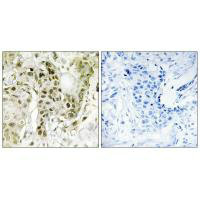
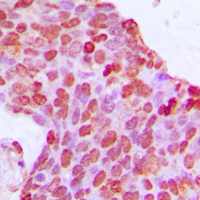
IHC (Immunohiostchemistry)
(BCOR on a FFPE Cervix Tissue)
IHC (Immunohiostchemistry)
(BCOR on a FFPE Cervix Tissue)
Dilution Info
Dilution Info
Related Product Information for anti-BCOR antibody
BCOR is located on chromosome X, in the Xp11.4 locus, and derives its name from its function as an interacting corepressor of BCL-6 that enhances BCL-6-mediated transcriptional repression. BCOR is a gene that encodes for an epigenetic regulator involved in the specification of cell differentiation and body structure development. Various BCOR aberrations, represent driver elements of various sarcomas such as Clear Cell Sarcoma of the Kidney, Primitive Mesenchymal Myxoid Tumor of infancy, small round blue cell sarcoma, endometrial stromal sarcoma and histologically heterogeneous CNS neoplasms group with similar genomic methylation patterns known as CNS-HGNET-BCOR. Furthermore, other BCOR alterations (often loss of function mutations) recur in a large variety of Mesenchymal, Epithelial, Neural and Hematological Tumors, suggesting a central role in cancer evolution.
Using next-generation sequencing, an increasing number of novel gene fusions and other abnormalities have emerged recently in the spectrum of EWSR1-negative Small Blue Round Cell Tumors (SBRCTs). A subset of SBRCTs harboring either BCOR gene fusions (BCOR-CCNB3, BCOR-MAML3), BCOR internal tandem duplications (ITD), or YWHAENUTM2B share a transcriptional signature including high BCOR mRNA expression, as well as similar histologic features. Furthermore, other tumors such as Clear Cell Sarcoma of Kidney (CCSK) and Primitive Myxoid Mesenchymal Tumor of Infancy (PMMTI) also demonstrate BCOR ITDs and high BCOR gene expression. Recent studies have found the IHC of BCOR to be a highly sensitive marker for SBRCTs and CCSKs with BCOR abnormalities and YWHAE rearrangements and can be used as a useful identification marker in these various molecular subsets.
In another study, Strong diffuse nuclear BCOR staining (defined as >95% of tumor cells) was seen in the round cell component of 20 (100%) classic YWHAE-NUTM2 high-grade Endometrial Stromal Sarcomas and the 3 unusual high-grade Endometrial Stromal Sarcomas. It was concluded that BCOR immunohistochemical staining is a highly sensitive marker for YWHAE-NUTM2 high-grade Endometrial Stromal Sarcomas with both classic and unusual morphology and identifies a subset of high-grade Endometrial Stromal Sarcomas with BCOR alterations, including BCOR rearrangement and internal tandem duplication.
Using next-generation sequencing, an increasing number of novel gene fusions and other abnormalities have emerged recently in the spectrum of EWSR1-negative Small Blue Round Cell Tumors (SBRCTs). A subset of SBRCTs harboring either BCOR gene fusions (BCOR-CCNB3, BCOR-MAML3), BCOR internal tandem duplications (ITD), or YWHAENUTM2B share a transcriptional signature including high BCOR mRNA expression, as well as similar histologic features. Furthermore, other tumors such as Clear Cell Sarcoma of Kidney (CCSK) and Primitive Myxoid Mesenchymal Tumor of Infancy (PMMTI) also demonstrate BCOR ITDs and high BCOR gene expression. Recent studies have found the IHC of BCOR to be a highly sensitive marker for SBRCTs and CCSKs with BCOR abnormalities and YWHAE rearrangements and can be used as a useful identification marker in these various molecular subsets.
In another study, Strong diffuse nuclear BCOR staining (defined as >95% of tumor cells) was seen in the round cell component of 20 (100%) classic YWHAE-NUTM2 high-grade Endometrial Stromal Sarcomas and the 3 unusual high-grade Endometrial Stromal Sarcomas. It was concluded that BCOR immunohistochemical staining is a highly sensitive marker for YWHAE-NUTM2 high-grade Endometrial Stromal Sarcomas with both classic and unusual morphology and identifies a subset of high-grade Endometrial Stromal Sarcomas with BCOR alterations, including BCOR rearrangement and internal tandem duplication.
NCBI and Uniprot Product Information
Customer Reviews
Loading reviews...
Share Your Experience
Similar Products



Product Notes
The BCOR (Catalog #AAA59314) is an Antibody produced from Mouse and is intended for research purposes only. The product is available for immediate purchase. The BCOR, MMab reacts with Paraffin, Frozen and may cross-react with other species as described in the data sheet. AAA Biotech's BCOR can be used in a range of immunoassay formats including, but not limited to, IHC (Immunohistochemistry). Researchers should empirically determine the suitability of the BCOR for an application not listed in the data sheet. Researchers commonly develop new applications and it is an integral, important part of the investigative research process. It is sometimes possible for the material contained within the vial of "BCOR, Monoclonal Antibody" to become dispersed throughout the inside of the vial, particularly around the seal of said vial, during shipment and storage. We always suggest centrifuging these vials to consolidate all of the liquid away from the lid and to the bottom of the vial prior to opening. Please be advised that certain products may require dry ice for shipping and that, if this is the case, an additional dry ice fee may also be required.Precautions
All products in the AAA Biotech catalog are strictly for research-use only, and are absolutely not suitable for use in any sort of medical, therapeutic, prophylactic, in-vivo, or diagnostic capacity. By purchasing a product from AAA Biotech, you are explicitly certifying that said products will be properly tested and used in line with industry standard. AAA Biotech and its authorized distribution partners reserve the right to refuse to fulfill any order if we have any indication that a purchaser may be intending to use a product outside of our accepted criteria.Disclaimer
Though we do strive to guarantee the information represented in this datasheet, AAA Biotech cannot be held responsible for any oversights or imprecisions. AAA Biotech reserves the right to adjust any aspect of this datasheet at any time and without notice. It is the responsibility of the customer to inform AAA Biotech of any product performance issues observed or experienced within 30 days of receipt of said product. To see additional details on this or any of our other policies, please see our Terms & Conditions page.Item has been added to Shopping Cart
If you are ready to order, navigate to Shopping Cart and get ready to checkout.