
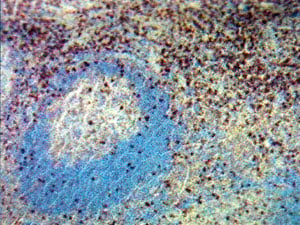
 IHC (Immunohistochemistry)
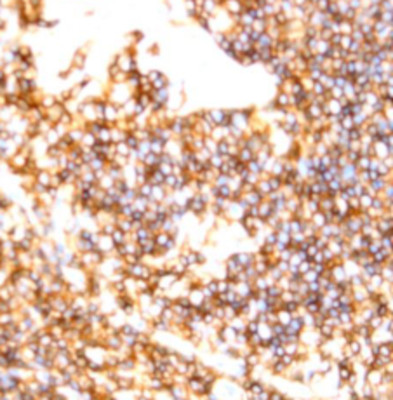
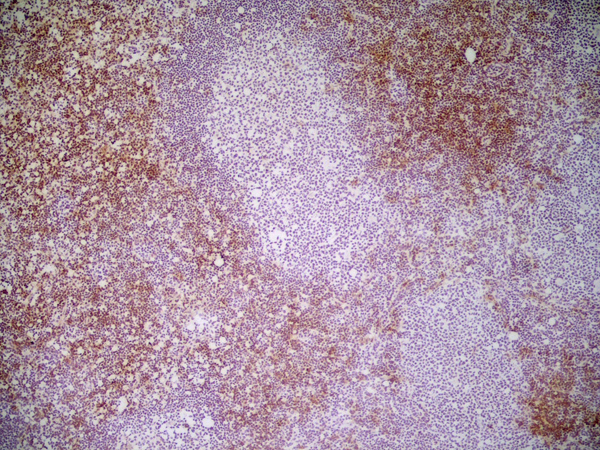
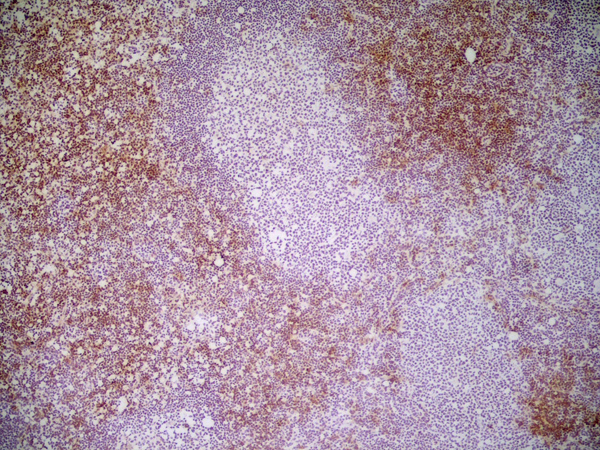
(CD8 expression in T-lymphocytes of the palatine tonsil. Formalin fixed, paraffin embedded human tissue (4 ?msection) stained with anti -CD8 (AAA79000) monospecific clonal antibody)
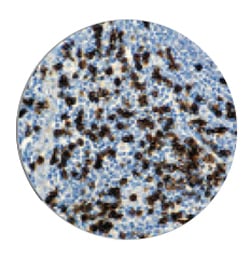
IHC (Immunohistochemistry)
(CD8 expression in T-lymphocytes of the palatine tonsil. Formalin fixed, paraffin embedded human tissue (4 ?msection) stained with anti -CD8 (AAA79000) monospecific clonal antibody)
Rabbit anti-Human CD8 Monoclonal Antibody | anti-CD8 antibody
Anti - CD8
Gene Names
CD8A; CD8; MAL; p32; Leu2
Reactivity
Human
Applications
Immunohistochemistry
Synonyms
CD8, Antibody; Anti - CD8; anti-CD8 antibody
Host
Rabbit
Reactivity
Human
Clonality
Monoclonal
Clone Number
P17-V
Specificity
Human
Sequence Length
235
Applicable Applications for anti-CD8 antibody
IHC (Immunohistochemistry)
Buffer
20 mM Tris-HCI, pH 8.0
Stabilizer
20 mg/ml BSA
Preservative
0.05% NaN3
Immunogen
Peptide derived from C-terminal region of human CD8. Antibody recognizes the epitope between Pro218 - Tyr234 of CD8-alpha human protein.
Positive control
human tonsil tissue
Cellular localization
membrane
IHC-P Protocol–Istruction Manual
1. Deparaffinize the section in 3 changes of xylene, 5 minutes each.
2. Wash the section in 96%, 80% and 70% ethyl alcohol for 10 minutes each.
3. Rinse in distilled water.
4. Block the endogenous peroxidase by incubating the tissue in 3% hydrogen peroxide (H2O2) for 10 minutes.
5. Wash in distilled water.
6. For antigen retrieval: immerse the slide in Tris-EDTA buffer, pH 9.0, 0.05% Tween-20*, and incubatein water bath at 96-98 degree C for 20-25 minutes.
7. Transfer the slide to room temperature and let it cool down for 15 minutes in the buffer used in the step #6
8.Rinse in distilled water.
9. Wash in 0.05 M Tris-HCl, pH 7.6 buffer supplemented with 0.2% of Tween-20 (buffer A) for 5 minutes.
10. Ready to use (RTU): Incubate the section with primary antibody (ready to use)for 1 hour in a closed wet chamber.
11.Wash twice 5 minutes with buffer A.
12. Apply the secondary antibody (the protocol depends on the supplier), and proceed to standard mmunohistochemistry protocol.
13.Wash twice 5 minutes with buffer A.
14. Apply the chromogen (DAB), 1 -3 minutes.
15. Wash in water –10 minutes.
16. Stain in hematoxylin for 5 minutes.
17.Wash in water–10 minutes.8.Dehydrate the section in 2 changes of 96% ethyl alcohol for 5 minutes each.
19. Wash the section in 2 changes of xylene for 2 minutes each.
20.Mount the slide for observation.
2. Wash the section in 96%, 80% and 70% ethyl alcohol for 10 minutes each.
3. Rinse in distilled water.
4. Block the endogenous peroxidase by incubating the tissue in 3% hydrogen peroxide (H2O2) for 10 minutes.
5. Wash in distilled water.
6. For antigen retrieval: immerse the slide in Tris-EDTA buffer, pH 9.0, 0.05% Tween-20*, and incubatein water bath at 96-98 degree C for 20-25 minutes.
7. Transfer the slide to room temperature and let it cool down for 15 minutes in the buffer used in the step #6
8.Rinse in distilled water.
9. Wash in 0.05 M Tris-HCl, pH 7.6 buffer supplemented with 0.2% of Tween-20 (buffer A) for 5 minutes.
10. Ready to use (RTU): Incubate the section with primary antibody (ready to use)for 1 hour in a closed wet chamber.
11.Wash twice 5 minutes with buffer A.
12. Apply the secondary antibody (the protocol depends on the supplier), and proceed to standard mmunohistochemistry protocol.
13.Wash twice 5 minutes with buffer A.
14. Apply the chromogen (DAB), 1 -3 minutes.
15. Wash in water –10 minutes.
16. Stain in hematoxylin for 5 minutes.
17.Wash in water–10 minutes.8.Dehydrate the section in 2 changes of 96% ethyl alcohol for 5 minutes each.
19. Wash the section in 2 changes of xylene for 2 minutes each.
20.Mount the slide for observation.
Precautions
1. We strongly recommend to use DB Primary Antibody Diluent eventually alternative diluent (containing protease free BSA at the concentrations 1mg/ml) for dilution of concentrated antibodies, otherwise the warranty might be oided.
2.Centrifuge the vial before use.3.Intended for professional use in laboratories.
4.Do not use after expiration date stamped on vial label.
5.Avoid contamination of the reagent.
6.Any discrepancies in the recommended procedures stated in the working protocol may affect the final results.
7. The reagent contains sodium azide (NaN3) which is highly toxic in higher concentrations. The concentration in the reagent (0.05%) is not considered as hazardous.
8. Disposal of waste material must be conducted in accordance with local regulations.
9.Wear appropriate Personal Protective Equipment to avoid contact with eyes and skin.
2.Centrifuge the vial before use.3.Intended for professional use in laboratories.
4.Do not use after expiration date stamped on vial label.
5.Avoid contamination of the reagent.
6.Any discrepancies in the recommended procedures stated in the working protocol may affect the final results.
7. The reagent contains sodium azide (NaN3) which is highly toxic in higher concentrations. The concentration in the reagent (0.05%) is not considered as hazardous.
8. Disposal of waste material must be conducted in accordance with local regulations.
9.Wear appropriate Personal Protective Equipment to avoid contact with eyes and skin.
Preparation and Storage
Store at +4°C. Do not freeze!
IHC (Immunohistochemistry)
(CD8 expression in T-lymphocytes of the palatine tonsil. Formalin fixed, paraffin embedded human tissue (4 ?msection) stained with anti -CD8 (AAA79000) monospecific clonal antibody)
IHC (Immunohistochemistry)
(CD8 expression in T-lymphocytes of the palatine tonsil. Formalin fixed, paraffin embedded human tissue (4 ?msection) stained with anti -CD8 (AAA79000) monospecific clonal antibody)
NCBI and Uniprot Product Information
NCBI GI #
NCBI GeneID
NCBI Official Full Name
T-cell surface glycoprotein CD8 alpha chain
NCBI Official Synonym Full Names
CD8a molecule
NCBI Official Symbol
CD8A
NCBI Official Synonym Symbols
CD8; MAL; p32; Leu2
NCBI Protein Information
T-cell surface glycoprotein CD8 alpha chain; T8 T-cell antigen; T cell co-receptor; OKT8 T-cell antigen; T-cell antigen Leu2; Leu2 T-lymphocyte antigen; CD8 antigen, alpha polypeptide (p32); T-lymphocyte differentiation antigen T8/Leu-2
UniProt Protein Name
T-cell surface glycoprotein CD8 alpha chain
UniProt Gene Name
CD8A
UniProt Synonym Gene Names
MAL
UniProt Entry Name
CD8A_HUMAN
Customer Reviews
Loading reviews...
Share Your Experience
Similar Products
Product Notes
The CD8 cd8a (Catalog #AAA79000) is an Antibody produced from Rabbit and is intended for research purposes only. The product is available for immediate purchase. The Anti - CD8 reacts with Human and may cross-react with other species as described in the data sheet. AAA Biotech's CD8 can be used in a range of immunoassay formats including, but not limited to, IHC (Immunohistochemistry). Researchers should empirically determine the suitability of the CD8 cd8a for an application not listed in the data sheet. Researchers commonly develop new applications and it is an integral, important part of the investigative research process. It is sometimes possible for the material contained within the vial of "CD8, Monoclonal Antibody" to become dispersed throughout the inside of the vial, particularly around the seal of said vial, during shipment and storage. We always suggest centrifuging these vials to consolidate all of the liquid away from the lid and to the bottom of the vial prior to opening. Please be advised that certain products may require dry ice for shipping and that, if this is the case, an additional dry ice fee may also be required.Precautions
All products in the AAA Biotech catalog are strictly for research-use only, and are absolutely not suitable for use in any sort of medical, therapeutic, prophylactic, in-vivo, or diagnostic capacity. By purchasing a product from AAA Biotech, you are explicitly certifying that said products will be properly tested and used in line with industry standard. AAA Biotech and its authorized distribution partners reserve the right to refuse to fulfill any order if we have any indication that a purchaser may be intending to use a product outside of our accepted criteria.Disclaimer
Though we do strive to guarantee the information represented in this datasheet, AAA Biotech cannot be held responsible for any oversights or imprecisions. AAA Biotech reserves the right to adjust any aspect of this datasheet at any time and without notice. It is the responsibility of the customer to inform AAA Biotech of any product performance issues observed or experienced within 30 days of receipt of said product. To see additional details on this or any of our other policies, please see our Terms & Conditions page.Item has been added to Shopping Cart
If you are ready to order, navigate to Shopping Cart and get ready to checkout.