Loading...

Skip to main content
Call us at +1-800-604-9114 for more information about our products or contact us online Need help? +1-800-604-9114 or contact us
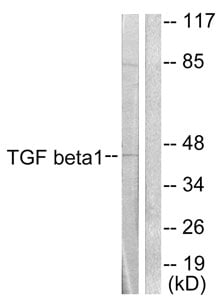
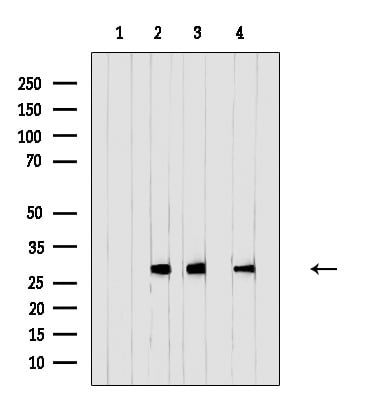
product-image-AAA330035_WB11.jpg WB (Western Blot) (Western blot analysis of extracts from various samples, using TGF beta1 Mouse mAb.Lane 1: Hela cells, blocked with antigen-specific peptides,Lane 2: Hela cells,Lane 3: Mouse kidney,Lane 4: Rat brain.)

Mouse TGF beta1 Monoclonal Antibody | anti-MBP antibody

TGF beta1 Mouse monoclonal Antibody

Gene Names
TGFB1; CED; LAP; DPD1; TGFB; TGFbeta
Reactivity
Human, Mouse, Rat
Applications
Immunocytochemistry, Immunofluorescence, Immunohistochemistry, Western Blot
Purity
Affinity-chromatography.
Synonyms
TGF beta1, Antibody; TGF beta1 Mouse monoclonal Antibody; Cartilage-inducing factor; CED; Differentiation inhibiting factor; DPD1; LAP; Latency-associated peptide; Prepro transforming growth factor beta 1; TGF beta 1; TGF beta; TGF beta 1 protein; TGF-beta 1 protein; TGF-beta-1; TGF-beta-5; TGF-beta1; TGFB; Tgfb-1; tgfb1; TGFB1_HUMAN; TGFbeta; TGFbeta1; Transforming Growth Factor b1; Transforming Growth Factor beta 1; Transforming growth factor beta 1a; transforming growth factor beta-1; transforming growth factor, beta 1; Transforming Growth Factor-beta1; anti-MBP antibody
Ordering
Host
Mouse
Reactivity
Human, Mouse, Rat
Clonality
Monoclonal
Isotype
Mouse IgG
Clone Number
AFB19414
Specificity
TGF beta1 antibody detects endogenous levels of total TGF beta1.
Purity/Purification
Affinity-chromatography.
Form/Format
Liquid. Mouse IgG in phosphate buffered saline (without Mg2+ and Ca2+), pH7.4, 150mM NaCl, 0.02% sodium azide and 50% glycerol.
Concentration
1mg/ml (varies by lot)
Applicable Applications for anti-MBP antibody
ICC (Immunocytochemistry), IF (Immunofluorescence), IHC (Immunohistochemistry), WB (Western Blot)
Immunogen
A synthesized peptide derived from human TGF beta1.
Conjugation
Unconjugated
Similarity
The 'straitjacket' and 'arm' domains encircle the Transforming growth factor beta-1 (TGF-beta-1) monomers and are fastened together by strong bonding between Lys-56 and Tyr-103/Tyr-104. The cell attachment site motif mediates binding to integrins (ITGAV:ITGB6 or ITGAV:ITGB8) (PubMed:28117447). The motif locates to a long loop in the arm domain called the bowtie tail (PubMed:28117447). Integrin-binding stabilizes an alternative conformation of the bowtie tail (PubMed:28117447). Activation by integrin requires force application by the actin cytoskeleton, which is resisted by the 'milieu molecules' (such as LTBP1, LRRC32/GARP and/or LRRC33/NRROS), resulting in distortion of the prodomain and release of the active TGF-beta-1 (PubMed:28117447). Belongs to the TGF-beta family.
Post Translational Modifications
Transforming growth factor beta-1 proprotein: The precursor proprotein is cleaved in the Golgi apparatus by FURIN to form Transforming growth factor beta-1 (TGF-beta-1) and Latency-associated peptide (LAP) chains, which remain non-covalently linked, rendering TGF-beta-1 inactive.N-glycosylated. Deglycosylation leads to activation of Transforming growth factor beta-1 (TGF-beta-1); mechanisms triggering deglycosylation-driven activation of TGF-beta-1 are however unclear.
Subunit Structure
Homodimer; disulfide-linked. Interacts with the serine proteases, HTRA1 and HTRA3: the interaction with either inhibits TGFB1-mediated signaling. The HTRA protease activity is required for this inhibition (By similarity). May interact with THSD4; this interaction may lead to sequestration by FBN1 microfibril assembly and attenuation of TGFB signaling (By similarity). Interacts with CD109, DPT and ASPN. Latency-associated peptide: Homodimer; disulfide-linked. Latency-associated peptide: Interacts with Transforming growth factor beta-1 (TGF-beta-1) chain; interaction is non-covalent and maintains (TGF-beta-1) in a latent state; each Latency-associated peptide (LAP) monomer interacts with TGF-beta-1 in the other monomer. Latency-associated peptide: Interacts with LTBP1; leading to regulate activation of TGF-beta-1. Latency-associated peptide: Interacts with LRRC32/GARP; leading to regulate activation of TGF-beta-1 on the surface of activated regulatory T-cells (Tregs). Interacts with LRRC33/NRROS; leading to regulate activation of TGF-beta-1 in macrophages and microglia (Probable). Latency-associated peptide: Interacts (via cell attachment site) with integrins ITGAV and ITGB6 (ITGAV:ITGB6), leading to release of the active TGF-beta-1. Latency-associated peptide: Interacts with NREP; the interaction results in a decrease in TGFB1 autoinduction (By similarity). Latency-associated peptide: Interacts with HSP90AB1; inhibits latent TGFB1 activation. Transforming growth factor beta-1: Homodimer; disulfide-linked. Transforming growth factor beta-1: Interacts with TGF-beta receptors (TGFBR1 and TGFBR2), leading to signal transduction.
Tissue Specificity
Highly expressed in bone. Abundantly expressed in articular cartilage and chondrocytes and is increased in osteoarthritis (OA). Colocalizes with ASPN in chondrocytes within OA lesions of articular cartilage.
Function
Transforming growth factor beta-1 proprotein: Precursor of the Latency-associated peptide (LAP) and Transforming growth factor beta-1 (TGF-beta-1) chains, which constitute the regulatory and active subunit of TGF-beta-1, respectively.Required to maintain the Transforming growth factor beta-1 (TGF-beta-1) chain in a latent state during storage in extracellular matrix. Associates non-covalently with TGF-beta-1 and regulates its activation via interaction with 'milieu molecules', such as LTBP1, LRRC32/GARP and LRRC33/NRROS, that control activation of TGF-beta-1. Interaction with LRRC33/NRROS regulates activation of TGF-beta-1 in macrophages and microglia (Probable). Interaction with LRRC32/GARP controls activation of TGF-beta-1 on the surface of activated regulatory T-cells (Tregs). Interaction with integrins (ITGAV:ITGB6 or ITGAV:ITGB8) results in distortion of the Latency-associated peptide chain and subsequent release of the active TGF-beta-1.Transforming growth factor beta-1: Multifunctional protein that regulates the growth and differentiation of various cell types and is involved in various processes, such as normal development, immune function, microglia function and responses to neurodegeneration (By similarity). Activation into mature form follows different steps: following cleavage of the proprotein in the Golgi apparatus, Latency-associated peptide (LAP) and Transforming growth factor beta-1 (TGF-beta-1) chains remain non-covalently linked rendering TGF-beta-1 inactive during storage in extracellular matrix. At the same time, LAP chain interacts with 'milieu molecules', such as LTBP1, LRRC32/GARP and LRRC33/NRROS that control activation of TGF-beta-1 and maintain it in a latent state during storage in extracellular milieus. TGF-beta-1 is released from LAP by integrins (ITGAV:ITGB6 or ITGAV:ITGB8): integrin-binding to LAP stabilizes an alternative conformation of the LAP bowtie tail and results in distortion of the LAP chain and subsequent release of the active TGF-beta-1. Once activated following release of LAP, TGF-beta-1 acts by binding to TGF-beta receptors (TGFBR1 and TGFBR2), which transduce signal. While expressed by many cells types, TGF-beta-1 only has a very localized range of action within cell environment thanks to fine regulation of its activation by Latency-associated peptide chain (LAP) and 'milieu molecules' (By similarity). Plays an important role in bone remodeling: acts as a potent stimulator of osteoblastic bone formation, causing chemotaxis, proliferation and differentiation in committed osteoblasts (By similarity). Can promote either T-helper 17 cells (Th17) or regulatory T-cells (Treg) lineage differentiation in a concentration-dependent manner (By similarity). At high concentrations, leads to FOXP3-mediated suppression of RORC and down-regulation of IL-17 expression, favoring Treg cell development (By similarity). At low concentrations in concert with IL-6 and IL-21, leads to expression of the IL-17 and IL-23 receptors, favoring differentiation to Th17 cells (By similarity). Stimulates sustained production of collagen through the activation of CREB3L1 by regulated intramembrane proteolysis (RIP). Mediates SMAD2/3 activation by inducing its phosphorylation and subsequent translocation to the nucleus. Can induce epithelial-to-mesenchymal transition (EMT) and cell migration in various cell types.
Preparation and Storage
Store at -20 degree C. Stable for 12 months from date of receipt.

WB (Western Blot)

(Western blot analysis of extracts from various samples, using TGF beta1 Mouse mAb.Lane 1: Hela cells, blocked with antigen-specific peptides,Lane 2: Hela cells,Lane 3: Mouse kidney,Lane 4: Rat brain.)

product-image-AAA330035_WB11.jpg WB (Western Blot) (Western blot analysis of extracts from various samples, using TGF beta1 Mouse mAb.Lane 1: Hela cells, blocked with antigen-specific peptides,Lane 2: Hela cells,Lane 3: Mouse kidney,Lane 4: Rat brain.)

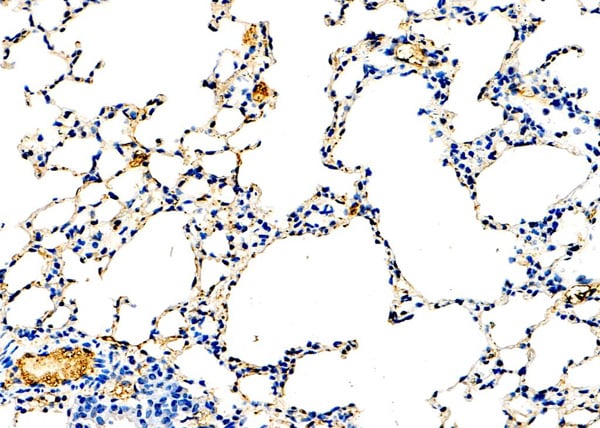
IHC (Immunohiostchemistry)

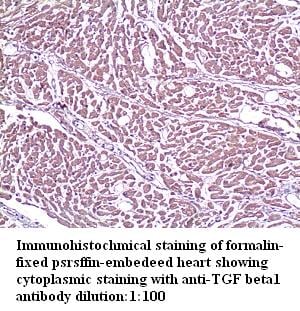
(At 1/100 staining Mouse lung tissue by IHC-P. The sample was formaldehyde fixed and a heat mediated antigen retrieval step in citrate buffer was performed. The sample was then blocked and incubated with the primary antibody at 4 degree C overnight. An HRP conjugated anti-Mouse antibody was used as the secondary antibody.)

product-image-AAA330035_IHC13.jpg IHC (Immunohiostchemistry) (At 1/100 staining Mouse lung tissue by IHC-P. The sample was formaldehyde fixed and a heat mediated antigen retrieval step in citrate buffer was performed. The sample was then blocked and incubated with the primary antibody at 4 degree C overnight. An HRP conjugated anti-Mouse antibody was used as the secondary antibody.)

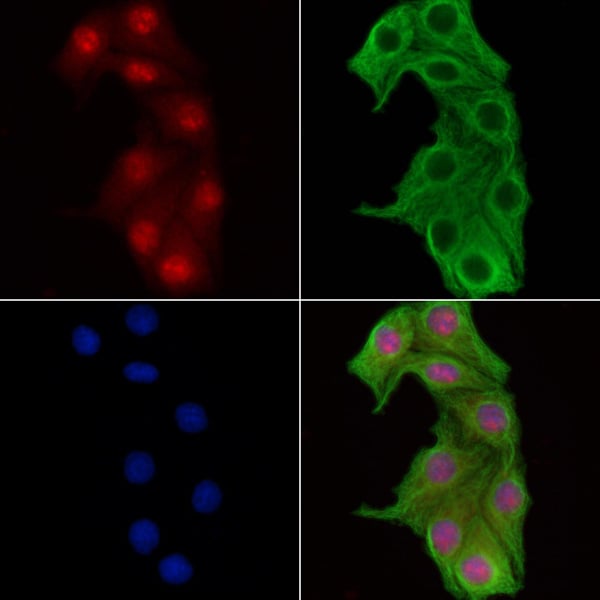
IF (Immunofluorescence)

(Staining Hela cells by IF/ICC. The samples were fixed with PFA and permeabilized in 0.1% Triton X-100, then blocked in 10% serum for 45 minutes at 25 degree C. Samples were then incubated with primary Ab(BF8012) and rabbit anti-beta tubulin Ab(AF7011) for 1 hour at 37 degree C. An AlexaFluor594 conjugated goat anti-mouse IgG(H+L) Ab(Red) and an AlexaFluor488 conjugated goat anti-rabbit IgG(H+L) Ab(Green) were used as the secondary antibody.The nuclear counter stain is DAPI (blue).)

product-image-AAA330035_IF15.jpg IF (Immunofluorescence) (Staining Hela cells by IF/ICC. The samples were fixed with PFA and permeabilized in 0.1% Triton X-100, then blocked in 10% serum for 45 minutes at 25 degree C. Samples were then incubated with primary Ab(BF8012) and rabbit anti-beta tubulin Ab(AF7011) for 1 hour at 37 degree C. An AlexaFluor594 conjugated goat anti-mouse IgG(H+L) Ab(Red) and an AlexaFluor488 conjugated goat anti-rabbit IgG(H+L) Ab(Green) were used as the secondary antibody.The nuclear counter stain is DAPI (blue).)
Product Categories/Family for anti-MBP antibody

NCBI and Uniprot Product Information

NCBI GI #
NCBI GeneID
NCBI Accession #
NCBI GenBank Nucleotide #
UniProt Accession #
Molecular Weight
44,341 Da
NCBI Official Full Name
transforming growth factor beta-1
NCBI Official Synonym Full Names
transforming growth factor, beta 1
NCBI Official Symbol
TGFB1
NCBI Official Synonym Symbols
CED; LAP; DPD1; TGFB; TGFbeta
NCBI Protein Information
transforming growth factor beta-1; TGF-beta-1; TGF-beta 1 protein; latency-associated peptide
UniProt Protein Name
Transforming growth factor beta-1
UniProt Gene Name
TGFB1
UniProt Synonym Gene Names
TGFB; TGF-beta-1; LAP
UniProt Entry Name
TGFB1_HUMAN

Similar Products

Product Notes

The MBP tgfb1 (Catalog #AAA330035) is an Antibody produced from Mouse and is intended for research purposes only. The product is available for immediate purchase. The TGF beta1 Mouse monoclonal Antibody reacts with Human, Mouse, Rat and may cross-react with other species as described in the data sheet. AAA Biotech's TGF beta1 can be used in a range of immunoassay formats including, but not limited to, ICC (Immunocytochemistry), IF (Immunofluorescence), IHC (Immunohistochemistry), WB (Western Blot). Researchers should empirically determine the suitability of the MBP tgfb1 for an application not listed in the data sheet. Researchers commonly develop new applications and it is an integral, important part of the investigative research process. It is sometimes possible for the material contained within the vial of "TGF beta1, Monoclonal Antibody" to become dispersed throughout the inside of the vial, particularly around the seal of said vial, during shipment and storage. We always suggest centrifuging these vials to consolidate all of the liquid away from the lid and to the bottom of the vial prior to opening. Please be advised that certain products may require dry ice for shipping and that, if this is the case, an additional dry ice fee may also be required.

Precautions

All products in the AAA Biotech catalog are strictly for research-use only, and are absolutely not suitable for use in any sort of medical, therapeutic, prophylactic, in-vivo, or diagnostic capacity. By purchasing a product from AAA Biotech, you are explicitly certifying that said products will be properly tested and used in line with industry standard. AAA Biotech and its authorized distribution partners reserve the right to refuse to fulfill any order if we have any indication that a purchaser may be intending to use a product outside of our accepted criteria.

Disclaimer

Though we do strive to guarantee the information represented in this datasheet, AAA Biotech cannot be held responsible for any oversights or imprecisions. AAA Biotech reserves the right to adjust any aspect of this datasheet at any time and without notice. It is the responsibility of the customer to inform AAA Biotech of any product performance issues observed or experienced within 30 days of receipt of said product. To see additional details on this or any of our other policies, please see our Terms & Conditions page.

Item has been added to Shopping Cart

If you are ready to order, navigate to Shopping Cart and get ready to checkout.

Submit a Question

Please complete the form below and a representative will contact you as soon as possible.

Request more Information

Please complete the form below and a representative will contact you as soon as possible.

Request a Manual

Please complete the form below and a representative will contact you as soon as possible.

Request a Quote

Please complete the form below and a representative will contact you as soon as possible.