
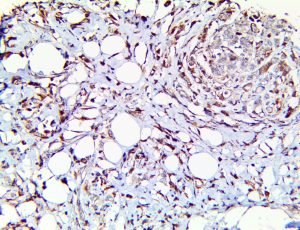
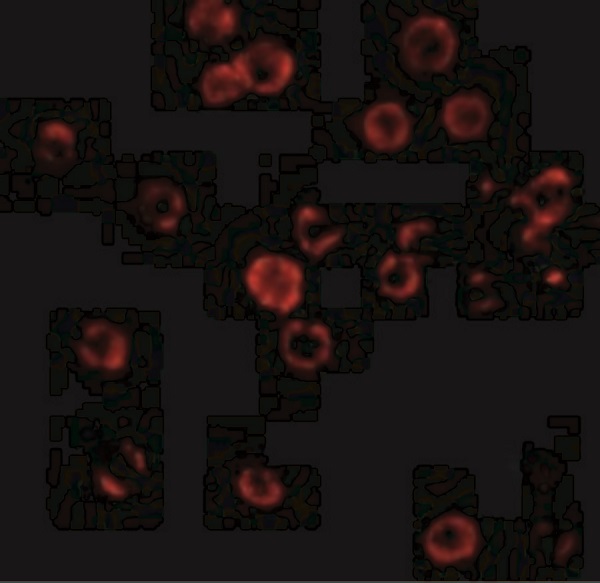
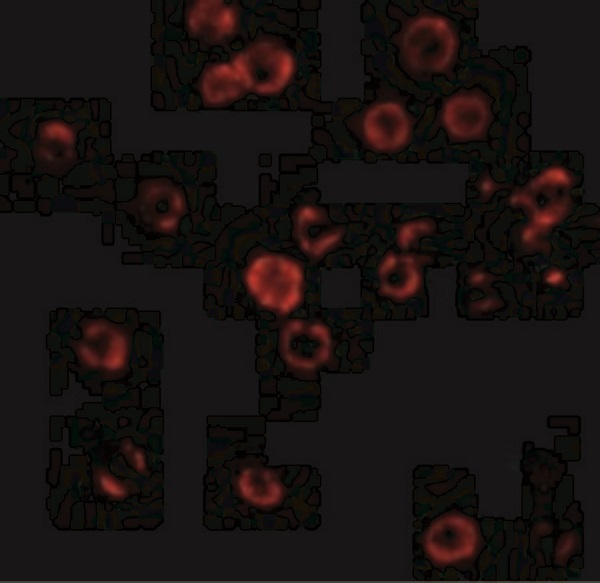
 IHC (Immunohiostchemistry)
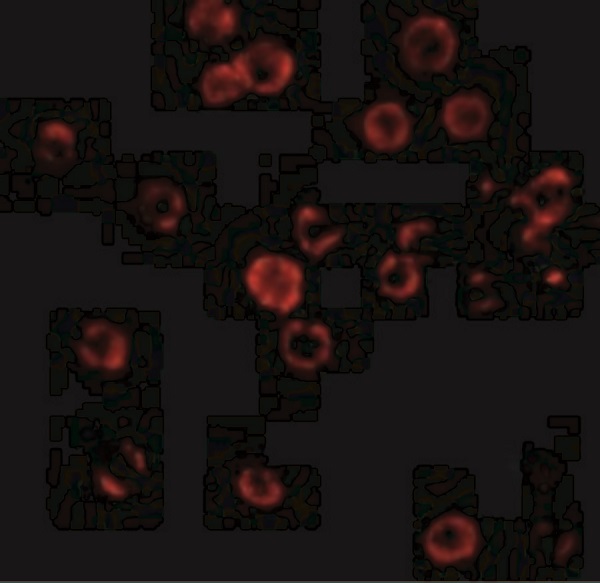
(TIM-3 Antibody Immunohistochemistry on an FFPE Ductal Breast Carcinoma Tissue)
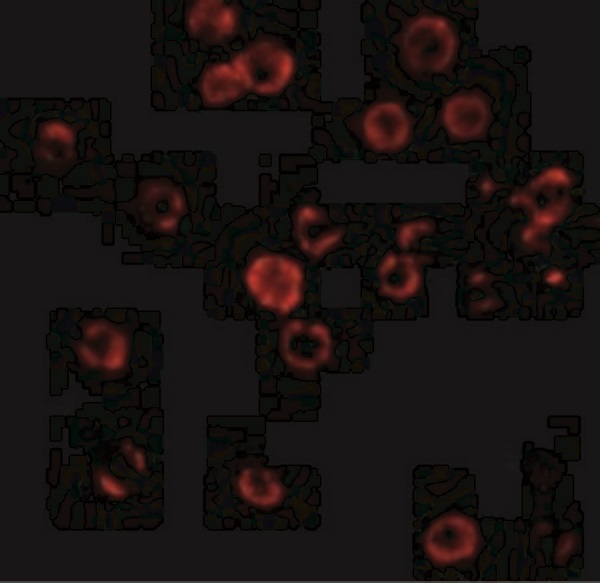
IHC (Immunohiostchemistry)
(TIM-3 Antibody Immunohistochemistry on an FFPE Ductal Breast Carcinoma Tissue)
Mouse anti-Human TIM-3/HAVCR2/CD366 Monoclonal Antibody | anti-TIM-3/HAVCR2/CD366 antibody
TIM-3/HAVCR2/CD366 (BSB-163)
Reactivity
Human
Synonyms
TIM-3/HAVCR2/CD366, Antibody; TIM-3/HAVCR2/CD366 (BSB-163); tim-3. tim3; anti-tim-3; anti-tim3; HAVCR2; anti-HAVCR2; CD366; anti-CD366; anti havcr2; anti cd366; anti-TIM-3/HAVCR2/CD366 antibody
Host
Mouse
Reactivity
Human
Clonality
Monoclonal
Isotype
IgG2c
Clone Number
BSB-163
Form/Format
Paraffin, Frozen
TIM-3 is a mouse monoclonal antibody derived from cell culture supernatant that is concentrated, dialyzed, filter sterilized and diluted in buffer pH7.5, containing BSA and sodium azide as a preservative.
TIM-3 is a mouse monoclonal antibody derived from cell culture supernatant that is concentrated, dialyzed, filter sterilized and diluted in buffer pH7.5, containing BSA and sodium azide as a preservative.
Immunogen
Recombinant extracellular domain of the human TIM3 protein.
Control
Colon, Testis, Tonsil, Liver
Localization
Cytoplasmic
Preparation and Storage
Store at 2-8 degree C (Control Slides: Store at 20-25 degree C)
IHC (Immunohiostchemistry)
(TIM-3 Antibody Immunohistochemistry on an FFPE Ductal Breast Carcinoma Tissue)
IHC (Immunohiostchemistry)
(TIM-3 Antibody Immunohistochemistry on an FFPE Ductal Breast Carcinoma Tissue)
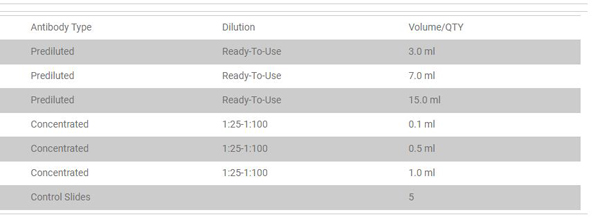
Dilution Info
Dilution Info
Related Product Information for anti-TIM-3/HAVCR2/CD366 antibody
T-cell Immunoglobulin and Mucin-domain Containing-3 (TIM-3), also known as Hepatitis A virus cellular receptor 2 (HAVCR2), is a protein that in humans is encoded by the HAVCR2 gene. TIM-3 is an immune checkpoint and together with other inhibitory receptors including programmed cell death protein 1 (PD-1) and lymphocyte activation gene 3 protein (LAG3) mediate CD8+ T-cell exhaustion. TIM-3 expression is up-regulated in tumor-infiltrating lymphocytes in Lung, Gastric, Head & Neck Cancers, Schwannoma, Melanoma and Follicular B-cell Non-Hodgkin Lymphoma. The TIM-3 pathway may interact with the PD-1 pathway in the dysfunctional CD8+ T cells and Tregs in cancer. TIM-3 is mainly expressed on activated CD8+ T cells and suppresses macrophage activation following PD-1 inhibition.
Upregulation has been observed in tumors progressing after anti-PD-1 therapy. It has been reported that early breast cancer patients with TIM-3+ iTILs have significantly improved breast cancer-specific survival whereas TIM-3+ sTILs did not reach statistical significance and it was concluded that the presence of TIM-3+ iTILs is an independent favorable prognostic factor in the whole cohort as well as among ER negative patients. In myelogenous leukemia (AML), upregulated TIM-3 during AML could reduce cytokine production. Co-expression of PD-1 and TIM-3 was correlated with AML progression. In follicular B-cell non-Hodgkin lymphoma, TIM-3 was expressed on nearly 35% of lymph node CD4+ and CD8+ T cells and could mediate T-cells exhaustion. In glioma patients, TIM-3 was correlated with cancer immune escape and might be a potent target. In colorectal cancer, upregulation of TIM-3 could restrict T-cell responses and might participate in tumorigenesis. The expression of TIM-3 antibody might be an independent prognostic factor for colorectal cancer.
Upregulation has been observed in tumors progressing after anti-PD-1 therapy. It has been reported that early breast cancer patients with TIM-3+ iTILs have significantly improved breast cancer-specific survival whereas TIM-3+ sTILs did not reach statistical significance and it was concluded that the presence of TIM-3+ iTILs is an independent favorable prognostic factor in the whole cohort as well as among ER negative patients. In myelogenous leukemia (AML), upregulated TIM-3 during AML could reduce cytokine production. Co-expression of PD-1 and TIM-3 was correlated with AML progression. In follicular B-cell non-Hodgkin lymphoma, TIM-3 was expressed on nearly 35% of lymph node CD4+ and CD8+ T cells and could mediate T-cells exhaustion. In glioma patients, TIM-3 was correlated with cancer immune escape and might be a potent target. In colorectal cancer, upregulation of TIM-3 could restrict T-cell responses and might participate in tumorigenesis. The expression of TIM-3 antibody might be an independent prognostic factor for colorectal cancer.
Customer Reviews
Loading reviews...
Share Your Experience
Similar Products




Product Notes
The TIM-3/HAVCR2/CD366 (Catalog #AAA59395) is an Antibody produced from Mouse and is intended for research purposes only. The product is available for immediate purchase. The TIM-3/HAVCR2/CD366 (BSB-163) reacts with Human and may cross-react with other species as described in the data sheet. It is sometimes possible for the material contained within the vial of "TIM-3/HAVCR2/CD366, Monoclonal Antibody" to become dispersed throughout the inside of the vial, particularly around the seal of said vial, during shipment and storage. We always suggest centrifuging these vials to consolidate all of the liquid away from the lid and to the bottom of the vial prior to opening. Please be advised that certain products may require dry ice for shipping and that, if this is the case, an additional dry ice fee may also be required.Precautions
All products in the AAA Biotech catalog are strictly for research-use only, and are absolutely not suitable for use in any sort of medical, therapeutic, prophylactic, in-vivo, or diagnostic capacity. By purchasing a product from AAA Biotech, you are explicitly certifying that said products will be properly tested and used in line with industry standard. AAA Biotech and its authorized distribution partners reserve the right to refuse to fulfill any order if we have any indication that a purchaser may be intending to use a product outside of our accepted criteria.Disclaimer
Though we do strive to guarantee the information represented in this datasheet, AAA Biotech cannot be held responsible for any oversights or imprecisions. AAA Biotech reserves the right to adjust any aspect of this datasheet at any time and without notice. It is the responsibility of the customer to inform AAA Biotech of any product performance issues observed or experienced within 30 days of receipt of said product. To see additional details on this or any of our other policies, please see our Terms & Conditions page.Item has been added to Shopping Cart
If you are ready to order, navigate to Shopping Cart and get ready to checkout.