Loading...

Skip to main content
Call us at +1-800-604-9114 for more information about our products or contact us online Need help? +1-800-604-9114 or contact us
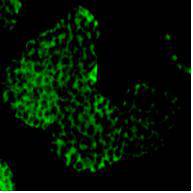
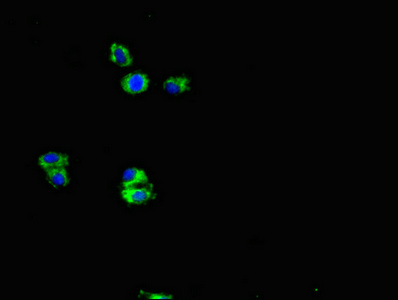
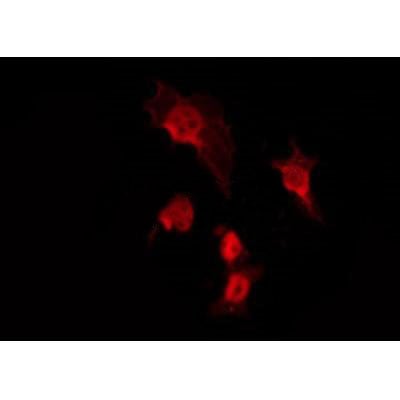
product-image-AAA329924_AD11.jpg Application Data (At 25 degree C. The primary antibody was diluted at 1/200 and incubated with the sample for 1 hour at 37 degree C. An Alexa Fluor 594 conjugated goat anti-rabbit IgG (H+L) Ab, diluted at 1/600, was used as the secondary antibody.)

Rabbit APP Polyclonal Antibody | anti-APP antibody

Phospho-APP (Thr729) Antibody

Gene Names
APP; AAA; AD1; PN2; ABPP; APPI; CVAP; ABETA; PN-II; CTFgamma
Reactivity
Human, Mouse, Rat
Predicted Reactivity: Pig (100%), Horse (100%), Chicken (100%), Xenopus (86%)
Applications
ELISA, Immunocytochemistry, Immunofluorescence, Immunohistochemistry, Western Blot
Purity
The antibody is from purified rabbit serum by affinity purification via sequential chromatography on phospho-peptide and non-phospho-peptide affinity columns.
Synonyms
APP, Antibody; Phospho-APP (Thr729) Antibody; A4_HUMAN; AAA; ABETA; ABPP; AD1; AICD-50; AICD-57; AICD-59; AID (50); AID (57); AID (59); Alzheimer disease amyloid protein; amyloid beta A4 protein; Amyloid intracellular domain 50; Amyloid intracellular domain 57; Amyloid intracellular domain 59; amyloid of aging and alzheimer disease; APP; APPI; beta-amyloid peptide; Beta-APP40; Beta-APP42; C31; Cerebral vascular amyloid peptide; CTFgamma; CVAP; Gamma-CTF (50); Gamma-CTF (57); Gamma-CTF (59); peptidase nexin-II; PN-II; PreA4; Protease nexin-II; S-APP-alpha; S-APP-beta; anti-APP antibody
Ordering
Host
Rabbit
Reactivity
Human, Mouse, Rat
Predicted Reactivity: Pig (100%), Horse (100%), Chicken (100%), Xenopus (86%)
Clonality
Polyclonal
Isotype
Rabbit IgG
Specificity
Phospho-APP (Thr729) Antibody detects endogenous levels of APP only when phosphorylated at Thr729.
Tissue Specificity: Expressed in the brain and in cerebrospinal fluid (at protein level). Expressed in all fetal tissues examined with highest levels in brain, kidney, heart and spleen. Weak expression in liver. In adult brain, highest expression found in the frontal lobe of the cortex and in the anterior perisylvian cortex-opercular gyri. Moderate expression in the cerebellar cortex, the posterior perisylvian cortex-opercular gyri and the temporal associated cortex. Weak expression found in the striate, extra-striate and motor cortices. Expressed in cerebrospinal fluid, and plasma. Isoform APP695 is the predominant form in neuronal tissue, isoform APP751 and isoform APP770 are widely expressed in non-neuronal cells. Isoform APP751 is the most abundant form in T-lymphocytes. Appican is expressed in astrocytes.
Purity/Purification
The antibody is from purified rabbit serum by affinity purification via sequential chromatography on phospho-peptide and non-phospho-peptide affinity columns.
Form/Format
Liquid. Rabbit IgG in phosphate buffered saline, pH7.4, 150mM NaCl, 0.02% sodium azide and 50% glycerol.
Concentration
1mg/ml (varies by lot)
Applicable Applications for anti-APP antibody
ELISA (Peptide ELISA), ICC (Immunocytochemistry), IF (Immunofluorescence), IHC (Immunohistochemistry), WB (Western Blot)
Immunogen
A synthesized peptide derived from human Amyloid-betaA4 around the phosphorylation site of Thr729.
Conjugation
Unconjugated
Fragment
Fab fragment
Post Translational Modifications
Proteolytically processed under normal cellular conditions. Cleavage either by alpha-secretase, beta-secretase or theta-secretase leads to generation and extracellular release of soluble APP peptides, S-APP-alpha and S-APP-beta, and the retention of corresponding membrane-anchored C-terminal fragments, C80, C83 and C99. Subsequent processing of C80 and C83 by gamma-secretase yields P3 peptides. This is the major secretory pathway and is non-amyloidogenic. Alternatively, presenilin/nicastrin-mediated gamma-secretase processing of C99 releases the amyloid-beta proteins, amyloid-beta protein 40 and amyloid-beta protein 42, major components of amyloid plaques, and the cytotoxic C-terminal fragments, gamma-CTF (50), gamma-CTF (57) and gamma-CTF (59). PSEN1 cleavage is more efficient with C83 than with C99 as substrate (in vitro). Many other minor amyloid-beta peptides, amyloid-beta 1-X peptides, are found in cerebral spinal fluid (CSF) including the amyloid-beta X-15 peptides, produced from the cleavage by alpha-secretase and all terminating at Gln-686.Proteolytically cleaved by caspases during neuronal apoptosis. Cleavage at Asp-739 by either CASP6, CASP8 or CASP9 results in the production of the neurotoxic C31 peptide and the increased production of amyloid-beta peptides.N-glycosylated. N- and O-glycosylated. O-glycosylation on Ser and Thr residues with core 1 or possibly core 8 glycans. Partial tyrosine glycosylation (Tyr-681) is found on some minor, short amyloid-beta peptides (amyloid-beta 1-15, 1-16, 1-17, 1-18, 1-19 and 1-20) but not found on amyloid-beta protein 38, amyloid-beta protein 40 nor on amyloid-beta protein 42. Modification on a tyrosine is unusual and is more prevelant in AD patients. Glycans had Neu5AcHex (Neu5Ac)HexNAc-O-Tyr, Neu5AcNeu5AcHex (Neu5Ac)HexNAc-O-Tyr and O-AcNeu5AcNeu5AcHex (Neu5Ac)HexNAc-O-Tyr structures, where O-Ac is O-acetylation of Neu5Ac. Neu5AcNeu5Ac is most likely Neu5Ac 2,8Neu5Ac linked. O-glycosylations in the vicinity of the cleavage sites may influence the proteolytic processing. Appicans are L-APP isoforms with O-linked chondroitin sulfate.Phosphorylation in the C-terminal on tyrosine, threonine and serine residues is neuron-specific. Phosphorylation can affect APP processing, neuronal differentiation and interaction with other proteins. Phosphorylated on Thr-743 in neuronal cells by Cdc5 kinase and Mapk10, in dividing cells by Cdc2 kinase in a cell-cycle dependent manner with maximal levels at the G2/M phase and, in vitro, by GSK-3-beta. The Thr-743 phosphorylated form causes a conformational change which reduces binding of Fe65 family members. In dopaminergic (DA) neurons, phosphorylation on Thr-743 by LRKK2 promotes the production and the nuclear translocation of the APP intracellular domain (AICD) which induces DA neuron apoptosis. Phosphorylation on Tyr-757 is required for SHC binding. Phosphorylated in the extracellular domain by casein kinases on both soluble and membrane-bound APP. This phosphorylation is inhibited by heparin.Extracellular binding and reduction of copper, results in a corresponding oxidation of Cys-144 and Cys-158, and the formation of a disulfide bond. In vitro, the APP-Cu (+) complex in the presence of hydrogen peroxide results in an increased production of amyloid-beta-containing peptides.Trophic-factor deprivation triggers the cleavage of surface APP by beta-secretase to release sAPP-beta which is further cleaved to release an N-terminal fragment of APP (N-APP). Amyloid-beta peptides are degraded by IDE. Sulfated on tyrosine residues.
Subunit Structure
Binds, via its C-terminus, to the PID domain of several cytoplasmic proteins, including APBB family members, the APBA family, MAPK8IP1, SHC1 and, NUMB and DAB1 (By similarity). Binding to DAB1 inhibits its serine phosphorylation (By similarity). Interacts (via NPXY motif) with DAB2 (via PID domain); the interaction is impaired by tyrosine phosphorylation of the NPXY motif. Also interacts with GPCR-like protein BPP, APPBP1, IB1, KNS2 (via its TPR domains), APPBP2 (via BaSS) and DDB1. In vitro, it binds MAPT via the MT-binding domains (By similarity). Associates with microtubules in the presence of ATP and in a kinesin-dependent manner (By similarity). Interacts, through a C-terminal domain, with GNAO1. Amyloid-beta protein 42 binds CHRNA7 in hippocampal neurons. Amyloid-beta associates with HADH2. Soluble APP binds, via its N-terminal head, to FBLN1. Interacts with CPEB1 and AGER (By similarity). Interacts with ANKS1B and TNFRSF21. Interacts with ITM2B. Interacts with ITM2C. Interacts with IDE. Can form homodimers; dimerization is enhanced in the presence of Cu (2+) ions. Can form homodimers; this is promoted by heparin binding. Amyloid-beta protein 40 interacts with S100A9. CTF-alpha product of APP interacts with GSAP. Isoform APP695 interacts with SORL1 (via N-terminal ectodomain); this interaction retains APP in the trans-Golgi network and reduces processing into soluble APP-alpha and amyloid-beta peptides. The C99 fragment also interacts with SORL1. Isoform APP751 interacts with SORL1. Isoform APP770 interacts with SORL1. Interacts with PLD3. Interacts with VDAC1. Interacts with NSG1; could regulate APP processing (By similarity). Amyloid-beta protein 42 interacts with FPR2. Interacts with SYT7 (By similarity). Interacts (via transmembrane region) with PSEN1; the interaction is direct. Interacts with LRRK2. Interacts (via cytoplasmic domain) with KIF5B.
Similarity
The transmembrane helix undergoes a conformation change and unravels partially when bound to PSEN1, facilitating cleavage by PSEN1.The basolateral sorting signal (BaSS) is required for sorting of membrane proteins to the basolateral surface of epithelial cells.The GFLD subdomain binds Cu (2+) ions; this promotes homodimerization.The NPXY sequence motif found in many tyrosine-phosphorylated proteins is required for the specific binding of the PID domain. However, additional amino acids either N- or C-terminal to the NPXY motif are often required for complete interaction. The PID domain-containing proteins which bind APP require the YENPTY motif for full interaction. These interactions are independent of phosphorylation on the terminal tyrosine residue. The YENPXY site is also involved in clathrin-mediated endocytosis.The C-terminal region can bind zinc ions; this favors dimerization and formation of higher oligomers.The OX-2 motif shows some similarity to a region in the N-terminus of CD200/MOX2.Belongs to the APP family.
Subcellular Location
Cell membrane>Single-pass type I membrane protein. Membrane>Single-pass type I membrane protein. Perikaryon. Cell projection>Growth cone. Membrane>Clathrin-coated pit. Early endosome. Cytoplasmic vesicle.
Note: Cell surface protein that rapidly becomes internalized via clathrin-coated pits. Only a minor proportion is present at the cell membrane; most of the protein is present in intracellular vesicles (PubMed:20580937). During maturation, the immature APP (N-glycosylated in the endoplasmic reticulum) moves to the Golgi complex where complete maturation occurs (O-glycosylated and sulfated). After alpha-secretase cleavage, soluble APP is released into the extracellular space and the C-terminal is internalized to endosomes and lysosomes. Some APP accumulates in secretory transport vesicles leaving the late Golgi compartment and returns to the cell surface. APP sorts to the basolateral surface in epithelial cells. During neuronal differentiation, the Thr-743 phosphorylated form is located mainly in growth cones, moderately in neurites and sparingly in the cell body (PubMed:10341243). Casein kinase phosphorylation can occur either at the cell surface or within a post-Golgi compartment. Associates with GPC1 in perinuclear compartments. Colocalizes with SORL1 in a vesicular pattern in cytoplasm and perinuclear regions. Secreted. Cell surface.
Note: Associates with FPR2 at the cell surface and the complex is then rapidly internalized.Nucleus. Cytoplasm.
Note: Located to both the cytoplasm and nuclei of neurons. It can be translocated to the nucleus through association with APBB1 (Fe65) (PubMed:11544248). In dopaminergic neurons, the phosphorylated Thr-743 form is localized to the nucleus (By similarity).
Preparation and Storage
Store at -20 degree C. Stable for 12 months from date of receipt.

Application Data

(At 25 degree C. The primary antibody was diluted at 1/200 and incubated with the sample for 1 hour at 37 degree C. An Alexa Fluor 594 conjugated goat anti-rabbit IgG (H+L) Ab, diluted at 1/600, was used as the secondary antibody.)

product-image-AAA329924_AD11.jpg Application Data (At 25 degree C. The primary antibody was diluted at 1/200 and incubated with the sample for 1 hour at 37 degree C. An Alexa Fluor 594 conjugated goat anti-rabbit IgG (H+L) Ab, diluted at 1/600, was used as the secondary antibody.)

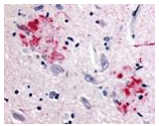
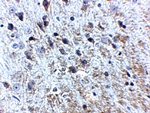
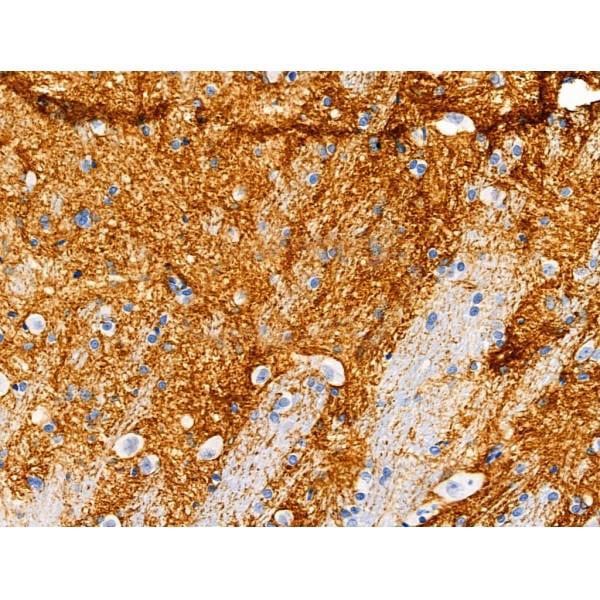
IHC (Immunohiostchemistry)

(Staining Rat brain tissue by IHC-P. The sample was formaldehyde fixed and a heat mediated antigen retrieval step in citrate buffer was performed. The sample was then blocked and incubated with the primary antibody at 4 degree C overnight. An HRP conjugated anti-Rabbit antibody was used as the secondary antibody.)

product-image-AAA329924_IHC13.jpg IHC (Immunohiostchemistry) (Staining Rat brain tissue by IHC-P. The sample was formaldehyde fixed and a heat mediated antigen retrieval step in citrate buffer was performed. The sample was then blocked and incubated with the primary antibody at 4 degree C overnight. An HRP conjugated anti-Rabbit antibody was used as the secondary antibody.)

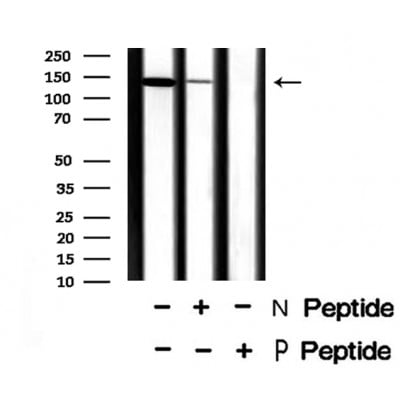
WB (Western Blot)

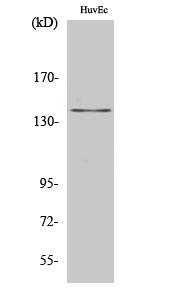
(Western blot analysis of Amyloid-βA4 (Phospho-Thr729) using Hela whole cell lysates.-/+ means absence or presence of N peptide(non-phospho peptide) and P peptide(phospho peptide).)

product-image-AAA329924_WB15.jpg WB (Western Blot) (Western blot analysis of Amyloid-βA4 (Phospho-Thr729) using Hela whole cell lysates.-/+ means absence or presence of N peptide(non-phospho peptide) and P peptide(phospho peptide).)
Related Product Information for anti-APP antibody
Functions as a cell surface receptor and performs physiological functions on the surface of neurons relevant to neurite growth, neuronal adhesion and axonogenesis. Interaction between APP molecules on neighboring cells promotes synaptogenesis. Involved in cell mobility and transcription regulation through protein-protein interactions. Can promote transcription activation through binding to APBB1-KAT5 and inhibits Notch signaling through interaction with Numb. Couples to apoptosis-inducing pathways such as those mediated by G (O) and JIP. Inhibits G (o) alpha ATPase activity (By similarity). Acts as a kinesin I membrane receptor, mediating the axonal transport of beta-secretase and presenilin 1 (By similarity). By acting as a kinesin I membrane receptor, plays a role in axonal anterograde transport of cargo towards synapes in axons. Involved in copper homeostasis/oxidative stress through copper ion reduction. In vitro, copper-metallated APP induces neuronal death directly or is potentiated through Cu (2+)-mediated low-density lipoprotein oxidation. Can regulate neurite outgrowth through binding to components of the extracellular matrix such as heparin and collagen I and IV. The splice isoforms that contain the BPTI domain possess protease inhibitor activity. Induces a AGER-dependent pathway that involves activation of p38 MAPK, resulting in internalization of amyloid-beta peptide and leading to mitochondrial dysfunction in cultured cortical neurons. Provides Cu (2+) ions for GPC1 which are required for release of nitric oxide (NO) and subsequent degradation of the heparan sulfate chains on GPC1. Amyloid-beta peptides are lipophilic metal chelators with metal-reducing activity. Bind transient metals such as copper, zinc and iron. In vitro, can reduce Cu (2+) and Fe (3+) to Cu (+) and Fe (2+), respectively. Amyloid-beta protein 42 is a more effective reductant than amyloid-beta protein 40. Amyloid-beta peptides bind to lipoproteins and apolipoproteins E and J in the CSF and to HDL particles in plasma, inhibiting metal-catalyzed oxidation of lipoproteins. APP42-beta may activate mononuclear phagocytes in the brain and elicit inflammatory responses. Promotes both tau aggregation and TPK II-mediated phosphorylation. Interaction with overexpressed HADH2 leads to oxidative stress and neurotoxicity. Also binds GPC1 in lipid rafts. Appicans elicit adhesion of neural cells to the extracellular matrix and may regulate neurite outgrowth in the brain.The gamma-CTF peptides as well as the caspase-cleaved peptides, including C31, are potent enhancers of neuronal apoptosis.N-APP binds TNFRSF21 triggering caspase activation and degeneration of both neuronal cell bodies (via caspase-3) and axons (via caspase-6).

NCBI and Uniprot Product Information

NCBI GI #
NCBI GeneID
351
NCBI Accession #
NCBI GenBank Nucleotide #
Molecular Weight
86,943 Da
NCBI Official Full Name
amyloid beta A4 protein isoform a
NCBI Official Synonym Full Names
amyloid beta (A4) precursor protein
NCBI Official Symbol
APP
NCBI Official Synonym Symbols
AAA; AD1; PN2; ABPP; APPI; CVAP; ABETA; PN-II; CTFgamma
NCBI Protein Information
amyloid beta A4 protein; preA4; protease nexin-II; peptidase nexin-II; beta-amyloid peptide; alzheimer disease amyloid protein; cerebral vascular amyloid peptide
UniProt Protein Name
Amyloid beta A4 protein
UniProt Gene Name
APP
UniProt Synonym Gene Names
A4; AD1; APP; CVAP; PN-II; S-APP-alpha; S-APP-beta; AICD-59; AID(59); AICD-57; AID(57); AICD-50; AID(50)
UniProt Entry Name
A4_HUMAN

Similar Products

Product Notes

The APP app (Catalog #AAA329924) is an Antibody produced from Rabbit and is intended for research purposes only. The product is available for immediate purchase. The Phospho-APP (Thr729) Antibody reacts with Human, Mouse, Rat Predicted Reactivity: Pig (100%), Horse (100%), Chicken (100%), Xenopus (86%) and may cross-react with other species as described in the data sheet. AAA Biotech's APP can be used in a range of immunoassay formats including, but not limited to, ELISA (Peptide ELISA), ICC (Immunocytochemistry), IF (Immunofluorescence), IHC (Immunohistochemistry), WB (Western Blot). Researchers should empirically determine the suitability of the APP app for an application not listed in the data sheet. Researchers commonly develop new applications and it is an integral, important part of the investigative research process. It is sometimes possible for the material contained within the vial of "APP, Polyclonal Antibody" to become dispersed throughout the inside of the vial, particularly around the seal of said vial, during shipment and storage. We always suggest centrifuging these vials to consolidate all of the liquid away from the lid and to the bottom of the vial prior to opening. Please be advised that certain products may require dry ice for shipping and that, if this is the case, an additional dry ice fee may also be required.

Precautions

All products in the AAA Biotech catalog are strictly for research-use only, and are absolutely not suitable for use in any sort of medical, therapeutic, prophylactic, in-vivo, or diagnostic capacity. By purchasing a product from AAA Biotech, you are explicitly certifying that said products will be properly tested and used in line with industry standard. AAA Biotech and its authorized distribution partners reserve the right to refuse to fulfill any order if we have any indication that a purchaser may be intending to use a product outside of our accepted criteria.

Disclaimer

Though we do strive to guarantee the information represented in this datasheet, AAA Biotech cannot be held responsible for any oversights or imprecisions. AAA Biotech reserves the right to adjust any aspect of this datasheet at any time and without notice. It is the responsibility of the customer to inform AAA Biotech of any product performance issues observed or experienced within 30 days of receipt of said product. To see additional details on this or any of our other policies, please see our Terms & Conditions page.

Item has been added to Shopping Cart

If you are ready to order, navigate to Shopping Cart and get ready to checkout.

Submit a Question

Please complete the form below and a representative will contact you as soon as possible.

Request more Information

Please complete the form below and a representative will contact you as soon as possible.

Request a Manual

Please complete the form below and a representative will contact you as soon as possible.

Request a Quote

Please complete the form below and a representative will contact you as soon as possible.