
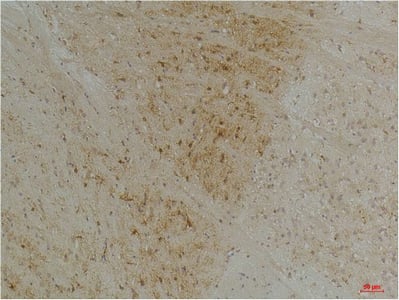
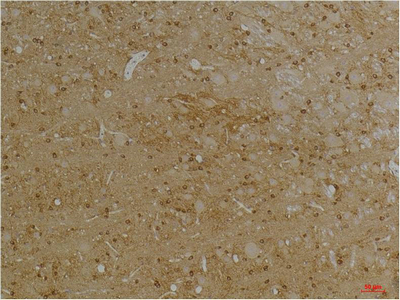
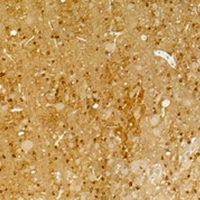
 Application Data
(Dilution: WB 1:1000-2000, IHC 1:100-200)
Application Data
(Dilution: WB 1:1000-2000, IHC 1:100-200)
Rabbit Kv1.1 potassium channel Polyclonal Antibody | anti-Kv1.1 antibody
Kv1.1 potassium channel Polyclonal Antibody
Gene Names
KCNA1; EA1; MK1; AEMK; HBK1; HUK1; MBK1; RBK1; KV1.1
Reactivity
Human, Mouse, Rat
Applications
Immunohistochemistry, Western Blot
Synonyms
Kv1.1 potassium channel, Antibody; Kv1.1 potassium channel Polyclonal Antibody; KCNA1; Potassium voltage-gated channel subfamily A member 1; Voltage-gated K (+) channel HuKI; Voltage-gated potassium channel HBK1; Voltage-gated potassium channel subunit Kv1.1; anti-Kv1.1 antibody
Host
Rabbit
Reactivity
Human, Mouse, Rat
Clonality
Polyclonal
Applicable Applications for anti-Kv1.1 antibody
IHC (Immunohistochemistry), WB (Western Blot)
Preparation and Storage
Maintain refrigerated at 2-8 degree C for up to 2 weeks. For long term storage store at -20 degree C in small aliquots to prevent freeze-thaw cycles.
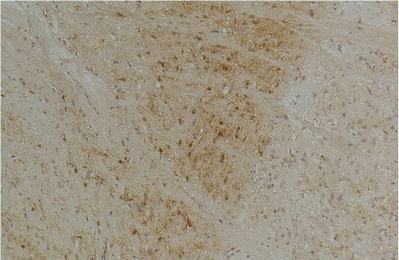
Application Data
(Dilution: WB 1:1000-2000, IHC 1:100-200)
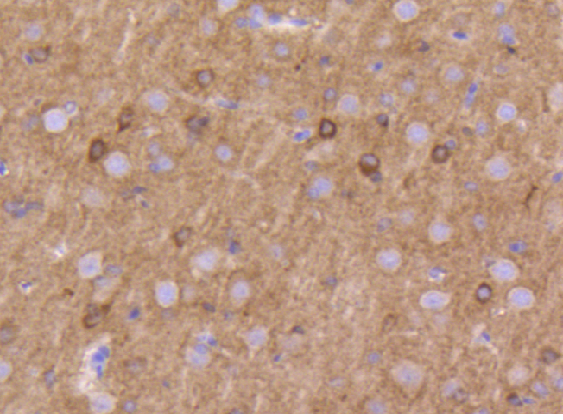
Application Data
(Dilution: WB 1:1000-2000, IHC 1:100-200)
Application Data
(Dilution: WB 1:1000-2000, IHC 1:100-200)
Application Data
(Dilution: WB 1:1000-2000, IHC 1:100-200)
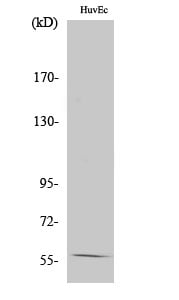
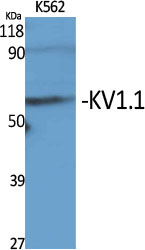
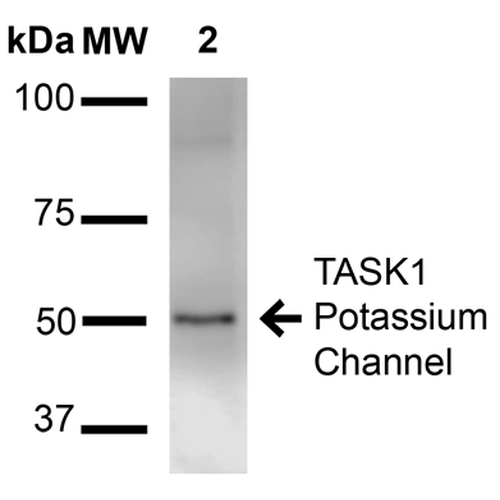
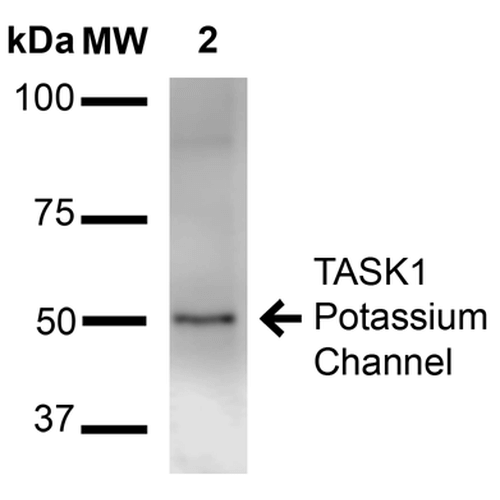
WB (Western Blot)
(Dilution: WB 1:1000-2000, IHC 1:100-200)
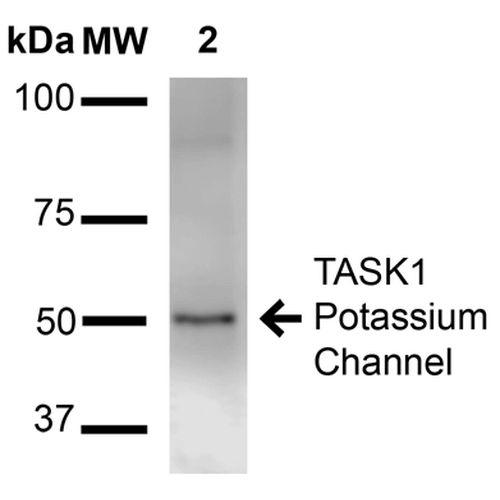
WB (Western Blot)
(Dilution: WB 1:1000-2000, IHC 1:100-200)
Related Product Information for anti-Kv1.1 antibody
Voltage-gated potassium channel that mediates transmembrane potassium transport in excitable membranes, primarily in the brain and the central nervous system, but also in the kidney (PubMed:17156368). Channel properties are modulated by cytoplasmic beta subunits that regulate the subcellular location of the alpha subunits and promote rapid inactivation of delayed rectifier potassium channels (PubMed:17156368). In vivo, membranes probably contain a mixture of heteromeric potassium channel complexes, making it difficult to assign currents observed in intact tissues to any particular potassium channel family member. Homotetrameric KCNA1 forms a delayed-rectifier potassium channel that opens in response to membrane depolarization, followed by slow spontaneous channel closure (PubMed:19968958, PubMed:19307729, PubMed:19903818). In contrast, a heterotetrameric channel formed by KCNA1 and KCNA4 shows rapid inactivation (PubMed:17136396). Regulates the frequency of neuronal action potential firing in response to mechanical stimuli, and plays a role in the perception of pain caused by mechanical stimuli, but does not play a role in the perception of pain due to heat stimuli (By similarity). Required for normal responses to auditory stimuli and precise location of sound sources, but not for sound perception (By similarity). The use of toxins that block specific channels suggest that it contributes to the regulation of the axonal release of the neurotransmitter dopamine (By similarity). Required for normal postnatal brain development and normal proliferation of neuronal precursor cells in the brain (By similarity). Plays a role in the reabsorption of Mg (2+) in the distal convoluted tubules in the kidney and in magnesium ion homeostasis, probably via its effect on the membrane potential (PubMed:19307729).
NCBI and Uniprot Product Information
NCBI GI #
NCBI GeneID
NCBI Accession #
NCBI GenBank Nucleotide #
Molecular Weight
56,466 Da
NCBI Official Full Name
potassium voltage-gated channel subfamily A member 1
NCBI Official Synonym Full Names
potassium voltage-gated channel, shaker-related subfamily, member 1 (episodic ataxia with myokymia)
NCBI Official Symbol
KCNA1
NCBI Official Synonym Symbols
EA1; MK1; AEMK; HBK1; HUK1; MBK1; RBK1; KV1.1
NCBI Protein Information
potassium voltage-gated channel subfamily A member 1; voltage-gated K(+) channel HuKI; voltage-gated potassium channel HBK1; voltage-gated potassium channel subunit Kv1.1
UniProt Protein Name
Potassium voltage-gated channel subfamily A member 1
UniProt Gene Name
KCNA1
UniProt Entry Name
KCNA1_HUMAN
Customer Reviews
Loading reviews...
Share Your Experience
Similar Products
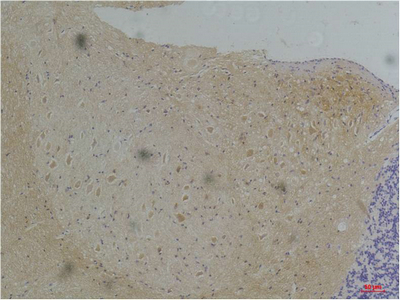
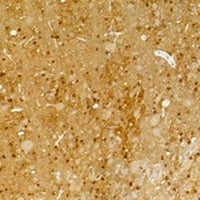
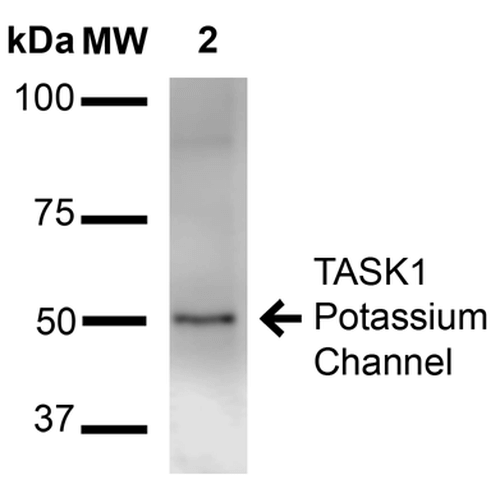
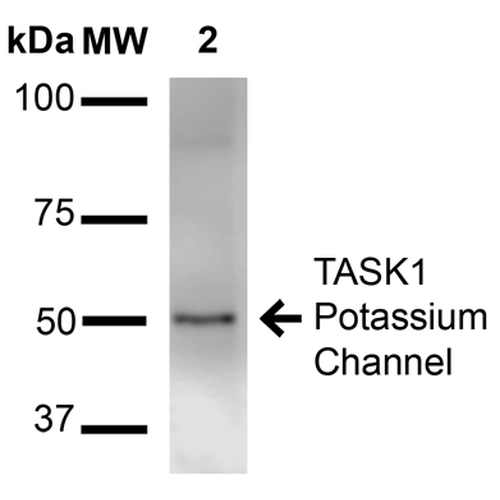
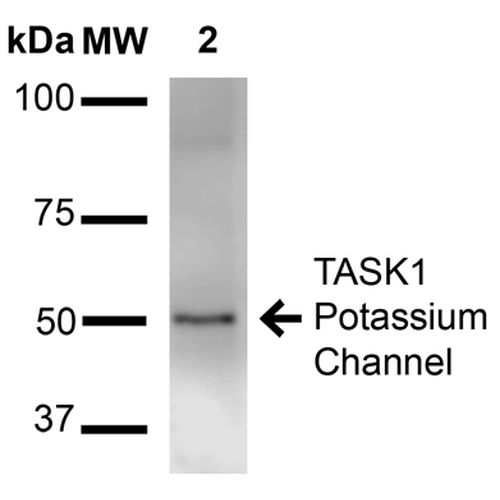
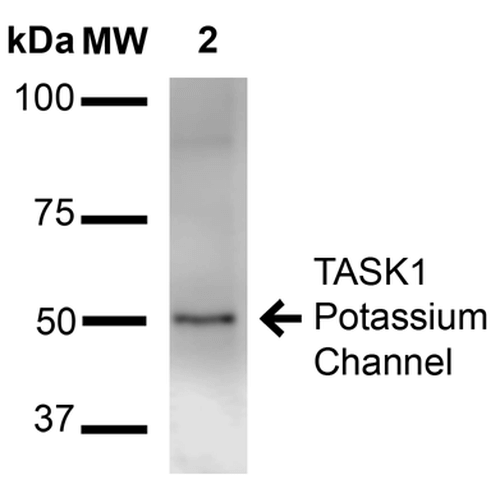
Product Notes
The Kv1.1 kcna1 (Catalog #AAA293745) is an Antibody produced from Rabbit and is intended for research purposes only. The product is available for immediate purchase. The Kv1.1 potassium channel Polyclonal Antibody reacts with Human, Mouse, Rat and may cross-react with other species as described in the data sheet. AAA Biotech's Kv1.1 potassium channel can be used in a range of immunoassay formats including, but not limited to, IHC (Immunohistochemistry), WB (Western Blot). Researchers should empirically determine the suitability of the Kv1.1 kcna1 for an application not listed in the data sheet. Researchers commonly develop new applications and it is an integral, important part of the investigative research process. It is sometimes possible for the material contained within the vial of "Kv1.1 potassium channel, Polyclonal Antibody" to become dispersed throughout the inside of the vial, particularly around the seal of said vial, during shipment and storage. We always suggest centrifuging these vials to consolidate all of the liquid away from the lid and to the bottom of the vial prior to opening. Please be advised that certain products may require dry ice for shipping and that, if this is the case, an additional dry ice fee may also be required.Precautions
All products in the AAA Biotech catalog are strictly for research-use only, and are absolutely not suitable for use in any sort of medical, therapeutic, prophylactic, in-vivo, or diagnostic capacity. By purchasing a product from AAA Biotech, you are explicitly certifying that said products will be properly tested and used in line with industry standard. AAA Biotech and its authorized distribution partners reserve the right to refuse to fulfill any order if we have any indication that a purchaser may be intending to use a product outside of our accepted criteria.Disclaimer
Though we do strive to guarantee the information represented in this datasheet, AAA Biotech cannot be held responsible for any oversights or imprecisions. AAA Biotech reserves the right to adjust any aspect of this datasheet at any time and without notice. It is the responsibility of the customer to inform AAA Biotech of any product performance issues observed or experienced within 30 days of receipt of said product. To see additional details on this or any of our other policies, please see our Terms & Conditions page.Item has been added to Shopping Cart
If you are ready to order, navigate to Shopping Cart and get ready to checkout.