Loading...

Skip to main content
Call us at +1-800-604-9114 for more information about our products or contact us online Need help? +1-800-604-9114 or contact us
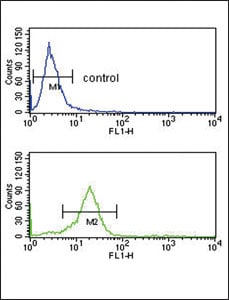
product-image-AAA287290_FCM11.jpg FCM/FACS (Flow Cytometry) (OPRM1 Antibody (Center) flow cytometry analysis of K562 cells (bottom histogram) compared to a negative control cell (top histogram).FITC-conjugated goat-anti-rabbit secondary antibodies were used for the analysis.)

Rabbit OPRM1 Polyclonal Antibody | anti-OPRM1 antibody

OPRM1 Antibody (Center)

Gene Names
OPRM1; MOP; MOR; LMOR; MOR1; OPRM; M-OR-1
Reactivity
Human, mouse
(Predicted Reactivity: Monkey, Pig, Rat)
Applications
Flow Cytometry, Functional Assay, Immunohistochemistry, ELISA, Western Blot
Purity
Peptide Affinity Purified Rabbit Polyclonal Antibody (Pab)
Synonyms
OPRM1, Antibody; OPRM1 Antibody (Center); Mu-type opioid receptor; M-OR-1; MOR-1; Mu opiate receptor; Mu opioid receptor; MOP; hMOP; OPRM1; MOR1; anti-OPRM1 antibody
Ordering
Host
Rabbit
Reactivity
Human, mouse
(Predicted Reactivity: Monkey, Pig, Rat)
Clonality
Polyclonal
Isotype
Rabbit Ig
Specificity
This OPRM1 antibody is generated from rabbits immunized with a KLH conjugated synthetic peptide between 161-187 amino acids from the Central region of human OPRM1.
Purity/Purification
Peptide Affinity Purified Rabbit Polyclonal Antibody (Pab)
Form/Format
Purified polyclonal antibody supplied in PBS with 0.09% (W/V) sodium azide. This antibody is purified through a protein A column, followed by peptide affinity purification.
Sequence Positions
161-187
Sequence Length
186
Applicable Applications for anti-OPRM1 antibody
FCM/FACS (Flow Cytometry), IHC (Immunohistochemistry), ELISA, WB (Western Blot)
Calculated MW
44779
Function
Receptor for endogenous opioids such as beta-endorphin and endomorphin. Receptor for natural and synthetic opioids including morphine, heroin, DAMGO, fentanyl, etorphine, buprenorphin and methadone. Agonist binding to the receptor induces coupling to an inactive GDP-bound heterotrimeric G-protein complex and subsequent exchange of GDP for GTP in the G-protein alpha subunit leading to dissociation of the G-protein complex with the free GTP-bound G-protein alpha and the G-protein beta- gamma dimer activating downstream cellular effectors. The agonist- and cell type-specific activity is predominantly coupled to pertussis toxin-sensitive G(i) and G(o) G alpha proteins, GNAI1, GNAI2, GNAI3 and GNAO1 isoforms Alpha-1 and Alpha-2, and to a lesser extent to pertussis toxin-insensitive G alpha proteins GNAZ and GNA15. They mediate an array of downstream cellular responses, including inhibition of adenylate cyclase activity and both N-type and L-type calcium channels, activation of inward rectifying potassium channels, mitogen-activated protein kinase (MAPK), phospholipase C (PLC), phosphoinositide/protein kinase (PKC), phosphoinositide 3-kinase (PI3K) and regulation of NF-kappa-B. Also couples to adenylate cyclase stimulatory G alpha proteins. The selective temporal coupling to G-proteins and subsequent signaling can be regulated by RGSZ proteins, such as RGS9, RGS17 and RGS4. Phosphorylation by members of the GPRK subfamily of Ser/Thr protein kinases and association with beta-arrestins is involved in short-term receptor desensitization. Beta-arrestins associate with the GPRK-phosphorylated receptor and uncouple it from the G-protein thus terminating signal transduction. The phosphorylated receptor is internalized through endocytosis via clathrin-coated pits which involves beta-arrestins. The activation of the ERK pathway occurs either in a G-protein-dependent or a beta-arrestin-dependent manner and is regulated by agonist- specific receptor phosphorylation. Acts as a class A G-protein coupled receptor (GPCR) which dissociates from beta-arrestin at or near the plasma membrane and undergoes rapid recycling. Receptor down-regulation pathways are varying with the agonist and occur dependent or independent of G-protein coupling. Endogenous ligands induce rapid desensitization, endocytosis and recycling whereas morphine induces only low desensitization and endocytosis. Heterooligomerization with other GPCRs can modulate agonist binding, signaling and trafficking properties. Involved in neurogenesis. Isoform 12 couples to GNAS and is proposed to be involved in excitatory effects. Isoform 16 and isoform 17 do not bind agonists but may act through oligomerization with binding- competent OPRM1 isoforms and reduce their ligand binding activity.
Cellular location
Cell membrane; Multi-pass membrane protein
Tissue Location
Expressed in brain. Isoform 16 and isoform 17 are detected in brain.
Preparation and Storage
Maintain refrigerated at 2-8°C for up to 2 weeks. For long term storage store at -20°C in small aliquots to prevent freeze-thaw cycles.

FCM/FACS (Flow Cytometry)

(OPRM1 Antibody (Center) flow cytometry analysis of K562 cells (bottom histogram) compared to a negative control cell (top histogram).FITC-conjugated goat-anti-rabbit secondary antibodies were used for the analysis.)

product-image-AAA287290_FCM11.jpg FCM/FACS (Flow Cytometry) (OPRM1 Antibody (Center) flow cytometry analysis of K562 cells (bottom histogram) compared to a negative control cell (top histogram).FITC-conjugated goat-anti-rabbit secondary antibodies were used for the analysis.)

IHC (Immunohiostchemistry)

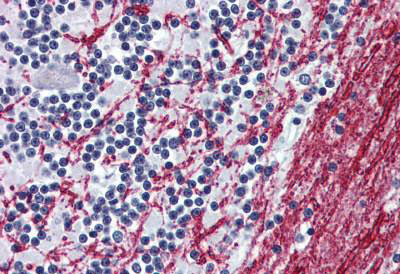
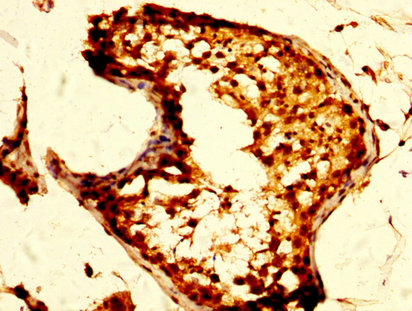
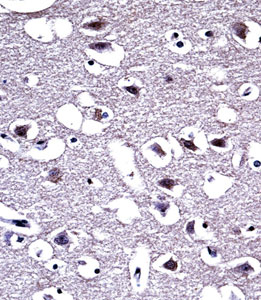
(OPRM1 Antibody (Center) (AAA287290)immunohistochemistry analysis in formalin fixed and paraffin embedded human brain tissue followed by peroxidase conjugation of the secondary antibody and DAB staining.This data demonstrates the use of OPRM1 Antibody (Center) for immunohistochemistry. Clinical relevance has not been evaluated.)

product-image-AAA287290_IHC13.jpg IHC (Immunohiostchemistry) (OPRM1 Antibody (Center) (AAA287290)immunohistochemistry analysis in formalin fixed and paraffin embedded human brain tissue followed by peroxidase conjugation of the secondary antibody and DAB staining.This data demonstrates the use of OPRM1 Antibody (Center) for immunohistochemistry. Clinical relevance has not been evaluated.)

WB (Western Blot)

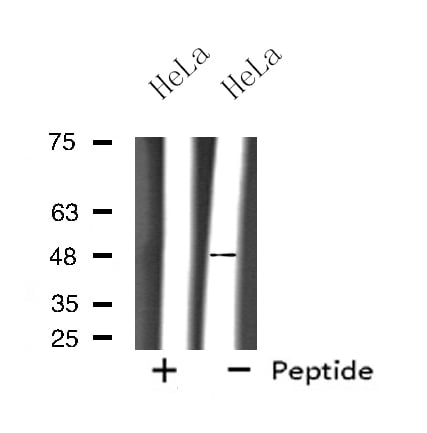
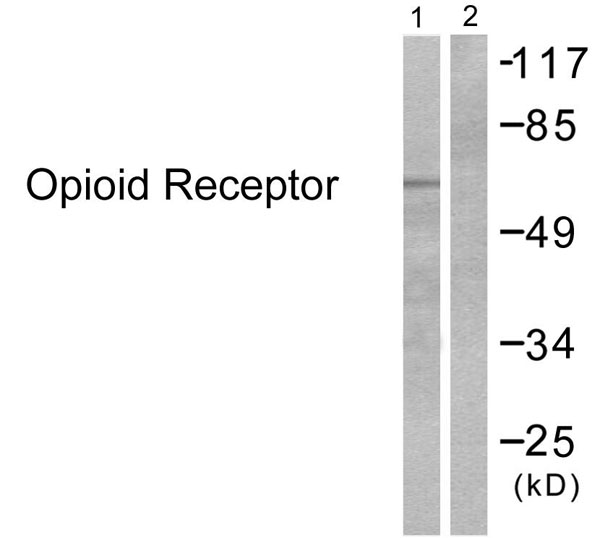
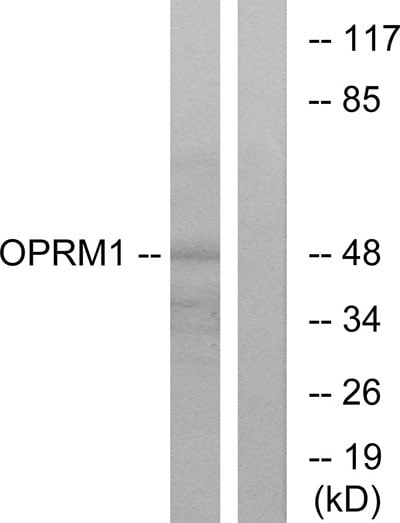
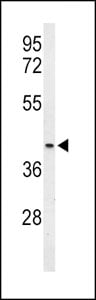
(Western blot analysis of OPRM1 Antibody (Center) in mouse heart tissue lysates (35ug/lane). OPRM1 (arrow) was detected using the purified Pab.)

product-image-AAA287290_WB15.jpg WB (Western Blot) (Western blot analysis of OPRM1 Antibody (Center) in mouse heart tissue lysates (35ug/lane). OPRM1 (arrow) was detected using the purified Pab.)
Related Product Information for anti-OPRM1 antibody
OPRM1 is the mu opioid receptor, which is the primary site of action for the most commonly used opioids, including morphine, heroin, fentanyl, and methadone. It is also the primary receptor for endogenous opioid peptides beta-endorphin (see POMC, MIM 176830) and the enkephalins (see PENK, MIM 131330). The OPRM1 receptor is a membrane of the G protein-coupled receptor family (Bond et al., 1998 [PubMed 9689128]). There are at least 3 types of opioid receptors, mu, kappa (OPRK1; MIM 165196), and delta, each with a distinct pharmacologic profile.
Product Categories/Family for anti-OPRM1 antibody
References
Bare,L.A., et.al., FEBS Lett. 354 (2), 213-216 (1994)
Wang,J.B., et.al., FEBS Lett. 338 (2), 217-222 (1994)

NCBI and Uniprot Product Information

NCBI GI #
NCBI GeneID
NCBI GenBank Nucleotide #
Molecular Weight
44779
NCBI Official Full Name
mu-type opioid receptor isoform MOR-1
NCBI Official Synonym Full Names
opioid receptor, mu 1
NCBI Official Symbol
OPRM1
NCBI Official Synonym Symbols
MOP; MOR; LMOR; MOR1; OPRM; M-OR-1
NCBI Protein Information
mu-type opioid receptor
UniProt Protein Name
Mu-type opioid receptor
UniProt Gene Name
OPRM1
UniProt Synonym Gene Names
MOR1; M-OR-1; MOR-1; MOP; hMOP
UniProt Entry Name
OPRM_HUMAN

Similar Products

Product Notes

The OPRM1 oprm1 (Catalog #AAA287290) is an Antibody produced from Rabbit and is intended for research purposes only. The product is available for immediate purchase. The immunogen sequence is 161-187. The OPRM1 Antibody (Center) reacts with Human, mouse (Predicted Reactivity: Monkey, Pig, Rat) and may cross-react with other species as described in the data sheet. AAA Biotech's OPRM1 can be used in a range of immunoassay formats including, but not limited to, FCM/FACS (Flow Cytometry), IHC (Immunohistochemistry), ELISA, WB (Western Blot). Researchers should empirically determine the suitability of the OPRM1 oprm1 for an application not listed in the data sheet. Researchers commonly develop new applications and it is an integral, important part of the investigative research process. It is sometimes possible for the material contained within the vial of "OPRM1, Polyclonal Antibody" to become dispersed throughout the inside of the vial, particularly around the seal of said vial, during shipment and storage. We always suggest centrifuging these vials to consolidate all of the liquid away from the lid and to the bottom of the vial prior to opening. Please be advised that certain products may require dry ice for shipping and that, if this is the case, an additional dry ice fee may also be required.

Precautions

All products in the AAA Biotech catalog are strictly for research-use only, and are absolutely not suitable for use in any sort of medical, therapeutic, prophylactic, in-vivo, or diagnostic capacity. By purchasing a product from AAA Biotech, you are explicitly certifying that said products will be properly tested and used in line with industry standard. AAA Biotech and its authorized distribution partners reserve the right to refuse to fulfill any order if we have any indication that a purchaser may be intending to use a product outside of our accepted criteria.

Disclaimer

Though we do strive to guarantee the information represented in this datasheet, AAA Biotech cannot be held responsible for any oversights or imprecisions. AAA Biotech reserves the right to adjust any aspect of this datasheet at any time and without notice. It is the responsibility of the customer to inform AAA Biotech of any product performance issues observed or experienced within 30 days of receipt of said product. To see additional details on this or any of our other policies, please see our Terms & Conditions page.

Item has been added to Shopping Cart

If you are ready to order, navigate to Shopping Cart and get ready to checkout.

Submit a Question

Please complete the form below and a representative will contact you as soon as possible.

Request more Information

Please complete the form below and a representative will contact you as soon as possible.

Request a Manual

Please complete the form below and a representative will contact you as soon as possible.

Request a Quote

Please complete the form below and a representative will contact you as soon as possible.