
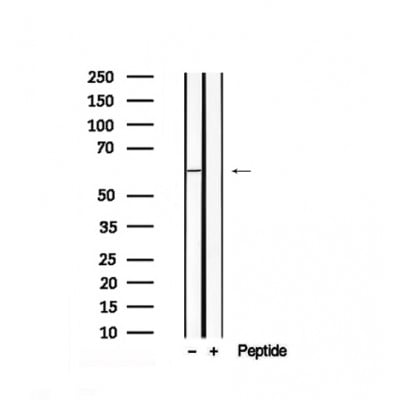
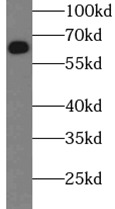
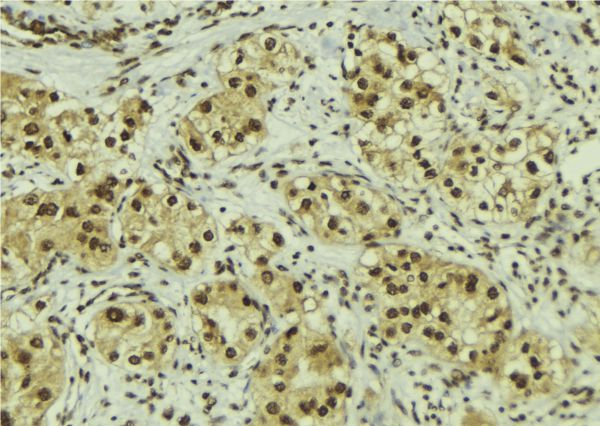
 WB (Western Blot)
(Western blot analysis of extracts from Hela, using Phospho-P62/SQSTM1(S28)Antibody.)
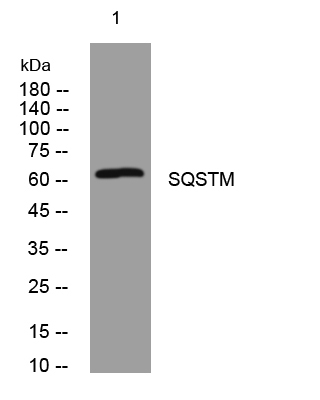
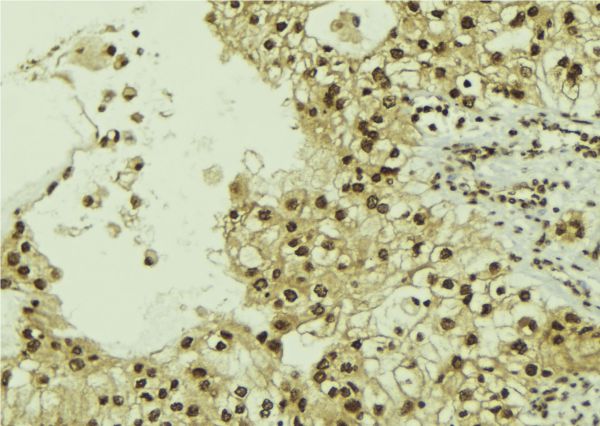
WB (Western Blot)
(Western blot analysis of extracts from Hela, using Phospho-P62/SQSTM1(S28)Antibody.)
Rabbit SQSTM1/p62 Polyclonal Antibody | anti-SQSTM1/p62 antibody
Phospho-SQSTM1/p62 (Ser28) Antibody
Gene Names
SQSTM1; p60; p62; A170; OSIL; PDB3; ZIP3; p62B
Reactivity
Human, Mouse, RatPredicted Reactivity: Pig (83%), Bovine (83%), Rabbit (83%)
Applications
ELISA, Western Blot
Purity
The antibody is from purified rabbit serum by affinity purification via sequential chromatography on phospho-peptide and non-phospho-peptide affinity columns.
Synonyms
SQSTM1/p62, Antibody; Phospho-SQSTM1/p62 (Ser28) Antibody; A170; DMRV; EBI 3 associated protein of 60kDa; EBI 3 associated protein p60; EBI3 associated protein of 60kDa; EBI3 associated protein p60; EBI3-associated protein of 60kDa; EBIAP; FTDALS3; MGC127197; ORCA; OSF-6; Osi; OSIL; Oxidative stress induced like; p60; p62; p62B; Paget disease of bone 3; PDB 3; PDB3; Phosphotyrosine independent ligand for the Lck SH2 domain of 62kDa; Phosphotyrosine independent ligand for the Lck SH2 domain p62; Phosphotyrosine-independent ligand for the Lck SH2 domain of 62kDa; PKC-zeta-interacting protein; Protein kinase C-zeta-interacting protein; Sequestosome 1; Sequestosome-1; SQSTM 1; SQSTM_HUMAN; Sqstm1; STAP; STONE14; Ubiquitin binding protein p62; Ubiquitin-binding protein p62; ZIP 3; ZIP; ZIP3; anti-SQSTM1/p62 antibody
Host
Rabbit
Reactivity
Human, Mouse, Rat
Predicted Reactivity: Pig (83%), Bovine (83%), Rabbit (83%)
Predicted Reactivity: Pig (83%), Bovine (83%), Rabbit (83%)
Clonality
Polyclonal
Isotype
Rabbit IgG
Specificity
Phospho-SQSTM1/p62 (Ser28) Antibody detects endogenous levels of SQSTM1/p62 onlyPhospho-SQSTM1/p62 (Ser28) Antibody.
Tissue Specificity: Ubiquitously expressed.
Tissue Specificity: Ubiquitously expressed.
Purity/Purification
The antibody is from purified rabbit serum by affinity purification via sequential chromatography on phospho-peptide and non-phospho-peptide affinity columns.
Form/Format
Liquid. Rabbit IgG in phosphate buffered saline, pH7.4, 150mM NaCl, 0.02% sodium azide and 50% glycerol.
Concentration
1mg/ml (varies by lot)
Applicable Applications for anti-SQSTM1/p62 antibody
ELISA (Peptide ELISA), WB (Western Blot)
Immunogen
A synthesized peptide derived from human SQSTM1/p62 around the phosphorylation site of Ser28.
Conjugation
Unconjugated
Fragment
Fab fragment
Post Translational Modifications
Phosphorylated. May be phosphorylated by PRKCZ (By similarity). Phosphorylated in vitro by TTN. Phosphorylation at Ser-403 by ULK1 is stimulated by SESN2. Phosphorylated at Ser-403 by TBK1, leading to promote relocalization of 'Lys-63'-linked ubiquitinated STING1 to autophagosomes. Phosphorylation at Ser-349 by MTOR promotes interaction with KEAP1 and inactivation of the BCR (KEAP1) complex, promoting NFE2L2/NRF2 nuclear accumulation and expression of phase II detoxifying enzymes (By similarity).Ubiquitinated by RNF26: ubiquitinated SQSTM1 attracts specific vesicle-associated adapters, forming a molecular bridge that restrains cognate vesicles in the perinuclear region and organizes the endosomal pathway for efficient cargo transport. Deubiquitination by USP15 releases target vesicles for fast transport into the cell periphery. Ubiquitinated by the BCR (KEAP1) complex at Lys-420, increasing SQSTM1 sequestering activity and promoting its degradation. Ubiquitinated via 'Lys-29' and 'Lys-33'-linked polyubiquitination leading to xenophagic targeting of bacteria and inhibition of their replication.
Subunit Structure
Homooligomer or heterooligomer; may form homotypic arrays. Dimerization interferes with ubiquitin binding. Interacts directly with PRKCI and PRKCZ (Probable). Forms ternary complexes with PRKCZ and KCNAB2 or PRKCZ and GABBR3. Also interacts with KCNAB1, GABRR1, GABRR2 and GABRR3. Forms an NGF-induced complex with IKBKB, PRKCI and TRAF6 (By similarity). Interacts with EBI3, LCK, RASA1, PRKCZ, PRKCI, NR2F2, NTRK1, NTRK2, NTRK3, NBR1, MAP2K5, TRIM13, TRIM55 and MAPKAPK5. Interacts with the proteasome subunits PSMD4 and PSMC2. Interacts with K63-polyubiquitinated MAPT/TAU. Interacts with IKBKB through PRKCZ and PRKCI. Interacts with NGFR through TRAF6 and bridges that complex to NTRK1. Forms a complex with MAP2K5 and PRKCZ or PRKCI. Component of a ternary complex with PAWR and PRKCZ. Upon TNF-alpha stimulation, interacts with RIPK1 probably bridging IKBKB to the TNF-R1 complex composed of TNF-R1/TNFRSF1A, TRADD and RIPK1. Forms a complex with JUB/Ajuba, PRKCZ and TRAF6. Interacts with TRAF6 and CYLD. Identified in a complex with TRAF6 and CYLD (By similarity). Identified in a heterotrimeric complex with ubiquitin and ZFAND5, where ZFAND5 and SQSTM1 both interact with the same ubiquitin molecule. Directly interacts with MAP1LC3A and MAP1LC3B, as well as with other MAP1 LC3 family members, including GABARAP, GABARAPL1 and GABARAPL2; these interactions are necessary for the recruitment MAP1 LC3 family members to inclusion bodies containing polyubiquitinated protein aggregates and for their degradation by autophagy. Interacts with FHOD3. Interacts with TRMI5. Interacts with SESN1. Interacts with SESN2. Interacts with ULK1. Interacts with UBD. Interacts with WDR81; the interaction is direct and regulates the interaction of SQSTM1 with ubiquitinated proteins. Interacts with WDFY3; this interaction is required to recruit WDFY3 to cytoplasmic bodies and to PML bodies. Interacts with TRIM23. Interacts with LRRC25. Interacts with TRIM50. Interacts with TRIM16. Interacts with STING1; leading to relocalization of STING1 to autophagosomes. Interacts (when phosphorylated at Ser-349) with KEAP1; the interaction is direct and inactivates the BCR (KEAP1) complex by sequestering KEAP1 in inclusion bodies, promoting its degradation.
Similarity
The UBA domain binds specifically 'Lys-63'-linked polyubiquitin chains of polyubiquitinated substrates. Mediates the interaction with TRIM55. Both the UBA and PB1 domains are necessary and sufficient for the localization into the ubiquitin-containing inclusion bodies.The PB1 domain mediates homooligomerization and interactions with FHOD3, MAP2K5, NBR1, PRKCI, PRKCZ and WDR81. Both the PB1 and UBA domains are necessary and sufficient for the localization into the ubiquitin-containing inclusion bodies.The ZZ-type zinc finger mediates the interaction with RIPK1.The LIR (LC3-interacting region) motif mediates the interaction with ATG8 family proteins.
Subcellular Location
Cytoplasm>Cytosol. Late endosome. Lysosome. Cytoplasmic vesicle>Autophagosome. Nucleus. Endoplasmic reticulum. Nucleus>PML body. Cytoplasm>Myofibril>Sarcomere.
Note: In cardiac muscle, localizes to the sarcomeric band (By similarity). Commonly found in inclusion bodies containing polyubiquitinated protein aggregates. In neurodegenerative diseases, detected in Lewy bodies in Parkinson disease, neurofibrillary tangles in Alzheimer disease, and HTT aggregates in Huntington disease. In protein aggregate diseases of the liver, found in large amounts in Mallory bodies of alcoholic and nonalcoholic steatohepatitis, hyaline bodies in hepatocellular carcinoma, and in SERPINA1 aggregates. Enriched in Rosenthal fibers of pilocytic astrocytoma. In the cytoplasm, observed in both membrane-free ubiquitin-containing protein aggregates (sequestosomes) and membrane-surrounded autophagosomes. Colocalizes with TRIM13 in the perinuclear endoplasmic reticulum. Co-localizes with TRIM5 in cytoplasmic bodies. When nuclear export is blocked by treatment with leptomycin B, accumulates in PML bodies.
Note: In cardiac muscle, localizes to the sarcomeric band (By similarity). Commonly found in inclusion bodies containing polyubiquitinated protein aggregates. In neurodegenerative diseases, detected in Lewy bodies in Parkinson disease, neurofibrillary tangles in Alzheimer disease, and HTT aggregates in Huntington disease. In protein aggregate diseases of the liver, found in large amounts in Mallory bodies of alcoholic and nonalcoholic steatohepatitis, hyaline bodies in hepatocellular carcinoma, and in SERPINA1 aggregates. Enriched in Rosenthal fibers of pilocytic astrocytoma. In the cytoplasm, observed in both membrane-free ubiquitin-containing protein aggregates (sequestosomes) and membrane-surrounded autophagosomes. Colocalizes with TRIM13 in the perinuclear endoplasmic reticulum. Co-localizes with TRIM5 in cytoplasmic bodies. When nuclear export is blocked by treatment with leptomycin B, accumulates in PML bodies.
Preparation and Storage
Store at -20 degree C. Stable for 12 months from date of receipt.
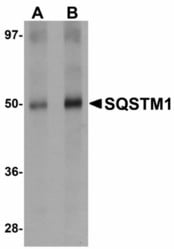
WB (Western Blot)
(Western blot analysis of extracts from Hela, using Phospho-P62/SQSTM1(S28)Antibody.)
WB (Western Blot)
(Western blot analysis of extracts from Hela, using Phospho-P62/SQSTM1(S28)Antibody.)
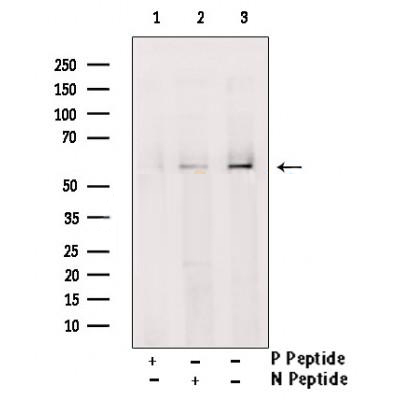
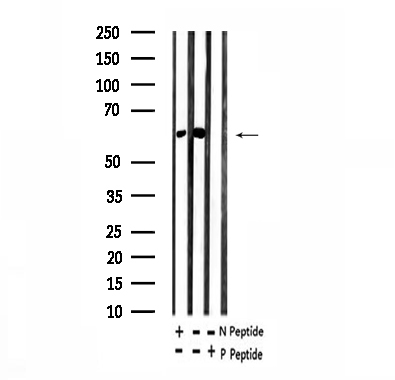
WB (Western Blot)
(Western blot analysis of extracts from Hela cells, using Phospho-P62/SQSTM1(Ser28) Antibody. Lane1 was treated with phospho-blocking peptide, Lane2 was treated with non-phospho-blocking peptide.)
WB (Western Blot)
(Western blot analysis of extracts from Hela cells, using Phospho-P62/SQSTM1(Ser28) Antibody. Lane1 was treated with phospho-blocking peptide, Lane2 was treated with non-phospho-blocking peptide.)
Related Product Information for anti-SQSTM1/p62 antibody
Autophagy receptor required for selective macroautophagy (aggrephagy). Functions as a bridge between polyubiquitinated cargo and autophagosomes. Interacts directly with both the cargo to become degraded and an autophagy modifier of the MAP1 LC3 family. Along with WDFY3, involved in the formation and autophagic degradation of cytoplasmic ubiquitin-containing inclusions (p62 bodies, ALIS/aggresome-like induced structures). Along with WDFY3, required to recruit ubiquitinated proteins to PML bodies in the nucleus. May regulate the activation of NFKB1 by TNF-alpha, nerve growth factor (NGF) and interleukin-1. May play a role in titin/TTN downstream signaling in muscle cells. May regulate signaling cascades through ubiquitination. Adapter that mediates the interaction between TRAF6 and CYLD (By similarity). May be involved in cell differentiation, apoptosis, immune response and regulation of K (+) channels. Involved in endosome organization by retaining vesicles in the perinuclear cloud: following ubiquitination by RNF26, attracts specific vesicle-associated adapters, forming a molecular bridge that restrains cognate vesicles in the perinuclear region and organizes the endosomal pathway for efficient cargo transport. Promotes relocalization of 'Lys-63'-linked ubiquitinated STING1 to autophagosomes. Acts as an activator of the NFE2L2/NRF2 pathway via interaction with KEAP1: interaction inactivates the BCR (KEAP1) complex, promoting nuclear accumulation of NFE2L2/NRF2 and subsequent expression of cytoprotective genes.
Adapter protein which binds ubiquitin and may regulate the activation of NFKB1 by TNF-alpha, nerve growth factor (NGF) and interleukin-1. May play a role in titin/TTN downstream signaling in muscle cells. May regulate signaling cascades through ubiquitination. Adapter that mediates the interaction between TRAF6 and CYLD (By similarity). May be involved in cell differentiation, apoptosis, immune response and regulation of K (+) channels.
Adapter protein which binds ubiquitin and may regulate the activation of NFKB1 by TNF-alpha, nerve growth factor (NGF) and interleukin-1. May play a role in titin/TTN downstream signaling in muscle cells. May regulate signaling cascades through ubiquitination. Adapter that mediates the interaction between TRAF6 and CYLD (By similarity). May be involved in cell differentiation, apoptosis, immune response and regulation of K (+) channels.
NCBI and Uniprot Product Information
NCBI GI #
NCBI GeneID
Molecular Weight
440
NCBI Official Full Name
Sequestosome-1
NCBI Official Synonym Full Names
sequestosome 1
NCBI Official Symbol
SQSTM1
NCBI Official Synonym Symbols
p60; p62; A170; OSIL; PDB3; ZIP3; p62B
NCBI Protein Information
sequestosome-1; EBIAP; EBI3-associated protein p60; oxidative stress induced like; ubiquitin-binding protein p62; EBI3-associated protein of 60 kDa; phosphotyrosine independent ligand for the Lck SH2 domain p62; phosphotyrosine-independent ligand for the
UniProt Protein Name
Sequestosome-1
UniProt Gene Name
SQSTM1
UniProt Synonym Gene Names
ORCA; OSIL; EBIAP; p60
UniProt Entry Name
SQSTM_HUMAN
Customer Reviews
Loading reviews...
Share Your Experience
Similar Products




Product Notes
The SQSTM1/p62 sqstm1 (Catalog #AAA329962) is an Antibody produced from Rabbit and is intended for research purposes only. The product is available for immediate purchase. The Phospho-SQSTM1/p62 (Ser28) Antibody reacts with Human, Mouse, Rat Predicted Reactivity: Pig (83%), Bovine (83%), Rabbit (83%) and may cross-react with other species as described in the data sheet. AAA Biotech's SQSTM1/p62 can be used in a range of immunoassay formats including, but not limited to, ELISA (Peptide ELISA), WB (Western Blot). Researchers should empirically determine the suitability of the SQSTM1/p62 sqstm1 for an application not listed in the data sheet. Researchers commonly develop new applications and it is an integral, important part of the investigative research process. It is sometimes possible for the material contained within the vial of "SQSTM1/p62, Polyclonal Antibody" to become dispersed throughout the inside of the vial, particularly around the seal of said vial, during shipment and storage. We always suggest centrifuging these vials to consolidate all of the liquid away from the lid and to the bottom of the vial prior to opening. Please be advised that certain products may require dry ice for shipping and that, if this is the case, an additional dry ice fee may also be required.Precautions
All products in the AAA Biotech catalog are strictly for research-use only, and are absolutely not suitable for use in any sort of medical, therapeutic, prophylactic, in-vivo, or diagnostic capacity. By purchasing a product from AAA Biotech, you are explicitly certifying that said products will be properly tested and used in line with industry standard. AAA Biotech and its authorized distribution partners reserve the right to refuse to fulfill any order if we have any indication that a purchaser may be intending to use a product outside of our accepted criteria.Disclaimer
Though we do strive to guarantee the information represented in this datasheet, AAA Biotech cannot be held responsible for any oversights or imprecisions. AAA Biotech reserves the right to adjust any aspect of this datasheet at any time and without notice. It is the responsibility of the customer to inform AAA Biotech of any product performance issues observed or experienced within 30 days of receipt of said product. To see additional details on this or any of our other policies, please see our Terms & Conditions page.Item has been added to Shopping Cart
If you are ready to order, navigate to Shopping Cart and get ready to checkout.