
Hantavirus Symptoms, Diagnosis, and Research Tools: A Complete Scientific Guide (2026)
 Cynthia
12 min read
Cynthia
12 min read
In this Article


All of the products listed in AAA Biotech’s catalog are strictly for research-use only (RUO).
Quick Overview
Hantavirus is a group of negative-sense RNA viruses carried by rodents worldwide. Two major syndromes affect humans: Hantavirus Pulmonary Syndrome (HPS) in the Americas and Hemorrhagic Fever with Renal Syndrome (HFRS) in Europe and Asia. Transmission occurs primarily through inhalation of contaminated aerosols from rodent urine and feces.
Early symptoms often resemble influenza and may include fever, muscle pain, headache, fatigue, and malaise. In severe cases, the disease can rapidly progress to life-threatening respiratory failure or acute kidney injury, depending on the hantavirus species involved.
Because clinical symptoms are not specific to hantavirus infection, laboratory testing is required for confirmation. Diagnosis is typically established through serological assays that detect hantavirus-specific IgM and IgG antibodies, most commonly by ELISA, or through RT-PCR testing to identify viral RNA in patient samples.
What Is Hantavirus?
Hantavirus is a group of single-stranded RNA viruses found in rodent populations worldwide. These viruses do not cause visible illness in their rodent hosts, which shed the virus throughout their lifetime in saliva, urine, and feces.
Humans acquire infection by inhaling aerosol particles from contaminated rodent excreta, a process called zoonotic transmission. Once inside the body, hantavirus targets endothelial cells (the cells lining blood vessels), causing increased vascular permeability that leads to severe, sometimes fatal complications.
Understanding hantavirus transmission routes is critical for both clinical diagnosis and laboratory safety protocols. The virus causes two distinct clinical syndromes depending on geographic region and viral strain.
Major Hantavirus Species
HFRS (Asia and Europe) is caused by Hantaan, Seoul, Dobrava-Belgrade, Saaremaa, Amur, and Puumala viruses. Hantaan virus, found mainly in China and Korea, causes the most severe form, with reported case fatality rates generally ranging from 5 to 15 percent.
Seoul virus, distributed worldwide via brown rats, produces milder disease with 1 to 2 percent mortality. Puumala virus in Northern Europe causes a mild form called nephropathia epidemica with less than 1 percent deaths.
HPS (Americas) is caused primarily by Sin Nombre virus (North America) and Andes virus (South America). Andes virus is epidemiologically important because it can spread person-to-person, a rare capability among hantaviruses.
Global Distribution Patterns
Hantavirus is recognized as an emerging infectious disease with cases confirmed across the Americas, Europe, and Asia.
The 2026 Andes virus cluster linked to the MV Hondius cruise ship demonstrated how hantavirus outbreaks can reach global attention. Beginning with a single case in Argentina, subsequent human-to-human transmission aboard the ship affected eight confirmed cases across multiple countries.
This event highlighted the importance of rapid surveillance, diagnostic capability, and understanding transmission routes in an increasingly interconnected world.
How Does Hantavirus Spread?
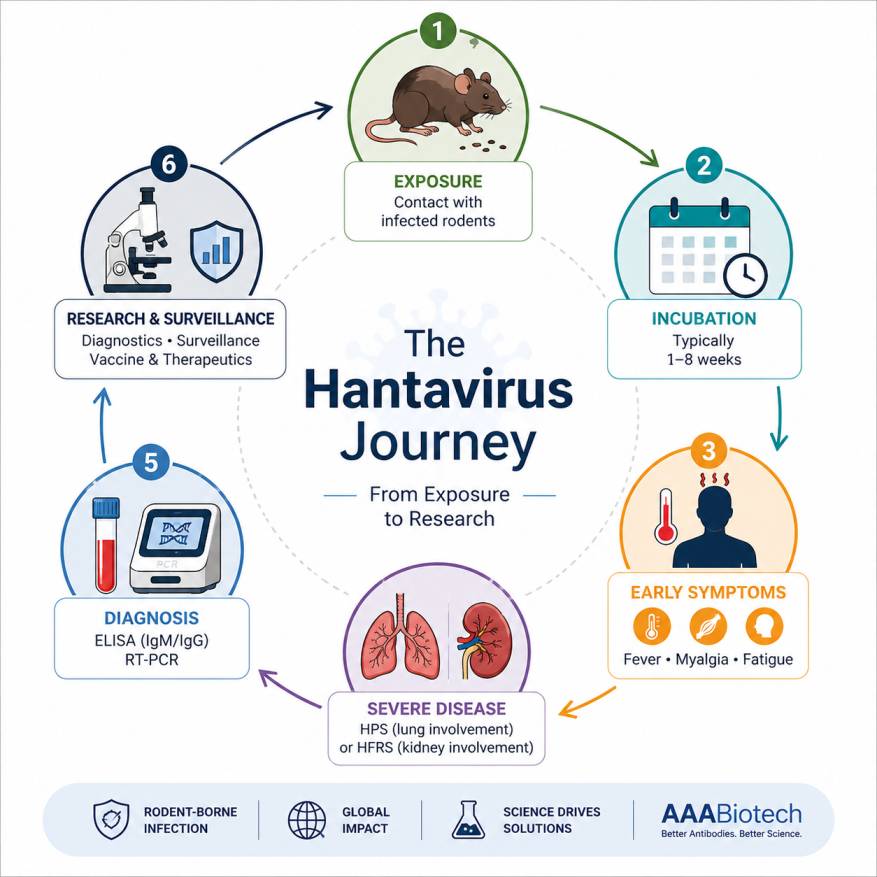
Hantavirus transmits to humans primarily through inhalation of aerosol particles contaminated with virus from rodent urine, feces, or saliva. This airborne route is the dominant transmission pathway.
Rarely, infection occurs through direct contact with infected rodents (bites or scratches) or handling contaminated materials without proper protection. Person-to-person transmission is extremely uncommon, with documented cases limited almost exclusively to Andes virus in close-contact settings.
Common Exposure Scenarios
- Cleaning or sweeping enclosed spaces where rodents nest (attics, sheds, garages) generates aerosol particles
- Sleeping or working in rodent-infested buildings with poor ventilation
- Handling stored grains, food, or other materials contaminated with rodent droppings
- Outdoor activities (camping, hiking) in endemic areas with high rodent populations
- Laboratory exposure through accidental aerosol generation during specimen handling requires adherence to biosafety level 2 enhanced practices when working with hantavirus specimens
What Makes Andes Virus Different?
Andes virus stands apart because it demonstrates human-to-human transmission capability. While standard rodent-to-human transmission occurs through environmental exposure, Andes virus can spread between infected and susceptible humans through respiratory droplets or salivary secretions.
This transmission requires prolonged or close contact, such as between household members, partners, or healthcare workers. The 2018 to 2019 outbreak in Argentine Chubut Province confirmed sustained person-to-person chains of infection, with some individuals causing multiple secondary cases.
Molecular studies show certain Andes virus strains possess genomic features that may facilitate human respiratory epithelium infection, explaining its unique transmissibility.
Table 1: Transmission Route Comparison
| Virus | Primary Route | Human-to-Human Transmission | Geographic Region |
|---|---|---|---|
| Sin Nombre | Rodent aerosol | No | North America |
| Andes virus | Rodent aerosol + respiratory droplets | Yes (rare) | South America |
| Hantaan | Rodent aerosol | No | Asia |
What Are the Symptoms of Hantavirus Infection?
Hantavirus infection progresses in two distinct phases: early (nonspecific) symptoms followed by a critical phase of severe, life-threatening complications.
Symptoms begin 1 to 8 weeks after exposure (average 2 to 4 weeks). Recognizing the progression matters because early intervention with supportive care dramatically improves outcomes.
Early Symptoms
The first phase lasts 3 to 7 days and includes:
- Fever (usually 38 degrees Celsius or 100.4 degrees Fahrenheit or higher)
- Myalgia (severe muscle and joint pain, especially in the thighs and lower back)
- Headache (often frontal)
- Chills and sweating
- Fatigue and malaise
- Abdominal discomfort, nausea, vomiting, or diarrhea
Advanced Symptoms
As the illness progresses (days 4 to 10), the second phase emerges with critical respiratory or renal complications:
In HPS (lung-dominant form):
- Cough (initially dry, may become productive)
- Shortness of breath and chest discomfort
- Rapid progression to severe respiratory distress and pulmonary edema (fluid in the lungs)
- Hypoxia (dangerously low blood oxygen) requiring mechanical ventilation
In HFRS (kidney-dominant form):
- Back or flank pain
- Decreased urine output (oliguria) progressing to acute kidney injury
- Hemorrhagic manifestations: petechiae (small red spots on skin), mucosal bleeding, or internal bleeding
- Thrombocytopenia (low platelet count)
- Possible shock or multi-organ failure in severe cases
How Is Hantavirus Diagnosed?
Clinical symptoms alone cannot diagnose hantavirus. Laboratory confirmation is required. The key to timely diagnosis is maintaining a high index of suspicion when a patient presents with fever, myalgia, and respiratory or renal symptoms after rodent exposure. Multiple diagnostic methods exist, each with distinct advantages and optimal timing windows.
Serological Testing
ELISA (Enzyme-Linked Immunosorbent Assay) detecting IgM and IgG antibodies is the gold standard diagnostic method. Most patients develop detectable IgM antibodies by the time clinical symptoms appear.
IgM indicates acute infection, while IgG appears later and persists for years, confirming past exposure or infection. Serological testing is simple, rapid, and requires only blood samples, making it ideal for clinical laboratories without specialized biosafety facilities.
High-quality hantavirus research antibodies and ELISA components are essential for validating assay performance and supporting diagnostic development.
RT-PCR
Reverse transcription PCR (RT-PCR) detects viral RNA directly and is most useful during the first week of illness, when viral RNA circulates in the bloodstream before robust antibody responses develop.
Real-time quantitative RT-PCR (RT-qPCR) offers sensitivity as high as 0.9 copies per microliter of RNA in optimized assays. This method confirms acute infection faster than serology and helps differentiate hantavirus from other viral hemorrhagic fevers, particularly in early disease stages.
Researchers developing RT-PCR assays benefit from sequence-validated primers and molecular detection reagents that accelerate assay validation and deployment.
Samples for RT-PCR include blood, respiratory secretions, or tissue. Laboratories must handle these materials in BSL-2 enhanced facilities due to aerosol hazard risk.
Immunohistochemistry
This technique uses fluorescently or enzyme-labeled antibodies to detect viral antigens directly in tissue samples. Immunohistochemistry is particularly valuable in postmortem diagnosis, allowing pathologists to identify hantavirus in lung or kidney tissue and understand tissue distribution of infection.
Multichannel immunofluorescence can simultaneously detect viral antigens and cellular markers, revealing that hantavirus replicates in endothelial cells, alveolar epithelium, and macrophages.
Sequencing Approaches
Whole-genome or targeted segment sequencing identifies the specific hantavirus species or strain. This is epidemiologically important for outbreak investigation and strain confirmation.
For example, sequencing of the 2026 Andes virus cruise ship cluster confirmed that all cases were caused by the same ANDV strain, supporting the human-to-human transmission hypothesis.
Table 2: Diagnostic Methods Comparison
| Method | Sample Type | Advantages | Limitations | Typical Use |
|---|---|---|---|---|
| IgM ELISA | Serum | Fast, simple, BSL-2 compatible | Early cases may test negative | Clinical confirmation |
| RT-PCR | Blood, sputum, tissue | Detects infection early; highly specific | Requires BSL-3 facilities and technical expertise | Early diagnosis |
| Immunohistochemistry | Tissue | Localizes virus within tissues | Primarily useful for postmortem analysis | Research and pathology |
| Sequencing | Blood, tissue | Provides strain identification and outbreak tracking | Complex, time-consuming, and expensive | Epidemiological investigations |
What Challenges Exist in Hantavirus Detection?
Despite the availability of multiple diagnostic tools, hantavirus detection remains challenging in clinical and research settings. Understanding these obstacles helps laboratories optimize workflows and avoid missed diagnoses.
Table 3: Hantavirus Detection Troubleshooting Matrix
| Challenge | Why It Matters | Impact on Diagnosis | Solution |
|---|---|---|---|
| Nonspecific symptoms | Flu-like fever mimics many viral illnesses | Easy to miss without exposure history | Ask about rodent exposure and maintain a high index of suspicion |
| Early seronegative window | IgM antibodies may be absent during the first 3–5 days | Negative ELISA does not exclude infection | Use RT-PCR and repeat serology after approximately one week |
| Assay sensitivity variation | Different ELISA kits vary in analytical performance | False-negative results may occur | Use validated, quality-assured diagnostic assays |
| Differential diagnosis | HPS can closely resemble acute respiratory distress syndrome (ARDS) | Hantavirus infection may be overlooked | Include hantavirus in the differential diagnosis when clinically appropriate |
Research Tools Supporting Hantavirus Studies
Hantavirus researchers and diagnostic developers depend on high-quality, specialized reagents to design assays, understand pathogenesis, and develop therapeutics. AAA Biotech supplies the reagents that accelerate discovery and enable laboratories to build robust diagnostic pipelines. Some tools include:
Recombinant Antigens
Recombinant hantavirus antigens, including nucleocapsid protein (N) and envelope glycoproteins (Gn and Gc), serve as the foundation for ELISA assay development, immunological studies, and vaccine candidates.
These proteins are produced in expression systems (bacterial, yeast, or mammalian cells) to generate full-length or truncated antigens with high purity and consistency.
AAA Biotech offers recombinant hantavirus proteins designed for immunoassay development and antigen characterization, including the Hantavirus Nucleocapsid Antigen and Hantavirus Capsid Recombinant Protein. These proteins support applications such as Western blotting, lateral flow assay development, and other immunodiagnostic workflows.
Research Antibodies
Monoclonal and polyclonal antibodies targeting hantavirus antigens enable immunoassays, flow cytometry, immunofluorescence, and tissue staining. Species-specific antibodies differentiate Hantaan from Puumala virus.
For example, AAA Biotech provides a Hantavirus (Hantaan) Monoclonal Antibody, Clone B5D9 generated against the recombinant nucleocapsid protein of the Hantaan 76-118 strain. Such validated antibodies support ELISA development and other immunological applications.
When building immunological studies, access to characterized hantavirus antibodies enables faster assay optimization and more reliable results.
Assay Development Components
Developing a hantavirus diagnostic assay requires integrated components: coating antigens, detection antibodies, enzyme conjugates, substrates, and control samples.
AAA Biotech offers human IgM ELISA kits that support serological detection workflows, alongside recombinant antigens and detection antibodies that can be incorporated into custom assay designs.
Molecular Detection Reagents
RT-PCR and RT-qPCR assay development requires sequence-validated primer sets, hydrolysis probes, positive control RNA, and master mixes. Reference materials sourced from characterized hantavirus clinical specimens or in vitro transcribed RNA enable laboratories to validate assay sensitivity and specificity.
Positive controls for multiple hantavirus species (Sin Nombre, Andes, Hantaan, Puumala) allow multiplex designs that detect diverse geographic strains in a single reaction.
Current Trends in Hantavirus Research
The 2026 Andes virus outbreak aboard the MV Hondius and sustained elevated case counts in South America have catalyzed renewed research momentum. Four key trends now drive the hantavirus field forward.
Surveillance Strategies
Enhanced molecular epidemiology and real-time genomic sequencing have become essential surveillance tools. In May 2026, the French National Agency for Research on AIDS and Viral Hepatitis (ANRS MIE) activated a Level 1 Outbreak Response unit to define research priorities and establish enhanced scientific surveillance for the hantavirus cluster.
Whole-genome sequencing rapidly identifies viral strains, tracks transmission chains, and detects mutations that might enhance transmissibility or virulence. Rodent population monitoring using capture-recapture and genetic methods helps predict outbreak risk in endemic regions.
Diagnostic Innovation
Rapid point-of-care tests (POCTs) and multiplexed assays are advancing. Lateral flow immunochromatographic assays for IgM detection are under development to enable bedside testing in resource-limited settings.
Multiplex RT-qPCR platforms simultaneously detect multiple hantavirus species and differentiate from other hemorrhagic fevers (Dengue, Yellow Fever). Digital PCR and digital droplet PCR (ddPCR) improve sensitivity for early-stage viremia detection when viral loads are minimal.
Therapeutic Development
While supportive care remains the cornerstone of hantavirus treatment, antiviral therapeutics and immunomodulatory approaches are under investigation. Ribavirin (an RNA polymerase inhibitor) has shown modest benefit in HFRS when given intravenously early in disease.
Novel antivirals targeting viral proteases, polymerases, and glycoprotein processing are in preclinical development. Monoclonal antibody therapeutics that neutralize viral entry are being tested in animal models.
Vaccine Research
Vaccine development is advancing across multiple platforms. A first-in-human Phase 1 trial of an Andes virus DNA vaccine evaluated safety and immunogenicity in healthy adults.
The vaccine encoded the Andes virus Gn and Gc envelope glycoproteins and was administered by PharmaJet's Stratis needle-free jet injection, with published results reporting the candidate vaccine was safe and induced a durable immune response.
In January 2024, the UK government awarded a £1.7 million contract to researchers at the University of Bath and its spinout, EnsiliTech, to develop the world's first thermally stable mRNA vaccine. The project utilizes a patented ensilication technology that encases mRNA in tiny silica layers, enabling transport and storage at room temperature (refrigeration-free) rather than the standard –70°C.
Supporting Hantavirus Research Efforts
Hantavirus research faces real obstacles. Diagnostic laboratories lack validated assay kits for emerging strains. Researchers struggle to source high-purity, species-specific antigens and antibodies.
AAA Biotech develops recombinant hantavirus antigens, produces validated antibodies, and supplies molecular detection reagents that meet the highest standards. We understand the biosafety and technical requirements for hantavirus work.
We collaborate directly with diagnostic developers, researchers, and public health laboratories to translate scientific insights into tools that protect human health.
Explore our hantavirus product catalog, request quotes for custom reagent development, or contact our scientific team to discuss your specific research needs. Together, we can advance hantavirus diagnostics and prevention.
Faq's
How long can hantaviruses remain infectious in the environment?
Hantaviruses can survive for days to weeks in dried rodent excreta, especially in cool, dark conditions. Heat, UV light, bleach, and alcohol-based disinfectants effectively inactivate the virus.
Which sample types are commonly collected in hantavirus research studies?
Common specimens include serum or whole blood, respiratory samples, tissue specimens, urine, saliva, and rodent tissues. In clinical settings, serum is most often used for diagnostic testing.
What biosafety precautions are recommended when studying hantaviruses?
Serological testing and basic RT-PCR generally require enhanced BSL-2 practices, while viral culture and infected animal work require BSL-3 containment. Appropriate PPE, biosafety cabinets, and aerosol-minimizing procedures are essential.
Can archived specimens be used in hantavirus investigations?
Yes. Archived serum, FFPE tissues, and frozen samples can support serology, immunohistochemistry, RT-PCR, and sequencing studies when properly stored.
What factors affect the sensitivity of serological assays?
Sensitivity depends on the timing of sample collection, antigen quality, assay design, cross-reactivity, and the patient's immune status.
When should researchers consider custom assay development?
Custom assays may be needed when commercial tests lack the required sensitivity or specificity, when strain-specific detection is necessary, or when developing multiplex or point-of-care platforms.
Are commercially available hantavirus research reagents available?
Yes. AAA Biotech offers hantavirus research reagents, including recombinant antigens, monoclonal antibodies, ELISA kits, and custom solutions to support assay development and immunological studies.
How can researchers select the right tools for their study objectives?
Begin by defining your research goals and target virus. Then choose reagents based on your assay requirements, biosafety capabilities, and desired performance characteristics.
Lead Clinical Research Coordinator (LCRC)
Cynthia Lee is the President of AAA Biotech and specializes in understanding highly validated and characterized monoclonal/polyclonal antibodies, recombinant proteins, and ELISA kits.
Related Posts