What Are Antibodies: Structure, Function & Types
 Cynthia
7 min read
Cynthia
7 min read
In this Article


All of the products listed in AAA Biotech’s catalog are strictly for research-use only (RUO).

7 Key Takeaways
- Antibodies are proteins that help defend the body against harmful invaders.
- Each B cell produces antibodies designed to recognize a specific antigen.
- Antibodies attach to antigens and help the immune system identify and remove them.
- Antibodies have a Y-shaped structure with two antigen-binding sites.
- The five main types of antibodies are IgG, IgM, IgA, IgE, and IgD.
- Antibodies are widely used in diagnostic tests and disease detection.
- Vaccines help the body prepare antibodies and build protection against future infections.
So, What Are Antibodies?
It is made by the immune system when something harmful, called an antigen, enters the body.
Antibodies find and attach to these antigens to help remove them. Antigens can be many things, like germs that cause disease or poisons like insect venom.
Here is what you need to know -
How Antibodies Work?
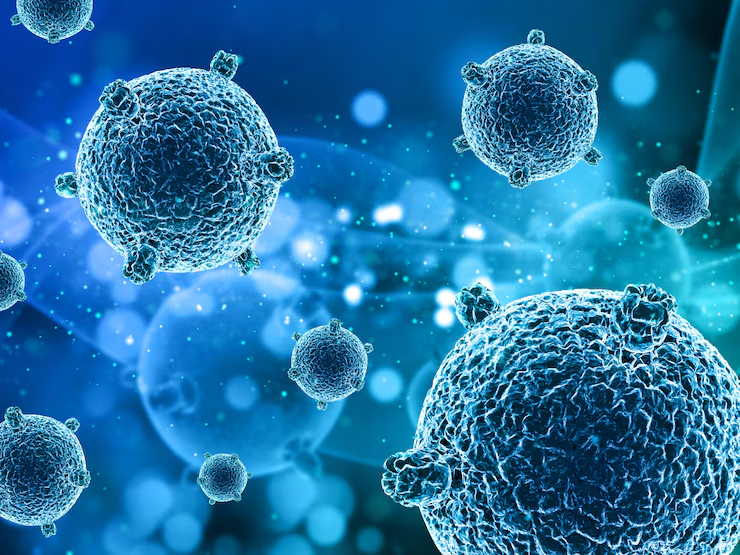
When something foreign, like a virus or bacteria, enters the body, the immune system can tell it's not part of the body because it looks different on the surface. To fight it, the immune system uses several tools—one of the most important being antibodies.
Antibodies are made by special white blood cells called B cells (or B lymphocytes).
When a harmful substance (called an antigen) sticks to the surface of a B cell, the B cell gets activated.
It then makes many copies of itself. These copies, called plasma cells, start releasing millions of antibodies into the blood and lymph (a fluid that helps fight infections).
What Antibodies Do?
Antibodies travel through the body looking for antigens that match the one that started the immune response. They attach to these antigens and help stop them in different ways:
1. Antitoxins: Some antibodies can neutralize poisons (toxins) by changing their chemical structure.
2. Blocking invaders: Other antibodies stick to germs and stop them from moving or entering body cells.
3. Calling for help: Sometimes, when antibodies cover an invader, they trigger a chemical reaction called the complement system.
This can:
- Make the invader burst open.
- Attract special immune cells to swallow and destroy the invader.
Once this process starts, antibody production continues for several days—until the body removes all the antigens. After that, the antibodies stay in the body for months, giving long-lasting protection against that same invader.
Antibodies and B Cells
B cells and antibodies are a powerful team in the immune system.
Their main job is to spot harmful invaders (called antigens) and make large amounts of antibodies to help remove them from the body.
- Each B cell can only recognize one specific type of antigen, but the body has many different B cells, so together they can detect almost any invader.
- B cells recognize antigens using special proteins on their surface called antigen receptors. These are like built-in antibodies that stay attached to the B cell.
How B Cells Recognize Antigens?
- All the antigen receptors on one B cell are the same.
- Different B cells have slightly different receptors that can recognize different parts of different antigens.
- The part of the antigen that a B cell binds to is called an epitope (or antigenic determinant). It’s like a small piece of the antigen’s surface.
For a B cell to respond, the shape of its receptor must match the shape of the epitope, like pieces of a puzzle.
If they fit, the B cell gets activated and starts making antibodies.
Antibody Structure
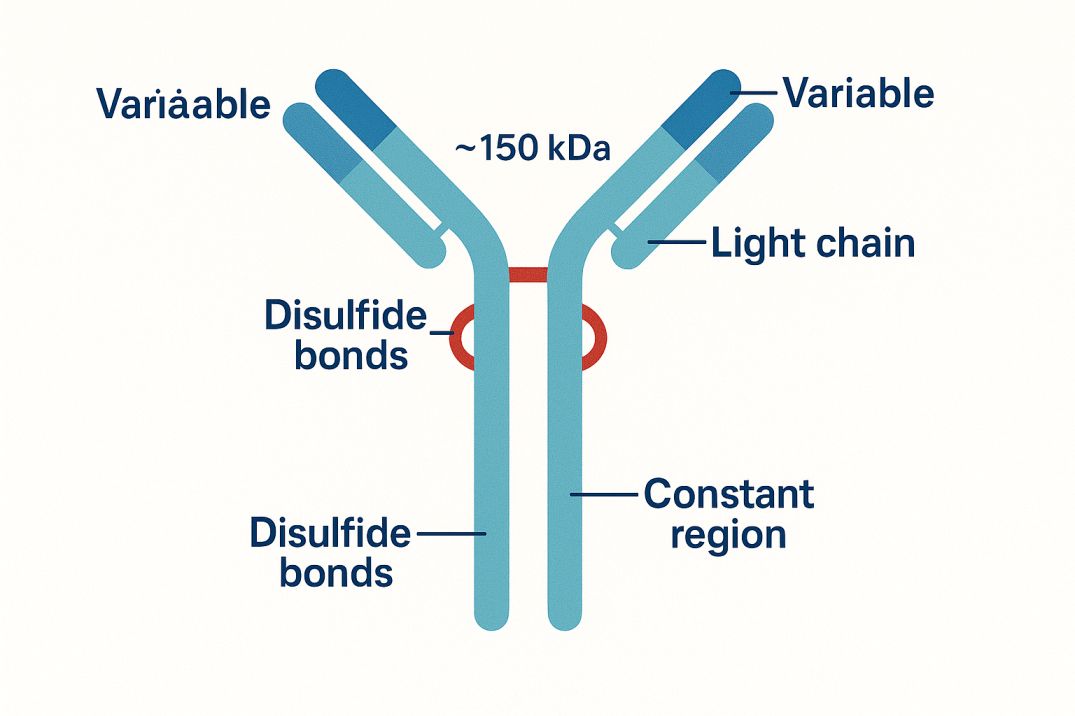
An antibody has a Y-shaped structure made of four protein chains — two heavy chains and two light chains, arranged in pairs.
At the top ends of the Y (called the N-terminus of the heavy chains), each heavy chain joins with a light chain to form the antigen-binding sites. These are the two arms of the Y and are known as the Fab (fragment antigen-binding) regions. They are the parts of the antibody that attach to foreign substances like viruses or bacteria.
The bottom part of the Y (called the C-terminus of the heavy chains) is called the Fc (fragment crystallization) region. This part helps the antibody connect with immune cells so the body can destroy the invader.
All four chains are held together by chemical bonds, including strong ones called disulfide bonds.
The heavy chains have a variable region, which changes between different antibodies so they can recognize different threats, and three constant regions, which stay mostly the same. Each antibody has two identical binding sites, and these sites vary depending on what the antibody is meant to target.
For a brief overview, here is what you need to know -
What Are The Different Types of Antibodies and What Do They Do?
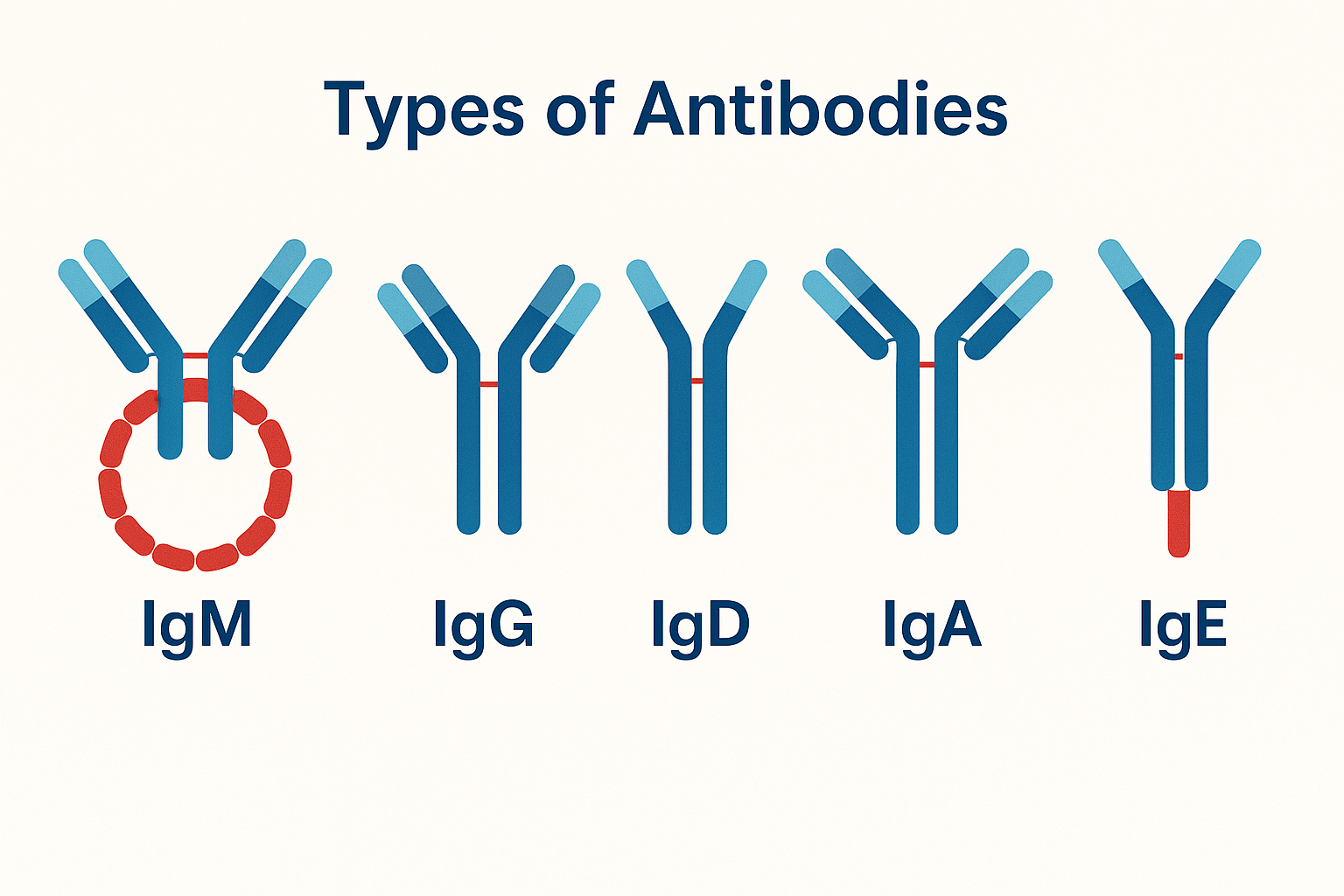
Human antibodies are grouped into five types, based on their heavy (H) chains. These types are called:
IgG, IgM, IgA, IgE, and IgD
Each type has a different structure and job in the immune system.
IgG – Main Defender in the Blood
- Most common antibody in the blood (about 70–75%).
- Helps neutralize toxins and fights infections.
- Helps white blood cells (like macrophages) recognize and destroy threats.
- It can cross the placenta from mother to baby and protects the baby before its own immune system is ready.
IgM – First Responder
- Makes up about 10% of the antibodies in the blood.
- It’s the first antibody made when there’s an infection.
- Has a pentamer shape (5 Y-shaped units joined together), which lets it attach to many germs at once.
- Even though it doesn’t stick to germs as tightly as IgG, its shape gives it strong overall binding power.
- Also helps send signals inside immune cells when it binds to an antigen.
IgA – Mucosal Protector
- Found in mucus, saliva, tears, breast milk, and fluids in the gut.
- Makes up 10–15% of antibodies.
- Has a dimer shape (two IgA units linked).
- In breast milk, IgA protects the baby’s digestive system from germs.
IgE – Allergy and Parasite Fighter
- Found in tiny amounts (less than 0.001% of antibodies).
- Originally evolved to fight parasites.
- In places without many parasites, it mostly causes allergic reactions (like hay fever, asthma, and food allergies).
IgD – Still a Mystery
- Very rare, making up less than 1% of antibodies.
- Believed to help activate B cells, but scientists are still figuring out exactly what it does.
| Antibody Type | IgG | IgM | IgA | IgE | IgD |
|---|---|---|---|---|---|
| Heavy Chain Name | Gamma (γ) | Mu (μ) | Alpha (α) | Epsilon (ε) | Delta (δ) |
| Size (Molecular Weight) | Medium (150 kDa) | Very Large (900 kDa) | Large (385 kDa) | Small (200 kDa) | Small (180 kDa) |
| Antigen Binding Sites | 2 | 10 | 4 | 2 | 2 |
| Amount in Blood | Most common (80%) | 6% | 13% | Very little (0.002%) | 1% |
| Activates Complement System | Yes | Yes | No | No | No |
| Where It's Found | In the blood and body fluids | Mostly in the blood | In body fluids like tears, mucus, and saliva | Attached to allergy cells (mast cells, basophils) | On the surface of B cells |
| Main Job | Fights infections in the blood, neutralizes toxins, helps immune cells attack germs | First antibody made when you're sick, helps activate other immune responses | Protects surfaces like the nose, mouth, and intestines from infection | Involved in allergic reactions and fights parasites | May help start B cell responses (still not fully understood) |
Antibodies in Medicine and Research
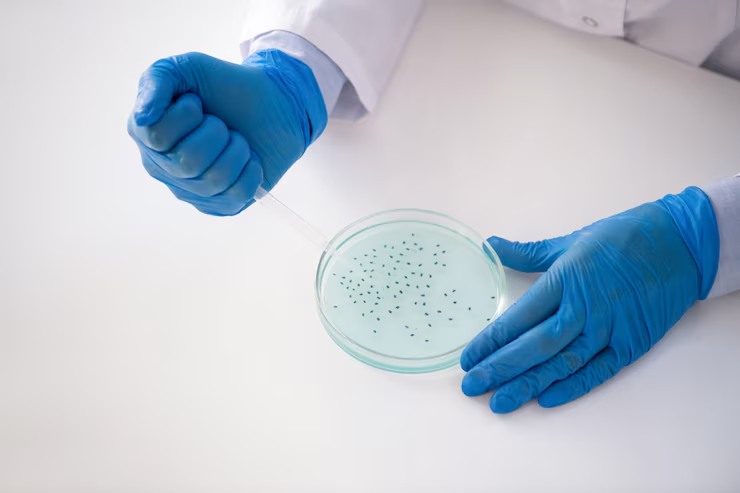
Antibodies are very useful in both medicine and scientific research.
For example, doctors can use ready-made antibodies (taken from the blood of people or animals who have recovered from certain infections) to give someone immediate protection. This is called passive immunity, and it’s used in emergencies—like treating snakebites or tetanus—where the body needs fast help to fight harmful toxins or germs.
On the other hand, vaccines work by giving your body a preview of a dangerous germ. This helps your immune system prepare to fight it off in the future. Once the vaccine does its job, certain immune cells (called B cells) are ready to make antibodies quickly if the real infection shows up later.
Monoclonal Antibodies – Lab-Made and Powerful
Monoclonal antibodies are special antibodies made in the lab using genetic techniques. They are designed to recognize and stick to one very specific target, like a virus, a cancer cell, or even a drug molecule.
Because they are so specific, scientists can use them to:
- Test for tiny amounts of substances in blood or tissue samples.
- Identify different types of cells, including cancer cells, by spotting unique markers on their surface.
Faq's
Can Antibodies Be Used to Detect Diseases?
Yes, they can. Antibodies are an important part of the immune system, and doctors can use them in lab tests to find out if someone has or had a specific disease. These tests look for antibodies that form in response to infections or other health conditions.
How Long Do Antibodies Stay in the Body?
After fighting off an infection, your body keeps some antibodies around to help protect you in the future. How long they stay depends on the disease—for some illnesses, antibodies may last only a few months, while for others, they may remain for years.
Are Antibodies Used in COVID-19 Testing?
Yes, but not for diagnosing current infections. Antibody tests (or serology tests) check if someone has had COVID-19 in the past by detecting antibodies in their blood.
These tests show whether the immune system responded to the virus, not whether the person is currently sick.
How Are Antibodies Made for Medical Use?
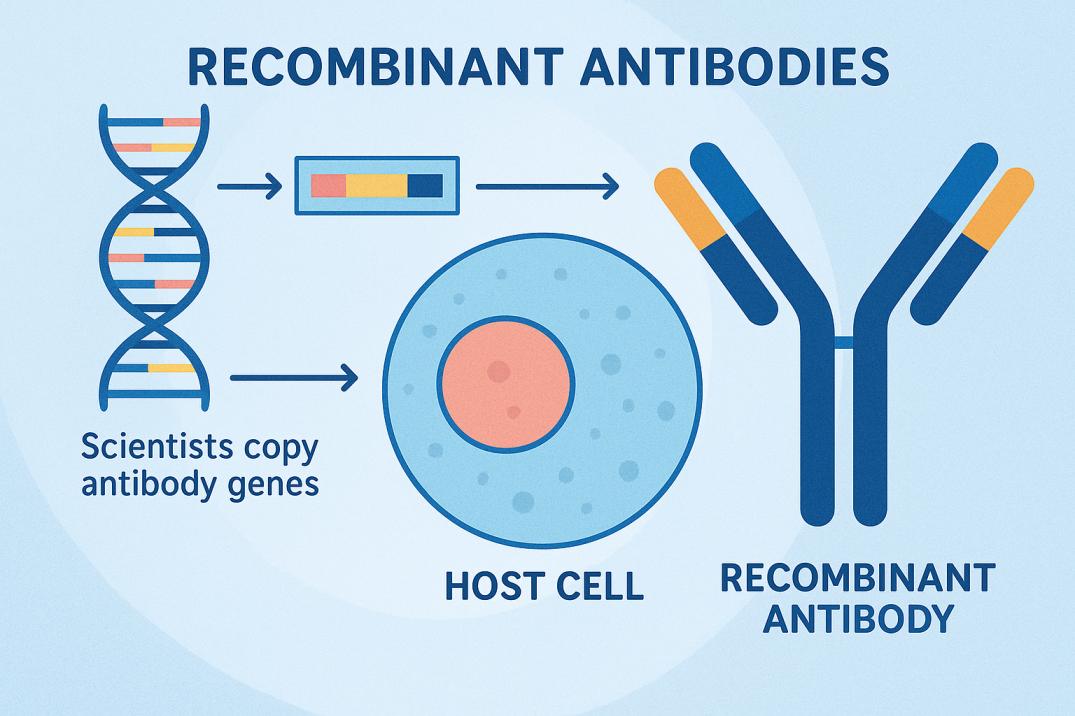
Scientists can make antibodies in the lab, especially monoclonal antibodies (mAbs), using advanced methods like hybridoma technology or recombinant DNA techniques.
These enable the large-scale production of specific antibodies used in research, testing, and treatment.
Can Antibodies Be Used to Treat Cancer?
Yes, especially monoclonal antibodies. They can be designed to target cancer cells specifically, either by:
- Marking them for the immune system to attack,
- Blocking signals that help cancer grow, or
- Delivering chemotherapy drugs directly to the cancer cells.
Lead Clinical Research Coordinator (LCRC)
Cynthia Lee is the President of AAA Biotech and specializes in understanding highly validated and characterized monoclonal/polyclonal antibodies, recombinant proteins, and ELISA kits.
Related Posts