
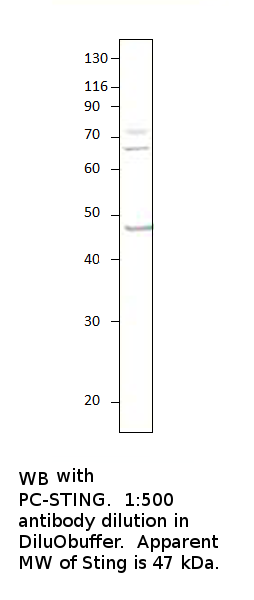
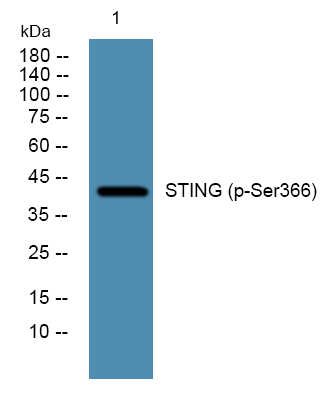
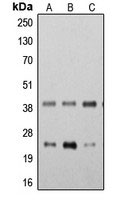
 WB (Western Blot)
Rabbit STING / TMEM173 Polyclonal Antibody | anti-STING / TMEM173 antibody
STING / TMEM173 Antibody
Gene Names
TMEM173; ERIS; MITA; MPYS; SAVI; NET23; STING; hMITA; hSTING
Reactivity
Human, Mouse, Rat
Applications
Western Blot, Immunoprecipitation, ELISA
Synonyms
STING / TMEM173, Antibody; STING / TMEM173 Antibody; endoplasmic reticulum IFN stimulator; ERIS; FLJ38577; Mediator of IRF3 activation; MITA; Mitochondrial mediator of IRF3 activation; MPYS; N terminal methionine proline tyrosine serine plasma membrane tetraspanner; NET23; Stimulator of interferon genes; STING; Tmem173; Transmembrane protein 173 antibody; anti-STING / TMEM173 antibody
Host
Rabbit
Reactivity
Human, Mouse, Rat
Clonality
Polyclonal
Sequence Length
379
Applicable Applications for anti-STING / TMEM173 antibody
WB (Western Blot), IP (Immunoprecipitation), ELISA
Immunogen
Synthetic peptide corresponding to amino acid region 332-342. The selected peptide was post-synthetically modified to achieve highest antigenicity before coupling to a carrier protein using hetero bifunctional cross linker.
Immunoglobulin & Concentration
0.75 mg/mL in antibody stabilization buffer
Preparation and Storage
Store at -20°C for long term storage.
WB (Western Blot)
WB (Western Blot)
Related Product Information for anti-STING / TMEM173 antibody
Affinity Purifeid Stimulator of interferon genes protein isoform 1 Antibody
Viral infections stimulate transcription factor including NK-Kb, IRF3 which stimulate the secretion of type I interferon and innate antiviral response. Stimulator of interferon gene protein (STING) is a critical adapter protein that links virus sensing receptor to transcription factor IRF3 activation in response to both RNA and DNA pathogens. The mechanism through wihich interferons are induced by cytosolic DNA involces cyclic GMP-AMP synthase which binds and activates the endoplasmic reticulum adapter protein STING that activates the transcription activity of interferon synthesis . STING recruits and activates the cytosolic kinase IKK and TBK1, which activates the transcription factor NF-kB and transcription factor IRF3. The NF-kB and IRF3 enters the nucleus and in concert induce interferons and other cytokines (1) .The DNA- dependent RNA Polymerease III also acts as a sensor and synthesizes AT-rich DNA such as poly (dA: dT) into mRNA ligand that stimulates RIG-1 Pathway to induce interferons (1,2). The ubiquination of STING by E3 ubiquitin ligase tripartite motif protein 32 (TRIM32) ubiquinated STING and dramatically enhanced STINGmediated induction of IFN-b (3). DNA can be introduced by viral or bacterial infection, leakage from nucleous or not activate DNA-dependent RNA polymerase and downstream RIG1 pathways, but instead activate STING pathway via cGas and cGAMP stimulation for interferon inductions. STING functions both as an adaptor protein signaling cytoplasmic dsDNA and diret immuno sensor of cGAMP (4) . In presence of Cgamp, the two surface loops of STING serves as gate an latch of the cleft formed by the dimeric STING (CTD), undergo rearrangement to interact with ligand. Dengue virus (DENV) inhibits type I interferon production to efficiently infects humans. This inhibition in INF production was effectively carried out by DENV protease NS2B3 on STING (5) Mouse STING is resistant to NS2B3 protease of DENV, thus it severely restrict the replication of DENCV in mice (5)
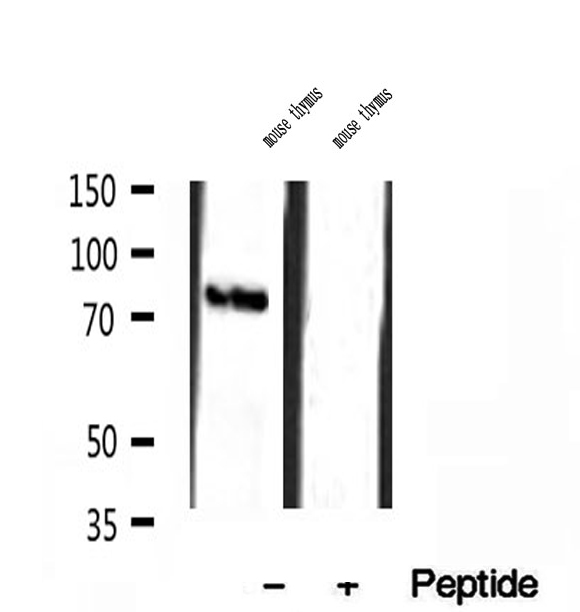
STING-selective antibodies were generated against peptides taken from the human STING protein sequence. The STING-selective antibodies were affinity purified on inmobilized antigen based affinity matrices. The isolated antibodies were the stabilized in antibody stabilization buffer for long- term storage. This antibody also labels two bands of 67 and 74 kDa. The identies of these bands are unknown, but may represent splice variants of this protein.
Viral infections stimulate transcription factor including NK-Kb, IRF3 which stimulate the secretion of type I interferon and innate antiviral response. Stimulator of interferon gene protein (STING) is a critical adapter protein that links virus sensing receptor to transcription factor IRF3 activation in response to both RNA and DNA pathogens. The mechanism through wihich interferons are induced by cytosolic DNA involces cyclic GMP-AMP synthase which binds and activates the endoplasmic reticulum adapter protein STING that activates the transcription activity of interferon synthesis . STING recruits and activates the cytosolic kinase IKK and TBK1, which activates the transcription factor NF-kB and transcription factor IRF3. The NF-kB and IRF3 enters the nucleus and in concert induce interferons and other cytokines (1) .The DNA- dependent RNA Polymerease III also acts as a sensor and synthesizes AT-rich DNA such as poly (dA: dT) into mRNA ligand that stimulates RIG-1 Pathway to induce interferons (1,2). The ubiquination of STING by E3 ubiquitin ligase tripartite motif protein 32 (TRIM32) ubiquinated STING and dramatically enhanced STINGmediated induction of IFN-b (3). DNA can be introduced by viral or bacterial infection, leakage from nucleous or not activate DNA-dependent RNA polymerase and downstream RIG1 pathways, but instead activate STING pathway via cGas and cGAMP stimulation for interferon inductions. STING functions both as an adaptor protein signaling cytoplasmic dsDNA and diret immuno sensor of cGAMP (4) . In presence of Cgamp, the two surface loops of STING serves as gate an latch of the cleft formed by the dimeric STING (CTD), undergo rearrangement to interact with ligand. Dengue virus (DENV) inhibits type I interferon production to efficiently infects humans. This inhibition in INF production was effectively carried out by DENV protease NS2B3 on STING (5) Mouse STING is resistant to NS2B3 protease of DENV, thus it severely restrict the replication of DENCV in mice (5)
STING-selective antibodies were generated against peptides taken from the human STING protein sequence. The STING-selective antibodies were affinity purified on inmobilized antigen based affinity matrices. The isolated antibodies were the stabilized in antibody stabilization buffer for long- term storage. This antibody also labels two bands of 67 and 74 kDa. The identies of these bands are unknown, but may represent splice variants of this protein.
Product Categories/Family for anti-STING / TMEM173 antibody
NCBI and Uniprot Product Information
NCBI GI #
NCBI GeneID
NCBI Accession #
NCBI GenBank Nucleotide #
NCBI Official Full Name
stimulator of interferon genes protein isoform 1
NCBI Official Synonym Full Names
transmembrane protein 173
NCBI Official Symbol
TMEM173
NCBI Official Synonym Symbols
ERIS; MITA; MPYS; SAVI; NET23; STING; hMITA; hSTING
NCBI Protein Information
stimulator of interferon genes protein
UniProt Protein Name
Stimulator of interferon genes protein
UniProt Gene Name
TMEM173
UniProt Synonym Gene Names
ERIS; MITA; STING; hSTING; ERIS; hMITA
UniProt Entry Name
STING_HUMAN
Customer Reviews
Loading reviews...
Share Your Experience
Similar Products
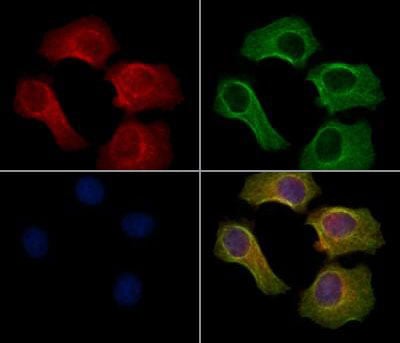
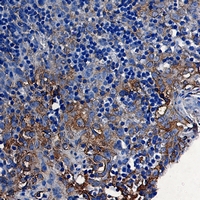
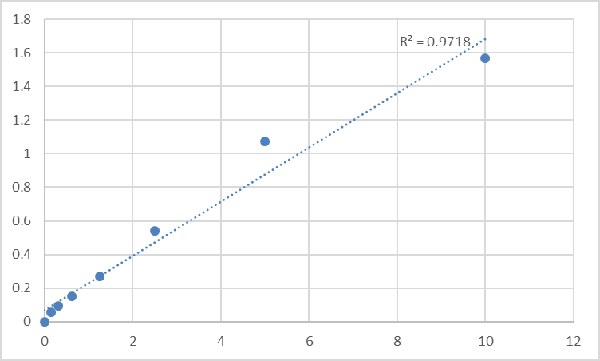
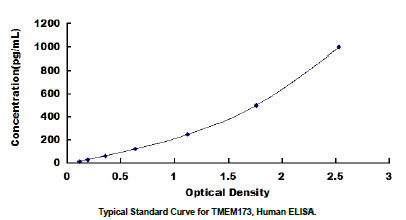
Product Notes
The STING / TMEM173 tmem173 (Catalog #AAA75781) is an Antibody produced from Rabbit and is intended for research purposes only. The product is available for immediate purchase. The STING / TMEM173 Antibody reacts with Human, Mouse, Rat and may cross-react with other species as described in the data sheet. AAA Biotech's STING / TMEM173 can be used in a range of immunoassay formats including, but not limited to, WB (Western Blot), IP (Immunoprecipitation), ELISA. Researchers should empirically determine the suitability of the STING / TMEM173 tmem173 for an application not listed in the data sheet. Researchers commonly develop new applications and it is an integral, important part of the investigative research process. It is sometimes possible for the material contained within the vial of "STING / TMEM173, Polyclonal Antibody" to become dispersed throughout the inside of the vial, particularly around the seal of said vial, during shipment and storage. We always suggest centrifuging these vials to consolidate all of the liquid away from the lid and to the bottom of the vial prior to opening. Please be advised that certain products may require dry ice for shipping and that, if this is the case, an additional dry ice fee may also be required.Precautions
All products in the AAA Biotech catalog are strictly for research-use only, and are absolutely not suitable for use in any sort of medical, therapeutic, prophylactic, in-vivo, or diagnostic capacity. By purchasing a product from AAA Biotech, you are explicitly certifying that said products will be properly tested and used in line with industry standard. AAA Biotech and its authorized distribution partners reserve the right to refuse to fulfill any order if we have any indication that a purchaser may be intending to use a product outside of our accepted criteria.Disclaimer
Though we do strive to guarantee the information represented in this datasheet, AAA Biotech cannot be held responsible for any oversights or imprecisions. AAA Biotech reserves the right to adjust any aspect of this datasheet at any time and without notice. It is the responsibility of the customer to inform AAA Biotech of any product performance issues observed or experienced within 30 days of receipt of said product. To see additional details on this or any of our other policies, please see our Terms & Conditions page.Item has been added to Shopping Cart
If you are ready to order, navigate to Shopping Cart and get ready to checkout.