
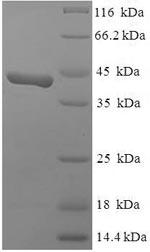
 SDS-PAGE
SWI/SNF complex subunit SMARCC1 (SMARCC1) Recombinant Protein | SMARCC1 recombinant protein
Recombinant Human SWI/SNF complex subunit SMARCC1 (SMARCC1), partial
Gene Names
SMARCC1; Rsc8; SRG3; SWI3; BAF155; CRACC1
Purity
Greater or equal to 85% purity as determined by SDS-PAGE.
Synonyms
SWI/SNF complex subunit SMARCC1 (SMARCC1); N/A; Recombinant Human SWI/SNF complex subunit SMARCC1 (SMARCC1), partial; BRG1-associated factor 155; BAF155; SWI/SNF complex 155 kDa subunit; SWI/SNF-related matrix-associated actin-dependent regulator of chromatin subfamily C member 1; SMARCC1 recombinant protein
Host
E Coli or Yeast or Baculovirus or Mammalian Cell
Purity/Purification
Greater or equal to 85% purity as determined by SDS-PAGE.
Form/Format
Lyophilized or liquid (Format to be determined during the manufacturing process)
Sequence Positions
451-671aa. Partial
Sequence
IPSYASWFDY NCIHVIERRA LPEFFNGKNK SKTPEIYLAY RNFMIDTYRL NPQEYLTSTA CRRNLTGDVC AVMRVHAFLE QWGLVNYQVD PESRPMAMGP PPTPHFNVLA DTPSGLVPLH LRSPQVPAAQ QMLNFPEKNK EKPVDLQNFG LRTDIYSKKT LAKSKGASAG REWTEQETLL LLEALEMYKD DWNKVSEHVG SRTQDECILH FLRLPIEDPY L
Preparation and Storage
Store at -20 degree C, for extended storage, conserve at -20 degree C or -80 degree C.
SDS-PAGE
SDS-PAGE
Related Product Information for SMARCC1 recombinant protein
Involved in transcriptional activation and repression of select genes by chromatin remodeling (alteration of DNA-nucleosome topology). May stimulate the ATPase activity of the catalytic subunit of the complex. Belongs to the neural progenitors-specific chromatin remodeling complex (npBAF complex) and the neuron-specific chromatin remodeling complex (nBAF complex). During neural development a switch from a st/progenitor to a post-mitotic chromatin remodeling mechanism occurs as neurons exit the cell cycle and become committed to their adult state. The transition from proliferating neural st/progenitor cells to post-mitotic neurons requires a switch in subunit composition of the npBAF and nBAF complexes. As neural progenitors exit mitosis and differentiate into neurons, npBAF complexes which contain ACTL6A/BAF53A and PHF10/BAF45A, are exchanged for homologous alternative ACTL6B/BAF53B and DPF1/BAF45B or DPF3/BAF45C subunits in neuron-specific complexes (nBAF). The npBAF complex is essential for the self-renewal/proliferative capacity of the multipotent neural st cells. The nBAF complex along with CREST plays a role regulating the activity of genes essential for dendrite growth.
Product Categories/Family for SMARCC1 recombinant protein
References
Diversity and specialization of mammalian SWI/SNF complexes.Wang W., Xue Y., Zhou S., Kuo A., Cairns B.R., Crabtree G.R.Genes Dev. 10:2117-2130(1996) Bienvenut W.V., Matallanas D., Cooper W.N., Kolch W.Submitted (JUL-2007) to UniProtKB Mitotic inactivation of a human SWI/SNF chromatin remodeling complex.Sif S., Stukenberg P.T., Kirschner M.W., Kingston R.E.Genes Dev. 12:2842-2851(1998) Robust phosphoproteomic profiling of tyrosine phosphorylation sites from human T cells using immobilized metal affinity chromatography and tandem mass spectrometry.Brill L.M., Salomon A.R., Ficarro S.B., Mukherji M., Stettler-Gill M., Peters E.C.Anal. Chem. 76:2763-2772(2004) Global, in vivo, and site-specific phosphorylation dynamics in signaling networks.Olsen J.V., Blagoev B., Gnad F., Macek B., Kumar C., Mortensen P., Mann M.Cell 127:635-648(2006) A quantitative atlas of mitotic phosphorylation.Dephoure N., Zhou C., Villen J., Beausoleil S.A., Bakalarski C.E., Elledge S.J., Gygi S.P.Proc. Natl. Acad. Sci. U.S.A. 105:10762-10767(2008) Quantitative phosphoproteomic analysis of T cell receptor signaling reveals system-wide modulation of protein-protein interactions.Mayya V., Lundgren D.H., Hwang S.-I., Rezaul K., Wu L., Eng J.K., Rodionov V., Han D.K.Sci. Signal. 2:RA46-RA46(2009) Lysine acetylation targets protein complexes and co-regulates major cellular functions.Choudhary C., Kumar C., Gnad F., Nielsen M.L., Rehman M., Walther T.C., Olsen J.V., Mann M.Science 325:834-840(2009) Quantitative phosphoproteomics reveals widespread full phosphorylation site occupancy during mitosis.Olsen J.V., Vermeulen M., Santamaria A., Kumar C., Miller M.L., Jensen L.J., Gnad F., Cox J., Jensen T.S., Nigg E.A., Brunak S., Mann M.Sci. Signal. 3:RA3-RA3(2010) Initial characterization of the human central proteome.Burkard T.R., Planyavsky M., Kaupe I., Breitwieser F.P., Buerckstuemmer T., Bennett K.L., Superti-Furga G., Colinge J.BMC Syst. Biol. 5:17-17(2011) System-wide temporal characterization of the proteome and phosphoproteome of human embryonic stem cell differentiation.Rigbolt K.T., Prokhorova T.A., Akimov V., Henningsen J., Johansen P.T., Kratchmarova I., Kassem M., Mann M., Olsen J.V., Blagoev B.Sci. Signal. 4:RS3-RS3(2011) N-terminal acetylome analyses and functional insights of the N-terminal acetyltransferase NatB.Van Damme P., Lasa M., Polevoda B., Gazquez C., Elosegui-Artola A., Kim D.S., De Juan-Pardo E., Demeyer K., Hole K., Larrea E., Timmerman E., Prieto J., Arnesen T., Sherman F., Gevaert K., Aldabe R.Proc. Natl. Acad. Sci. U.S.A. 109:12449-12454(2012) An enzyme assisted RP-RPLC approach for in-depth analysis of human liver phosphoproteome.Bian Y., Song C., Cheng K., Dong M., Wang F., Huang J., Sun D., Wang L., Ye M., Zou H.J. Proteomics 96:253-262(2014) Reconstitution of a core chromatin remodeling complex from SWI/SNF subunits.Phelan M.L., Sif S., Narlikar G.J., Kingston R.E.Mol. Cell 3:247-253(1999) Cyclin E associates with BAF155 and BRG1, components of the mammalian SWI-SNF complex, and alters the ability of BRG1 to induce growth arrest.Shanahan F., Seghezzi W., Parry D., Mahony D., Lees E.Mol. Cell. Biol. 19:1460-1469(1999) Functional selectivity of recombinant mammalian SWI/SNF subunits.Kadam S., McAlpine G.S., Phelan M.L., Kingston R.E., Jones K.A., Emerson B.M.Genes Dev. 14:2441-2451(2000) Purification and characterization of mSin3A-containing Brg1 and hBrm chromatin remodeling complexes.Sif S., Saurin A.J., Imbalzano A.N., Kingston R.E.Genes Dev. 15:603-618(2001) BAF60a mediates critical interactions between nuclear receptors and the BRG1 chromatin-remodeling complex for transactivation.Hsiao P.W., Fryer C.J., Trotter K.W., Wang W., Archer T.K.Mol. Cell. Biol. 23:6210-6220(2003) Regulation of muscle development by DPF3, a novel histone acetylation and methylation reader of the BAF chromatin remodeling complex.Lange M., Kaynak B., Forster U.B., Toenjes M., Fischer J.J., Grimm C., Schlesinger J., Just S., Dunkel I., Krueger T., Mebus S., Lehrach H., Lurz R., Gobom J., Rottbauer W., Abdelilah-Seyfried S., Sperling S.Genes Dev. 22:2370-2384(2008) Ubiquitin-dependent and ubiquitin-independent control of subunit stoichiometry in the SWI/SNF complex.Keppler B.R., Archer T.K.J. Biol. Chem. 285:35665-35674(2010) Solution structure of the SANT domain of human SWI/SNF-related matrix-associated actin-dependent regulator of chromatin subfamily C member 1.RIKEN structural genomics initiative (RSGI) Submitted (APR-2008) to the PDB data bank
NCBI and Uniprot Product Information
NCBI GI #
NCBI GeneID
NCBI Accession #
NCBI GenBank Nucleotide #
Molecular Weight
27.5 kDa
NCBI Official Full Name
SWI/SNF complex subunit SMARCC1
NCBI Official Synonym Full Names
SWI/SNF related, matrix associated, actin dependent regulator of chromatin, subfamily c, member 1
NCBI Official Symbol
SMARCC1
NCBI Official Synonym Symbols
Rsc8; SRG3; SWI3; BAF155; CRACC1
NCBI Protein Information
SWI/SNF complex subunit SMARCC1
UniProt Protein Name
SWI/SNF complex subunit SMARCC1
UniProt Gene Name
SMARCC1
UniProt Synonym Gene Names
BAF155; BAF155
UniProt Entry Name
SMRC1_HUMAN
Customer Reviews
Loading reviews...
Share Your Experience
Similar Products
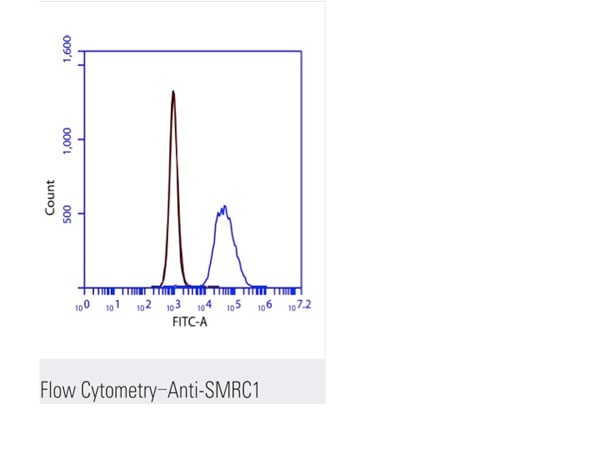
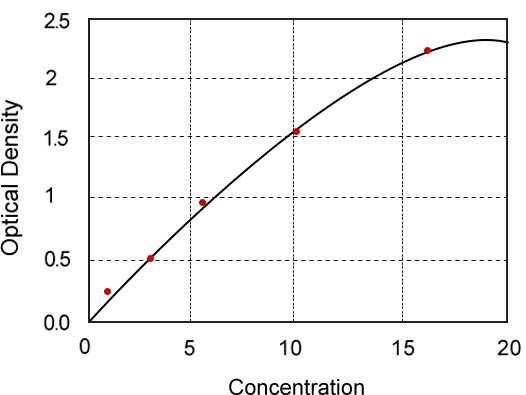
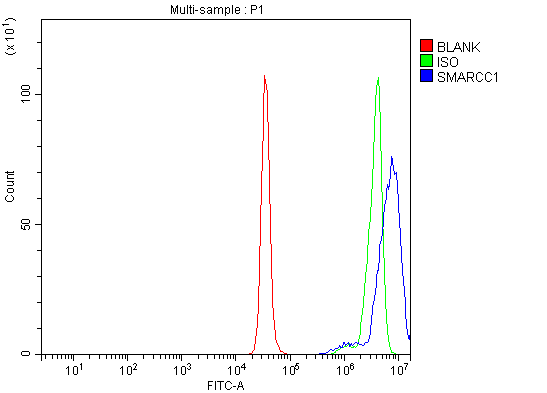
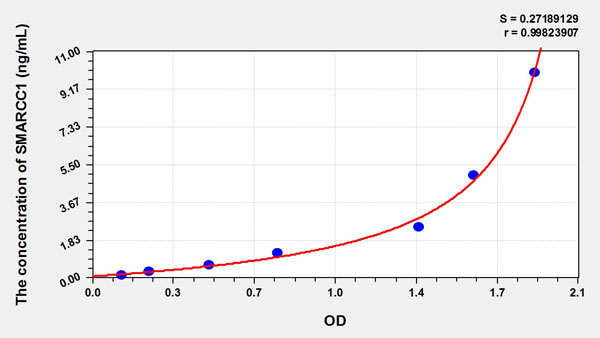
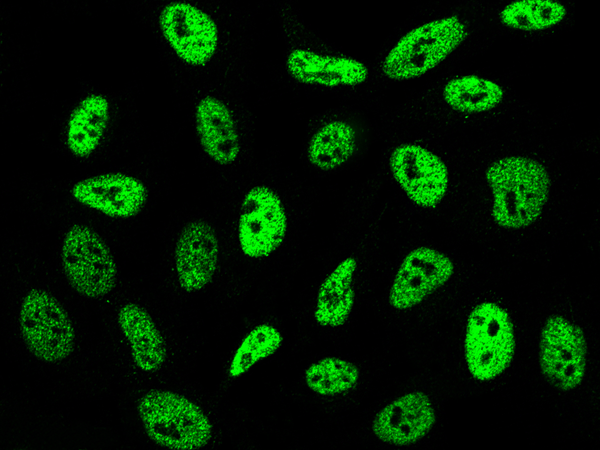
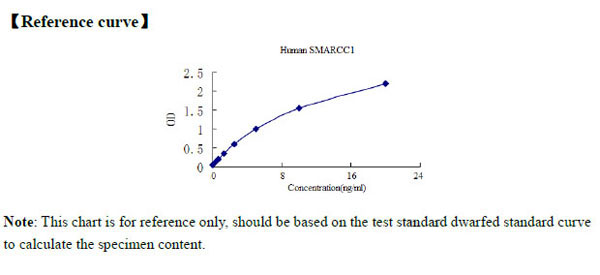
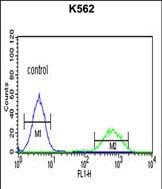
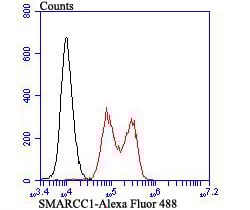
Product Notes
The SMARCC1 smarcc1 (Catalog #AAA117488) is a Recombinant Protein produced from E Coli or Yeast or Baculovirus or Mammalian Cell and is intended for research purposes only. The product is available for immediate purchase. The immunogen sequence is 451-671aa. Partial. The amino acid sequence is listed below: IPSYASWFDY NCIHVIERRA LPEFFNGKNK SKTPEIYLAY RNFMIDTYRL NPQEYLTSTA CRRNLTGDVC AVMRVHAFLE QWGLVNYQVD PESRPMAMGP PPTPHFNVLA DTPSGLVPLH LRSPQVPAAQ QMLNFPEKNK EKPVDLQNFG LRTDIYSKKT LAKSKGASAG REWTEQETLL LLEALEMYKD DWNKVSEHVG SRTQDECILH FLRLPIEDPY L. It is sometimes possible for the material contained within the vial of "SWI/SNF complex subunit SMARCC1 (SMARCC1), Recombinant Protein" to become dispersed throughout the inside of the vial, particularly around the seal of said vial, during shipment and storage. We always suggest centrifuging these vials to consolidate all of the liquid away from the lid and to the bottom of the vial prior to opening. Please be advised that certain products may require dry ice for shipping and that, if this is the case, an additional dry ice fee may also be required.Precautions
All products in the AAA Biotech catalog are strictly for research-use only, and are absolutely not suitable for use in any sort of medical, therapeutic, prophylactic, in-vivo, or diagnostic capacity. By purchasing a product from AAA Biotech, you are explicitly certifying that said products will be properly tested and used in line with industry standard. AAA Biotech and its authorized distribution partners reserve the right to refuse to fulfill any order if we have any indication that a purchaser may be intending to use a product outside of our accepted criteria.Disclaimer
Though we do strive to guarantee the information represented in this datasheet, AAA Biotech cannot be held responsible for any oversights or imprecisions. AAA Biotech reserves the right to adjust any aspect of this datasheet at any time and without notice. It is the responsibility of the customer to inform AAA Biotech of any product performance issues observed or experienced within 30 days of receipt of said product. To see additional details on this or any of our other policies, please see our Terms & Conditions page.Item has been added to Shopping Cart
If you are ready to order, navigate to Shopping Cart and get ready to checkout.