
 Application Data
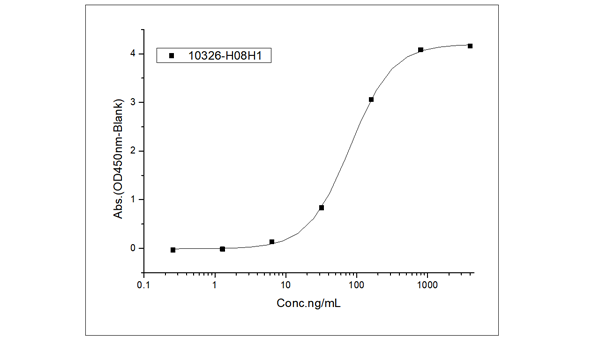
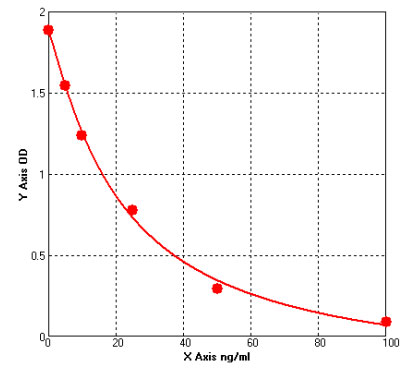
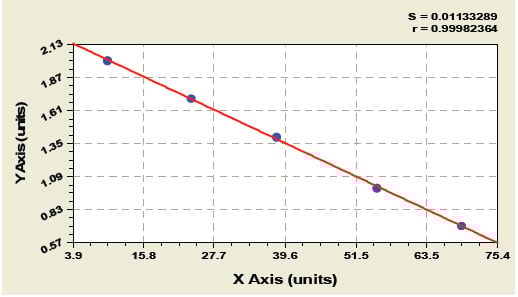
(Immobilized Recombinant Human HMGB1 Protein (His Tag) (#AAA259172) at 2 ug/mL (100 uL/well) can bind Recombinant Human AGER / RAGE Protein (Fc Tag) (Cat: 11629-H02H), the EC50 is 40-120 ng/mL.)
Application Data
(Immobilized Recombinant Human HMGB1 Protein (His Tag) (#AAA259172) at 2 ug/mL (100 uL/well) can bind Recombinant Human AGER / RAGE Protein (Fc Tag) (Cat: 11629-H02H), the EC50 is 40-120 ng/mL.)
HMGB1 recombinant protein
Recombinant Human HMGB1 Protein (His Tag), HPLC-verified
Purity
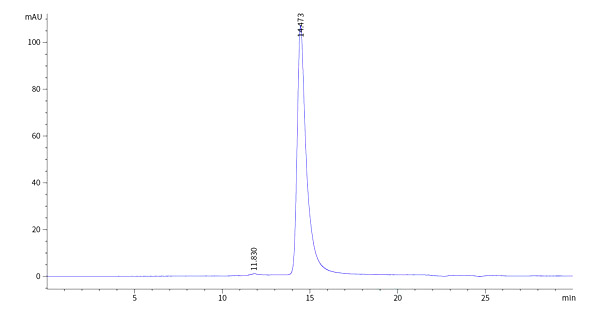
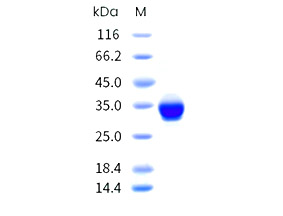
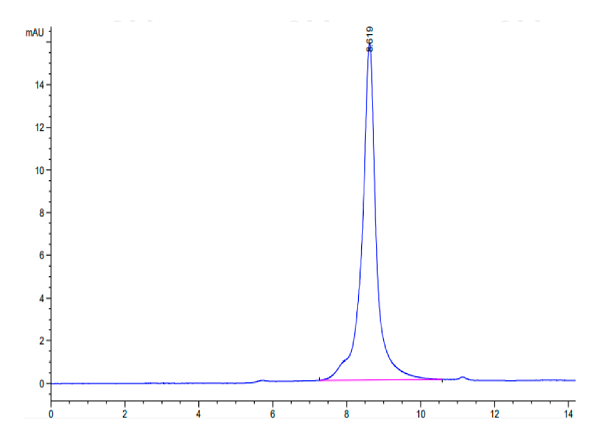
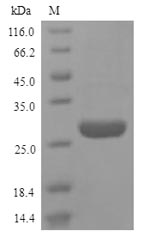
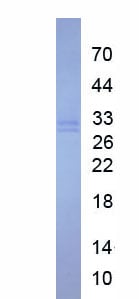
>= 95% as determined by SDS-PAGE.= 95% as determined by SEC-HPLC.
Synonyms
HMGB1; N/A; Recombinant Human HMGB1 Protein (His Tag), HPLC-verified; high mobility group box 1; HMG-1 Protein, Human; HMG1 Protein, Human; HMG3 Protein, Human; SBP-1 Protein, Human; HMGB1 recombinant protein
Host
HEK293 Cells
Purity/Purification
>= 95% as determined by SDS-PAGE.
= 95% as determined by SEC-HPLC.
= 95% as determined by SEC-HPLC.
Form/Format
Lyophilized from sterile PBS, pH 7.4.
Normally 5%-8% trehalose, mannitol and 0.01% Tween80 are added as protectants before lyophilization.
Normally 5%-8% trehalose, mannitol and 0.01% Tween80 are added as protectants before lyophilization.
Species
Human
Predicted N Terminal
Gly 2
Endotoxin
<1.0 EU per ug of the protein as determined by the LAL method
Protein Construction
A DNA sequence encoding the Human HMGB1 (NP_002119.1)(Gly2-Glu215) was expressed with a polyhistidine tag at the C-terminus.
Activity
Immobilized Recombinant Human HMGB1 Protein (His Tag) at 2 ug/mL (100 uL/well) can bind Recombinant Human AGER/RAGE Protein (Fc Tag) , the EC50 is 40-120 ng/mL.
Preparation and Storage
Samples are stable for up to twelve months from date of receipt at -20 degree C to -80 degree C. Store it under sterile conditions at -20 degree C to -80 degree C. It is recommended that the protein be aliquoted for optimal storage. Avoid repeated freeze-thaw cycles.
Application Data
(Immobilized Recombinant Human HMGB1 Protein (His Tag) (#AAA259172) at 2 ug/mL (100 uL/well) can bind Recombinant Human AGER / RAGE Protein (Fc Tag) (Cat: 11629-H02H), the EC50 is 40-120 ng/mL.)
Application Data
(Immobilized Recombinant Human HMGB1 Protein (His Tag) (#AAA259172) at 2 ug/mL (100 uL/well) can bind Recombinant Human AGER / RAGE Protein (Fc Tag) (Cat: 11629-H02H), the EC50 is 40-120 ng/mL.)
Application Data
Application Data
Application Data
Application Data
Related Product Information for HMGB1 recombinant protein
High-mobility group box 1 protein (HMGB1), also known as HMG-1 or amphoterin previously, is a member of the HMGB family consisting of three members, HMGB1, HMGB2, and HMGB3. HMGB1 is a DNA-binding nuclear protein, released actively following cytokine stimulation as well as passively during cell death. It is the prototypic damage-associated molecular pattern (DAMP) molecule and has been implicated in several inflammatory disorders. HMGB1 signals via the receptor for advanced glycation end-product (RAGE) and members of the toll-like receptor (TLR) family. The most prominent HMGB1 protein and mRNA expression arthritis are present in pannus regions, where synovial tissue invades articular cartilage and bone. HMGB1 promotes the activity of proteolytic enzymes, and osteoclasts need HMGB1 for functional maturation. As a non-histone nuclear protein, HMGB1 has a dual function. Inside the cell, HMGB1 binds DNA, regulating transcription, and determining chromosomal architecture. Outside the cell, HMGB1 can serve as an alarmin to activate the innate system and mediate a wide range of physiological and pathological responses. Extracellular HMGB1 represents an optimal " necrotic marker" selected by the innate immune system to recognize tissue damage and initiate reparative responses. However, extracellular HMGB1 also acts as a potent pro-inflammatory cytokine that contributes to the pathogenesis of diverse inflammatory and infectious disorders. HMGB1 has been successfully therapeutically targeted in multiple preclinical models of infectious and sterile diseases including arthritis. As shown in studies on patients as well as animal models, HMGB1 can play an important role in the pathogenesis of the rheumatic disease, including rheumatoid arthritis, systemic lupus erythematosus, and polymyositis among others. Besides, enhanced postmyocardial infarction remodeling in type 1 diabetes mellitus was partially mediated by HMGB1 activation.
References
Ulloa L, et al. (2006) High-mobility group box 1 (HMGB1) protein: friend and foe. Cytokine Growth Factor Rev. 17 (3): 189-201.Pisetsky DS, et al. (2008) High-mobility group box protein 1 (HMGB1): an alarmin mediating the pathogenesis of rheumatic disease. Arthritis Res Ther. 10 (3): 209.
Volz HC, et al. (2010) The role of HMGB1/RAGE in inflammatory cardiomyopathy. Semin Thromb Hemost. 36(2): 185-94.
Sims GP, et al. (2010) HMGB1 and RAGE in inflammation and cancer. Annu Rev Immunol. 28: 367-88.Andersson U, et al. (2010) The role of HMGB1 in the pathogenesis of rheumatic disease. Biochim Biophys Acta. 1799 (1-2): 141-8.
Volz HC, et al. (2010) The role of HMGB1/RAGE in inflammatory cardiomyopathy. Semin Thromb Hemost. 36(2): 185-94.
Sims GP, et al. (2010) HMGB1 and RAGE in inflammation and cancer. Annu Rev Immunol. 28: 367-88.Andersson U, et al. (2010) The role of HMGB1 in the pathogenesis of rheumatic disease. Biochim Biophys Acta. 1799 (1-2): 141-8.
Customer Reviews
Loading reviews...
Share Your Experience
Similar Products




Product Notes
The HMGB1 (Catalog #AAA259172) is a Recombinant Protein produced from HEK293 Cells and is intended for research purposes only. The product is available for immediate purchase. It is sometimes possible for the material contained within the vial of "HMGB1, Recombinant Protein" to become dispersed throughout the inside of the vial, particularly around the seal of said vial, during shipment and storage. We always suggest centrifuging these vials to consolidate all of the liquid away from the lid and to the bottom of the vial prior to opening. Please be advised that certain products may require dry ice for shipping and that, if this is the case, an additional dry ice fee may also be required.Precautions
All products in the AAA Biotech catalog are strictly for research-use only, and are absolutely not suitable for use in any sort of medical, therapeutic, prophylactic, in-vivo, or diagnostic capacity. By purchasing a product from AAA Biotech, you are explicitly certifying that said products will be properly tested and used in line with industry standard. AAA Biotech and its authorized distribution partners reserve the right to refuse to fulfill any order if we have any indication that a purchaser may be intending to use a product outside of our accepted criteria.Disclaimer
Though we do strive to guarantee the information represented in this datasheet, AAA Biotech cannot be held responsible for any oversights or imprecisions. AAA Biotech reserves the right to adjust any aspect of this datasheet at any time and without notice. It is the responsibility of the customer to inform AAA Biotech of any product performance issues observed or experienced within 30 days of receipt of said product. To see additional details on this or any of our other policies, please see our Terms & Conditions page.Item has been added to Shopping Cart
If you are ready to order, navigate to Shopping Cart and get ready to checkout.