
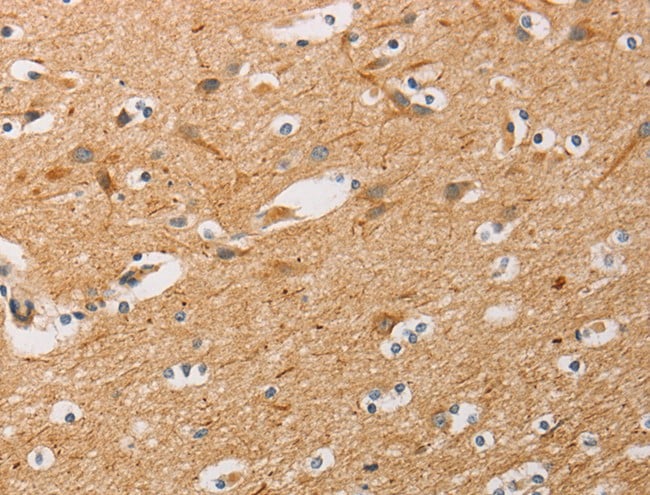
 IHC (Immunohistochemisry)
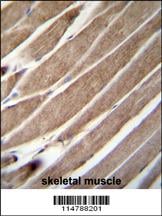
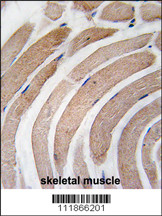
(ATG4D Antibody (N-term) immunohistochemistry analysis in formalin fixed and paraffin embedded human skeletal muscle followed by peroxidase conjugation of the secondary antibody and DAB staining.This data demonstrates the use of ATG4D Antibody (N-term) for immunohistochemistry. Clinical relevance has not been evaluated.)
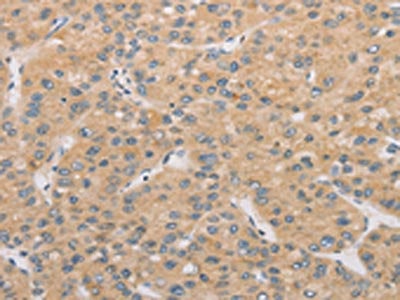
IHC (Immunohistochemisry)
(ATG4D Antibody (N-term) immunohistochemistry analysis in formalin fixed and paraffin embedded human skeletal muscle followed by peroxidase conjugation of the secondary antibody and DAB staining.This data demonstrates the use of ATG4D Antibody (N-term) for immunohistochemistry. Clinical relevance has not been evaluated.)
Rabbit anti-Mouse ATG4D Polyclonal Antibody | anti-ATG4D antibody
ATG4D Antibody (N-term)
IHC (Immunohistochemisry)
(ATG4D Antibody (N-term) immunohistochemistry analysis in formalin fixed and paraffin embedded human skeletal muscle followed by peroxidase conjugation of the secondary antibody and DAB staining.This data demonstrates the use of ATG4D Antibody (N-term) for immunohistochemistry. Clinical relevance has not been evaluated.)
IHC (Immunohistochemisry)
(ATG4D Antibody (N-term) immunohistochemistry analysis in formalin fixed and paraffin embedded human skeletal muscle followed by peroxidase conjugation of the secondary antibody and DAB staining.This data demonstrates the use of ATG4D Antibody (N-term) for immunohistochemistry. Clinical relevance has not been evaluated.)
WB (Western Blot)
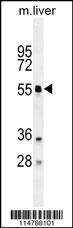
(ATG4D Antibody (N-term) western blot analysis in mouse liver tissue lysates (35ug/lane).This demonstrates the ATG4D antibody detected the ATG4D protein (arrow).)
WB (Western Blot)
(ATG4D Antibody (N-term) western blot analysis in mouse liver tissue lysates (35ug/lane).This demonstrates the ATG4D antibody detected the ATG4D protein (arrow).)
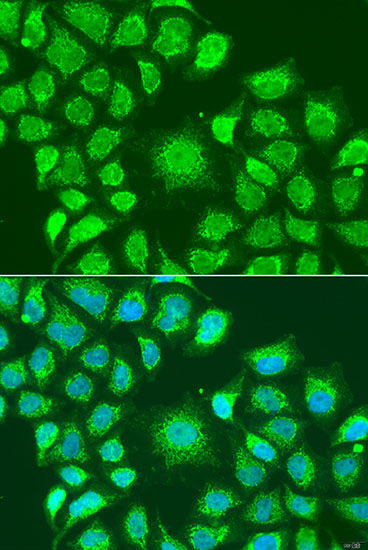
IF (Immunofluorescence)
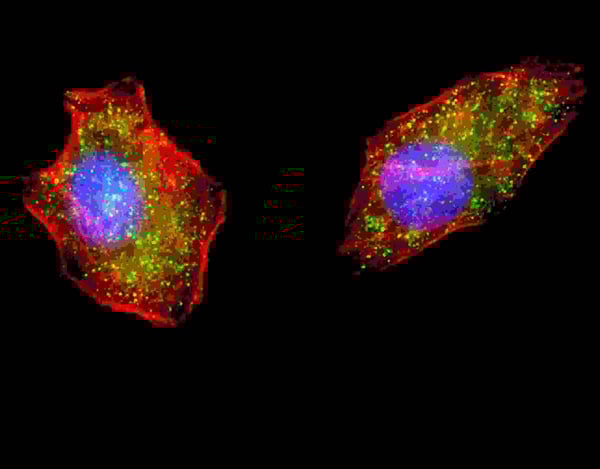
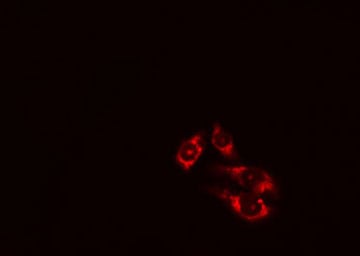
(Fluorescent image of U251 cells stained with ATG4D (N-term) antibody. U251 cells were treated with Chloroquine (50 uM,16h), then fixed with 4% PFA (20 min), permeabilized with Triton X-100 (0.2%, 30 min). Cells were then incubated with AAA288316 ATG4D (N-term) primary antibody (1:200, 2 h at room temperature). For secondary antibody, Alexa Fluor 488 conjugated donkey anti-rabbit antibody (green) was used (1:1000, 1h). Cytoplasmic actin was counterstained with Alexa Fluor 555 (red) conjugated Phalloidin (5.25 uM, 25 min). Nuclei were counterstained with Hoechst 33342 (blue) (10 ug/ml, 5 min). Pictures were taken on a Biorevo microscope (BZ-900, Keyence). ATG4D (N-term) immunoreactivity is localized to autophagic vacuoles in the cytoplasm of U251 cells.)
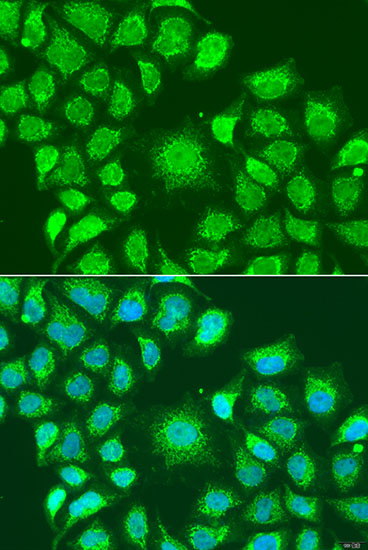
IF (Immunofluorescence)
(Fluorescent image of U251 cells stained with ATG4D (N-term) antibody. U251 cells were treated with Chloroquine (50 uM,16h), then fixed with 4% PFA (20 min), permeabilized with Triton X-100 (0.2%, 30 min). Cells were then incubated with AAA288316 ATG4D (N-term) primary antibody (1:200, 2 h at room temperature). For secondary antibody, Alexa Fluor 488 conjugated donkey anti-rabbit antibody (green) was used (1:1000, 1h). Cytoplasmic actin was counterstained with Alexa Fluor 555 (red) conjugated Phalloidin (5.25 uM, 25 min). Nuclei were counterstained with Hoechst 33342 (blue) (10 ug/ml, 5 min). Pictures were taken on a Biorevo microscope (BZ-900, Keyence). ATG4D (N-term) immunoreactivity is localized to autophagic vacuoles in the cytoplasm of U251 cells.)
damaged organelles are destroyed intracellularly. Autophagy is
postulated to be essential for cell homeostasis and cell remodeling
during differentiation, metamorphosis, non-apoptotic cell death,
and aging. Reduced levels of autophagy have been described in some
malignant tumors, and a role for autophagy in controlling the
unregulated cell growth linked to cancer has been proposed. This
gene encodes a member of the autophagin protein family. The encoded
protein is also designated as a member of the C-54 family of
cysteine proteases.
1.Betin, V.M., et al. J. Cell. Sci. 122 (PT 14), 2554-2566 (2009)
2.Lamesch, P., et al. Genomics 89(3):307-315(2007)
3.Marino, G., et al. J. Biol. Chem. 278(6):3671-3678(2003)
References for U251 cell line:
1. Westermark B.; Pontén J.; Hugosson R. (1973)." Determinants for the establishment of permanent tissue culture lines from human gliomas". Acta Pathol Microbiol Scand A. 81:791-805. [PMID: 4359449].
2. Pontén, J.,Westermark B. (1978)." Properties of Human Malignant Glioma Cells in Vitro". Medical Biology 56: 184-193.[PMID: 359950].
3. Geng Y.;Kohli L.; Klocke B.J.; Roth K.A.(2010). "Chloroquine-induced autophagic vacuole accumulation and cell death in glioma cells is p53 independent". Neuro Oncol. 12(5): 473-481.[ PMID: 20406898].
NCBI and Uniprot Product Information
Customer Reviews
Loading reviews...
Share Your Experience
Similar Products

Product Notes
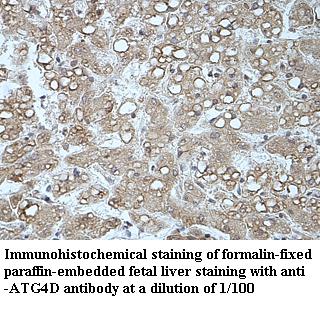
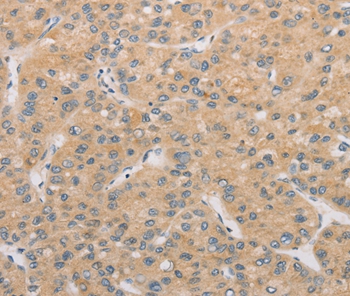
The ATG4D atg4d (Catalog #AAA288316) is an Antibody produced from Rabbit and is intended for research purposes only. The product is available for immediate purchase. The immunogen sequence is 42-71. The ATG4D Antibody (N-term) reacts with Mouse and may cross-react with other species as described in the data sheet. AAA Biotech's ATG4D can be used in a range of immunoassay formats including, but not limited to, IHC (Immunohistochemistry), WB (Western Blot), ELISA, IF (Immunofluorescence). Researchers should empirically determine the suitability of the ATG4D atg4d for an application not listed in the data sheet. Researchers commonly develop new applications and it is an integral, important part of the investigative research process. It is sometimes possible for the material contained within the vial of "ATG4D, Polyclonal Antibody" to become dispersed throughout the inside of the vial, particularly around the seal of said vial, during shipment and storage. We always suggest centrifuging these vials to consolidate all of the liquid away from the lid and to the bottom of the vial prior to opening. Please be advised that certain products may require dry ice for shipping and that, if this is the case, an additional dry ice fee may also be required.Precautions
All products in the AAA Biotech catalog are strictly for research-use only, and are absolutely not suitable for use in any sort of medical, therapeutic, prophylactic, in-vivo, or diagnostic capacity. By purchasing a product from AAA Biotech, you are explicitly certifying that said products will be properly tested and used in line with industry standard. AAA Biotech and its authorized distribution partners reserve the right to refuse to fulfill any order if we have any indication that a purchaser may be intending to use a product outside of our accepted criteria.Disclaimer
Though we do strive to guarantee the information represented in this datasheet, AAA Biotech cannot be held responsible for any oversights or imprecisions. AAA Biotech reserves the right to adjust any aspect of this datasheet at any time and without notice. It is the responsibility of the customer to inform AAA Biotech of any product performance issues observed or experienced within 30 days of receipt of said product. To see additional details on this or any of our other policies, please see our Terms & Conditions page.Item has been added to Shopping Cart
If you are ready to order, navigate to Shopping Cart and get ready to checkout.