
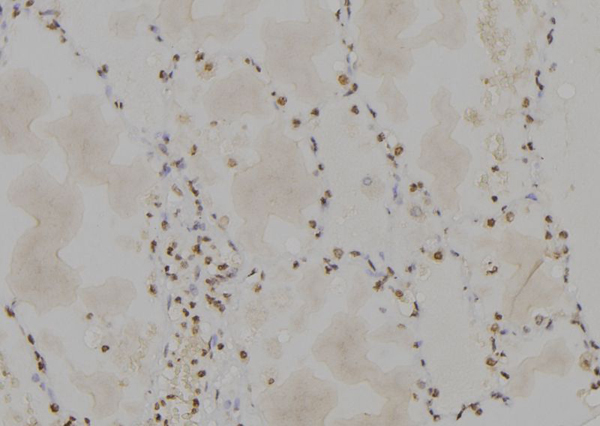
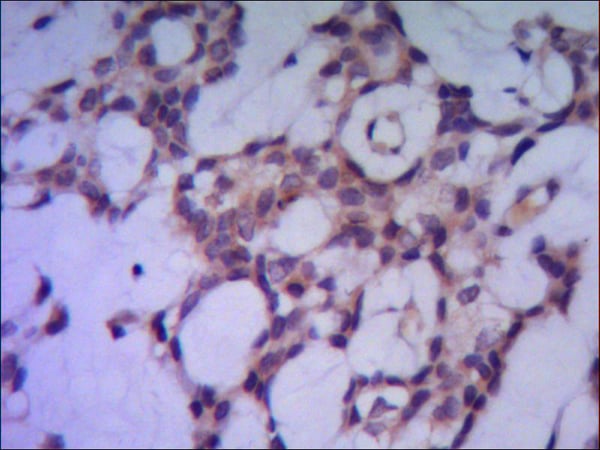
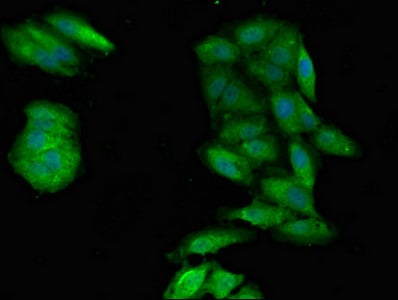
 IHC (Immunohiostchemistry)
(AAA326662 at 1/100 staining Human lung tissue by IHC-P. The sample was formaldehyde fixed and a heat mediated antigen retrieval step in citrate buffer was performed. The sample was then blocked and incubated with the antibody for 1.5 hours at 22 degree C. An HRP conjugated goat anti-rabbit antibody was used as the secondary.)
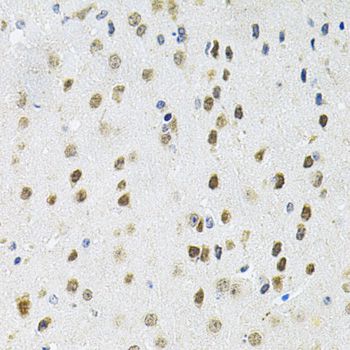
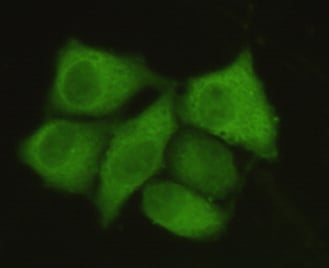
IHC (Immunohiostchemistry)
(AAA326662 at 1/100 staining Human lung tissue by IHC-P. The sample was formaldehyde fixed and a heat mediated antigen retrieval step in citrate buffer was performed. The sample was then blocked and incubated with the antibody for 1.5 hours at 22 degree C. An HRP conjugated goat anti-rabbit antibody was used as the secondary.)
Rabbit PPP1CA Polyclonal Antibody | anti-PPP1CA antibody
PPP1CA Antibody
Gene Names
PPP1CA; PP1A; PP-1A; PPP1A; PP1alpha
Reactivity
Human, Mouse, Rat
Applications
ELISA, Immunohistochemistry, Western Blot
Purity
The antiserum was purified by peptide affinity chromatography using SulfoLink Coupling Resin.
Synonyms
PPP1CA, Antibody; PPP1CA Antibody; Alpha isoform serine threonine protein phosphatase PP1alpha 1 catalytic subunit; Catalytic subunit; EC 3.1.3.16; MGC15877; MGC1674; PP 1A; PP-1A; PP1A; PP1A_HUMAN; PP1alpha; PP2C ALPHA; PP2CA; Ppp1ca; Protein Phosphatase 2C Alpha Isoform; Serine threonine protein phosphatase PP1 alpha catalytic subunit; Serine threonine protein phosphatase PP1 alpha catalytic subunit protein phosphatase 1; Serine/threonine-protein phosphatase PP1-alpha catalytic subunit; anti-PPP1CA antibody
Host
Rabbit
Reactivity
Human, Mouse, Rat
Clonality
Polyclonal
Isotype
IgG
Specificity
PPP1CA antibody detects endogenous levels of total PPP1CA
Purity/Purification
The antiserum was purified by peptide affinity chromatography using SulfoLink Coupling Resin.
Form/Format
Liquid
Phosphate buffered saline, pH 7.4, 150mM NaCl, 0.02% sodium azide and 50% glycerol.
Phosphate buffered saline, pH 7.4, 150mM NaCl, 0.02% sodium azide and 50% glycerol.
Concentration
1mg/ml (varies by lot)
Sequence Length
341
Applicable Applications for anti-PPP1CA antibody
ELISA, IHC (Immunohistochemistry), WB (Western Blot)
Immunogen
A synthesized peptide derived from human PPP1CA
Subcellular Location
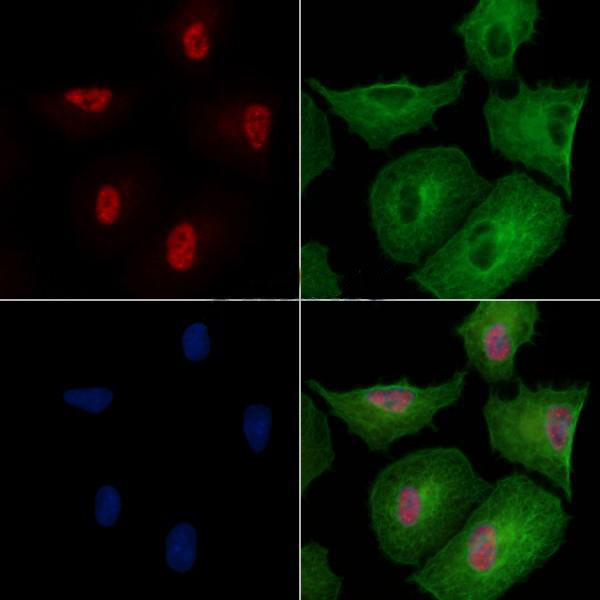
Cytoplasm. Nucleus. Nucleus > Nucleoplasm. Nucleus > Nucleolus. Primarily nuclear and largely excluded from the nucleolus. Highly mobile in cells and can be relocalized through interaction with targeting subunits. NOM1 plays a role in targeting this protein to the nucleolus. In the presence of PPP1R8 relocalizes from the nucleus to nuclear speckles.
Tissue Specificity
Up-regulated in synovial fluid mononuclear cells and peripheral blood mononuclear cells from patients with rheumatoid arthritis.
Predicted Cross Reactivity
Bovine, Horse, Sheep, Rabbit, Dog
Similarity
Bovine (100%), Horse (100%), Sheep (100%), Rabbit (100%), Dog (100%)
Conjugation
Unconjugated
Preparation and Storage
Store at -20 degree C. Stable for 12 months from date of receipt.
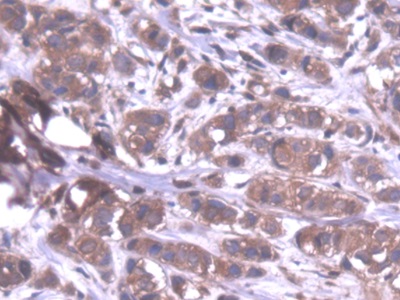
IHC (Immunohiostchemistry)
(AAA326662 at 1/100 staining Human lung tissue by IHC-P. The sample was formaldehyde fixed and a heat mediated antigen retrieval step in citrate buffer was performed. The sample was then blocked and incubated with the antibody for 1.5 hours at 22 degree C. An HRP conjugated goat anti-rabbit antibody was used as the secondary.)
IHC (Immunohiostchemistry)
(AAA326662 at 1/100 staining Human lung tissue by IHC-P. The sample was formaldehyde fixed and a heat mediated antigen retrieval step in citrate buffer was performed. The sample was then blocked and incubated with the antibody for 1.5 hours at 22 degree C. An HRP conjugated goat anti-rabbit antibody was used as the secondary.)
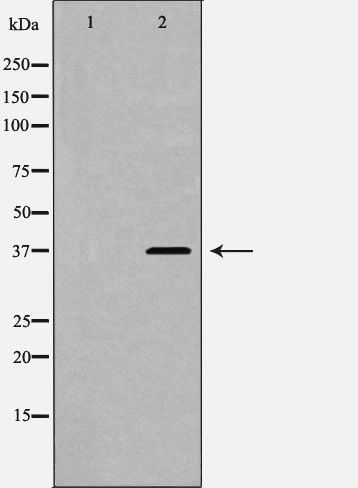
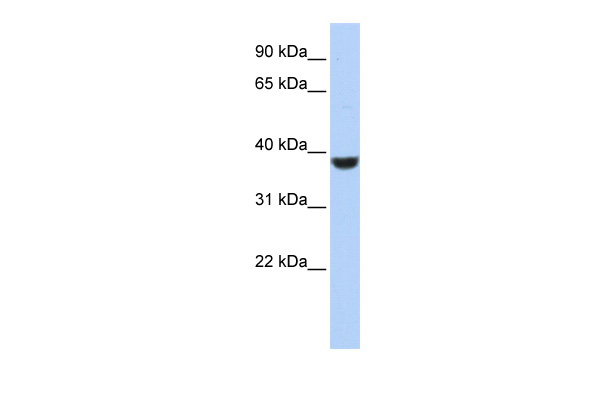
WB (Western Blot)
(Western blot analysis of Hela whole cell lysates, using PPP1CA Antibody. The lane on the left is treated with the antigen-specific peptide.)
WB (Western Blot)
(Western blot analysis of Hela whole cell lysates, using PPP1CA Antibody. The lane on the left is treated with the antigen-specific peptide.)
Related Product Information for anti-PPP1CA antibody
Description: Type 1 protein phosphatase (PP1), a serine/threonine phosphatase, is highly conserved in eukaryotic cells. Four isoforms of PP1 have been characterized: PP1alpha, PP1delta, PP1gamma1 and PP1gamma2 (1). Involvement in cell cycle regulation is one of the biological functions of PP1 (1). It has been illustrated that PP1 dephosphorylates Rb and cdc25 during mitosis (2, 3). A cell cycle-dependent phosphorylation at Thr320 of PP1alpha by cdc2 kinase inhibits PP1alpha activity (4).
Function: Protein phosphatase that associates with over 200 regulatory proteins to form highly specific holoenzymes which dephosphorylate hundreds of biological targets. Protein phosphatase 1 (PP1) is essential for cell division, and participates in the regulation of glycogen metabolism, muscle contractility and protein synthesis. Involved in regulation of ionic conductances and long-term synaptic plasticity. May play an important role in dephosphorylating substrates such as the postsynaptic density-associated Ca2+/calmodulin dependent protein kinase II. Component of the PTW/PP1 phosphatase complex, which plays a role in the control of chromatin structure and cell cycle progression during the transition from mitosis into interphase. Regulates NEK2 function in terms of kinase activity and centrosome number and splitting, both in the presence and absence of radiation-induced DNA damage. Regulator of neural tube and optic fissure closure, and enteric neural crest cell (ENCCs) migration during development. In balance with CSNK1D and CSNK1E, determines the circadian period length, through the regulation of the speed and rhythmicity of PER1 and PER2 phosphorylation. May dephosphorylate CSNK1D and CSNK1E. Dephosphorylates the 'Ser-418' residue of FOXP3 in regulatory T-cells (Treg) from patients with rheumatoid arthritis, thereby inactivating FOXP3 and rendering Treg cells functionally defective (PubMed:23396208). Dephosphorylates CENPA (PubMed:25556658). Dephosphorylates the 'Ser-139' residue of ATG16L1 causing dissociation of ATG12-ATG5-ATG16L1 complex, thereby inhibiting autophagy (PubMed:26083323).
Subunit Structure: PP1 comprises a catalytic subunit, PPP1CA, PPP1CB or PPP1CC, which is folded into its native form by inhibitor 2 and glycogen synthetase kinase 3, and then complexed to one or several targeting or regulatory subunits. PPP1R12A, PPP1R12B and PPP1R12C mediate binding to myosin. PPP1R3A (in skeletal muscle), PPP1R3B (in liver), PPP1R3C, PPP1R3D and PPP1R3F (in brain) mediate binding to glycogen. Interacts with PPP1R39 (By similarity). Interacts with BTBD10 (By similarity). Interacts with KCTD20 (By similarity). Interacts with PPP1R9A and PPP1R9B. Part of a complex containing PPP1R15B, PP1 and NCK1/2. Interacts with PHACTR4; which acts as an activator of PP1 activity (By similarity). Interacts with PPP1R15A and PPP1R15B; the interactions mediate binding to EIF2S1. Interacts with PPP1R7. Interacts with YLPM1. Forms a complex with ILF2, ILF3, YLPM1, KHDRBS1, RBMX and NCOA5. Interacts with NOM1 and PPP1R8. Interacts with HHV-1 ICP34.5. Interacts with PPP1R16B. Interacts with RPSA only in the presence of PPP1R16B. Component of the PTW/PP1 phosphatase complex, composed of PPP1R10/PNUTS, TOX4, WDR82, and PPP1CA or PPP1CB or PPP1CC. Interacts with PPP1R10/PNUTS and PPP1R8. Interacts with WDR82 in the presence of PPP1R10/PNUTS. Interacts with TRIM28; the interaction dephosphorylates TRIM28 on 'Ser-824' and forms a complex at the p21 promoter site. Interacts with isoform 1 and isoform 4 of NEK2. Interacts with FER; this promotes phosphorylation at Thr-320. Interacts with DAB2; the interaction is mutually exclusive with the AXIN1:PPP1CA interaction. Interacts with FOXP3 (PubMed:23396208). Interacts with CENPA (PubMed:25556658). Interacts with ATG16L1 (PubMed:26083323).
Post-translational Modifications: Phosphorylated. Dephosphorylated at Thr-320 in the presence of ionizing radiation.
Similarity: Belongs to the PPP phosphatase family. PP-1 subfamily.
Function: Protein phosphatase that associates with over 200 regulatory proteins to form highly specific holoenzymes which dephosphorylate hundreds of biological targets. Protein phosphatase 1 (PP1) is essential for cell division, and participates in the regulation of glycogen metabolism, muscle contractility and protein synthesis. Involved in regulation of ionic conductances and long-term synaptic plasticity. May play an important role in dephosphorylating substrates such as the postsynaptic density-associated Ca2+/calmodulin dependent protein kinase II. Component of the PTW/PP1 phosphatase complex, which plays a role in the control of chromatin structure and cell cycle progression during the transition from mitosis into interphase. Regulates NEK2 function in terms of kinase activity and centrosome number and splitting, both in the presence and absence of radiation-induced DNA damage. Regulator of neural tube and optic fissure closure, and enteric neural crest cell (ENCCs) migration during development. In balance with CSNK1D and CSNK1E, determines the circadian period length, through the regulation of the speed and rhythmicity of PER1 and PER2 phosphorylation. May dephosphorylate CSNK1D and CSNK1E. Dephosphorylates the 'Ser-418' residue of FOXP3 in regulatory T-cells (Treg) from patients with rheumatoid arthritis, thereby inactivating FOXP3 and rendering Treg cells functionally defective (PubMed:23396208). Dephosphorylates CENPA (PubMed:25556658). Dephosphorylates the 'Ser-139' residue of ATG16L1 causing dissociation of ATG12-ATG5-ATG16L1 complex, thereby inhibiting autophagy (PubMed:26083323).
Subunit Structure: PP1 comprises a catalytic subunit, PPP1CA, PPP1CB or PPP1CC, which is folded into its native form by inhibitor 2 and glycogen synthetase kinase 3, and then complexed to one or several targeting or regulatory subunits. PPP1R12A, PPP1R12B and PPP1R12C mediate binding to myosin. PPP1R3A (in skeletal muscle), PPP1R3B (in liver), PPP1R3C, PPP1R3D and PPP1R3F (in brain) mediate binding to glycogen. Interacts with PPP1R39 (By similarity). Interacts with BTBD10 (By similarity). Interacts with KCTD20 (By similarity). Interacts with PPP1R9A and PPP1R9B. Part of a complex containing PPP1R15B, PP1 and NCK1/2. Interacts with PHACTR4; which acts as an activator of PP1 activity (By similarity). Interacts with PPP1R15A and PPP1R15B; the interactions mediate binding to EIF2S1. Interacts with PPP1R7. Interacts with YLPM1. Forms a complex with ILF2, ILF3, YLPM1, KHDRBS1, RBMX and NCOA5. Interacts with NOM1 and PPP1R8. Interacts with HHV-1 ICP34.5. Interacts with PPP1R16B. Interacts with RPSA only in the presence of PPP1R16B. Component of the PTW/PP1 phosphatase complex, composed of PPP1R10/PNUTS, TOX4, WDR82, and PPP1CA or PPP1CB or PPP1CC. Interacts with PPP1R10/PNUTS and PPP1R8. Interacts with WDR82 in the presence of PPP1R10/PNUTS. Interacts with TRIM28; the interaction dephosphorylates TRIM28 on 'Ser-824' and forms a complex at the p21 promoter site. Interacts with isoform 1 and isoform 4 of NEK2. Interacts with FER; this promotes phosphorylation at Thr-320. Interacts with DAB2; the interaction is mutually exclusive with the AXIN1:PPP1CA interaction. Interacts with FOXP3 (PubMed:23396208). Interacts with CENPA (PubMed:25556658). Interacts with ATG16L1 (PubMed:26083323).
Post-translational Modifications: Phosphorylated. Dephosphorylated at Thr-320 in the presence of ionizing radiation.
Similarity: Belongs to the PPP phosphatase family. PP-1 subfamily.
NCBI and Uniprot Product Information
NCBI GI #
NCBI GeneID
NCBI Accession #
NCBI GenBank Nucleotide #
Molecular Weight
Observed: 38 kDa
Predicted: 38 kDa
Predicted: 38 kDa
NCBI Official Full Name
serine/threonine-protein phosphatase PP1-alpha catalytic subunit isoform 3
NCBI Official Synonym Full Names
protein phosphatase 1 catalytic subunit alpha
NCBI Official Symbol
PPP1CA
NCBI Official Synonym Symbols
PP1A; PP-1A; PPP1A; PP1alpha
NCBI Protein Information
serine/threonine-protein phosphatase PP1-alpha catalytic subunit
UniProt Protein Name
Serine/threonine-protein phosphatase PP1-alpha catalytic subunit
UniProt Gene Name
PPP1CA
UniProt Synonym Gene Names
PPP1A; PP-1A
Customer Reviews
Loading reviews...
Share Your Experience
Similar Products

Product Notes
The PPP1CA ppp1ca (Catalog #AAA326662) is an Antibody produced from Rabbit and is intended for research purposes only. The product is available for immediate purchase. The PPP1CA Antibody reacts with Human, Mouse, Rat and may cross-react with other species as described in the data sheet. AAA Biotech's PPP1CA can be used in a range of immunoassay formats including, but not limited to, ELISA, IHC (Immunohistochemistry), WB (Western Blot). Researchers should empirically determine the suitability of the PPP1CA ppp1ca for an application not listed in the data sheet. Researchers commonly develop new applications and it is an integral, important part of the investigative research process. It is sometimes possible for the material contained within the vial of "PPP1CA, Polyclonal Antibody" to become dispersed throughout the inside of the vial, particularly around the seal of said vial, during shipment and storage. We always suggest centrifuging these vials to consolidate all of the liquid away from the lid and to the bottom of the vial prior to opening. Please be advised that certain products may require dry ice for shipping and that, if this is the case, an additional dry ice fee may also be required.Precautions
All products in the AAA Biotech catalog are strictly for research-use only, and are absolutely not suitable for use in any sort of medical, therapeutic, prophylactic, in-vivo, or diagnostic capacity. By purchasing a product from AAA Biotech, you are explicitly certifying that said products will be properly tested and used in line with industry standard. AAA Biotech and its authorized distribution partners reserve the right to refuse to fulfill any order if we have any indication that a purchaser may be intending to use a product outside of our accepted criteria.Disclaimer
Though we do strive to guarantee the information represented in this datasheet, AAA Biotech cannot be held responsible for any oversights or imprecisions. AAA Biotech reserves the right to adjust any aspect of this datasheet at any time and without notice. It is the responsibility of the customer to inform AAA Biotech of any product performance issues observed or experienced within 30 days of receipt of said product. To see additional details on this or any of our other policies, please see our Terms & Conditions page.Item has been added to Shopping Cart
If you are ready to order, navigate to Shopping Cart and get ready to checkout.