
Filters
▼Clonality
▼Type
▼Reactivity
▼Gene Name
▼Isotype
▼Host
▼Application
▼Clone
▼Recombinant Antibodies
Also available for purchase in our catalog, we have flexible recombinant antibodies that are excellent tools in many different types of experiments, and well-suited for those that are large-scale or long-term. Our collection of recombinant antibodies includes different forms/formats of said antibodies, such as labeled or purified versions, and can be made utilizing different species’ isotypes to suit various experimental requirements.
Viewing 2800-2821 of 2821 product results


 IHC (Immunohistchemistry)
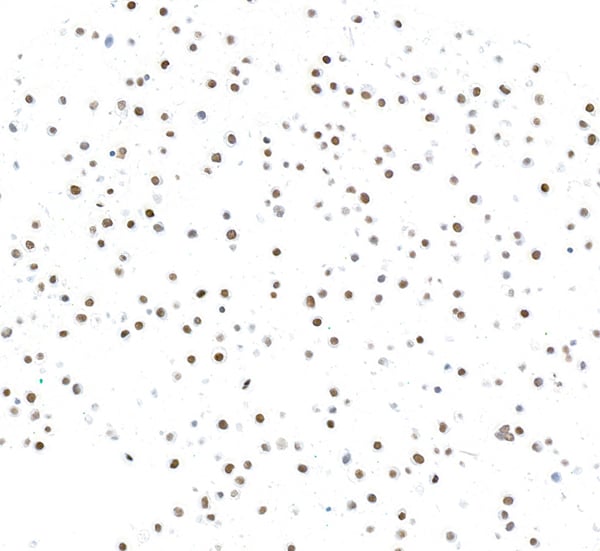
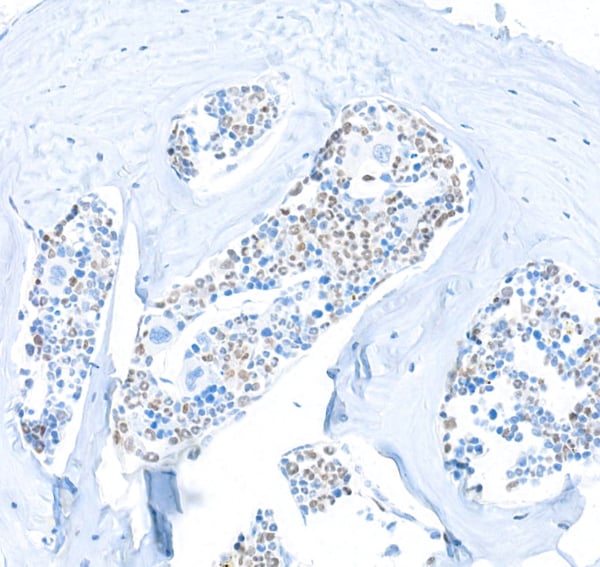
(Detection of SMARCB1/SNF5 by immunohistochemistry. Sample: FFPE section of ovarian carcinoma. Antibody: Rabbit anti-SMARCB1/SNF5 recombinant monoclonal antibody (AAA23883). Secondary: HRP-conjugated goat anti-rabbit IgG)
IHC (Immunohistchemistry)
(Detection of SMARCB1/SNF5 by immunohistochemistry. Sample: FFPE section of ovarian carcinoma. Antibody: Rabbit anti-SMARCB1/SNF5 recombinant monoclonal antibody (AAA23883). Secondary: HRP-conjugated goat anti-rabbit IgG)
SMARCB1/SNF5, Monoclonal Recombinant Antibody (Cat# AAA23883)
 SEC-HPLC
(The purity of this product is >95% as determined by SEC-MALS.)
SEC-HPLC
(The purity of this product is >95% as determined by SEC-MALS.)
SEZ6, Monoclonal Recombinant Antibody (Cat# AAA18899)
Protein A or G purified from cell culture supernatant.




 WB (Western Blot)
(Detection of human ZEB1 by western blot. Samples: Whole cell lysate (10 ug) from Jurkat, HeLa, RKO, Hep-G2, and HEK293T cells prepared using NETN lysis buffer. Antibody: Rabbit anti-ZEB1 recombinant monoclonal antibody (AAA23870 lot 1) used at 1:1000. Secondary: HRP-conjugated goat anti-rabbit IgG . Detection: Chemiluminescence with an exposure time of 30 seconds. Lower Panel: Rabbit anti-COPB2 antibody .)
WB (Western Blot)
(Detection of human ZEB1 by western blot. Samples: Whole cell lysate (10 ug) from Jurkat, HeLa, RKO, Hep-G2, and HEK293T cells prepared using NETN lysis buffer. Antibody: Rabbit anti-ZEB1 recombinant monoclonal antibody (AAA23870 lot 1) used at 1:1000. Secondary: HRP-conjugated goat anti-rabbit IgG . Detection: Chemiluminescence with an exposure time of 30 seconds. Lower Panel: Rabbit anti-COPB2 antibody .)
ZEB1, Monoclonal Recombinant Antibody (Cat# AAA23870)


 WB (Western Blot)
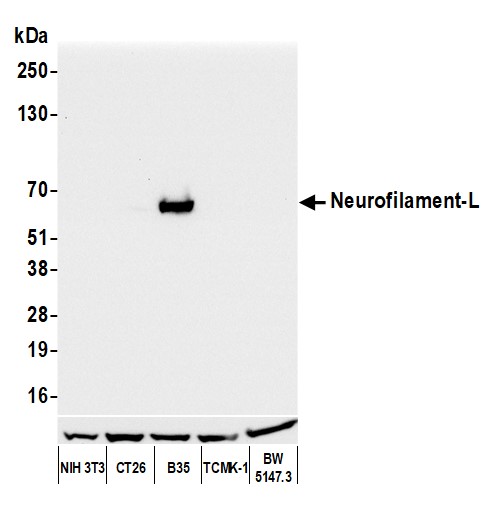
(Detection of human Neurofilament-L by western blot. Samples: Whole cell lysate (25 ug) from HEK293T, HeLa, SK-N-BE(2), Jurkat, and 786-O cells prepared using NETN lysis buffer. Antibody: Rabbit anti-Neurofilament-L recombinant monoclonal antibody (AAA23874 lot 1) used at 1:1000. Secondary: HRP-conjugated goat anti-rabbit IgG . Detection: Chemiluminescence with an exposure time of 10 seconds. Lower Panel: Rabbit anti-Actin recombinant monoclonal antibody .)
WB (Western Blot)
(Detection of human Neurofilament-L by western blot. Samples: Whole cell lysate (25 ug) from HEK293T, HeLa, SK-N-BE(2), Jurkat, and 786-O cells prepared using NETN lysis buffer. Antibody: Rabbit anti-Neurofilament-L recombinant monoclonal antibody (AAA23874 lot 1) used at 1:1000. Secondary: HRP-conjugated goat anti-rabbit IgG . Detection: Chemiluminescence with an exposure time of 10 seconds. Lower Panel: Rabbit anti-Actin recombinant monoclonal antibody .)
Neurofilament-L, Monoclonal Recombinant Antibody (Cat# AAA23874)




 WB (Western Blot)
(Detection of mouse PU.1 by western blot. Samples: Whole cell lysate (50 ug) from NIH 3T3, CT26, RAW 264.7, TCMK-1, and BW5147.3 cells prepared using NETN lysis buffer. Antibody: Rabbit anti-PU.1 recombinant monoclonal antibody (AAA23854 lot 1) used at 1:1000. Secondary: HRP-conjugated goat anti-rabbit IgG . Detection: Chemiluminescence with an exposure time of 3 minutes. Lower Panel: Rabbit anti-Actin recombinant monoclonal antibody .)
WB (Western Blot)
(Detection of mouse PU.1 by western blot. Samples: Whole cell lysate (50 ug) from NIH 3T3, CT26, RAW 264.7, TCMK-1, and BW5147.3 cells prepared using NETN lysis buffer. Antibody: Rabbit anti-PU.1 recombinant monoclonal antibody (AAA23854 lot 1) used at 1:1000. Secondary: HRP-conjugated goat anti-rabbit IgG . Detection: Chemiluminescence with an exposure time of 3 minutes. Lower Panel: Rabbit anti-Actin recombinant monoclonal antibody .)
PU.1, Monoclonal Recombinant Antibody (Cat# AAA23854)



 WB (Western Blot)
(Detection of human B7-H4 by western blot. Samples: Whole cell lysate (50 ug) from OVCAR-4, Hep-G2, MCF-7, HeLa, HEK293T, Jurkat, MOLT-4, HH, and C5/MJ cells prepared using NETN lysis buffer. Antibody: Rabbit anti-B7-H4 recombinant monoclonal antibody (AAA23811 lot 1) used at 1:1000. Secondary: HRP-conjugated goat anti-rabbit IgG . Detection: Chemiluminescence with an exposure time of 3 seconds.)
WB (Western Blot)
(Detection of human B7-H4 by western blot. Samples: Whole cell lysate (50 ug) from OVCAR-4, Hep-G2, MCF-7, HeLa, HEK293T, Jurkat, MOLT-4, HH, and C5/MJ cells prepared using NETN lysis buffer. Antibody: Rabbit anti-B7-H4 recombinant monoclonal antibody (AAA23811 lot 1) used at 1:1000. Secondary: HRP-conjugated goat anti-rabbit IgG . Detection: Chemiluminescence with an exposure time of 3 seconds.)
B7-H4, Monoclonal Recombinant Antibody (Cat# AAA23811)


 WB (Western Blot)
(Detection of mouse Lasu1/Ureb1 by western blot. Samples: Whole cell lysate (20 ug) from BW5147.3, mIMCD-3, A20, NIH 3T3, CT26, and CH27 cells prepared using NETN lysis buffer. Antibody: Rabbit anti-Lasu1/Ureb1 recombinant monoclonal antibody (AAA23842 Lot 1) used at 1:1000. Secondary: HRP-conjugated goat anti-rabbit IgG . Detection: Chemiluminescence with an exposure time of 30 seconds. Lower Panel: Rabbit anti-COPB2 antibody .)
WB (Western Blot)
(Detection of mouse Lasu1/Ureb1 by western blot. Samples: Whole cell lysate (20 ug) from BW5147.3, mIMCD-3, A20, NIH 3T3, CT26, and CH27 cells prepared using NETN lysis buffer. Antibody: Rabbit anti-Lasu1/Ureb1 recombinant monoclonal antibody (AAA23842 Lot 1) used at 1:1000. Secondary: HRP-conjugated goat anti-rabbit IgG . Detection: Chemiluminescence with an exposure time of 30 seconds. Lower Panel: Rabbit anti-COPB2 antibody .)
Lasu1/Ureb1, Monoclonal Recombinant Antibody (Cat# AAA23842)


 Application Data
(DS-9606a inhibited the tumor growth of PA-1 on Balb/c nude mice. The result showed significant anti-tumor effects, with an tumor inhibition rate (TGI) of 84.7% at 5 mpk at D46.)
Application Data
(DS-9606a inhibited the tumor growth of PA-1 on Balb/c nude mice. The result showed significant anti-tumor effects, with an tumor inhibition rate (TGI) of 84.7% at 5 mpk at D46.)
CLDN6, Monoclonal Recombinant Antibody (Cat# AAA29391)




 WB (Western Blot)
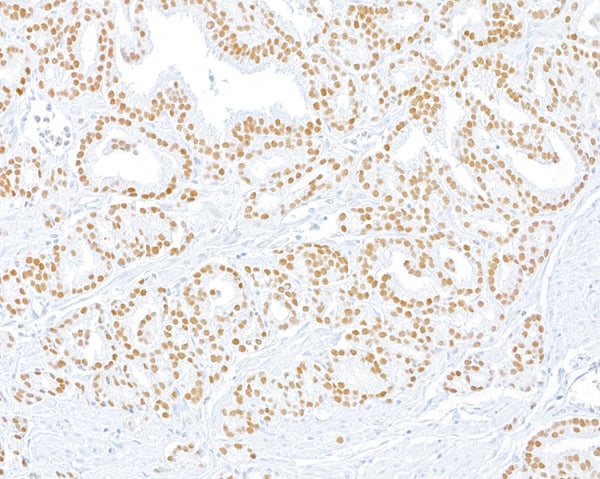
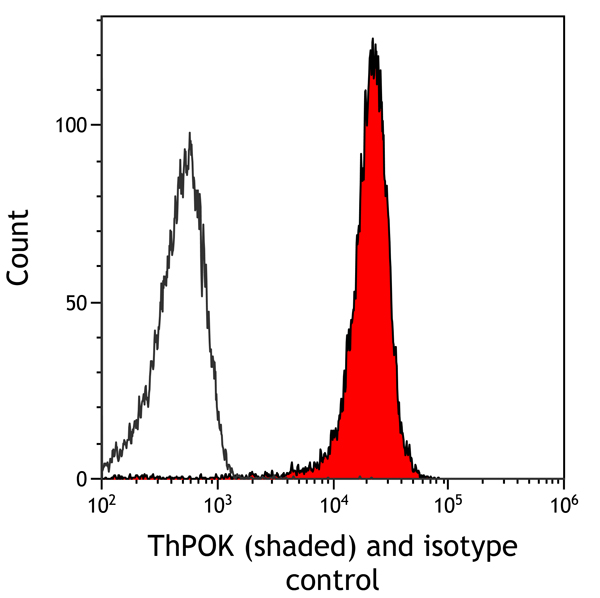
(Detection of human ThPOK by western blot. Samples: Whole cell lysate (50 ug) from LNCaP, MCF-7, HEK293T, HeLa, and OVCAR-3 cells prepared using NETN lysis buffer. Antibody: Rabbit anti-ThPOK recombinant monoclonal antibody (AAA23860 lot 1) used at 1:1000. Secondary: HRP-conjugated goat anti-rabbit IgG . Detection: Chemiluminescence with an exposure time of 75 seconds. Lower Panel: Rabbit anti-Actin recombinant monoclonal antibody .)
WB (Western Blot)
(Detection of human ThPOK by western blot. Samples: Whole cell lysate (50 ug) from LNCaP, MCF-7, HEK293T, HeLa, and OVCAR-3 cells prepared using NETN lysis buffer. Antibody: Rabbit anti-ThPOK recombinant monoclonal antibody (AAA23860 lot 1) used at 1:1000. Secondary: HRP-conjugated goat anti-rabbit IgG . Detection: Chemiluminescence with an exposure time of 75 seconds. Lower Panel: Rabbit anti-Actin recombinant monoclonal antibody .)
ThPOK, Monoclonal Recombinant Antibody (Cat# AAA23860)


 WB (Western Blot)
(Detection of human PARP1 by western blot. Samples: Whole cell lysate (10 ug) from Jurkat, HeLa, A2058, and U-251MG cells prepared using NETN lysis buffer. Antibody: Rabbit anti-PARP1 recombinant monoclonal antibody (AAA23855 lot 1) used at 1:1000. Secondary: HRP-conjugated goat anti-rabbit IgG . Detection: Chemiluminescence with an exposure time of 10 seconds. Lower Panel: Rabbit anti-COPB2 antibody .)
WB (Western Blot)
(Detection of human PARP1 by western blot. Samples: Whole cell lysate (10 ug) from Jurkat, HeLa, A2058, and U-251MG cells prepared using NETN lysis buffer. Antibody: Rabbit anti-PARP1 recombinant monoclonal antibody (AAA23855 lot 1) used at 1:1000. Secondary: HRP-conjugated goat anti-rabbit IgG . Detection: Chemiluminescence with an exposure time of 10 seconds. Lower Panel: Rabbit anti-COPB2 antibody .)
PARP1, Monoclonal Recombinant Antibody (Cat# AAA23855)


 WB (Western Blot)
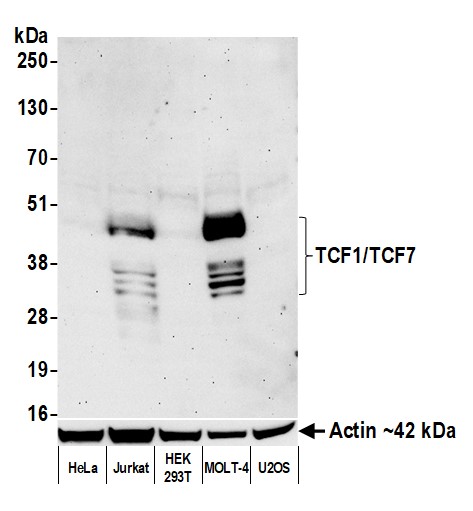
(Detection of human TCF1/TCF7 by western blot. Samples: Whole cell lysate (50 ug) from HeLa, Jurkat, HEK293T, MOLT-4, and U2OS cells prepared using NETN lysis buffer. Antibody: Rabbit anti-TCF1/TCF7 recombinant monoclonal antibody (AAA23875 lot 1) used at 1:1000. Secondary: HRP-conjugated goat anti-rabbit IgG . Detection: Chemiluminescence with an exposure time of 75 seconds. Lower Panel: Rabbit anti-Actin recombinant monoclonal antibody .)
WB (Western Blot)
(Detection of human TCF1/TCF7 by western blot. Samples: Whole cell lysate (50 ug) from HeLa, Jurkat, HEK293T, MOLT-4, and U2OS cells prepared using NETN lysis buffer. Antibody: Rabbit anti-TCF1/TCF7 recombinant monoclonal antibody (AAA23875 lot 1) used at 1:1000. Secondary: HRP-conjugated goat anti-rabbit IgG . Detection: Chemiluminescence with an exposure time of 75 seconds. Lower Panel: Rabbit anti-Actin recombinant monoclonal antibody .)
TCF1/TCF7, Recombinant Monoclonal Recombinant Antibody (Cat# AAA23875)


 Application Data
(GM-CSF-mediated proliferation of TF-1 can be completely blocked by antibodies with an IC50 of 4.105 nM.)
Application Data
(GM-CSF-mediated proliferation of TF-1 can be completely blocked by antibodies with an IC50 of 4.105 nM.)
CSF2Rb/CD131, Monoclonal Recombinant Antibody (Cat# AAA29394)


 WB (Western Blot)
(Detection of human TOX by western blot. Samples: Whole cell lysate (10 ug) from MOLT-4, HEK293T, Jurkat, HeLa, and CCRF-CEM cells prepared using NETN lysis buffer. Antibody: Rabbit anti-TOX recombinant monoclonal antibody (AAA23867 lot 1) used at 1:1000. Secondary: HRP-conjugated goat anti-rabbit IgG . Detection: Chemiluminescence with an exposure time of 3 minutes. Lower Panel: Rabbit anti-COPB2 antibody .)
WB (Western Blot)
(Detection of human TOX by western blot. Samples: Whole cell lysate (10 ug) from MOLT-4, HEK293T, Jurkat, HeLa, and CCRF-CEM cells prepared using NETN lysis buffer. Antibody: Rabbit anti-TOX recombinant monoclonal antibody (AAA23867 lot 1) used at 1:1000. Secondary: HRP-conjugated goat anti-rabbit IgG . Detection: Chemiluminescence with an exposure time of 3 minutes. Lower Panel: Rabbit anti-COPB2 antibody .)
TOX, Recombinant Monoclonal Recombinant Antibody (Cat# AAA23867)


 WB (Western Blot)
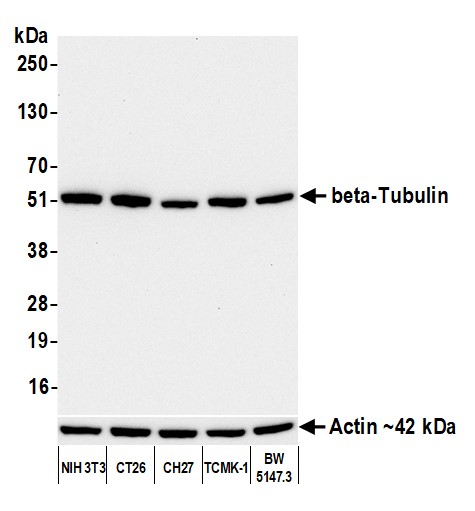
(Detection of human beta-Tubulin by western blot. Samples: Whole cell lysate (10 ug) from HeLa, HEK293T, Hep-G2, Jurkat, and MOLT-4 cells prepared using NETN lysis buffer. Antibody: Rabbit anti-beta-Tubulin recombinant monoclonal antibody (AAA23879 lot 1) used at 1:1000. Secondary: HRP-conjugated goat anti-rabbit IgG . Detection: Chemiluminescence with an exposure time of 10 seconds. Lower Panel: Rabbit anti-Actin recombinant monoclonal antibody .)
WB (Western Blot)
(Detection of human beta-Tubulin by western blot. Samples: Whole cell lysate (10 ug) from HeLa, HEK293T, Hep-G2, Jurkat, and MOLT-4 cells prepared using NETN lysis buffer. Antibody: Rabbit anti-beta-Tubulin recombinant monoclonal antibody (AAA23879 lot 1) used at 1:1000. Secondary: HRP-conjugated goat anti-rabbit IgG . Detection: Chemiluminescence with an exposure time of 10 seconds. Lower Panel: Rabbit anti-Actin recombinant monoclonal antibody .)
beta-Tubulin, Monoclonal Recombinant Antibody (Cat# AAA23879)

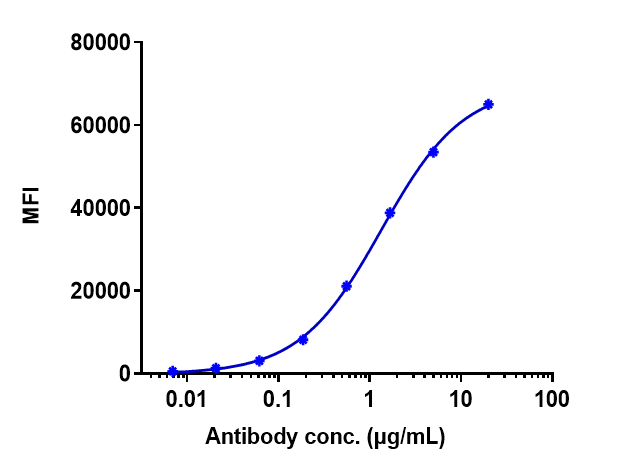


 Application Data
(Anti-CD20 Reference Antibody (rituximab)-induced ADCC activity was evaluated using Raji Cell. The max Lysis rate was approximately 35%.)
Application Data
(Anti-CD20 Reference Antibody (rituximab)-induced ADCC activity was evaluated using Raji Cell. The max Lysis rate was approximately 35%.)
CD20, Monoclonal Recombinant Antibody (Cat# AAA29393)


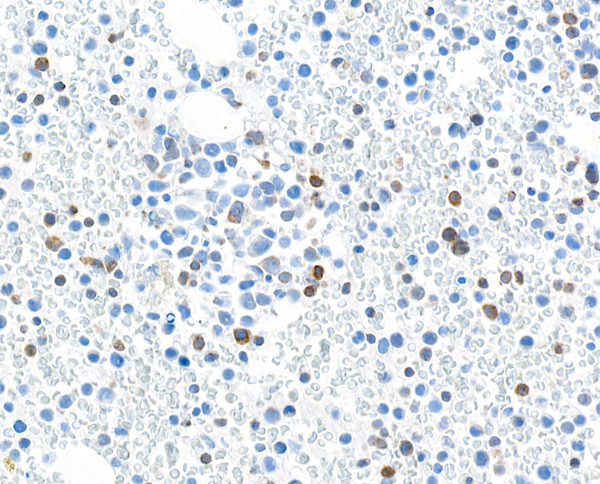


 WB (Western Blot)
(Detection of mouse TGF-beta 1 by western blot. Samples: Whole cell lysate (50 ug) from NIH 3T3, CT26, Ba/F3, TCMK-1, and BW5147.3 cells prepared using NETN lysis buffer. Antibody: Rabbit anti-TGF-beta 1 recombinant monoclonal antibody (AAA23863 lot 1) used at 1:1000. Secondary: HRP-conjugated goat anti-rabbit IgG . Detection: Chemiluminescence with an exposure time of 75 seconds. Lower Panel: Rabbit anti-COPB2 antibody .)
WB (Western Blot)
(Detection of mouse TGF-beta 1 by western blot. Samples: Whole cell lysate (50 ug) from NIH 3T3, CT26, Ba/F3, TCMK-1, and BW5147.3 cells prepared using NETN lysis buffer. Antibody: Rabbit anti-TGF-beta 1 recombinant monoclonal antibody (AAA23863 lot 1) used at 1:1000. Secondary: HRP-conjugated goat anti-rabbit IgG . Detection: Chemiluminescence with an exposure time of 75 seconds. Lower Panel: Rabbit anti-COPB2 antibody .)
TGF-beta 1, Monoclonal Recombinant Antibody (Cat# AAA23863)


 Application Data
(IMAB027 inhibited the tumor growth of OV90 on Balb/c nude mice. The result showed significant anti-tumor effects, with an tumor inhibition rate (TGI) of 50.7% at 5 mpk at D34.)
Application Data
(IMAB027 inhibited the tumor growth of OV90 on Balb/c nude mice. The result showed significant anti-tumor effects, with an tumor inhibition rate (TGI) of 50.7% at 5 mpk at D34.)
CLDN6, Monoclonal Recombinant Antibody (Cat# AAA29397)


 Application Data
(The phagocytosis ratio lemzoparlimab by CCRF-CEM increased with the increase of antibody concentration, and the phagocytosis Rate (%) reached 43%.)
Application Data
(The phagocytosis ratio lemzoparlimab by CCRF-CEM increased with the increase of antibody concentration, and the phagocytosis Rate (%) reached 43%.)
CD47, Monoclonal Recombinant Antibody (Cat# AAA29403)


 WB (Western Blot)
(Detection of human LAG3 by western blot. Samples: Whole cell lysate (50 ug) from RPMI-8226, Jurkat, HDLM-2, MJ, and HEK293T cells prepared using NETN lysis buffer. Antibody: Rabbit anti-LAG3 recombinant monoclonal antibody (AAA23802 lot 2) used at 1:1000. Secondary: HRP-conjugated goat anti-rabbit IgG . Detection: Chemiluminescence with an exposure time of 30 seconds.)
WB (Western Blot)
(Detection of human LAG3 by western blot. Samples: Whole cell lysate (50 ug) from RPMI-8226, Jurkat, HDLM-2, MJ, and HEK293T cells prepared using NETN lysis buffer. Antibody: Rabbit anti-LAG3 recombinant monoclonal antibody (AAA23802 lot 2) used at 1:1000. Secondary: HRP-conjugated goat anti-rabbit IgG . Detection: Chemiluminescence with an exposure time of 30 seconds.)
LAG3, Monoclonal Recombinant Antibody (Cat# AAA23802)


 WB (Western Blot)
(Detection of human c-Maf by western blot of HEK293T transfected with myc tagged human or mouse MafA, MafB, or c-Maf. Antibody: Rabbit anti-c-Maf recombinant monoclonal antibody (AAA23812 lot 3) used at 1:1000. Secondary: HRP-conjugated goat anti-rabbit IgG . Detection: Chemiluminescence with an exposure time of 30 seconds. Lower Panel: Rabbit anti-Myc Tag recombinant monoclonal antibody .)
WB (Western Blot)
(Detection of human c-Maf by western blot of HEK293T transfected with myc tagged human or mouse MafA, MafB, or c-Maf. Antibody: Rabbit anti-c-Maf recombinant monoclonal antibody (AAA23812 lot 3) used at 1:1000. Secondary: HRP-conjugated goat anti-rabbit IgG . Detection: Chemiluminescence with an exposure time of 30 seconds. Lower Panel: Rabbit anti-Myc Tag recombinant monoclonal antibody .)
c-Maf, Monoclonal Recombinant Antibody (Cat# AAA23812)


 WB (Western Blot)
(Detection of mouse SOX10 by western blot. Samples: Whole cell lysate from TCMK-1 (50 ug), B16-F10 (15 ug), NIH 3T3 (50 ug), and Malme-3M (15 ug) cells prepared using NETN lysis buffer. Antibody: Rabbit anti-SOX10 recombinant monoclonal antibody (AAA23824 lot 1) used at 1:1000. Secondary: HRP-conjugated goat anti-rabbit IgG . Detection: Chemiluminescence with an exposure time of 3 seconds.)
WB (Western Blot)
(Detection of mouse SOX10 by western blot. Samples: Whole cell lysate from TCMK-1 (50 ug), B16-F10 (15 ug), NIH 3T3 (50 ug), and Malme-3M (15 ug) cells prepared using NETN lysis buffer. Antibody: Rabbit anti-SOX10 recombinant monoclonal antibody (AAA23824 lot 1) used at 1:1000. Secondary: HRP-conjugated goat anti-rabbit IgG . Detection: Chemiluminescence with an exposure time of 3 seconds.)
SOX10, Monoclonal Recombinant Antibody (Cat# AAA23824)
What are recombinant antibodies?
Recombinant antibodies are produced in the lab by utilizing a known genetic sequence (an amino acid and nucleotide sequence). This allows for high consistency in how each new lot will perform and how specific they will be for the target, regardless of how many times they are produced/reproduced.
They help solve the problems observed when traditional non-recombinant techniques are utilized, such as changes in cell behavior over time, differences between production batches, and accuracy in complex biological systems.
A powerful feature of recombinant antibodies is that they can also be modified through progressive genetic engineering and subsequent testing in order to make them perform better and/or more reliably.
Applications For Recombinant Antibodies
1. Basic Research
Recombinant antibodies are primarily utilized in laboratory experiments to study the function of various proteins in cells. They are helpful in finding and tracking specific molecules through their use in techniques such as ELISA, Western blotting, immunofluorescence, and flow cytometry.
2. Diagnostics
They are also key components in diagnostic tests used to detect diseases and infections. As recombinant antibodies are produced in a consistent and controlled way, they are able to provide highly reliable results across batches. Though recombinant antibodies are indeed quite useful in diagnostic applications, all of the products listed in AAA Biotech’s also known as AAA Bio or AAABio catalog are strictly for research-use only (RUO).
3. Therapeutics (Medical Treatments)
Please note that all of the products listed in AAA Biotech’s catalog are strictly for research-use only (RUO).
- Chimeric Antibodies: Commonly used in therapeutic treatment. They combine different pieces of mouse and human antibodies in order to reduce immune reactions.
- Humanized Antibodies: Modified non-human antibodies that are made to look the same as actual native human antibodies, making them safer and more effective.
- Antibody Fragments (Fab, scFv, VHH): Smaller pieces of antibody fragments that can reach deep into tissues and tumors. They are useful in cancer treatments and imaging.
- Bispecific Antibodies: Specially-engineered antibodies that can bind to two different target molecules at once. Each antibody has two “arms” that allow for two places where the target antigen can bind (both “arms” will recognize the same exact epitope). These bispecific antibodies are engineered so that each arm can detect a completely different epitope than the other. Used in many of the treatments for cancer, diabetes, Alzheimer’s disease, and more.
- Fc-Fusion Proteins: Used as drugs and research tools. They combine parts of antibodies with other proteins to improve stability and effectiveness.
4. Imaging and Detection
Small antibody fragments are also used as imaging agents in medical scans. Their small size helps them reach and report on the status of tumors quickly.
5. Drug Development and Delivery
Recombinant antibodies can also be designed and made to deliver drugs directly to diseased cells, especially in targeted cancer therapy.
6. Immunotherapy
These antibodies can aid the immune system recognize and fight diseases more effectively, which is often their role in cancer treatment.
Please note that all of the products listed in AAA Biotech’s catalog are strictly for research-use only (RUO).
Advantages of Recombinant Antibodies
- Reliable Results Every Time: Recombinant antibodies are exceptionally consistent from batch to batch. This means researchers can trust that results will remain the same each time they purchase and use them.
- More Specific and Accurate: Compared to polyclonal antibodies, recombinant antibodies are significantly less likely to exhibit non-specific binding, which promotes more accurate and clearer results.
- Easier to Develop: Making recombinant antibodies is simpler and quicker than the traditional method of producing monoclonal antibodies via hybridomas.
- No Genetic Drift: Over time, hybridoma cells can change or become unstable, which can result in the antibodies progressively losing their function/specificity. Recombinant antibodies avoid this problem because they are produced from a fixed template DNA sequence.
- Truly Monoclonal: Studies have shown that many hybridomas thought to be monoclonal actually are not so, which can lead to, in some cases, unreliable results. Recombinant antibodies are made using precise genetic sequence templates, ensuring they are truly specific to one target.
- Long-Term Stability and Safety: Since their amino acid and genetic sequences are known and stored, recombinant antibodies can be reproduced at any time with the same quality. This method protects against contamination, genetic changes over time, or even accidental loss/deterioration of cell lines.
Why Buy Recombinant Antibody from AAA Biotech?
- Highly Validated: The vast majority of our antibodies are thoroughly tested to ensure they work reliably across different applications and experimental platforms.
- Versatile Applications: Our antibodies can be used in a wide range of research techniques, including (but not limited to) immunocytochemistry (ICC), ELISA, immunofluorescence (IF), immunohistochemistry (IHC), flow cytometry (FC), immunoprecipitation (IP), and Western blotting (WB).
- Support for Rare Species: We offer antibodies specifically designed for rare or less commonly used laboratory species — something many other suppliers do not provide.
- Wide Selection of Conjugated and Recombinant Forms: Choose from various labeled (conjugated) options and browse our high-quality recombinant antibodies – we are confident that we will have materials to meet your research needs.
Please note that all of the products listed in AAA Biotech’s catalog are strictly for research-use only (RUO).
FAQ
1. What are recombinant antibodies used for?
Research (e.g., ELISA, Western blot, flow cytometry)
Disease diagnostics
Therapeutic treatments (e.g., cancer, autoimmune diseases)
Medical imaging
Targeted drug delivery
Vaccine development
Please note that all of the products listed in AAA Biotech’s catalog are strictly for research-use only (RUO).
2. What is the difference between traditional and recombinant antibodies?
Traditional antibodies: Produced using animal hosts (hybridomas are typically made from an original animal inoculation), slower, less consistent, risk of genetic drift
Recombinant antibodies: Produced using DNA template sequences via laboratory cell lines, faster, highly consistent, animal-free, easily customizable
3. What are antibodies used to treat?
Please note that all of the products listed in AAA Biotech’s catalog are strictly for research-use only (RUO).
Antibodies are proteins that your body makes to protect you from infections, allergies, and other potentially harmful substances. Scientists have used the intrinsic properties of antibodies to develop them into tools for scientific advancement, and can now create special lab-grown antibodies that aid in the treatment of diseases such as cancer, heart-related issues, and arthritis.
4. Why do we need recombinant proteins?
Recombinant proteins are lab-made proteins that have become essential in the advancement of science and medicine. They’re used in the lab for innumerable purposes, such as to help grow and support cells, especially for tasks like expanding cell colonies, helping them develop into other types, or turning them into stem cells.